
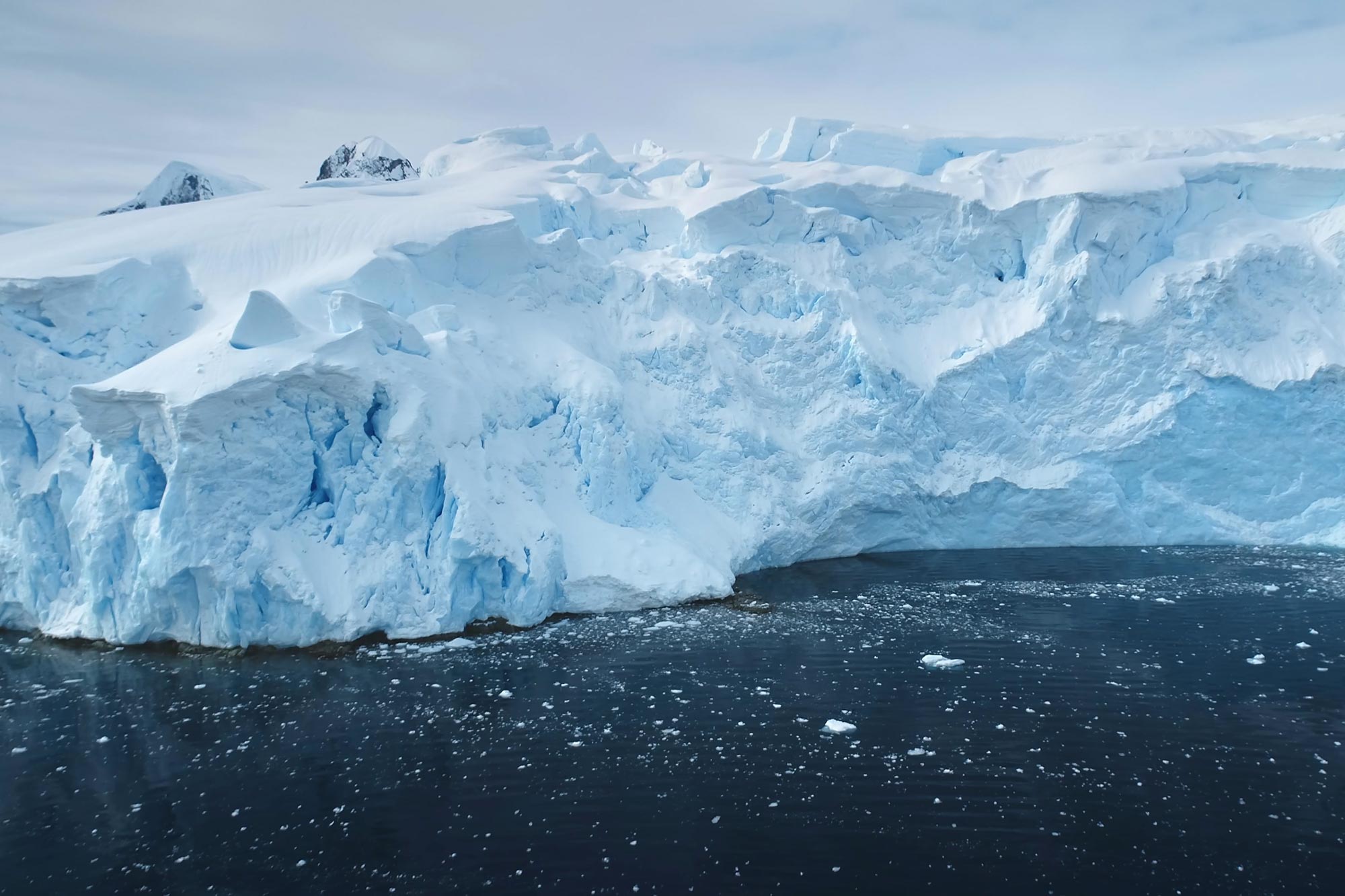
Ancient Antarctic ice is revealing a more detailed and unexpected picture of Earth’s climate history.
New research on ancient Antarctic ice and the air trapped within it is extending the timeline of Earth’s climate history and offering new insight into how the planet has evolved over the past 3 million years.
The results, published in two Nature papers, indicate that Earth’s long-term cooling during this period occurred alongside only a modest drop in heat-trapping greenhouse gases.
Scientists have long known that Earth was significantly warmer about 3 million years ago, with much higher sea levels. Evidence includes discoveries made more than a century ago of temperate and subtropical forest fossils in Alaska and Greenland, along with ancient shoreline deposits stretching from Georgia to Virginia.
However, the reasons behind that warmth, and the cooling that followed, have remained uncertain. One major challenge has been reconstructing accurate records of global temperatures and atmospheric greenhouse gas concentrations from that time.
Exploring Earth’s Oldest Ice
The new studies were led by researchers from the National Science Foundation Center for Oldest Ice Exploration, a nationwide effort based at Oregon State University that focuses on finding Antarctica’s oldest ice.
The research teams, led by Julia Marks-Peterson, a doctoral student at Oregon State University, and Sarah Shackleton, who was a postdoctoral fellow at Princeton University and is now a professor at Woods Hole Oceanographic Institution, analyzed newly identified samples of multi-million-year-old ice from Allan Hills, located along the edge of the East Antarctic Ice Sheet.
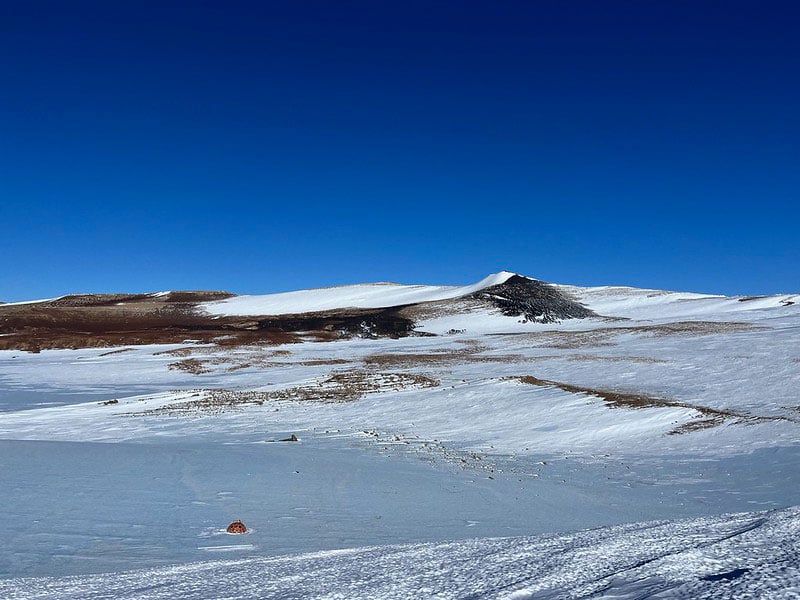
This region offers a rare setting where ancient ice from the Antarctic interior becomes trapped in mountain ranges near the continent’s margin. The ice layers, originally flat, are distorted by flow, which makes it difficult to obtain continuous climate records. Instead, researchers rely on snapshots that represent average environmental conditions during specific time periods.
“Those snapshots extend climate records from ice much further than previously possible,” said COLDEX Director Ed Brook, a paleoclimatologist in OSU’s College of Earth, Ocean, and Atmospheric Sciences. “These longer records are also now raising new questions about Earth’s climate evolution and how far back in time we might be able to go with ice core data.”
Ocean Cooling Over Millions of Years
By analyzing the ratios of noble gases preserved in air bubbles within the ice, Shackleton and her team reconstructed past ocean temperatures. Their results show that the average temperature of the global ocean has fallen by about 2 to 2.5 degrees Celsius (3.6 to 4.5 degrees Fahrenheit) over the past 3 million years.
Earlier studies mainly focused on surface ocean temperatures, which also show cooling. However, this research reveals that cooling occurred at different times in surface waters compared to deeper layers.
“The noble gases in ice provide a unique way to look at ocean temperature change,” Shackleton said. “Other methods can give you information about ocean temperature at a single site, but this gives a more global view.”
A large portion of the overall cooling appears to have taken place early, beginning around 3 million years ago and continuing for about 1 million years, when ice sheets began forming in the Northern Hemisphere. In contrast, surface temperatures declined more gradually, continuing to cool until about 1 million years ago. The researchers suggest this difference reflects changes in how heat moves between the ocean surface and deeper waters.
Greenhouse Gas Stability and Change
Using the same ice samples, Marks-Peterson and her colleagues produced the first direct measurements of atmospheric carbon dioxide and methane levels across the past 3 million years.
Their findings suggest that long-term carbon dioxide levels likely stayed below 300 parts per million. Around 2.7 million years ago, levels were about 250 parts per million and then dropped by roughly 20 parts per million by 1 million years ago. Methane levels remained relatively stable at about 500 parts per billion.
Some earlier studies based on ancient sediment chemistry have suggested higher carbon dioxide concentrations, though results have been mixed. This highlights the importance of extending ice core records as far back as possible, the researchers said.
Today, greenhouse gas levels are far higher. According to the National Oceanic and Atmospheric Administration, atmospheric carbon dioxide averaged 425 parts per million in 2025, while methane reached 1,935 parts per billion.
Rethinking Climate Drivers
The results suggest that the cooling trend over the past 3 million years cannot be explained by greenhouse gases alone. Other factors, including Earth’s reflectivity, changes in vegetation or ice cover, and ocean circulation, likely played major roles.
“Our hope is that this work will refine our view of past warmer climates and sharpen our understanding of how different elements of the Earth system interact,” said Marks-Peterson.
The findings have also opened new research directions. According to Brook, many of these questions are now being explored by scientists within COLDEX. Researchers have already identified ice as old as 6 million years at the base of one core and are analyzing these older samples.
Recent drilling efforts are expected to provide access to even older ice. Scientists are also developing improved methods to reconstruct carbon dioxide levels, examining additional gases in ice cores, and studying the conditions that allow ancient ice to be preserved. These efforts could help identify new sites for future drilling.
References:
“Global ocean heat content over the past 3 million years” by Sarah Shackleton, Valens Hishamunda, Yuzhen Yan, Austin Carter, Jacob Morgan, Jeff Severinghaus, Sarah Aarons, Julia Marks-Peterson, Jenna Epifanio, Christo Buizert, Edward Brook, Andrei V. Kurbatov, Michael L. Bender and John Higgins, 18 March 2026, Nature.
DOI: 10.1038/s41586-026-10116-3
“Broadly stable atmospheric CO2 and CH4 levels over the past 3 million years” by Julia Marks-Peterson, Sarah Shackleton, John Higgins, Jeffrey Severinghaus, Yuzhen Yan, Christo Buizert, Michael Kalk, Ross Beaudette, Valens Hishamunda, Demetria Eves, Austin Carter, Andrei Kurbatov, Jenna Epifanio, Jacob Morgan, Ian Nesbitt, Michael Bender and Edward Brook, 18 March 2026, Nature.
DOI: 10.1038/s41586-025-10032-y
COLDEX is supported by the NSF Office of Polar Programs; the Science and Technology Center Program at the NSF Office of Integrative Activities; and Oregon State University. Fieldwork in Antarctica is supported by the U.S. Antarctic Program and funded by NSF. Ice drilling support is provided by the NSF U.S. Ice Drilling Program and ice sample curation by the NSF Ice Core Facility in Denver, Colorado.
Never miss a breakthrough: Join the SciTechDaily newsletter.
Follow us on Google and Google News.