
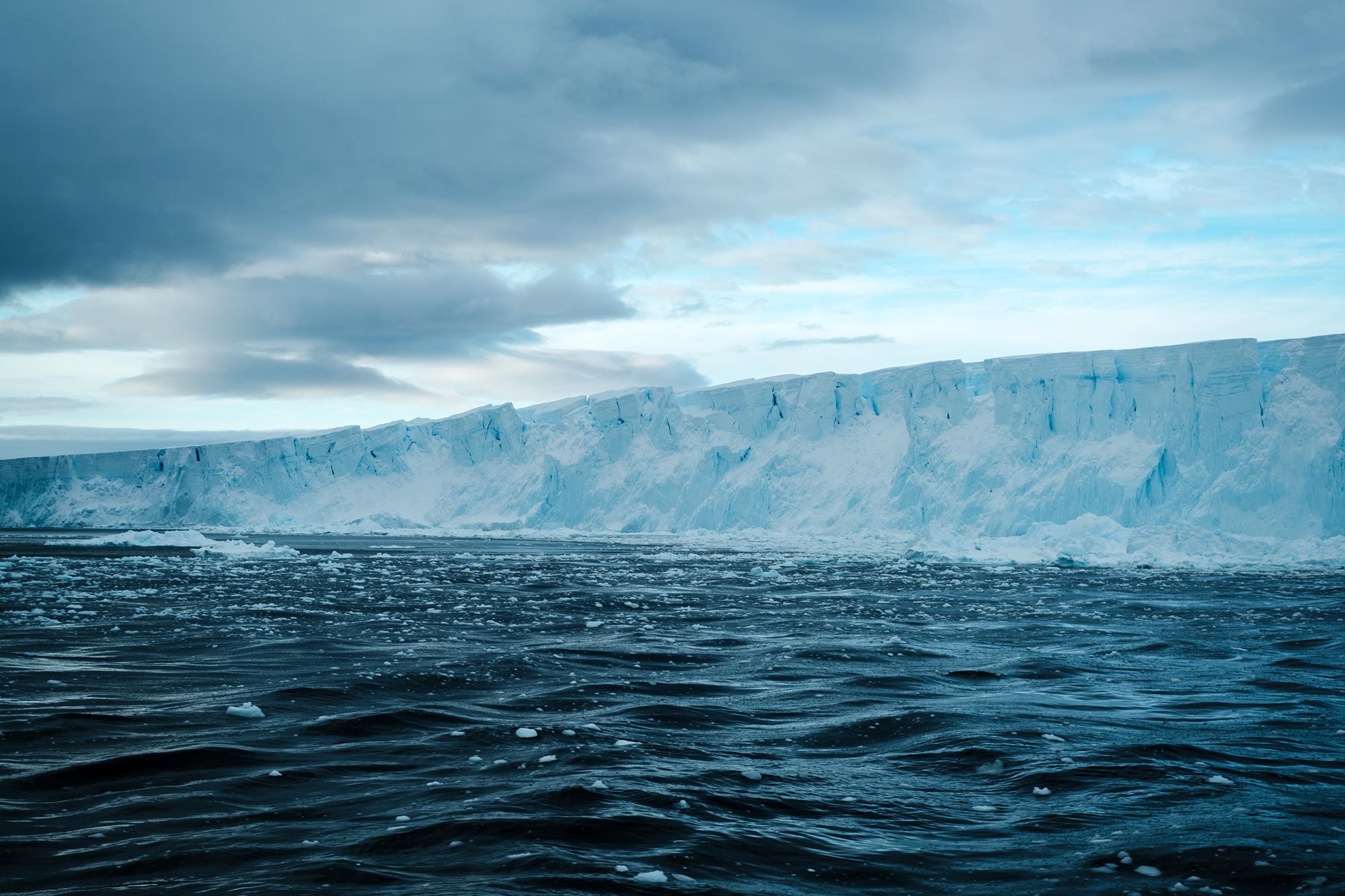
Ancient Antarctic ice sheet cycles affected subtropical ocean productivity by altering nutrient circulation. The 40,000-year obliquity cycle played an unexpectedly strong role, revealing deep global climate connections.
Fluctuations in Antarctica’s ice sheets once influenced marine life far beyond the polar regions, shaping biological productivity in subtropical oceans thousands of miles away. This conclusion comes from new research led by scientists at the University of Wisconsin–Madison.
Published in the Proceedings of the National Academy of Sciences, the study shows that the obliquity cycle, a 40,000-year pattern linked to shifts in Earth’s axial tilt, affected ocean productivity in subtropical regions about 34 million years ago, when the Antarctic ice sheet began to expand.
This result surprised researchers because the 40,000-year cycle, although important at the poles, usually has a weaker effect on climate and ocean conditions closer to the equator.
Unexpected Role of the 40,000-Year Obliquity Cycle
“We generally expect other astronomical cycles to have a greater influence,” says Stephen Meyers, a professor of geoscience at UW–Madison and one of the study’s lead authors.
However, the team found a clear and dominant impact from the 40,000-year cycle on subtropical marine productivity over a span of about 1 million years, a period tied to the early growth of the Antarctic ice sheets around 34 million years ago.
“This tells us that bioproductivity is being influenced by a distant high-latitude process, through nutrient delivery to the lower latitudes,” Meyers says.

Ocean Sediment Evidence and Scientific Discovery
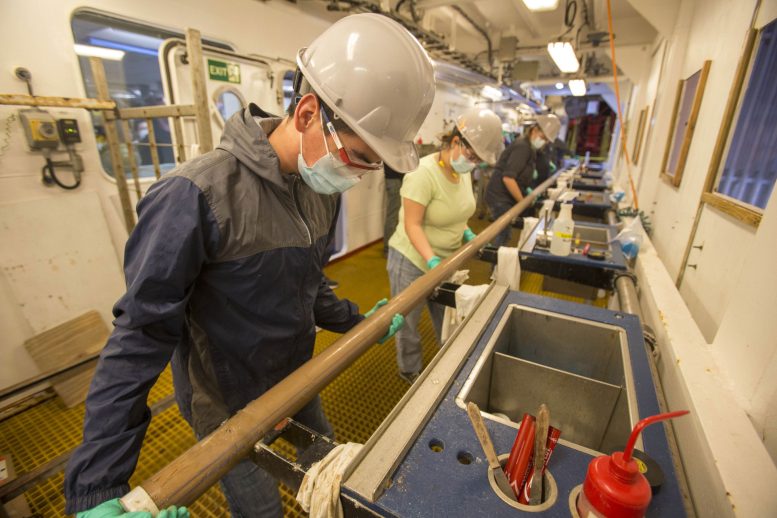
The researchers reached these conclusions by examining chemical signatures preserved in ocean sediments, which provide records of past biological activity. These samples were collected during ocean drilling expeditions from 2020 to 2022 aboard the now-retired research vessel JOIDES Resolution. For decades, this ship retrieved sediment cores that have helped scientists study ocean history and geology, supported by the US National Science Foundation and 23 partner countries.
“The vessel has provided archives that ground huge scientific discoveries related to global climate events, evolution of life, and plate tectonics,” says Alexandra Villa , who co-led the study with Meyers as a PhD student at UW–Madison and participated in the expedition. She is now a postdoctoral researcher at MARUM in Bremen, Germany, where she continues working with ocean drilling data.
Linking Antarctic Ice to Subtropical Productivity
The sediment cores allowed scientists to reconstruct how life in subtropical oceans responded to changes in the Antarctic ice sheet occurring thousands of miles away. To understand this connection, “it’s first important to think about how ocean circulation is linked to bioproductivity,” says Villa. “Today, about three-quarters of all marine bioproductivity north of 30 degrees south of the equator is supported by nutrients derived from Southern Ocean circulation—this is the ocean that surrounds Antarctica,” says Villa. “The nutrient-filled Southern Ocean water sinks, then makes its way to the lower latitudes, where it is mixed upward to the surface, influencing bioproductivity.”

Around 34 million years ago, the formation of the Antarctic ice sheet reshaped ocean circulation and altered how nutrients moved through the seas.
“And when the ice sheet became large enough to extend to the Southern Ocean, the 40,000-year obliquity rhythm of the marine-based ice sheets impacted the delivery of nutrients to our subtropical site,” Villa says.
Global Climate Connections and Teleconnections
This work builds on earlier UW–Madison research showing the strong influence of the 40,000-year obliquity cycle on marine-based ice sheets.
Scientists can now link this cycle to broader ocean circulation patterns with effects that extend across the globe, underscoring the tight connections within Earth’s climate system.
“The Earth System is so interconnected, and changes in one part of the planet can ripple out in surprising ways,” Meyers says. “The polar ice sheets and global ocean circulation are important ways this manifests, impacting marine food webs far from the ice sheet. Our study shows how dynamic, variable, and sometimes surprising, these ‘global teleconnections’ can be.”
Reference: “High-latitude teleconnections drive subtropical marine bioproductivity at the dawn of the Antarctic ice sheet” by Alexandra Villa and Stephen R. Meyers, 9 March 2026, Proceedings of the National Academy of Sciences.
DOI: 10.1073/pnas.2424082123
This research received support from the National Science Foundation (OCE-1450528), the Heising-Simons Foundation (2021-2797), the John Simon Guggenheim Memorial Foundation, and UW–Madison.
Never miss a breakthrough: Join the SciTechDaily newsletter.
Follow us on Google and Google News.
3 Comments
An unresolved issue with the Milankovitch Cycles is why the waxing and waning of continental glaciation has apparently changed from the 41,000-years of obliquity to the 100,000-years of eccentricity in the last million years. [ https://en.wikipedia.org/wiki/Milankovitch_cycles ]
It doesn’t strain credulity any to expect that the various astronomical influences on climate interact in ways that sometimes the cycles reinforce each other (constructive interference) and sometimes counteract (destructive interference). Additionally, tectonic activity can alter ocean currents, such as the closing of the Isthmus of Panama.
We must “grow up” to realize that our species plus millions of others, are not at all “permanent”.
Homo Sapiens may be finished within another 50-300k years. ?
There’s little reason to believe otherwise.
Earth evolves as this solar system wanders along a path influenced by other neighboring planets, and galaxies.
If this species is to survive and retain it’s cultural history by record, and practice, then a maturing of needs for the long term must become concrete decisions for the conveyance of this Earth’s multifaceted life forms into the yet unclear future.
Even if homo sapiens survive another 50,000-years, I doubt that our descendants will be much like us. Think of how many people walk around with white air pods in their ears, have tattoos all over their bodies, and would starve to death if the infrastructure were to fail.