
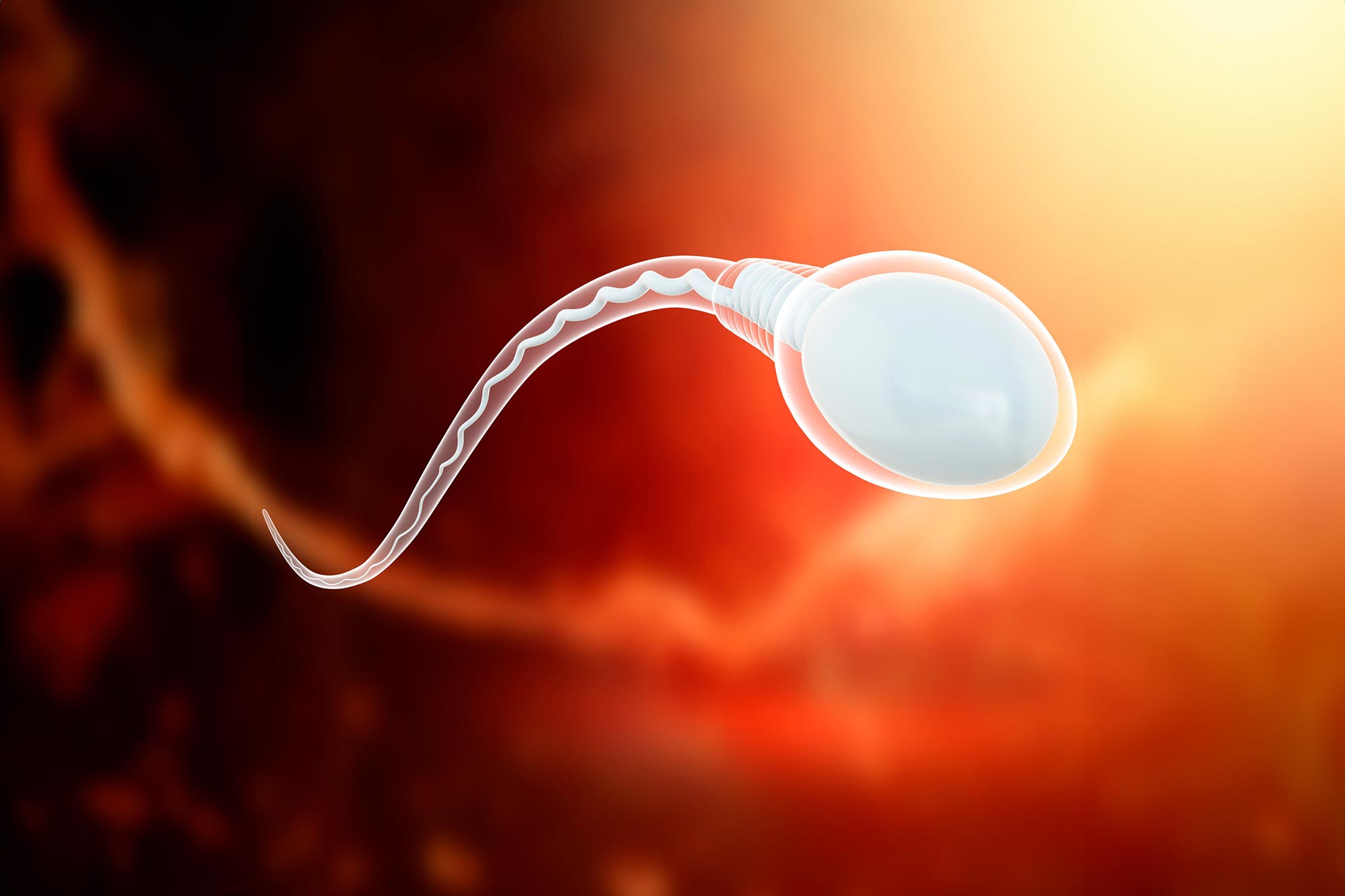
A new study identifies a genetic processing failure that leaves hybrid fruit fly males unable to produce sperm.
One of evolution’s defining moments occurs when two populations become so genetically different that they can no longer produce fertile offspring together. Even among closely related species that can still mate, their hybrid young often reach adulthood but are unable to reproduce, a phenomenon that frequently affects males first and has puzzled biologists for more than a century.
A recent study published in Molecular Biology and Evolution uncovers a cellular defect that helps explain why hybrid male fruit flies become sterile. Led by Whitehead Institute Member Yukiko Yamashita, graduate student Adrienne Fontan, and senior scientist Romain Lannes, the research reveals how a breakdown in processing genes essential for sperm production may contribute to the gradual formation of new species.
The researchers found that several genes required for sperm development fail during an early step of gene expression in hybrid males. Without properly processing these genes, cells cannot produce the proteins needed to build functional sperm.
A recent split reveals sterility
The work focused on hybrids from two closely related fruit fly species that separated from a common ancestor about 250,000 years ago. The species can still mate in the laboratory, but their hybrid male offspring cannot produce functional sperm.
To look for the cause, the study examined genes on the Y chromosome that are essential for sperm development.
“These genes on the Y chromosome are required to produce sperm,” says co-first author and Yamashita lab senior scientist Romain Lannes. “They are very large and difficult for the cell to process, and in the hybrid, it’s a total failure—the hybrid cannot make them.”
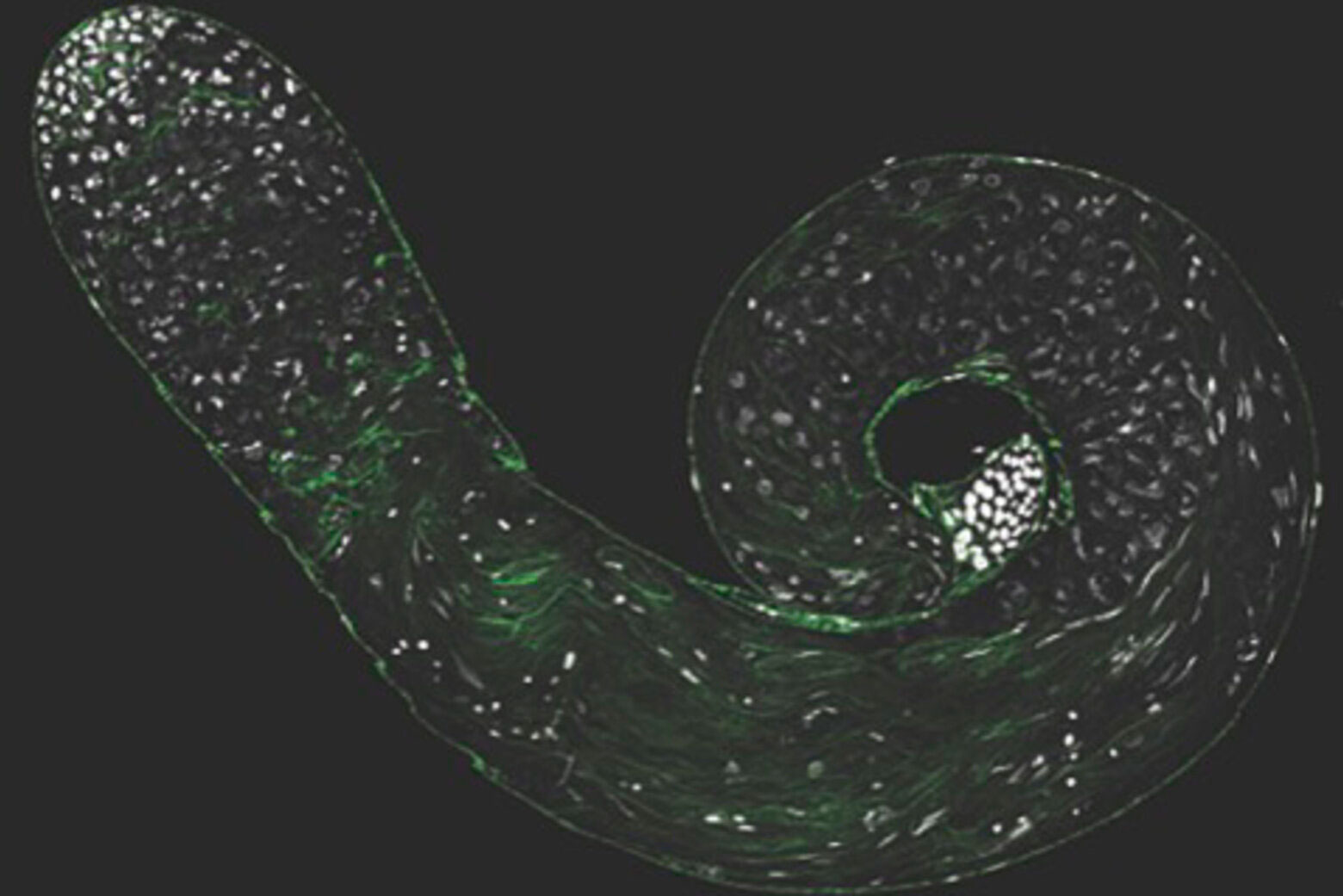
These Y chromosome genes begin working like other genes. The cell first makes an RNA copy of the DNA instructions. Before RNA can be used to produce proteins, the cell must remove noncoding sections and connect the remaining pieces in the right order.
In hybrid flies, that step often breaks down.
Instead of joining the RNA pieces correctly, the cell sometimes reverses the order of some pieces. The resulting RNA cannot make a functional protein. Because the affected genes are required for sperm development, the error stops hybrid males from producing sperm.
Repeated DNA exposes the break
The defect was traced to a notable feature of these genes: they are unusually large.
Much of that size comes from repetitive DNA inside the genes. These repeated regions are known as satellite DNA, and they consist of short DNA patterns copied many times in a row.
“Satellite DNA is made of short repeated sequences that can extend for very long regions,” says Yamashita, who is also a professor of biology at MIT and an HHMI Investigator. “Because they don’t encode proteins and are difficult to analyze with standard genetic tools, people historically didn’t study them much.”
Satellite DNA also evolves quickly. Even closely related species can carry very different versions of these repeated sequences.
Those differences may help explain the failure seen in the hybrid males. Each species may evolve cellular systems that are suited to processing its own repetitive DNA. When genetic material from two species comes together in a hybrid, those systems may no longer handle the DNA correctly.
Yamashita explained that large genes are already hard for cells to process. In hybrids, that built-in difficulty appears to become even greater.
“Even in a pure species, these big genes are challenging to process,” says Yamashita. “But that species has evolved ways to deal with that challenge. When you combine two species in a hybrid, that system can break.”
The Y chromosome may fail first
The findings also help explain a broader pattern in evolution. When hybrids between species are sterile, the affected sex is often the one with two different sex chromosomes. In fruit flies and humans, males have one X chromosome and one Y chromosome, while females have two X chromosomes.
Because the Y chromosome evolves quickly and contains many repetitive sequences, it may be especially vulnerable to incompatibilities that appear when species interbreed.
Fruit flies are useful for studying this problem because they reproduce quickly and are easy to examine in the laboratory. The two species used in this study diverged relatively recently, giving scientists a way to study the early stages of reproductive isolation.
Although the research centered on flies, similar processes may occur in other organisms. Rapid change on the Y chromosome is seen across many species, including mammals.
“I’m really interested in understanding why species split and become incompatible,” says Yamashita.
A clue beyond evolution
The same computational approaches used in this study may also help investigate human diseases involving extremely large genes. Some human genes stretch across millions of DNA bases and can be difficult for cells to process correctly, including genes linked to muscular and neurological disorders.
By identifying a precise failure in gene processing, the study gives a clearer view of how genetic differences between species can interfere with reproduction.
Reference: “Defective splicing of Y-chromosome-linked gigantic genes contributes to hybrid male sterility in Drosophila” by Adrienne Fontan, Romain Lannes, Jaclyn M Fingerhut, Jullien M Flynn and Yukiko M Yamashita, 16 February 2026, Molecular Biology and Evolution.
DOI: 10.1093/molbev/msag045
Funding: Howard Hughes Medical Institute (Y.M.Y.).
Never miss a breakthrough: Join the SciTechDaily newsletter.
Follow us on Google and Google News.