
Close Menu
    Facebook X (Twitter) Instagram
    SciTechDaily
    • Biology
    • Chemistry
    • Earth
    • Health
    • Physics
    • Science
    • Space
    • Technology
    Facebook X (Twitter) Pinterest YouTube RSS
    SciTechDaily
    Home»Biology»Severity of COVID-19 May Depend on Your Individual Genetic Variation in Immune System
    Biology

    Severity of COVID-19 May Depend on Your Individual Genetic Variation in Immune System

    By American Society for MicrobiologyApril 19, 2020No Comments2 Mins Read
    Facebook Twitter Pinterest Telegram LinkedIn WhatsApp Email Reddit
    Share
    Facebook Twitter LinkedIn Pinterest Telegram Email Reddit
    SARS-CoV-2 Immune System Genetics COVID-19
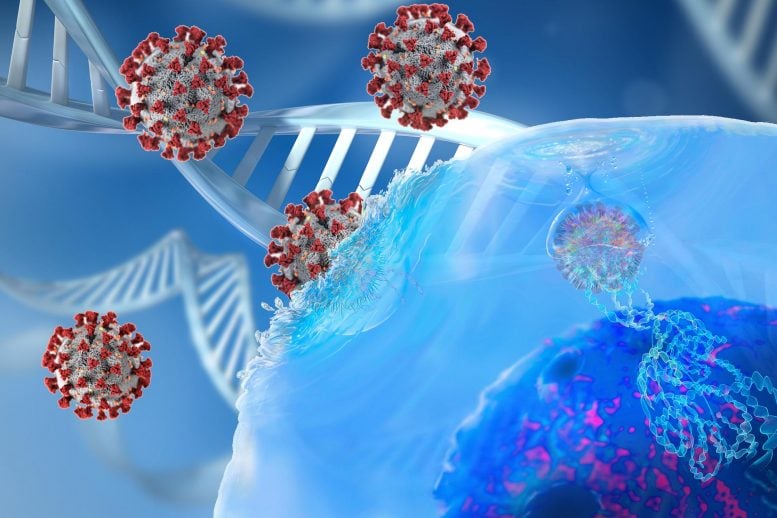
    The extent of genetic variation within the human immune system could impact both the likelihood of contracting and the severity of illness caused by COVID-19 virus.

    Genetic variability in the human immune system may affect susceptibility to, and severity of infection by severe acute respiratory syndrome coronavirus 2 (SARS-CoV-2), the virus responsible for the coronavirus disease (COVID-19). The research is published on April 17, 2020, in the Journal of Virology, a publication of the American Society for Microbiology.

    Individual genetic variation may explain differences in the strength of immune responses. Certain immune system genes, called human leukocyte antigen genes that are involved in recognizing pathogens, vary from person to person. Variations can influence how well the immune system recognizes a given pathogen. Poor recognition of SARS-CoV-2 could cause a person to be more vulnerable to the virus.

    “In particular, understanding how variation in HLA [a component of the immune system containing multiple genes] may affect the course of COVID-19 could help identify individuals at higher risk from the disease,” according to the authors of the new study.

    The authors show that individual HLA, haplotype, and full genotype variability likely influence the capacity to respond to SARS-CoV-2 infection, and note that certain alleles, in particular, could be associated with more severe infection, as has previously been shown with SARS-CoV.

    “This is the first study to report global distributions of HLA types and haplotypes with potential epidemiological ramifications in the setting of the current pandemic,” write the authors, from Oregon Health & Science University, Portland, and the Portland VA Research Foundation.

    “HLA typing can be fast and inexpensive,” the authors write. “Pairing HLA typing with COVID-19 testing where feasible could improve assessment of viral severity in the population. Following the development of a vaccine against SARS-CoV-2, the virus that causes COVID-19, individuals with high-risk HLA types could be prioritized for vaccination.”

    Reference: “Human leukocyte antigen susceptibility map for SARS-CoV-2” by Austin Nguyen, Julianne K. David, Sean K. Maden, Mary A. Wood, Benjamin R. Weeder, Abhinav Nellore and Reid F. Thompson, 17 April 2020, Journal of Virology.
    DOI: 10.1128/JVI.00510-20

    Never miss a breakthrough: Join the SciTechDaily newsletter.
    Follow us on Google and Google News.

    American Society for Microbiology COVID-19 Genetics Microbiology Public Health Virology
    Share. Facebook Twitter Pinterest LinkedIn Email Reddit

    Related Articles

    Virus Variants: A Vital Tool to Study Viral Evolution in the Test Tube

    Genetic Testing of Wastewater Can Detect New COVID Variants Before They Are Detected by Local Clinical Sequencing

    New Research Shows Poor Gut Health Connected to Severe COVID-19 – Probiotics May Help Patients

    New COVID-19 Research Provides Deep Insights Into Transmission and Mutation Properties of SARS-CoV-2

    Researchers Identify N95 Respirator Decontamination Method Using a Microwave

    MMR Vaccine Could Protect Against the Worst COVID-19 Symptoms – “A Low-Risk-High-Reward Preventive Measure”

    Different Groups of Bats Have Their Own Unique Strains of Coronavirus – They Have Been Evolving Together for Millions of Years

    Promising MERS Vaccine Candidate Might Be Able to Block Coronavirus Infections

    Tracking Dangerous Bat Coronaviruses With Next-Generation DNA Sequencing

    Leave A Reply Cancel Reply

    • Facebook
    • Twitter
    • Pinterest
    • YouTube

    Don't Miss a Discovery

    Subscribe for the Latest in Science & Tech!

    Trending News

    125-Million-Year-Old Crocodile Fossil Reveals Astonishing New Secrets

    Scientists Discover an “Impossible” Way Muscle Filaments Can Grow

    A Star’s Spin Could Solve a Longstanding Black Hole Mystery

    NASA Finds Earth Microbes Could Hide in the Moon’s Deep Shadows

    New Study: Intermittent Fasting Lowers Blood Sugar in Type 1 Diabetes

    Alzheimer’s Brain Changes May Begin 7 Years Earlier Than Scientists Thought

    This New Molecule Could Transform How We Recover Gold From Electronic Waste

    A Billion Years Before the Grand Canyon, a Giant Cliff May Have Stretched Across America

    Follow SciTechDaily
    • Facebook
    • Twitter
    • YouTube
    • Pinterest
    • Newsletter
    • RSS
    SciTech News
    • Biology News
    • Chemistry News
    • Earth News
    • Health News
    • Physics News
    • Science News
    • Space News
    • Technology News
    Recent Posts
    • A Major Quantum Computing Problem May Finally Have an Answer: Can We Trust the Results?
    • NASA’s Roman Telescope Begins a Million-Mile Journey Into Deep Space
    • Researchers Have Discovered a New Way To Reduce Chronic Nerve Pain
    • Less Sugar Early in Life Linked to Lower Dementia Risk Decades Later
    • Naked Comet Photobombs Public Telescope Image
    Copyright © 1998 - 2026 SciTechDaily. All Rights Reserved.
    • Science News
    • About
    • Contact
    • Editorial Board
    • Privacy Policy
    • Terms of Use

    Type above and press Enter to search. Press Esc to cancel.