
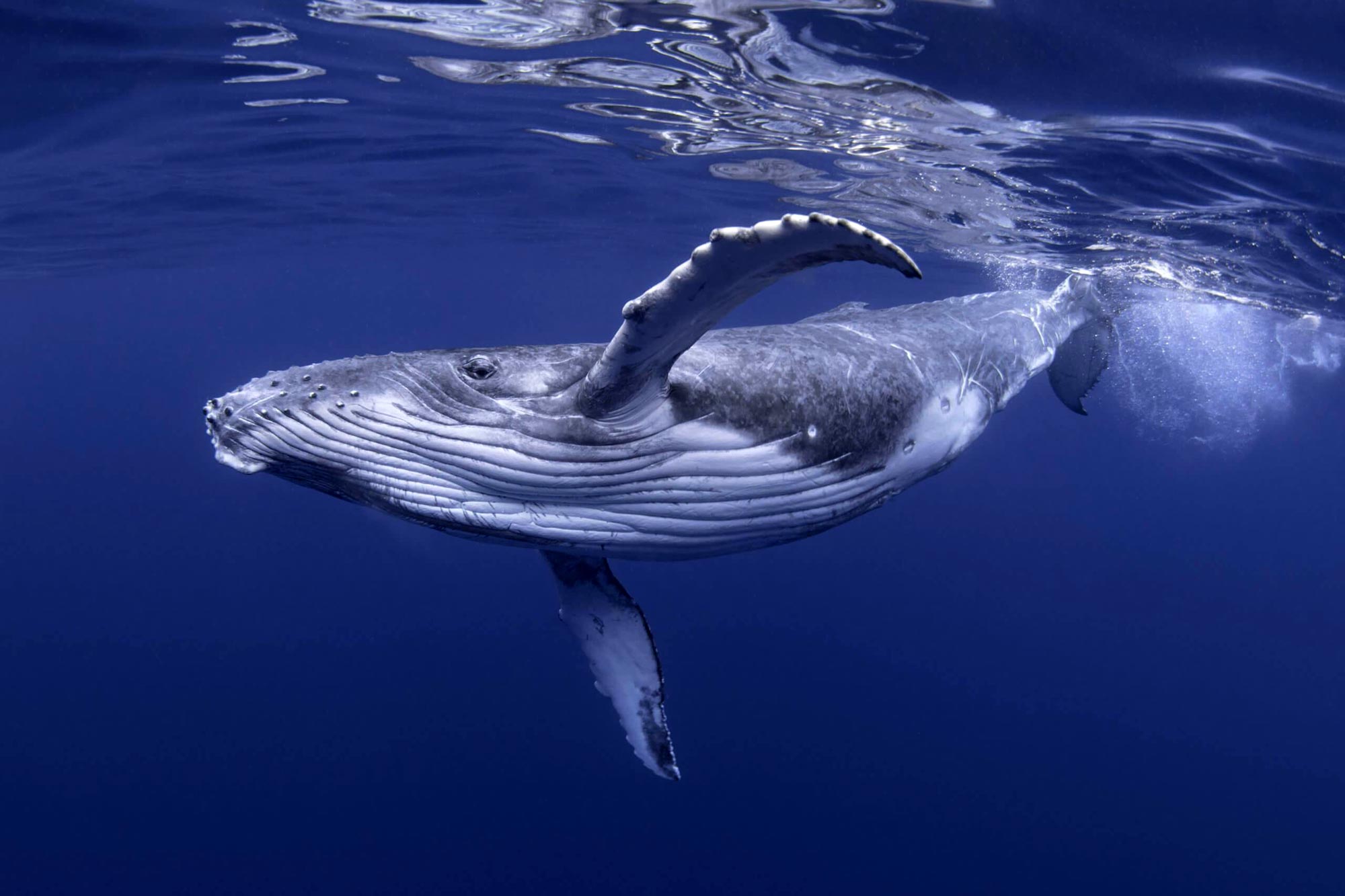
Southeast Alaska’s humpback whales use bubble nets for efficient krill hunting, a behavior documented by researchers aiming to bolster conservation efforts.
A new study published in Royal Society Open Science suggests humpback whales may be among the rare group of animals that both manufacture and use their own tools.
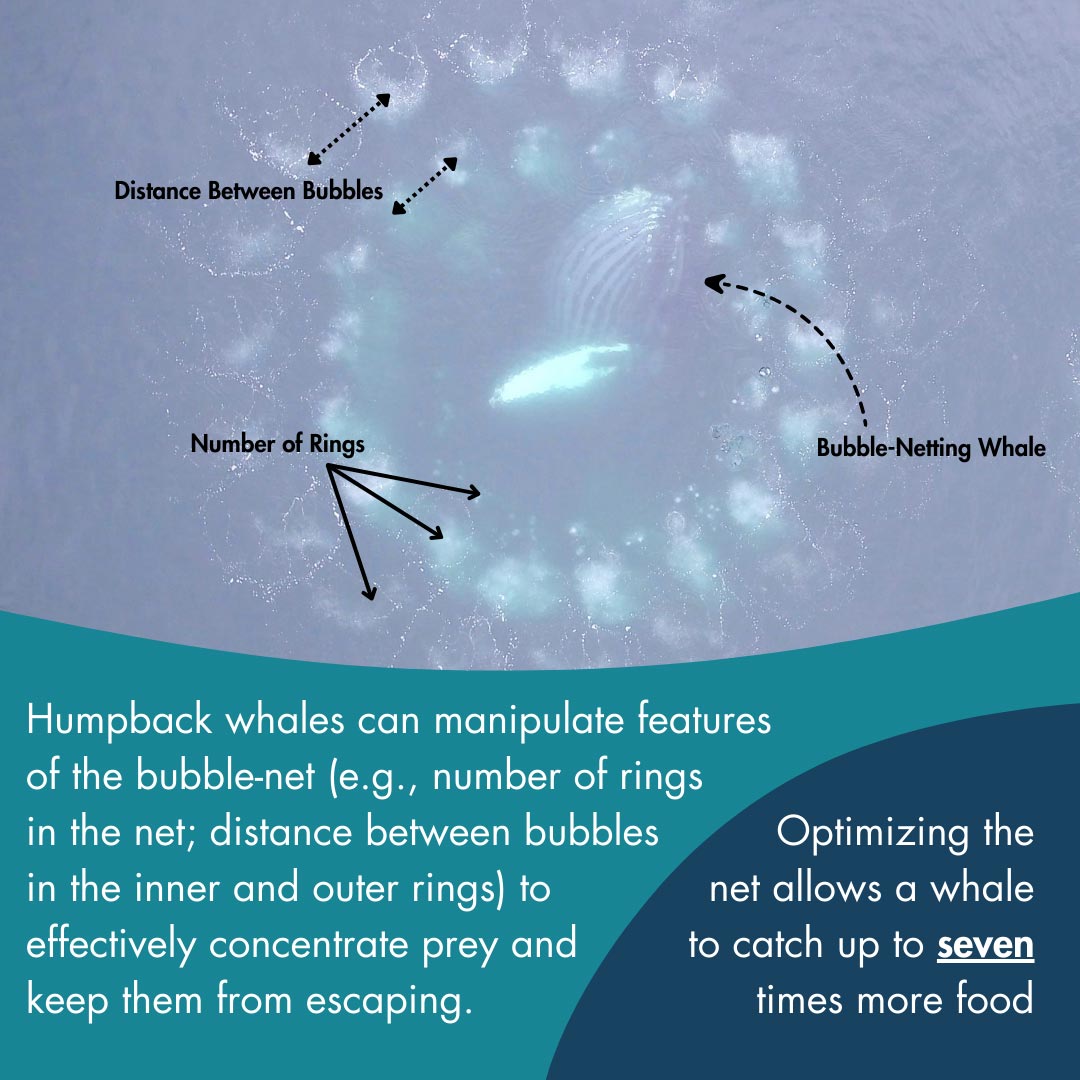
While it was previously known that humpback whales create “bubble-nets” to hunt, the new study reveals that they also manipulate this unique tool in a variety of ways to maximize their food intake in Alaskan feeding grounds.
This research, conducted by the Marine Mammal Research Program (MMRP) at UH Hawaiʻi Institute of Marine Biology (HIMB) and Alaska Whale Foundation (AWF), demystifies a behavior key to the whales’ survival and provides valuable insights that could improve targeted conservation efforts.
Unique Hunting Techniques of Humpback Whales
“Many animals use tools to help them find food,” explains Professor Lars Bejder, co-lead author of the study and Director of MMRP, “but very few actually create or modify these tools themselves. We discovered that solitary humpback whales in southeast (SE) Alaska craft complex bubble nets to catch krill, which are tiny shrimp-like creatures. These whales skillfully blow bubbles in patterns that form nets with internal rings, actively controlling details like the number of rings, the size and depth of the net, and the spacing between bubbles. This method lets them capture up to seven times more prey in a single feeding dive without using extra energy. This impressive behavior places humpback whales among the rare group of animals that both make and use their own tools for hunting.”
Success in hunting is key for the whalesʻ survival. The population of humpback whales in SE Alaska overwinters in Hawaiʻi, and their energy budget for the entire year depends on their ability to capture enough food during summer and fall in SE Alaska. Unraveling the nuances of their carefully honed hunting technique sheds light on how migratory humpback whales consume enough calories to traverse the Pacific Ocean.
Research Methods and Challenges
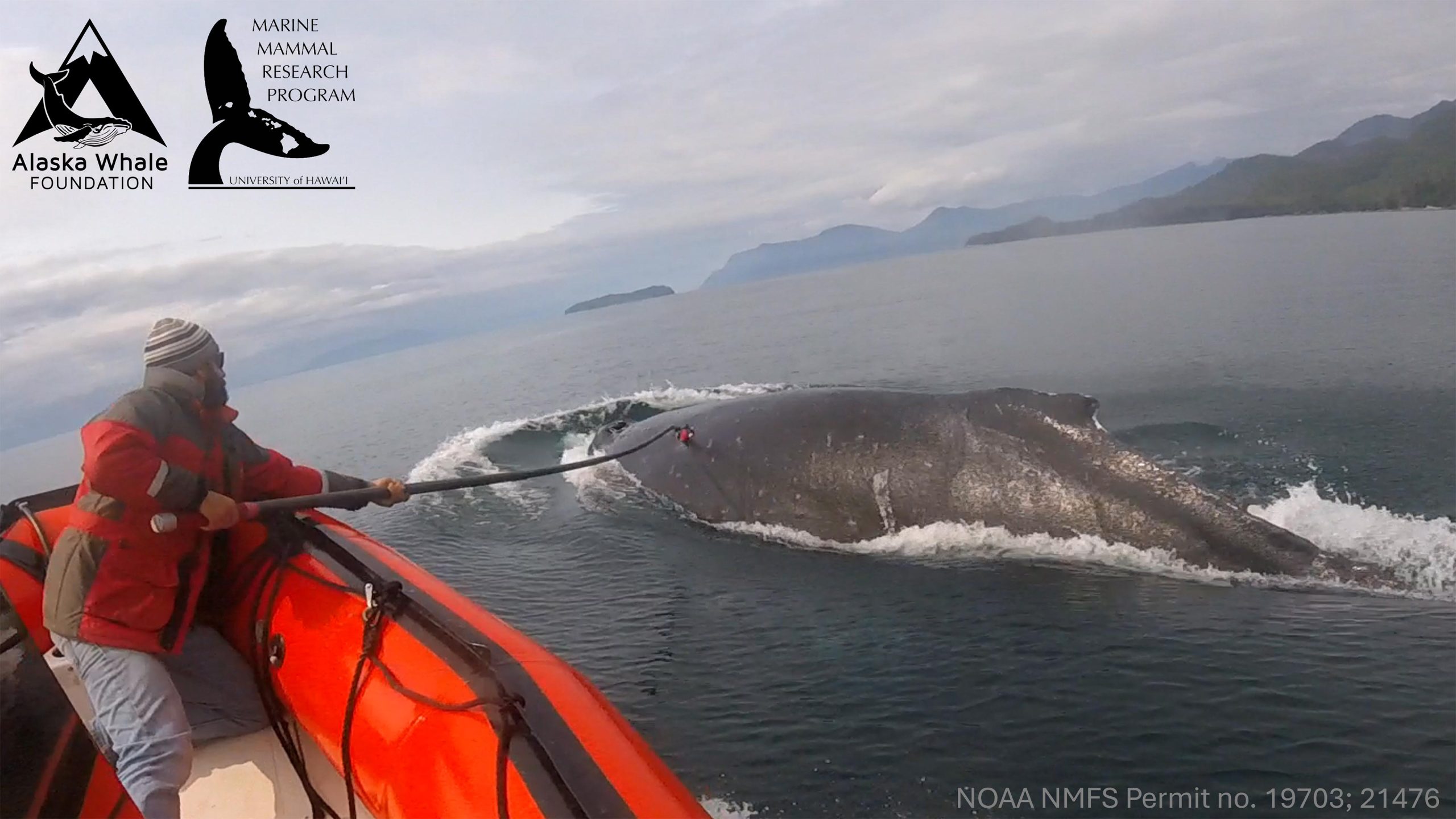
Marine mammals known as cetaceans include whales, dolphins, and porpoises, and they are notoriously difficult to study. Advances in research tools are making it easier to track and understand their behavior, and in this instance, researchers employed specialty tags and drones to study the whalesʻ movements from above and below the water.
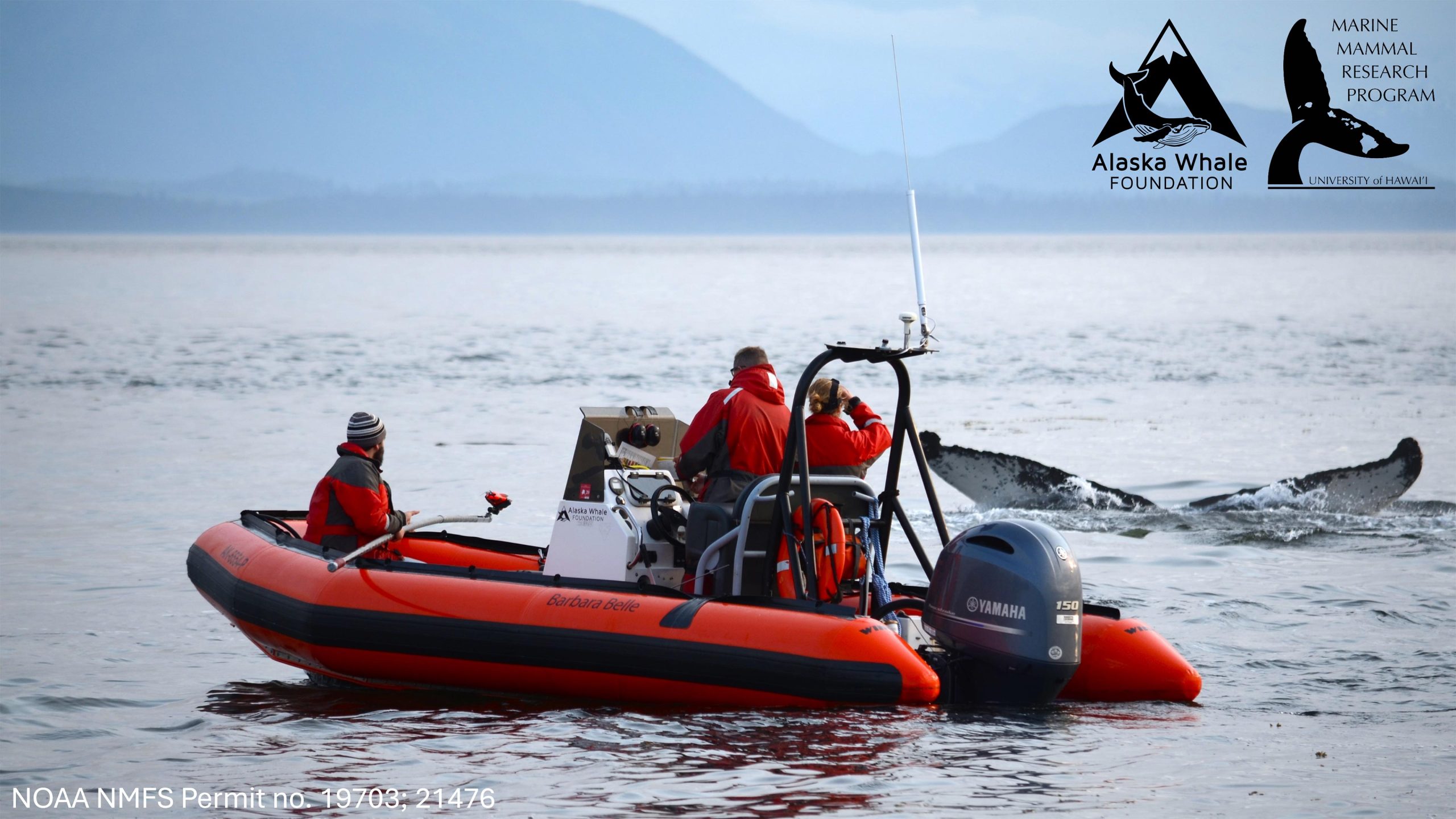
“We deployed non-invasive suction-cup tags on whales and flew drones over solitary bubble-netting humpback whales in SE Alaska, collecting data on their underwater movements,” shares co-author and MMRP researcher William Gough. The tools have incredible capability, but honing them takes practice. Gough reflects, “Whales are a difficult group to study, requiring skill and precision to successfully tag and/or drone them.”
The logistics of working in a remote location in SE Alaska brought its own challenges to the research. “We are so grateful to our research partners at the Alaska Whale Foundation (AWF) for their immense knowledge of the local area and the whales in that part of the world,” emphasizes Bejder. “This research would not have been possible without the strong collaborative effort with AWF.”
Implications for Conservation
Cetaceans throughout the globe face a slough of threats that range from habitat degradation, climate change, and fisheries, to chemical and noise pollution. One-quarter of the 92 known cetacean species are at risk of extinction, and there is a clear and urgent need to implement effective conservation strategies on their behalf. How the animals hunt is key to their survival, and understanding this essential behavior makes resource managers better poised to adeptly monitor and conserve the feeding grounds that are critical to their survival.
“This little-studied foraging behavior is wholly unique to humpback whales,” notes Gough. “It’s so incredible to see these animals in their natural habitat, performing behaviors that only a few people ever get to see. And it’s rewarding to be able to come back to the lab, dive into the data, and learn about what they’re doing underwater once they disappear from view.”
With powerful new tools in researchersʻ hands, many more exciting cetacean behavioral discoveries lie on the horizon. “This is a rich dataset that will allow us to learn even more about the physics and energetics of solitary bubble-netting,” shares Bejder. “There is also data coming in from humpback whales performing other feeding behaviors, such as cooperative bubble-netting, surface feeding, and deep lunge feeding, allowing for further exploration of this population’s energetic landscape and fitness.”
“What I find exciting is that humpbacks have come up with complex tools allowing them to exploit prey aggregations that otherwise would be unavailable to them,” says Dr. Andy Szabo, AWF Executive Director and study co-lead. “It is this behavioral flexibility and ingenuity that I hope will serve these whales well as our oceans continue to change.”
Reference: “Solitary humpback whales manufacture bubble-nets as tools to increase prey intake” by A. Szabo, L. Bejder, H. Warick, M. van Aswegen, A. S. Friedlaender, J. Goldbogen, J. M. Kendall-Bar, E. M. Leunissen, M. Angot and W. T. Gough, 1 August 2024, Royal Society Open Science.
DOI: 10.1098/rsos.240328
This study was made possible with support from Lindblad Expeditions – National Geographic Fund, the University of Hawaiʻi at Mānoa, and a Department of Defense (DOD) Defense University Research Instrumentation Program (DURIP) grant.
This study was conducted under a NOAA permit issued to Alaska Whale Foundation (no. 19703). All research was conducted under institution IACUC approvals.
Never miss a breakthrough: Join the SciTechDaily newsletter.
Follow us on Google and Google News.
2 Comments
Great story people and great study.
Love how you all patted yourselves on the back with your impressive and remarkable acknowledgement of the way you were so skillful in marking and getting the data on these magnificent creatures.
Time to figure out global warming antidotes and how to save mankind from the next great extinction event.
Love you all BTW
Typo: slew of threats, not slough of threats.
Great article otherwise, very fascinating indication of cetacean intelligence.