
Startling new evidence shows mammal salivary glands and snake venom glands share a common genetic foundation.
- Venoms are a mixture of proteins that animals have weaponized for prey capture and self defense
- New research has found that snakes and mammals share a set of genes that have similar activity within salivary and venom gland tissue
- These common genes provide a crucial foundation for evolving venom by ensuring that the glands can produce high loads of functional proteins
- These findings provide the first direct evidence that venom glands evolved from early salivary glands
- Under the right evolutionary conditions, mammal salivary glands could be repurposed for a venomous function
We are not venomous, and neither are mice – but within our genomes lurks that potential, suggest scientists from the Okinawa Institute of Science and Technology Graduate University (OIST) and the Australian National University.
As reported in PNAS, the researchers found that the genetic foundation required for oral venom to evolve is present in both reptiles and mammals.
Linking Snake Venom to Mammal Saliva
The study also provides the first concrete evidence of an underlying molecular link between venom glands in snakes and salivary glands in mammals.
“Venoms are a cocktail of proteins that animals have weaponized to immobilize and kill prey, as well as for self-defense,” said first author, Agneesh Barua, a PhD student at OIST. “What’s interesting about venom is that it has arisen in so many different animals: jellyfish, spiders, scorpions, snakes, and even some mammals. Although these animals evolved different ways to deliver venom, an oral system – where venom is injected through a bite – is one of the most common and well-studied.”
But scientists are still zeroing in on the origin of oral venom. This latest research into snakes, a group of animals renowned and feared for their potent bite, now reveals oral venom’s ancient foundation.
Previously, scientists have focused on the genes that code for the proteins that make up the toxic mixture. “However, many of the toxins currently found in venom were incorporated after the oral venom system was already established. We needed to look at the genes that were present before venom’s origin, genes which enabled the rise of venom systems,” Barua said.
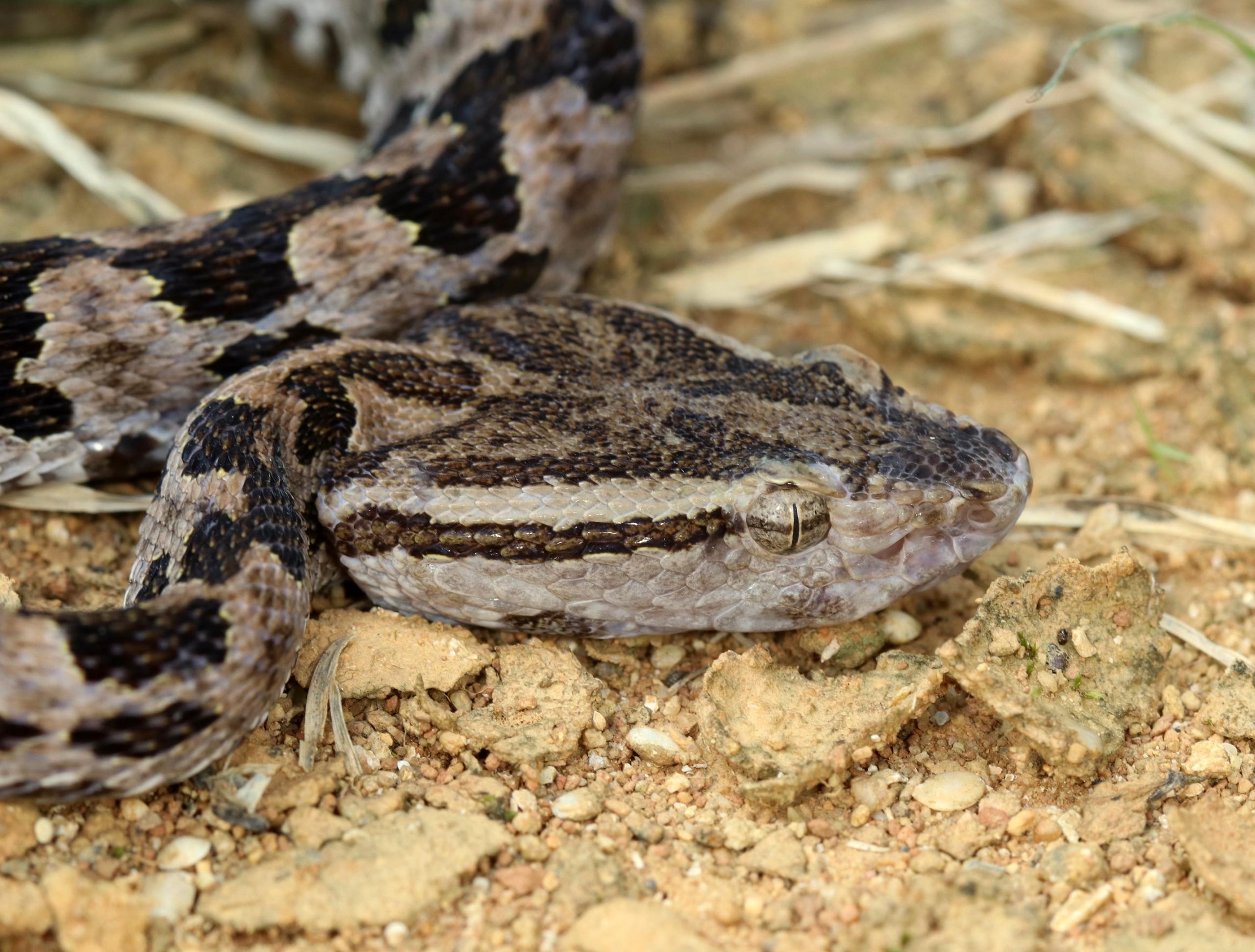
So instead, the team searched for genes that work alongside and interact strongly with the venom genes. The scientists used venom glands collected from the Taiwan habu snake – a pit viper found in Asia.
Protein-Folding Genes Enable Venom Systems
The researchers identified around 3,000 of these ‘cooperating’ genes and found that they played important roles in protecting the cells from stress caused by producing lots of proteins. The genes were also key in regulating protein modification and folding.
When proteins are made, the long chains of amino acids must fold together in a specific way. Just like a wrong fold when doing origami, one misstep prevents the protein from assuming the required shape needed for it to function properly. Misfolded proteins can also accumulate and damage cells.
“The role of these genes in the unfolded protein response pathway makes a lot of sense as venoms are complex mixtures of proteins. So to ensure you can manufacture all these proteins, you need a robust system in place to make sure the proteins are folded correctly so they can function effectively,” explained Barua.
The researchers then looked at the genomes of other creatures across the animal kingdom, including mammals like dogs, chimpanzees, and humans, and found that they contained their own versions of these genes.
Ancient Core Shared by Salivary and Venom Glands
When the team looked at the salivary gland tissues within mammals, they found that the genes had a similar pattern of activity to that seen in snake venom glands. The scientists therefore think that salivary glands in mammals and venom glands in snakes share an ancient functional core that has been maintained since the two lineages split hundreds of millions of years ago.
“Many scientists have intuitively believed this is true, but this is the first real solid evidence for the theory that venom glands evolved from early salivary glands,” said Barua. “And while snakes then went crazy, incorporating many different toxins into their venom and increasing the number of genes involved in producing venom, mammals like shrews produce simpler venom that has a high similarity to saliva.”
The apparent ease with which the function of salivary glands can be repurposed to be venomous is startling – and could mean that scientists start looking at other mammals in an unsettling new light.
“There were experiments in the 1980s that showed that male mice produce compounds in their saliva that are highly toxic when injected into rats,” said Barua. “If under certain ecological conditions, mice that produce more toxic proteins in their saliva have better reproductive success, then in a few thousand years, we might encounter venomous mice.”
Whether mice are or are not on this evolutionary path is a matter that requires further investigation, but it certainly blurs the line between venomous and non-venomous species.
And although very unlikely, if the right ecological conditions ever existed, humans too could become venomous. “It definitely gives a whole new meaning to a toxic person,” joked Barua.
Reference: “An ancient, conserved gene regulatory network led to the rise of oral venom systems” by Agneesh Barua and Alexander S. Mikheyev, 29 March 2021, Proceedings of the National Academy of Sciences.
DOI: 10.1073/pnas.2021311118
Never miss a breakthrough: Join the SciTechDaily newsletter.
Follow us on Google and Google News.
2 Comments
This is a great article, but at the same time one can ask how can this be news? Venomous mammals do exist. Rat + venomous saliva = Cuban solenodon.
It’s probable there have been mammals with venomous bites. But for such a species to survive they have to concurrently develop a behavior prohibiting biting amongst themselves for territorial defense, mating and grooming or its a self extinguishing gene. Most predatory mammals bite freely, even on play thus it would become lethal behavior.