
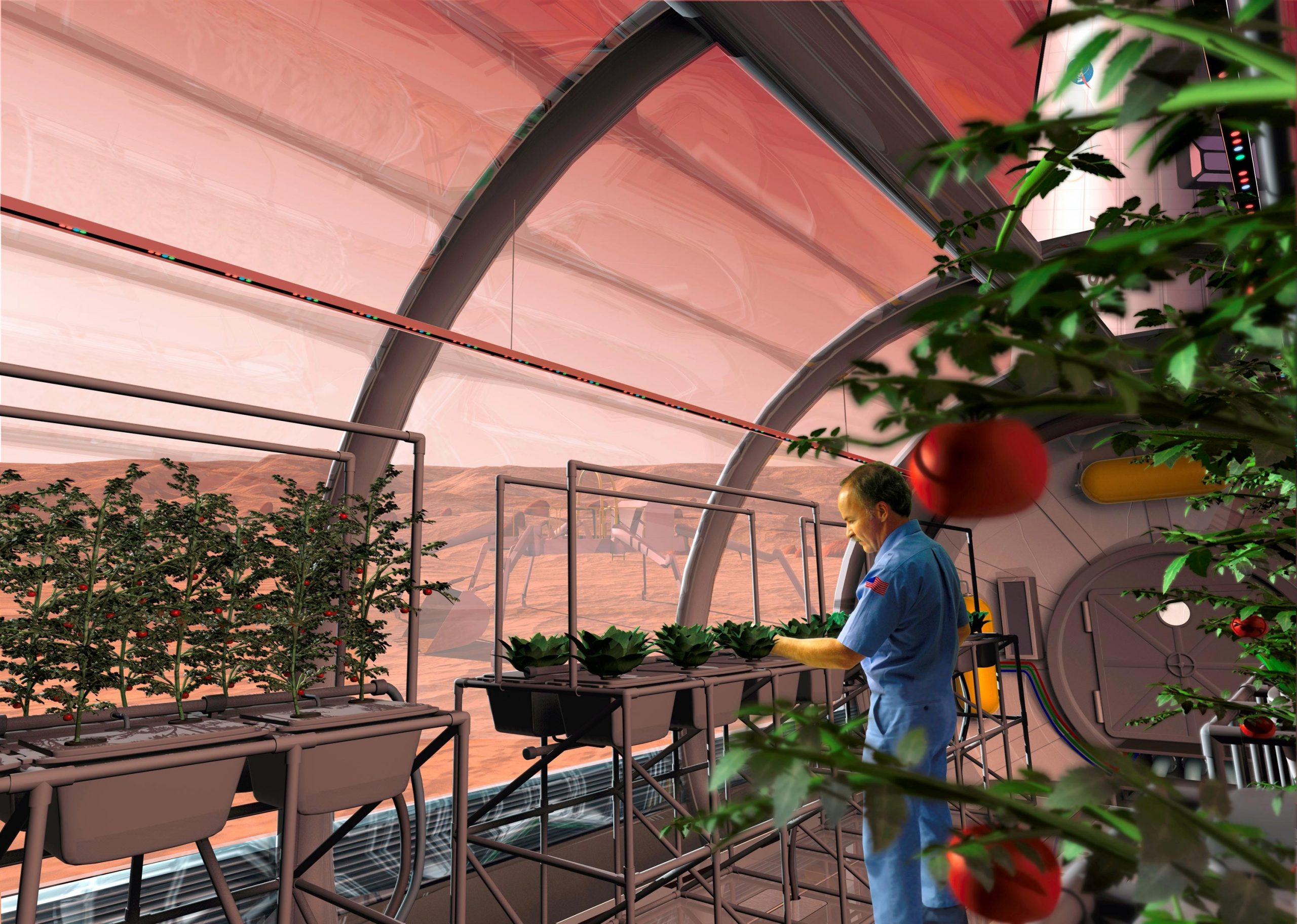
Scientists from the United States and Brazil are exploring how beneficial fungi could turn Martian and lunar regolith into fertile growing media
You’re on the fourth human mission to Mars, and you’ve been tasked with establishing the first self-sustaining food crop on a Martian settlement. You’re nervous because you’re using a new type of fungi called beneficial fungi, which you’re told will help enhance Martian regolith, enabling it to be used for growing crops.
You were privately told that doing this will not only get a high school named after you, but you will also successfully feed future settlers without the need to bring food from Earth. But you really only care about having your name on a high school.
While growing crops on Mars using fungi might be decades away, this hasn’t stopped an international team of scientists from the United States and Brazil from pushing the limits of enhancing crop production through non-traditional methods.
With their findings recently published in the journal Frontiers in Astronomy and Space Sciences, the researchers discuss how a type of fungi called beneficial fungi could be used to convert the toxic and nutrient-absent lunar and Martian regolith into biologically friendly soil for crop production. Beneficial fungi are fungal species that support nutrient cycling in plants, soils, and other organisms.
How Beneficial Fungi Improve Martian and Lunar Soil
For the study, the researchers used this review article to focus on how the Moon and Martian regolith are limited in vital nutrients for growing crops, specifically nitrogen, potassium, and phosphorus, and how to overcome this. The researchers discussed how several fungal species on Earth have been observed to promote plant growth through increased nutrient absorption while functioning under abiotic (non-living organism) stress, along with fungal species used on the International Space Station.
Abiotic stress is emphasized since plants are being grown using nutrient-deprived components like lunar and Martian regolith. To overcome this, the researchers suggest using arbuscular mycorrhizal fungi (AMF), which have been used in botany since the mid-19th century and function by acting as a microscopic extension of a plant’s root system.
The researchers note that while future studies are needed to address knowledge gaps in growing plants in real-world applications, specifically real lunar and Martian regolith, they express optimism that fungi can be used to help produce plentiful crops using lunar and Martian regolith in the future.
Why Fungi Are Key to Future Space Agriculture
The study notes in its conclusion, “Including plant growth-promoting fungi into lunar or Martian regolith-based agriculture systems would present a strategic enhancement to space crop production and the establishment of human settlements beyond Earth. Fungi such as Trichoderma and the various AMF (Glomeromycota) stand out for their ability to relieve abiotic stresses, mobilize essential nutrients, and potentially improve the physicochemical structure of regolith substrates. These microorganisms offer a promising biotechnological tool to transform the regolith environment (inorganic composition) and positively impact the engineered microbiome introduced to inhospitable substrates.”
Using lunar and Martian regolith to grow crops is a practice called in situ resource utilization (ISRU), also known as “living off the land.” This involves using local and available resources to procure mission-essential components without the need for outside supplies.
In the case of the Moon and Mars, using available regolith, which is completely devoid of nutrients to grow crops, and combining it with beneficial fungi could mitigate, and possibly completely negate, the need for shipping soil from Earth to grow food. This could drastically reduce the financial and logistical burdens of shipping entire food supplies from the Earth to the Moon and Mars.
NASA’s ISRU Research and the Future of Space Farming
Using ISRU for future human missions to the Moon and Mars is part of NASA’s Moon to Mars Architecture, with this study adding to a growing list of research dedicated to ISRU and specifically using lunar and Martian regolith to grow crops. Most recently, researchers combined one gram of cyanobacteria with Martian regolith simulant to grow 27 grams of duckweed.
How will beneficial fungi help grow crops in Martian regolith in the coming years and decades? Only time will tell, and this is why we science!
Reference: “Selection of beneficial fungi for plants with the potential to metabolize lunar and Martian regolith” by Jéssica Carneiro Oliveira, Rafael Loureiro, Andrew George Palmer and Camila Maistro Maistro Patreze, 28 February 2026, Frontiers in Astronomy and Space Sciences.
DOI: 10.3389/fspas.2026.1784533
Adapted from an article originally published in UniverseToday.
Never miss a breakthrough: Join the SciTechDaily newsletter.
Follow us on Google and Google News.
2 Comments
Living soil = nutritious food. Dead soil (or hydroponics) = nutrient deficient food. Check out the SaveSoil movement for info on why this is true.
What restrains fungi? Bacteria and squirrels? We should be careful that we don’t cover Mars with something that doesn’t have natural predators to keep it in check.