
Close Menu
    Facebook X (Twitter) Instagram
    SciTechDaily
    • Biology
    • Chemistry
    • Earth
    • Health
    • Physics
    • Science
    • Space
    • Technology
    Facebook X (Twitter) Pinterest YouTube RSS
    SciTechDaily
    Home»Space»Martian Meteorite Hunters: Paving the Way for Future Rovers To Search for Meteorites on Mars
    Space

    Martian Meteorite Hunters: Paving the Way for Future Rovers To Search for Meteorites on Mars

    By Royal Astronomical SocietyJuly 22, 2021No Comments4 Mins Read
    Facebook Twitter Pinterest Telegram LinkedIn WhatsApp Email Reddit
    Share
    Facebook Twitter LinkedIn Pinterest Telegram Email Reddit
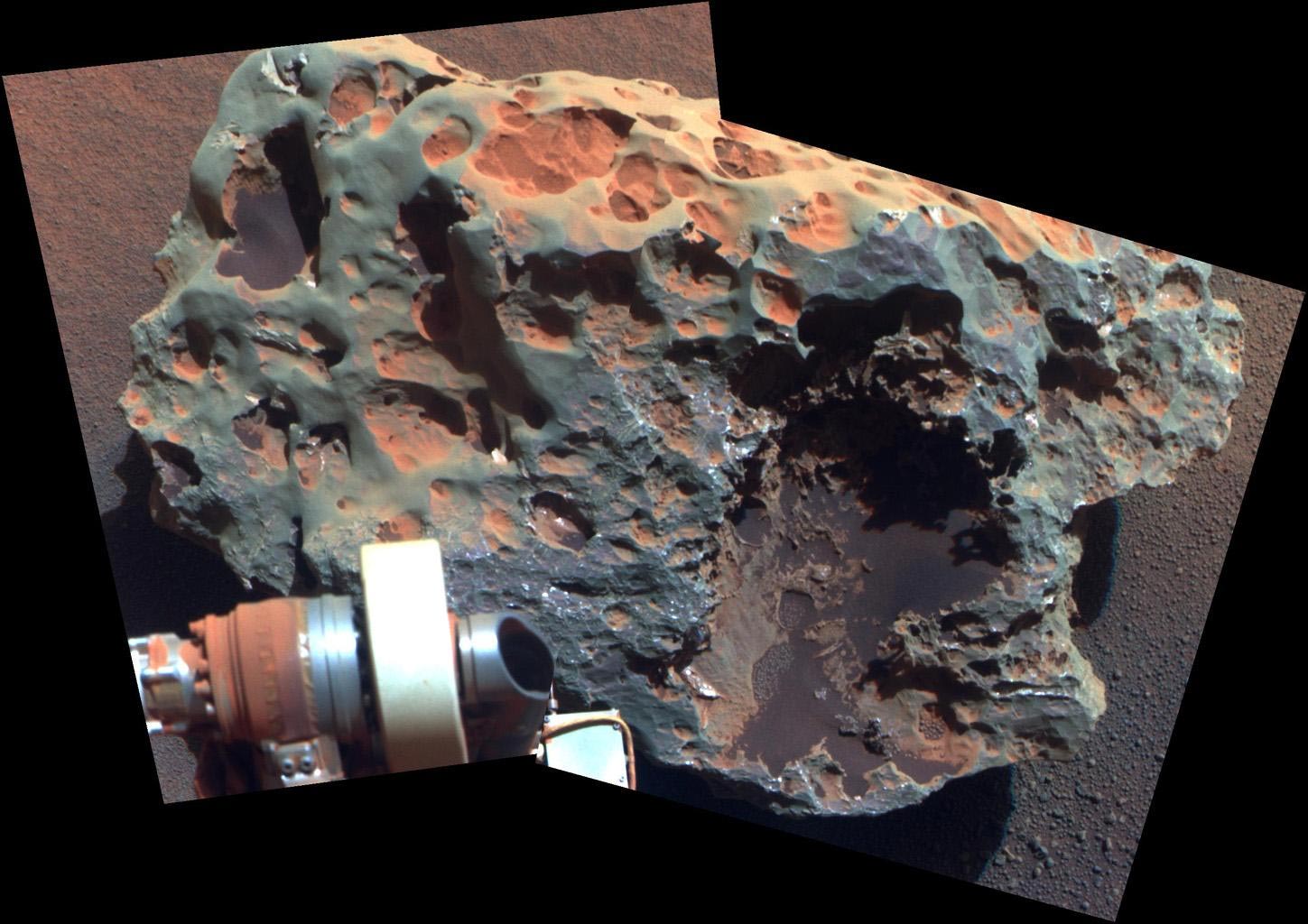
    Block Island Martian Meteorite
    False-color image of the Martian meteorite nicknamed “Block Island.” This image was taken with the panoramic camera of NASA’s Mars Exploration Rover Opportunity on July 28, 2009. The false color enhances the contrast of different types of soil and meteorite material visible in the image. Credit: NASA

    Earth-based testing may help Mars rover spot meteorites key to uncovering Mars’ history.

    A team at the Natural History Museum (NHM), London is paving the way for future rovers to search for meteorites on Mars. The scientists are using the NHM’s extensive meteorite collection to test the spectral instruments destined for the ExoMars rover Rosalind Franklin, and develop tools to identify meteorites on the surface of the red planet. The project is being presented today (23 July) at the virtual National Astronomy Meeting 2021.

    The cratered surface of our nearest planetary neighbor has a long and complex history, and searching for rocks amidst more rocks may seem like a futile activity. Despite this, Martian rovers statistically have a significantly higher ‘find per mile’ success rate than dedicated meteorite hunts on Earth: for every kilometer traveled by a Mars rover, approximately one meteorite is found, even though the rovers have not been specifically looking for them up till now.
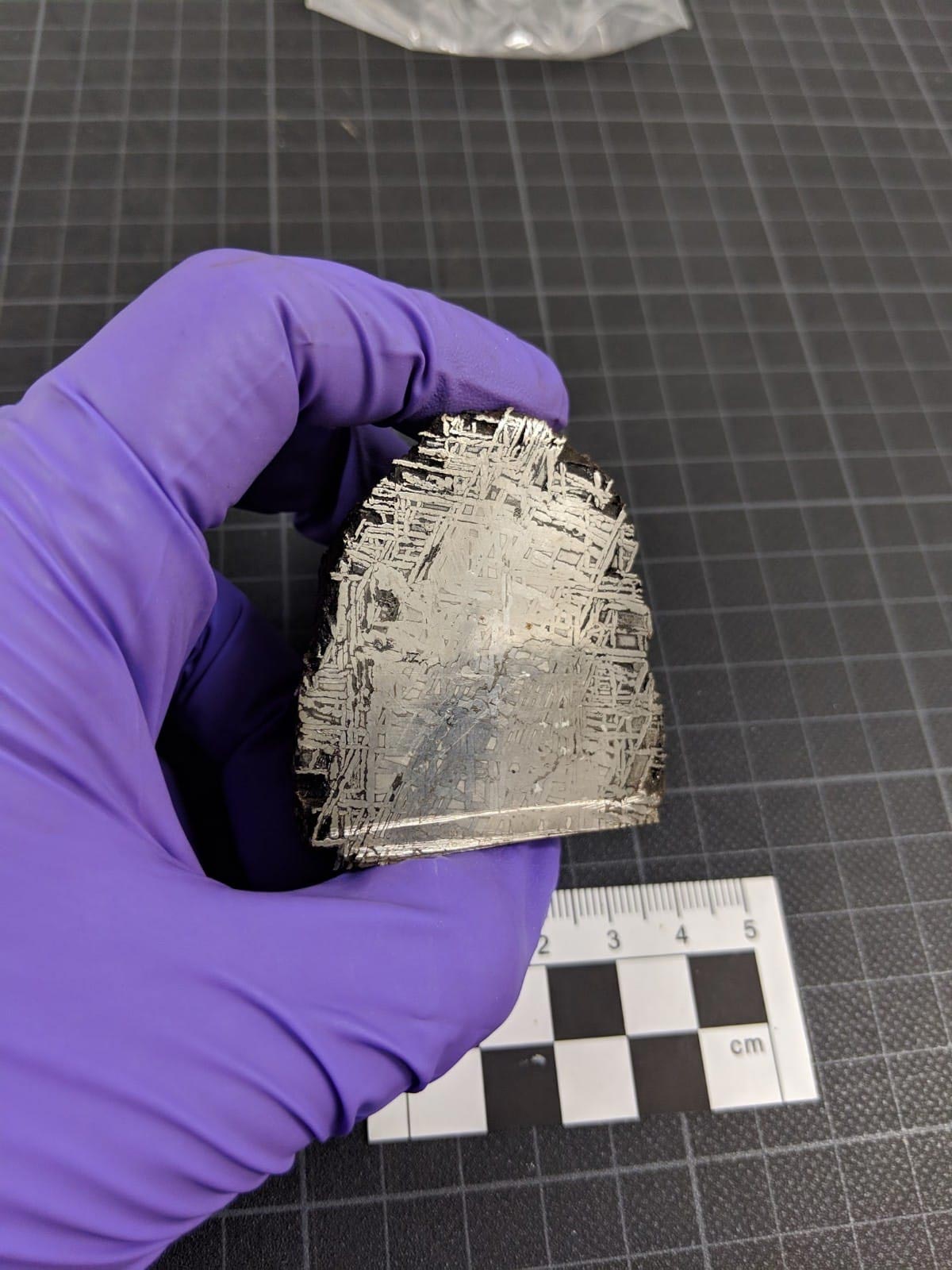
    3D Weathered Structure Richa Meteorite
    3D weathered structure, known as a Widmanstätten pattern, on the Richa Meteorite (BM1996, M55 Natural History Museum Collection). Credit: Sara Motaghian / Natural History Museum

    However, as part of the European Space Agency’s upcoming ExoMars mission, the next rover — named Rosalind Franklin, after the chemist best known for her pioneering work on DNA — will drill down into the Martian surface to sample the soil, analyze its composition and search for evidence of past or present life buried underground.

    Meteorites are important pieces of evidence that can help us understand this story; once a meteorite lands on a planet, it is subjected to the same atmospheric conditions as the rest of the surface. Chemical and physical weathering can provide information on climate weathering rates and water-rock interactions, meteorite sizes and distribution can help to infer information about the density of the atmosphere, and stony meteorites could be a potential delivery mechanism for organic materials to Mars.
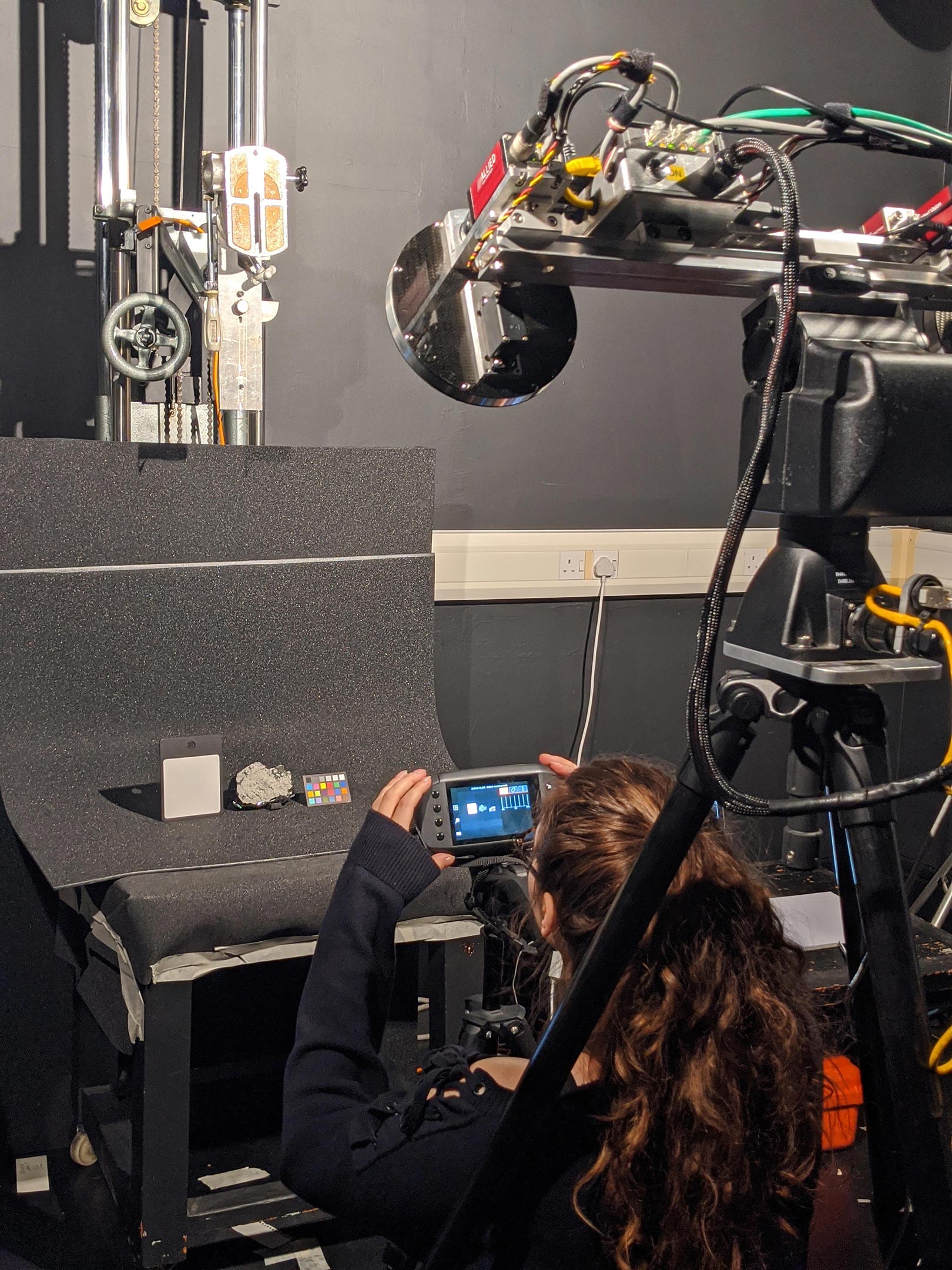
    Sara Motaghian Photographing Martian Meteorite Tissint
    Sara Motaghian photographing the Martian meteorite Tissint (BM.2012, M1 Natural History Museum Collection) and lab set up including the Aberystwyth University PanCam Emulator (AUP3), the Hyperspectral camera Counterpart, and VNIR contact spectrometer. Credit: Natasha Almeida / Natural History Museum

    “Meteorites act as a witness plate across geological time,” said Sara Motaghian, the PhD student at the NHM and Imperial College London who is carrying out the work. “Generally, the surfaces of Mars we are exploring are incredibly ancient, meaning there have been billions of years for the surface to accumulate these meteorites and lock in information from across Mars’ past.”

    The team are looking in particular at the use of multispectral imaging with the PanCam instrument, hoping to be able to highlight features in images that could be associated with meteorites as the rover moves across the surface. They are also investigating the possibility of using pattern recognition techniques to distinguish features such as Widmanstätten patterns, which can be revealed by extreme weathering.

    Block Island Meteorite
    Image of “Block Island”, an odd-shaped, dark rock on the surface of Mars, which is thought to be a meteorite. This object was imaged with the navigation camera on NASA’s Mars Exploration Rover Opportunity on sol 1959 (July 28, 2009). Credit: NASA / JPL-Caltech

    The launch of the ExoMars rover was originally scheduled for 2020, however was delayed until 2022 due to technical issues and growing concerns over the coronavirus pandemic. Once the rover reaches Mars in 2023, the team hope that their work will allow meteorites on the surface to be studied for longer by the Rosalind Franklin rover before it drives on, helping to build a more complete understanding of the Martian surface and its history, if any, of life.

    Never miss a breakthrough: Join the SciTechDaily newsletter.
    Follow us on Google and Google News.

    Astronomy Astrophysics Mars Meteorites Royal Astronomical Society
    Share. Facebook Twitter Pinterest LinkedIn Email Reddit

    Related Articles

    Mysterious Hydrogen-Free Supernova Sheds Light on Massive Stars’ Violent Death Throes

    Solving a Martian Climate Puzzle: Icy Clouds Could Have Kept Early Mars Warm Enough for Rivers and Lakes

    New Research Finds That Supermassive Black Holes Could Form From Dark Matter

    Stunning “Honeycomb Heart” Revealed in Iconic Supernova Explosion Remnant

    Analyzing Dust Storm Sequences on Mars

    Giant Radio Galaxies: Cosmic Beasts and Where to Find Them

    Astronomers Discover New Way to “See” Elusive Dark Matter Halos

    Asteroid Trailing Mars May Be Our Moon’s Long-Lost Twin

    Acidic Fluids: Finding Evidence of Life on Mars Just Got Harder

    Leave A Reply Cancel Reply

    • Facebook
    • Twitter
    • Pinterest
    • YouTube

    Don't Miss a Discovery

    Subscribe for the Latest in Science & Tech!

    Trending News

    Scientists Uncover Potential Brain Risks of Popular Fish Oil Supplements

    Scientists Discover a Surprising Way To Make Bread Healthier and More Nutritious

    After 60 Years, Scientists Uncover Unexpected Brain Effects of Popular Diabetes Drug Metformin

    New Research Uncovers Hidden Side Effects of Popular Weight-Loss Drugs

    Scientists Rethink Extreme Warming After Surprising Ocean Discovery

    Landmark Study Links Never Marrying to Significantly Higher Cancer Risk

    Researchers Discover Unknown Beetle Species Just Steps From Their Lab

    Largest-Ever Study Finds Medicinal Cannabis Ineffective for Anxiety, Depression, PTSD

    Follow SciTechDaily
    • Facebook
    • Twitter
    • YouTube
    • Pinterest
    • Newsletter
    • RSS
    SciTech News
    • Biology News
    • Chemistry News
    • Earth News
    • Health News
    • Physics News
    • Science News
    • Space News
    • Technology News
    Recent Posts
    • Researchers Uncover Source of Strange Deformation in Earth’s Largest Continental Rift
    • Scientists Solve Mystery of Where the Colorado River Vanished Millions of Years Ago
    • Not Just Alzheimer’s: Scientists Uncover Clues to a Second, Overlooked Disorder
    • Scientists Uncover Dangerous Connection Between Serotonin and Heart Valve Disease
    • Scientists Discover a “Protector” Protein That Could Help Reverse Hair Loss
    Copyright © 1998 - 2026 SciTechDaily. All Rights Reserved.
    • Science News
    • About
    • Contact
    • Editorial Board
    • Privacy Policy
    • Terms of Use

    Type above and press Enter to search. Press Esc to cancel.