
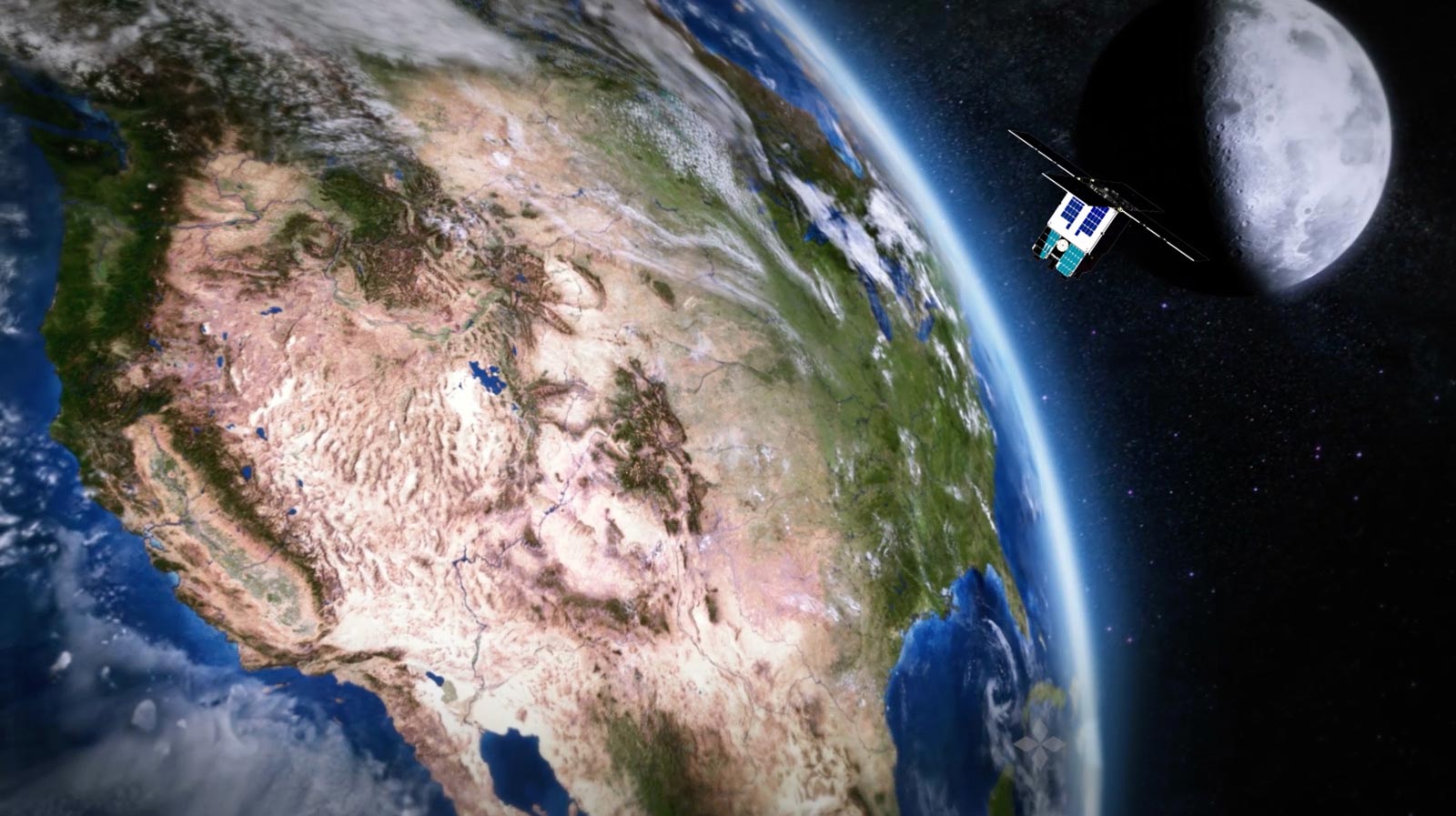
Designed to improve navigation for robotic explorers and the operation of GPS satellites, the technology demonstration reports a significant milestone.
Spacecraft that venture beyond our Moon rely on communication with ground stations on Earth to figure out where they are and where they’re going. NASA’s Deep Space Atomic Clock is working toward giving those far-flung explorers more autonomy when navigating. In a new study, the mission reports progress in their work to improve the ability of space-based atomic clocks to measure time consistently over long periods. The paper was published on June 30, 2021, in the journal Nature.
Known as stability, this feature also impacts the operation of GPS satellites that help people navigate on Earth, so this work also has the potential to increase the autonomy of next-generation GPS spacecraft.
> Related: What Is an Atomic Clock?
To calculate the trajectory of a distant spacecraft, engineers send signals from the spacecraft to Earth and back. They use refrigerator-size atomic clocks on the ground to log the timing of those signals, which is essential for precisely measuring the spacecraft’s position. But for robots on Mars or more distant destinations, waiting for the signals to make the trip can quickly add up to tens of minutes or even hours.
If those spacecraft carried atomic clocks, they could calculate their own position and direction, but the clocks would have to be highly stable. GPS satellites carry atomic clocks to help us get to our destinations on Earth, but those clocks require updates several times a day to maintain the necessary level of stability. Deep space missions would require more stable space-based clocks.
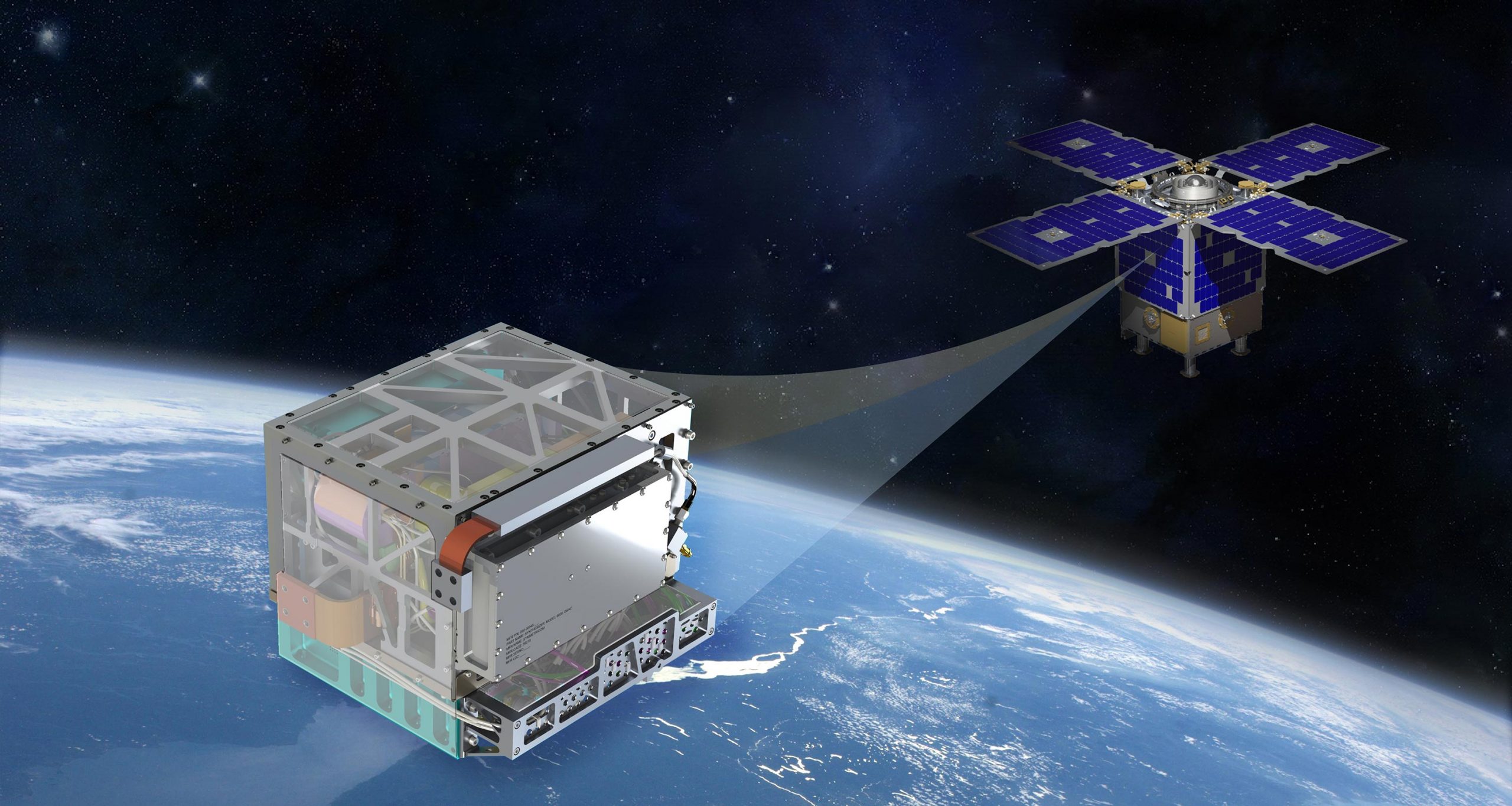
Managed by NASA’s Jet Propulsion Laboratory in Southern California, the Deep Space Atomic Clock has been operating aboard General Atomic’s Orbital Test Bed spacecraft since June 2019. The new study reports that the mission team has set a new record for long-term atomic clock stability in space, reaching more than 10 times the stability of current space-based atomic clocks, including those on GPS satellites.
When Every Nanosecond Counts
All atomic clocks have some degree of instability that leads to an offset in the clock’s time versus the actual time. If not corrected, the offset, while minuscule, increases rapidly, and with spacecraft navigation, even a tiny offset could have drastic effects.
One of the key goals of the Deep Space Atomic Clock mission was to measure the clock’s stability over longer and longer periods, to see how it changes with time. In the new paper, the team reports a level of stability that leads to a time deviation of less than four nanoseconds after more than 20 days of operation.
“As a general rule, an uncertainty of one nanosecond in time corresponds to a distance uncertainty of about one foot,” said Eric Burt, an atomic clock physicist for the mission at JPL and co-author of the new paper. “Some GPS clocks must be updated several times a day to maintain this level of stability, and that means GPS is highly dependent on communication with the ground. The Deep Space Atomic Clock pushes this out to a week or more, thus potentially giving an application like GPS much more autonomy.”
The stability and subsequent time delay reported in the new paper is about five times better than what the team reported in the spring of 2020. This does not represent an improvement in the clock itself, but in the team’s measurement of the clock’s stability. Longer operating periods and almost a full year of additional data made it possible to improve the precision of their measurement.
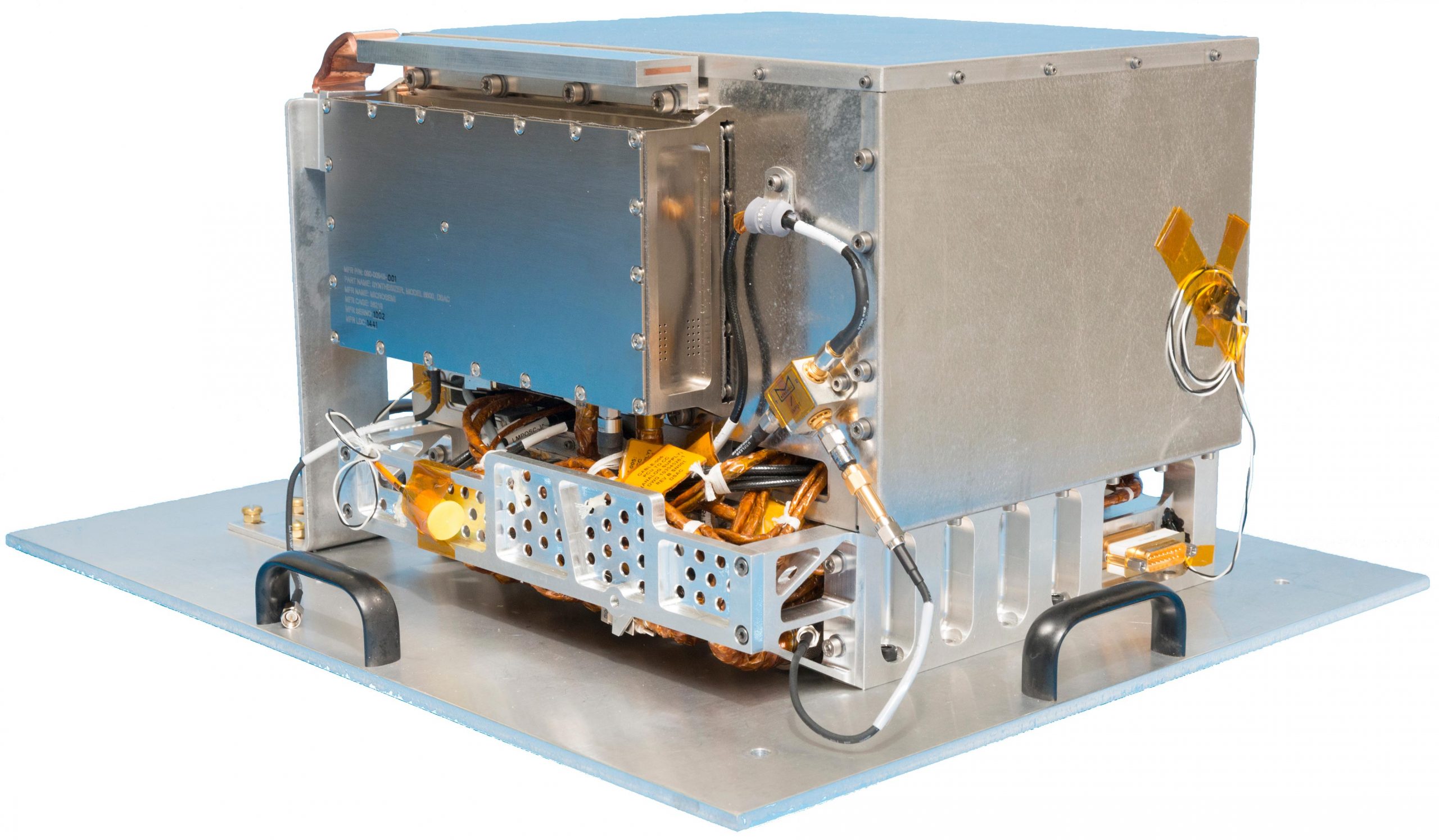
The Deep Space Atomic Clock mission will conclude in August, but NASA announced that work on this technology continues: the Deep Space Atomic Clock-2, an improved version of the cutting-edge timekeeper, will fly on the VERITAS (short for Venus Emissivity, Radio Science, InSAR, Topography, and Spectroscopy) mission to Venus. Like its predecessor, the new space clock is a technology demonstration, meaning its goal is to advance in-space capabilities by developing instruments, hardware, software, or the like that doesn’t currently exist. Built by JPL and funded by NASA’s Space Technology Mission Directorate (STMD), the ultra-precise clock signal generated with this technology could help enable autonomous spacecraft navigation and enhance radio science observations on future missions.
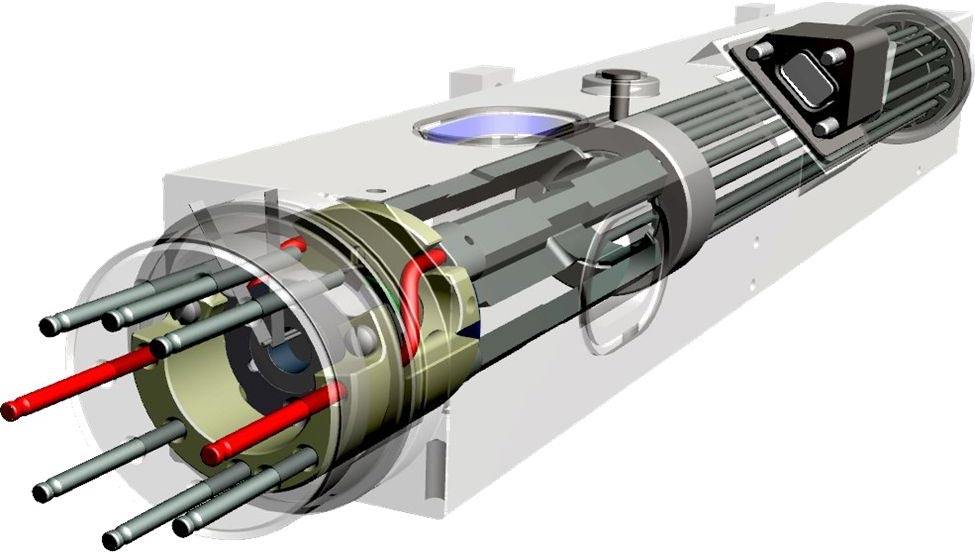
“NASA’s selection of Deep Space Atomic Clock-2 on VERITAS speaks to this technology’s promise,” said Todd Ely, Deep Space Atomic Clock principal investigator and project manager at JPL. “On VERITAS, we aim to put this next generation space clock through its paces and demonstrate its potential for deep space navigation and science.”
Reference: “Demonstration of a trapped-ion atomic clock in space’ by E. A. Burt, J. D. Prestage, R. L. Tjoelker, D. G. Enzer, D. Kuang, D. W. Murphy, D. E. Robison, J. M. Seubert, R. T. Wang and T. A. Ely, 30 June 2021, Nature.
DOI: 10.1038/s41586-021-03571-7
More About the Mission
The Deep Space Atomic Clock is hosted on a spacecraft provided by General Atomics Electromagnetic Systems of Englewood, Colorado. It is sponsored by STMD’s Technology Demonstration Missions program located at NASA’s Marshall Space Flight Center in Huntsville, Alabama, and NASA’s Space Communications and Navigation (SCaN) program within NASA’s Human Exploration and Operations Mission Directorate. JPL manages the project.
Never miss a breakthrough: Join the SciTechDaily newsletter.
Follow us on Google and Google News.
1 Comment
Interesting.
Some thoughts for consideration.
1. Accuracy of atomic clock ⏰ will be dependent on many factors outside the spaceship which is traveling at speeds and accelerates at sub, and faster than the speed of light and the passage of time itself will be different for the space-time traveler than people they leave behind and the people they encounter at the destination if any actual travel with the gross physical body is involved. So space – time travel along with the Gross body itself means complete👌💯 percent loss of the known entities of the present and encountering the historical ancestors or future of PROGENY depending on the linear direction of travel, based on the assumption that time is linear in nature. However, all these assumptions fall flat, when the assumption of Linear flow of time is discarded.
2. Can we keep three atomic clocks on the space ship? One which keeps the time on the departure planet and another which keeps the time at the arrival port/ destination? The time of the space ship atomic clock should stand still for ensuring that the laws of physics and laws of psychic are not violated.
3. Rethinking of time as non linear, is essential for the mathematics to make sense. We still have people who believe that the planet earth is flat. The Flat earth proponents remind me of the proponents of linear flow of time. 🙏🙏🙏
Views expressed are personal and not binding on anyone. 😁😁😁👣👣👣🙏