
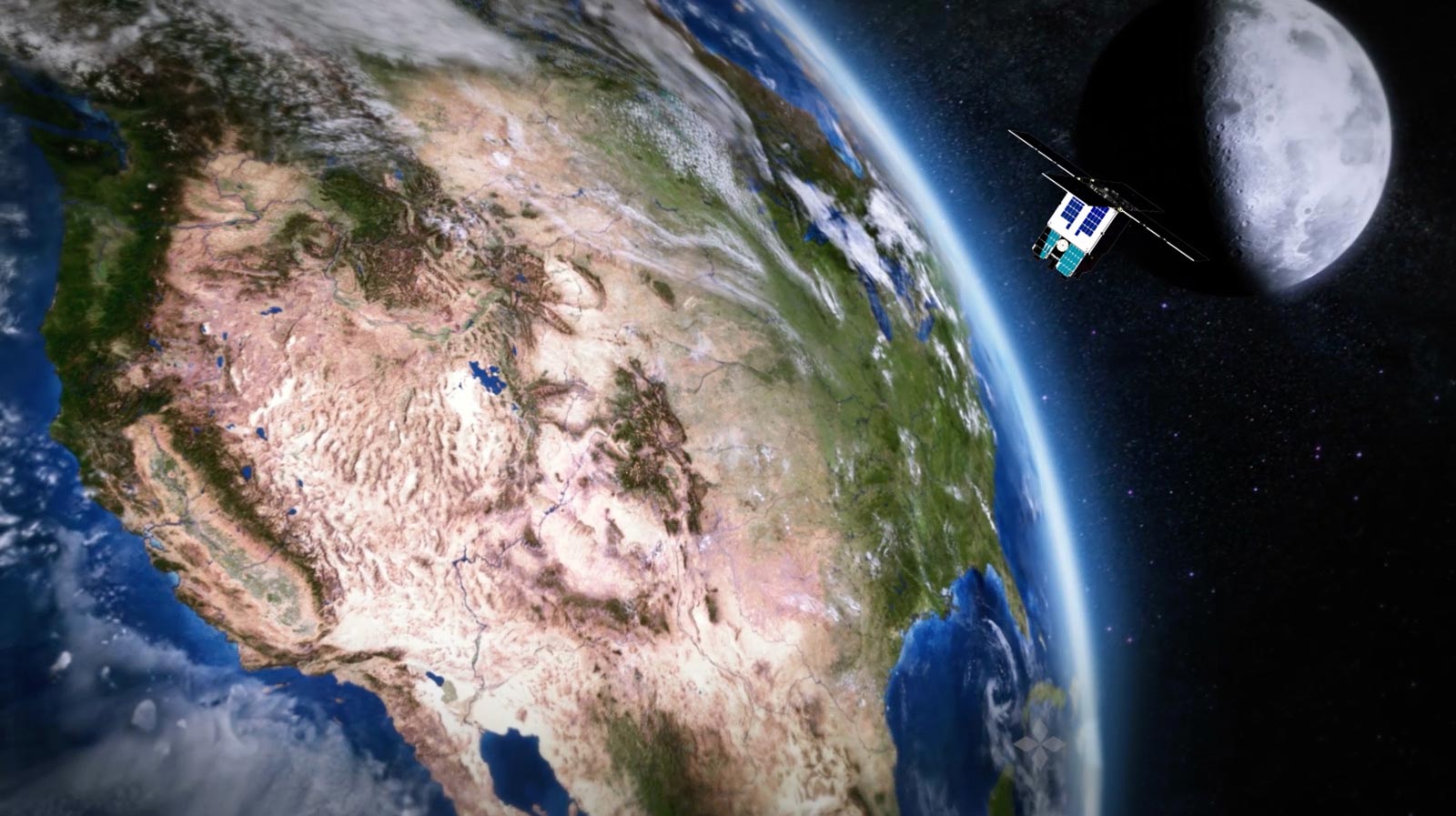
Smart phone apps provide nearly instantaneous navigation on Earth; the Deep Space Atomic Clock could do the same for future robotic and human explorers.
As the time when NASA will begin sending humans back to the Moon draws closer, crewed trips to Mars are an enticing next step. But future space explorers will need new tools when traveling to such distant destinations. The Deep Space Atomic Clock mission is testing a new navigation technology that could be used by both human and robotic explorers making their way around the Red Planet and other deep space destinations.
In less than a year of operations, the mission has passed its primary goal to become one of the most stable clocks to ever fly in space; it is now at least 10 times more stable than atomic clocks flown on GPS satellites. In order to keep testing the system, NASA has extended the mission through August 2021. The team will use the additional mission time to continue to improve the clock’s stability, with a goal of becoming 50 times more stable than GPS atomic clocks.
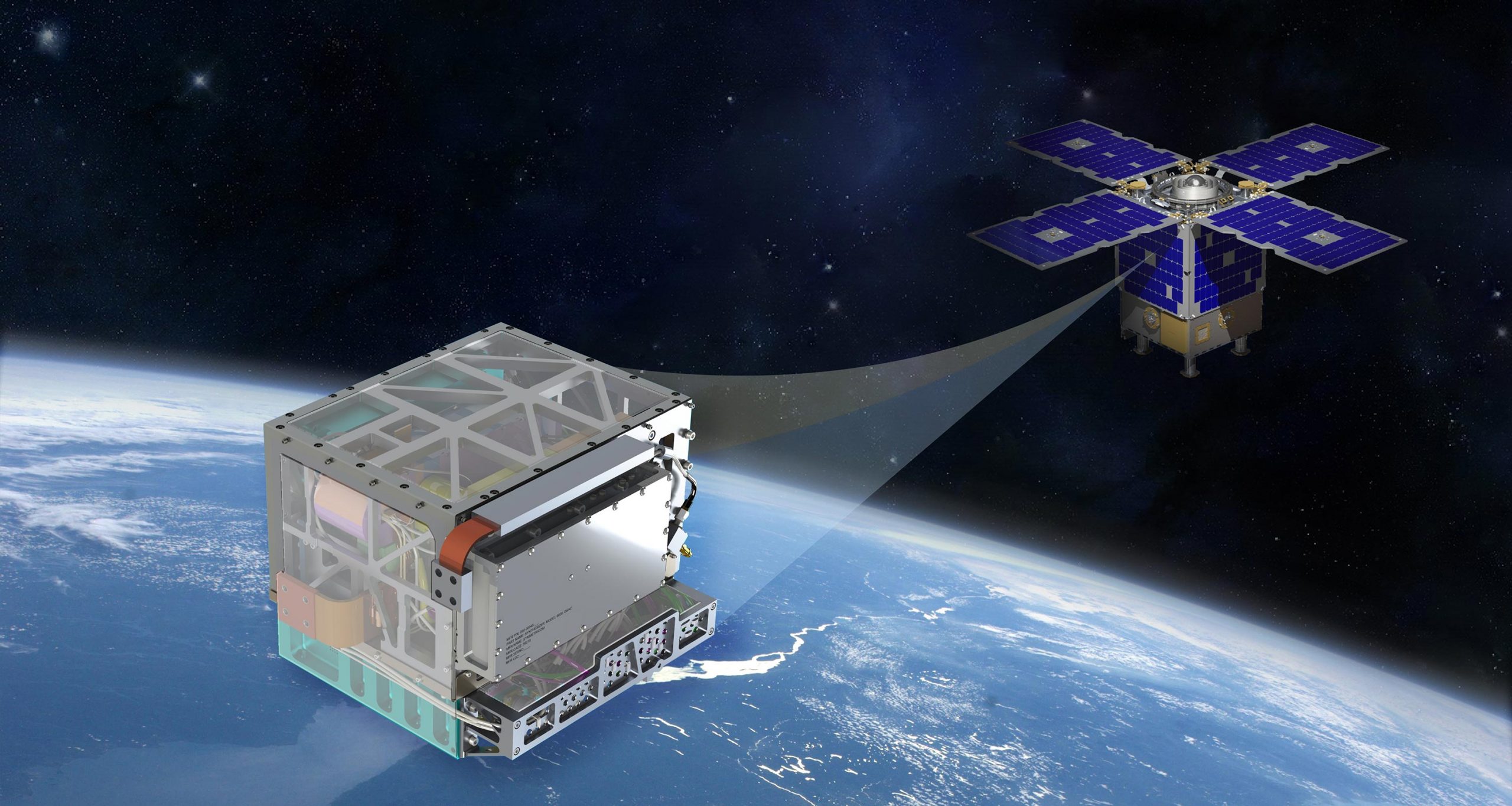
Launched in June 2019 and managed by NASA’s Jet Propulsion Laboratory in Southern California, the toaster-size Deep Space Atomic Clock is a payload on a commercial satellite. As a technology demonstration, its goal is to advance in-space capabilities by developing instruments, hardware, software or the like that doesn’t currently exist. These demonstration missions must also show that new technologies can reliably operate in space. The goal is to eventually see such technologies incorporated into full-scale missions.
In the case of the Deep Space Atomic Clock, the aim is to enable deep space navigation systems that are more autonomous than what exists today. So spacecraft traveling beyond the Moon would have something similar to the GPS-based system that we use on Earth. To do that, the mission is focused on the clock’s stability, or its ability to measure time consistently over long periods, while operating in the harsh space environment. The more stable a clock, the longer it can do its job without help from refrigerator-size atomic clocks on the ground.
“We’re extremely proud of what this mission has done already, and we’re very excited that NASA thinks it’s worthwhile for us to keep working on it,” said Todd Ely, Deep Space Atomic Clock principal investigator and project manager at JPL. “This has been an extremely challenging project, but we’re motivated by the idea that this technology could fundamentally transform deep space navigation.”
Better Clocks in Space
The atomic clocks found on GPS satellites are the reason your smart phone navigation tools work almost instantaneously. Your phone receives a series of signals from several satellites (at least four are required for positioning to work). The GPS software on your phone then uses the timing of those signals to determine your position as well as how fast you’re moving and in what direction. The atomic clocks on GPS satellites ensure the timing is accurate. To do this, the clocks need to be able to measure time precisely – down to less than a billionth of a second.
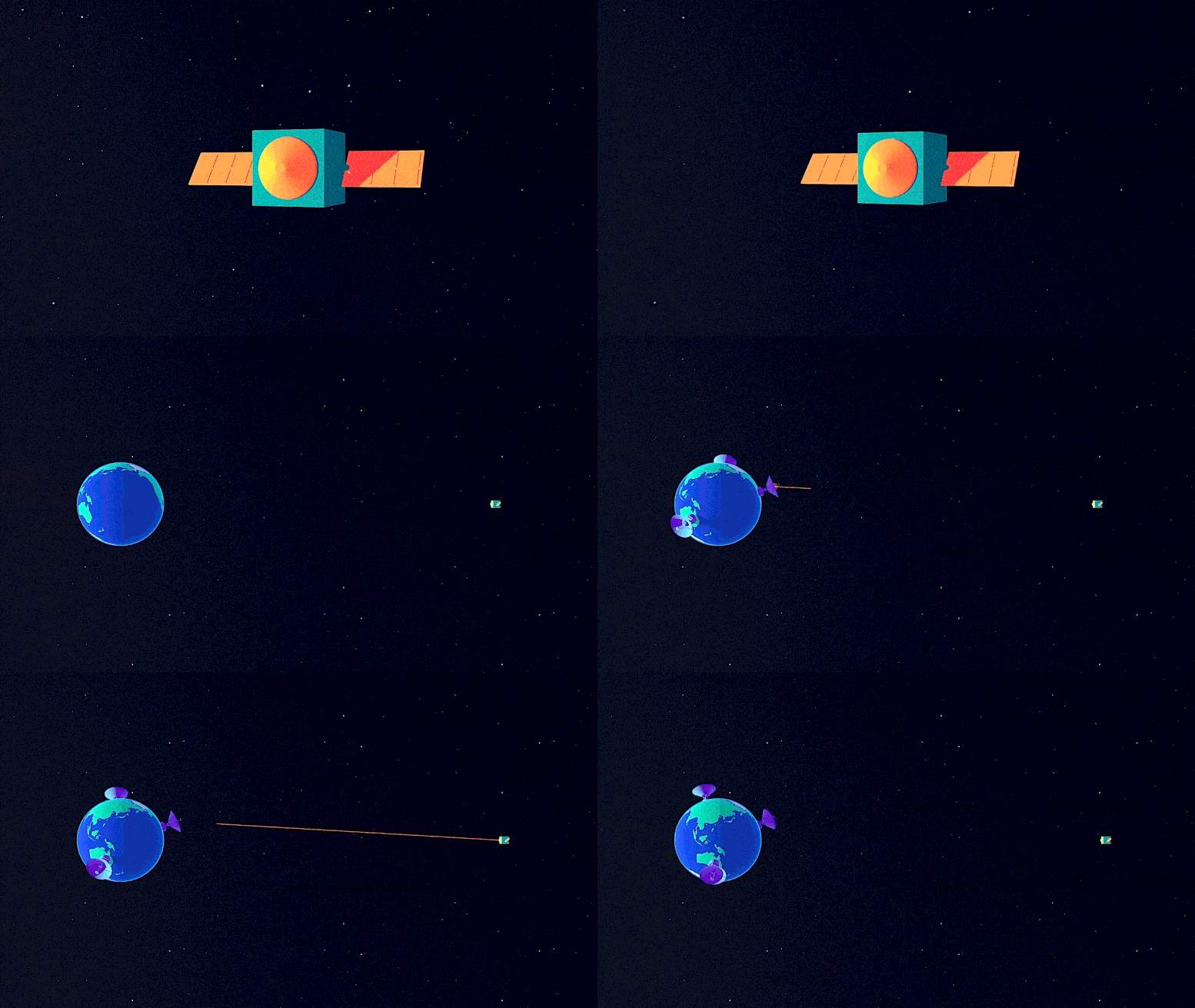
A similar process is used for spacecraft flying beyond the Moon: Navigators bounce signals between the robotic explorer and atomic clocks on Earth to determine the spacecraft’s trajectory. But there are limitations to this system due to the immense distances involved. For example, light signals can sometimes take up to 20 minutes to journey from Earth to Mars, so navigators can’t make last-minute changes to a spacecraft’s path.
Moreover, the atomic clocks on Earth-orbiting GPS satellites aren’t stable enough to be used for autonomous navigation on a spacecraft traveling in deep space. Over time, their measurement of the length of a second will change very subtly, but enough to impact navigation. In fact, GPS satellites receive daily or twice-daily updates from more stable ground-based atomic clocks to correct this drift, which would be impractical for spacecraft at more distant destinations. And unfortunately, flying those ground-based clocks also isn’t an option, not only because they are so large but because they aren’t engineered to operate in space.
Evolution to Revolution
The Deep Space Atomic Clock mission set out to bring the stability of a ground-based atomic clock to one small enough and tough enough to fly in space. The team has now demonstrated that the clock drifts by less than a nanosecond after four days, which adds up to less than one millionth of a second after 10 years and one full second every 10 million years. That might seem small, but an error of one full second could result in miscalculating a spacecraft’s position by hundreds of thousands of miles.
So far, the mission team has learned a tremendous amount about how their novel atomic clock design fares in space, including how it responds to increased doses of radiation (which varies at different points in space) and how to get the best performance out of the remotely operated clock.
“In the long run, this technology might be revolutionary,” said Robert Tjoelker, co-investigator for the Deep Space Atomic Clock at JPL. “Just getting our clock into space and operating well is a big first step. Further refinements towards even longer life and higher stability are already in the works.”
With additional development and testing, team members noted, the technology could be used for space navigation by the mid-2020s.
The Deep Space Atomic Clock is hosted on a spacecraft provided by General Atomics Electromagnetic Systems of Englewood, Colorado. It is sponsored by the Space Technology Mission Directorate’s Technology Demonstration Missions program located at NASA’s Marshall Space Flight Center in Huntsville, Alabama, and NASA’s Space Communications and Navigation (SCaN) program within NASA’s Human Exploration and Operations Mission Directorate. JPL manages the project.
Never miss a breakthrough: Join the SciTechDaily newsletter.
Follow us on Google and Google News.