
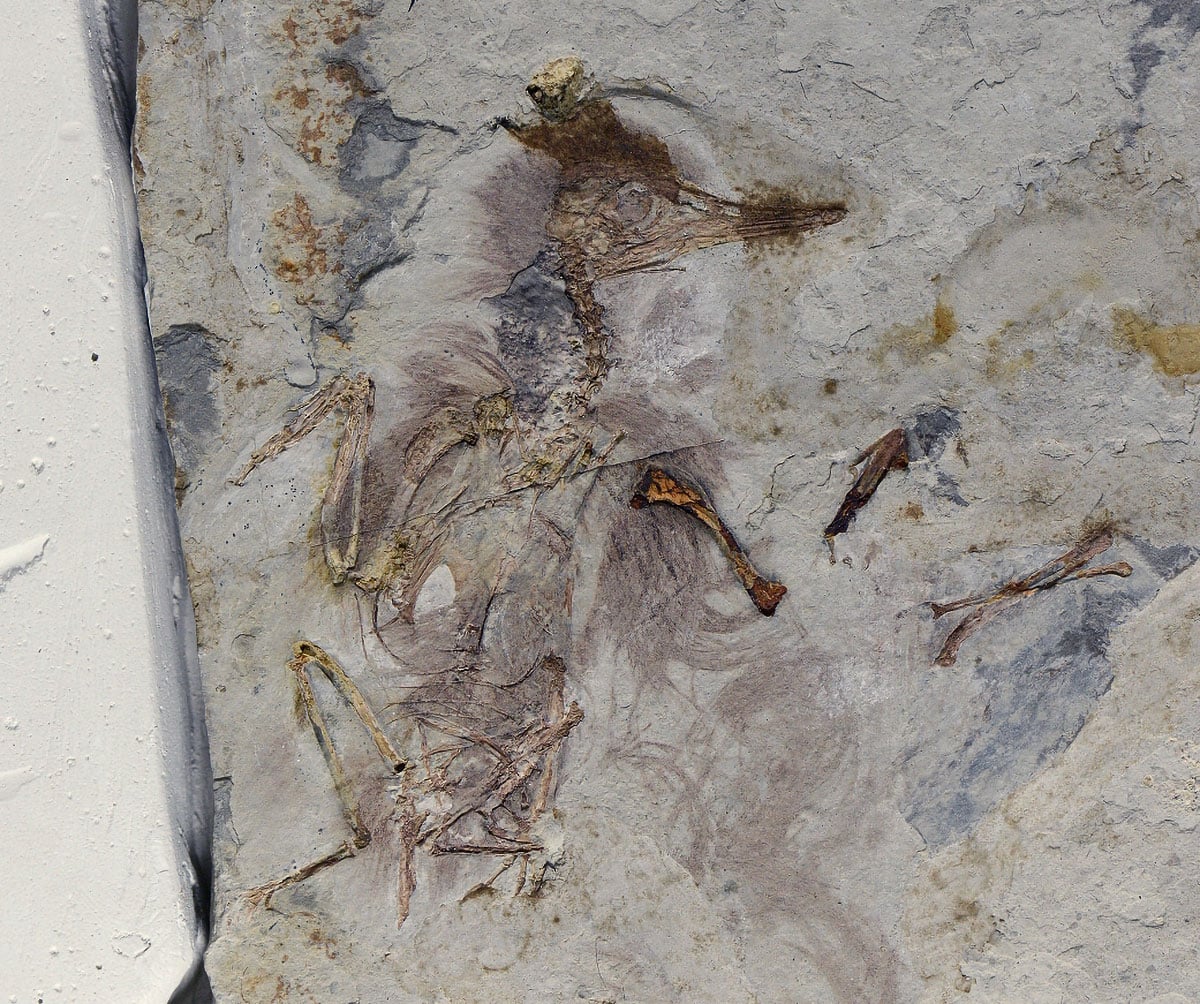
The new species, named after the electro funk band Chromeo, helps explain the larger story of why only one small group of dinosaurs survived the extinction.
A fossil rarely reveals an animal’s entire life story. Even when a body is well preserved, scientists often have only fragments of information, leaving many questions about how the creature behaved, what it ate, and how it died.
In one remarkable case involving a bird that lived about 120 million years ago, researchers believe the cause of death is unusually clear.
A dense cluster of rocks lodged in the fossil’s throat suggests that the bird likely choked. Why the animal was swallowing stones in the first place remains uncertain and leads scientists into larger questions about the early evolution of birds and dinosaurs.
A tiny fossil reveals a new species and an unusual clue
Jingmai O’Connor, associate curator of fossil reptiles at Chicago’s Field Museum and lead author of a study describing the species in the journal Palaeontologica Electronica, first noticed the fossil while examining specimens at the Shandong Tianyu Museum of Nature in China.
“There are thousands of bird fossils at the Shandong Tianyu Museum, but on my last trip to visit their collections, this one really jumped out at me,” says O’Connor. “I immediately knew it was a new species.”
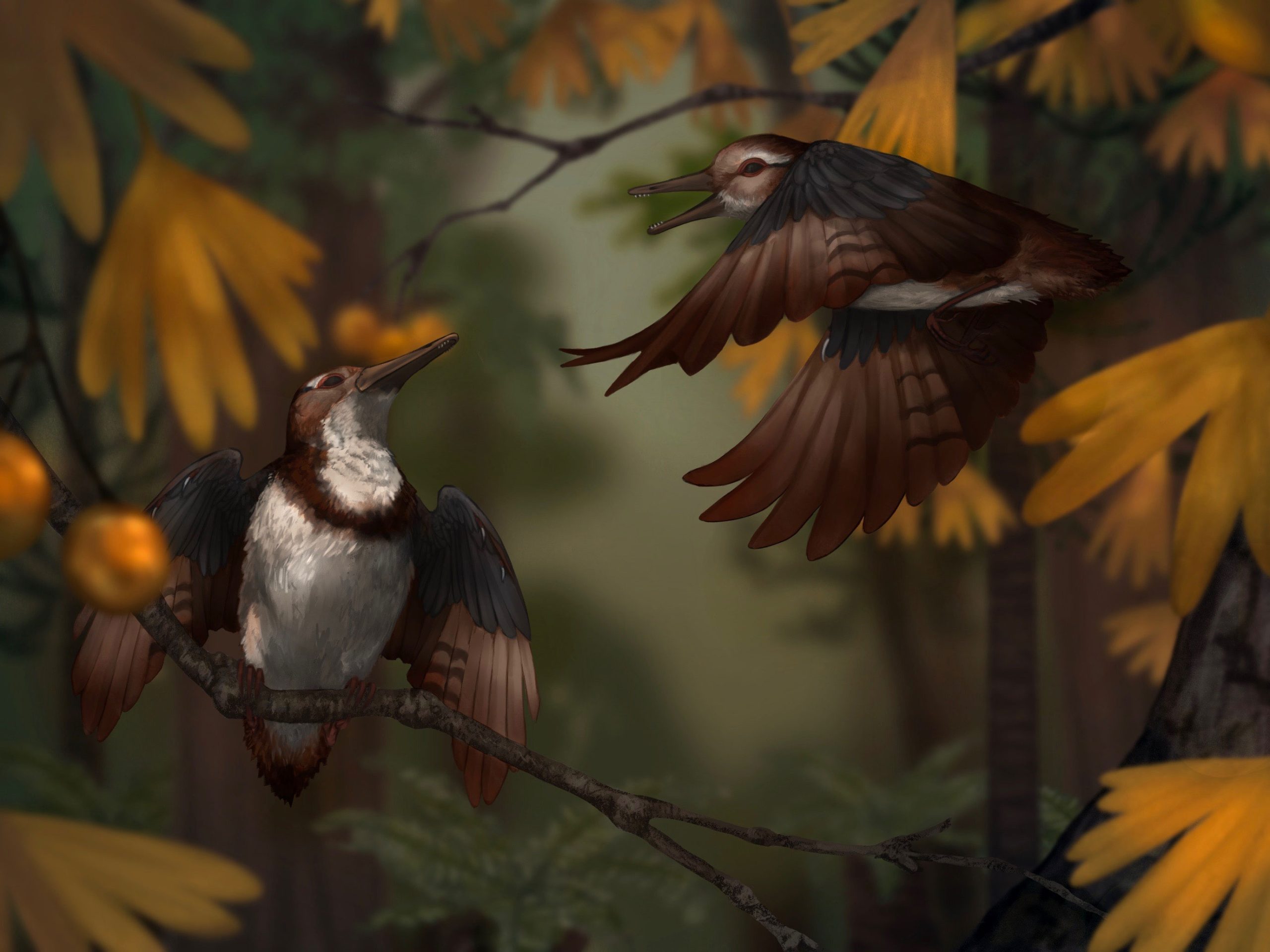
The fossil itself is extremely small, roughly comparable in size to a modern sparrow. Despite its tiny body, it shares certain features with a much larger fossil bird known as Longipteryx. One of the most striking similarities involves its teeth.
“It had really big teeth at the end of its beak, just like Longipteryx, but it’s a tiny little guy. So based on that, I knew it was something new.”
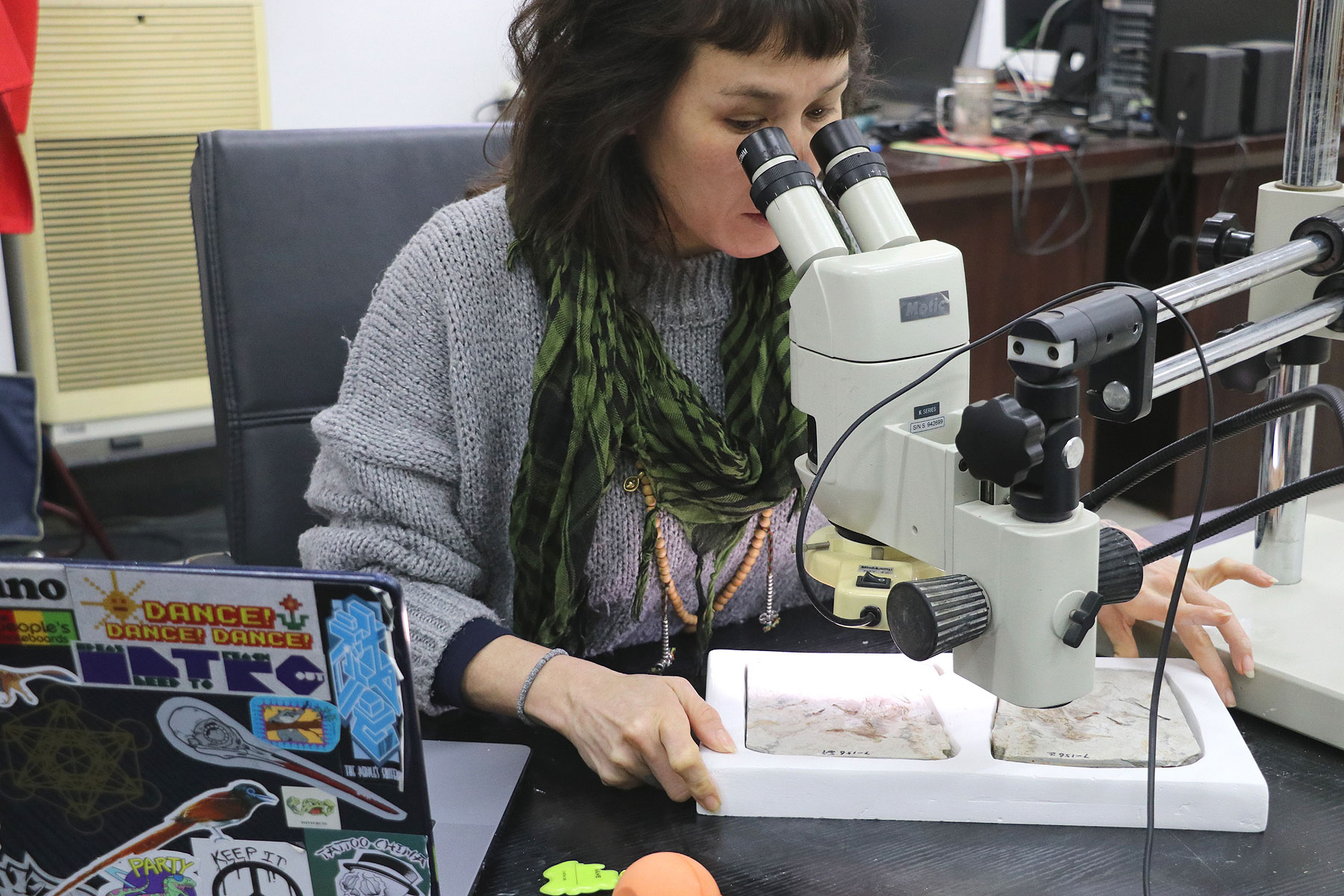
When O’Connor examined the specimen under a microscope, she noticed an unexpected feature that raised more questions than answers.
“I noticed that it had this really weird mass of stones in its esophagus, right up against the neck bones,” says O’Connor. “This is really weird, because in all of the fossils that I know of, no one has ever found a mass of stones inside the throat of an animal.”
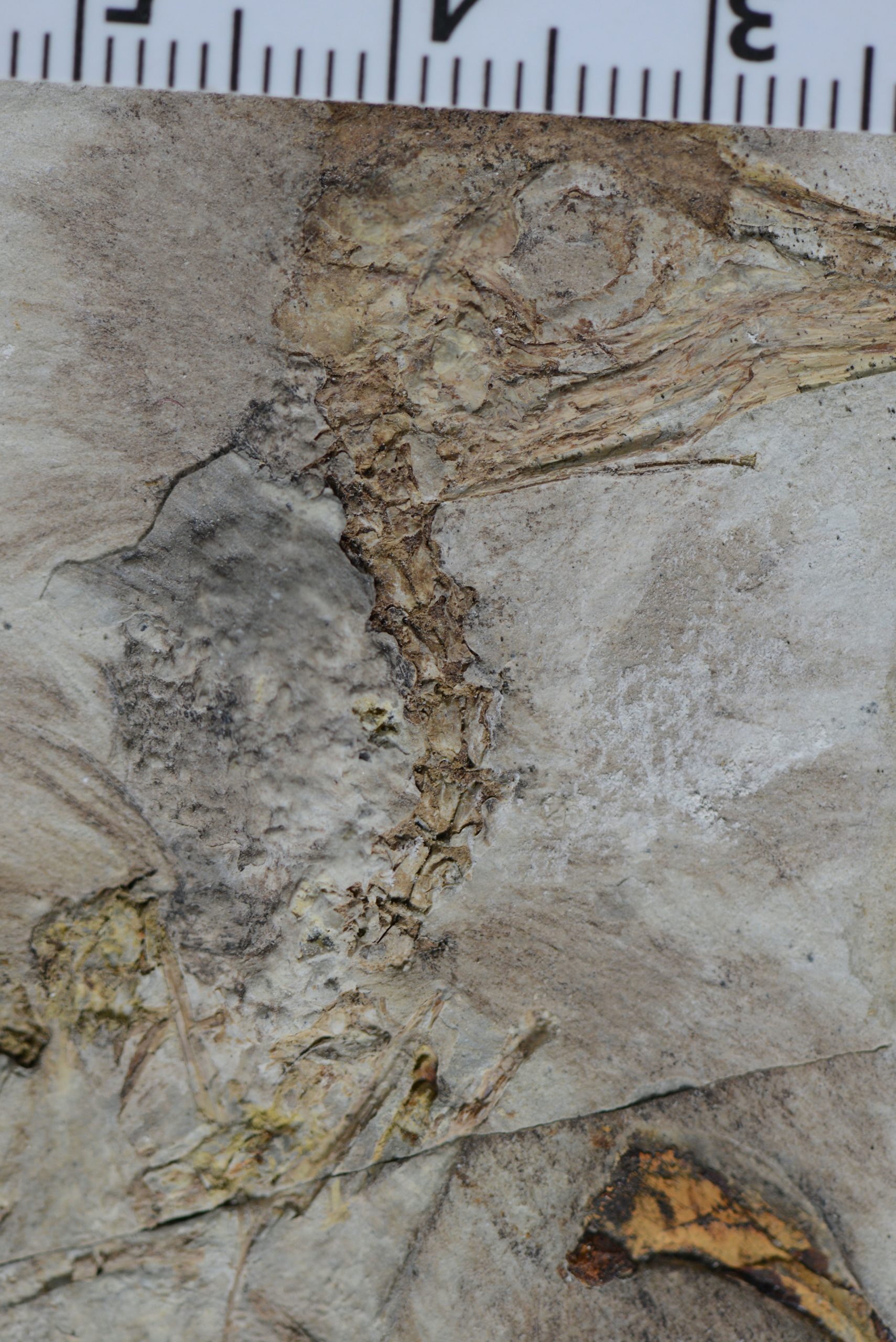
The stones were positioned in a way that strongly suggests they had been swallowed by the bird during its lifetime rather than ending up near the skeleton after death. Their chemical composition also supports the idea that they were ingested while the animal was alive, instead of being washed into the fossil site later as sediment accumulated on the lakebed where the bird eventually became preserved.
Animals swallowing stones is not unusual. Scientists even have a specific term for them. Rocks consumed by animals, intentionally or accidentally, are known as gastroliths. Many modern birds use this strategy to help digest food.
Chickens, for example, swallow small stones that collect in a muscular organ called a gizzard. Inside this organ, the stones assist with grinding tough food such as seeds and plant material. However, among thousands of fossils belonging to the same group as this ancient bird, none have previously been discovered with stones used in this way.
CT scans rule out normal digestion
To help determine if the new little bird was simply the first of its kind to be found with gizzard stones, O’Connor drew upon previous research in which she and her colleagues had CT-scanned fossils of birds that definitely did have gizzards.
“We had quantified the average volume of the stones, the number of stones that these other fossil birds had in their gizzards, the size of the gizzard stone mass compared to the total size of the bird,” says O’Connor. “We CT-scanned this new fossil so we could compare it to these other birds with gizzards.”
The CT scan data indicated that whatever the mass of rocks in the little bird’s throat were, they were not gizzard stones. “We found over 800 tiny stones in this bird’s throat— way more than we would have expected in other birds with gizzards. And based on their density, some of these stones weren’t even really stones, they seemed to be more like tiny clay balls,” says O’Connor. “With these data, we can very clearly say that these stones weren’t swallowed to help the bird crush its food.”
Evidence of a fatal choking event
If the stones were not used for digestion, the researchers had to consider other possibilities. Although they cannot be certain, one hypothesis points to illness.
“When birds are sick, they start doing weird things,” says O’Connor. “So we put forth a tentative hypothesis that this was a sick bird that was eating stones because it was sick. It swallowed too many, and it tried to regurgitate them in one big mass. But the mass of stones was too big, and it got lodged in the esophagus.”
This interpretation would explain why the stones appear packed together high in the throat. The bird may have attempted to expel the mass but was unable to do so before suffocating.

The discovery is particularly notable because direct evidence of how an individual animal died is extremely rare in the fossil record.
“It’s pretty rare to be able to know what caused the death of a specific individual in the fossil record,” says O’Connor. “But even though we don’t know why this bird ate all those stones, I’m fairly certain that regurgitation of that mass caused it to choke, and that’s what killed that little bird.”
A new dinosaur species with evolutionary significance
Beyond the unusual cluster of stones, the fossil also represents a newly recognized species. As with all birds from this period, it is technically also a dinosaur. O’Connor named the species Chromeornis funkyi (kroh-me-or-nis fun-key) in honor of the techno-funk band Chromeo, one of her favorite groups. Birds today are famous for producing songs and calls, and although scientists cannot determine exactly what sounds Chromeornis made, it likely produced some form of vocal communication.
Members of Chromeo, David “Dave 1” Macklovitch and Patrick “P-Thugg” Gemayel, responded enthusiastically to the news that a fossil species now carries their name.
“We’ve been doing this for 20 years, but this is the first time someone’s called us a dinosaur! Jokes aside, this is an incredible honor to add to a career full of surprises. We’re glad to bring a little fossil funk to the great science of paleontology.”
The importance of Chromeornis goes beyond the unusual story of one individual bird. The species belongs to a group known as enantiornithines. During the Cretaceous period, these birds were the most widespread and diverse bird group on Earth. However, their dominance came to an abrupt end when an asteroid struck the planet 66 million years ago. That impact triggered a mass extinction that eliminated the enantiornithines along with nearly all other dinosaurs. The only lineage that survived and continued evolving was the branch that ultimately produced modern birds.
“During that environmental disaster, the enantiornithines went from being the most successful group of birds to being wiped out,” says O’Connor. “Understanding why they were successful but also why they were vulnerable can help us predict the course of the mass extinction we’re in now. Learning about Chromeornis and other birds that went extinct could ultimately help guide conservation efforts today.”
Reference: “A new small-bodied longipterygid (Aves: Enantiornithes) from the Aptian Jiufotang Formation preserving unusual gastroliths” by Jingmai O’Connor, Xiaoli Wang, Alexander Clark, Pei-Chen Kuo, Ryan Davila, Yan Wang, Xiaoting Zheng, and Zhonghe Zhou, December 2025, Palaeontologia Electronica.
DOI: 10.26879/1589
This work was supported by grants from National Natural Science Foundation of China (42288201 and 41402017), Shandong Provincial Natural Science Foundation (ZR2020MD026 and Ts20190954).
Never miss a breakthrough: Join the SciTechDaily newsletter.
Follow us on Google and Google News.