
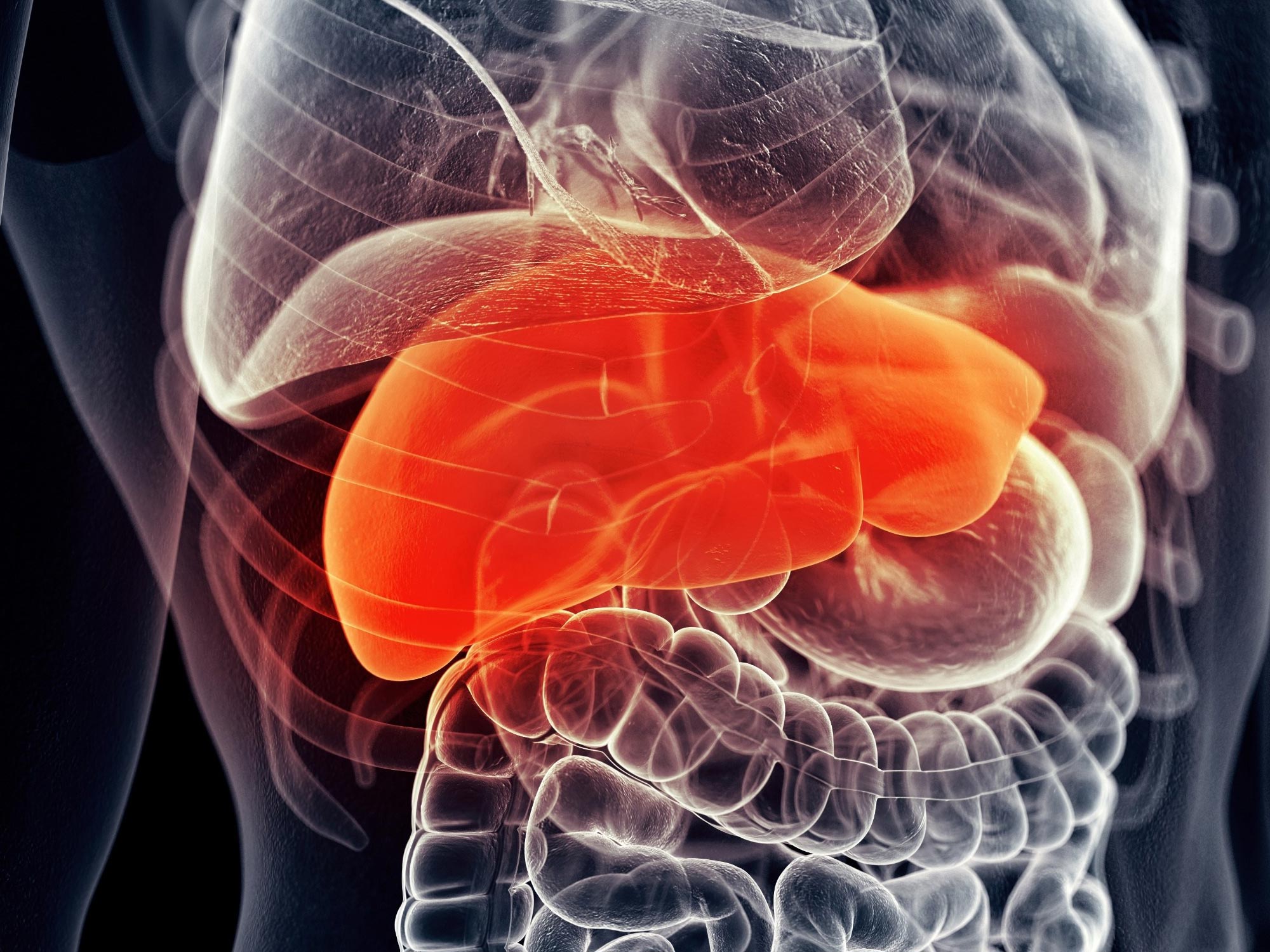
A new drug combination shows unexpected synergy against liver fibrosis.
A new study reveals that using two drugs together produces a much stronger effect than using either one alone, suggesting a realistic and potentially fast route toward a new treatment for liver fibrosis.
Liver fibrosis is a common but often unnoticed condition that affects hundreds of millions of people worldwide. Over time, it can progress to serious diseases such as cirrhosis or liver cancer.
Despite decades of scientific effort, no antifibrotic drug has yet been approved for clinical use. The disease develops when repeated or long-term liver damage caused by viral hepatitis, heavy alcohol use, metabolic disorders, toxins, or autoimmune disease triggers an abnormal healing response.
Key to this process are hepatic stellate cells (HSC). Under healthy conditions, these cells remain inactive. When the liver is injured, however, they become activated and begin producing collagen, which leads to scar tissue formation and the buildup of extracellular matrix.
This transformation is controlled by several interconnected signaling pathways. Because so many pathways are involved, liver fibrosis is difficult to treat, and drugs that target only one pathway often show limited benefit. This has increased interest in combination therapies that can act on multiple biological processes at the same time.
A study published in the journal Targetome by Hong Wang’s and Haiping Hao’s team at China Pharmaceutical University found that combining the drugs silybin and carvedilol produces a much stronger effect than using either drug alone.
Together, the drugs were able to shut down the activity of liver cells that drive scar formation. By interfering with a key molecular system that controls how these cells behave, the treatment reversed liver scarring in experimental studies. This approach offers a promising new direction for treating liver fibrosis, a condition for which no approved antifibrotic drugs currently exist.
Evaluating Silybin’s Strengths and Limitations
To understand why silybin works well in some ways but falls short as an antifibrotic treatment on its own, the researchers carried out a series of laboratory and animal experiments. They also tested silybin alongside many other existing drugs and examined how it affects the underlying biological processes involved in liver disease. Early tests focused on how well silybin protects liver cells from different types of damage.
The results showed that silybin helped liver cells stay alive, lowered harmful oxidative stress inside the cells, and reduced signals linked to inflammation.
Taken together, these findings show that silybin has strong protective and anti-inflammatory effects and does not appear to be toxic. However, when the researchers looked at whether silybin could directly stop scar tissue from forming, its impact was limited. In laboratory tests using human and rat cells that normally produce scar tissue, silybin caused only small decreases in genes linked to fibrosis, including COL1A1, COL1A2, ACTA2, and TGFB.
The animal studies supported these conclusions. In mice with liver fibrosis caused by carbon tetrachloride, silybin treatment led to only modest improvements in liver enzyme levels, collagen buildup, and fibrotic gene expression. These results indicate that silybin’s antifibrotic effects mainly come from protecting liver cells from damage, rather than directly shutting down the activity of hepatic stellate cells.
Discovering Synergy Through Drug Repurposing
To overcome silybin’s limited ability to stop fibrosis on its own, the researchers tested it alongside hundreds of existing medications. Using a screening method designed to track scar-forming activity, they evaluated 397 FDA-approved drugs in combination with silybin.
This approach identified carvedilol as the strongest partner. When used together, the two drugs greatly reduced collagen buildup and shut down the activity of scar-producing liver cells in laboratory-grown human and rat cells, consistently working better than either drug by itself.
Further testing in animals helped the researchers fine-tune the treatment. They found that a specific fixed-dose ratio of 50:1 (silybin to carvedilol) produced the most reliable and powerful results. At this ratio, the drug combination significantly reduced liver damage, inflammation, and scarring in mice. The improvements increased with dose and were stronger than those seen with obeticholic acid, a drug often used for comparison in fibrosis research.
Additional experiments revealed why the drug pair works so well together. The combination blocks a major communication system inside cells that controls scar formation, particularly by shutting down signals that tell liver cells to keep producing scar tissue. This provided a clear biological explanation for the strong antifibrotic effects seen in the study.
Overall, the findings point to a practical new approach for treating liver fibrosis using repurposed drugs. Both silybin and carvedilol are already commonly prescribed, have well-established safety records, and are relatively inexpensive. Because of this, the combination could move quickly into clinical testing and help address a major unmet medical need. More broadly, the study shows how systematically testing existing drugs together can uncover unexpected and powerful treatment combinations.
Reference: “Combination of silybin and carvedilol synergistically alleviates liver fibrosis by inhibiting Wnt/β-catenin signaling ” by An Chen, Xiaochai Zhu, Houzhe Jiang, Maosheng Gong, Shuang Cui, Guangji Wang, Hong Wang and Haiping Hao, 24 November 2025, Targetome.
DOI: 10.48130/targetome-0025-0009
Never miss a breakthrough: Join the SciTechDaily newsletter.
Follow us on Google and Google News.
5 Comments
This is exciting information for anyone suffering from liver disease.
What is the price?
What is the price !
And also will this be available to everyone who needs it?
Wonderful information, thanks