
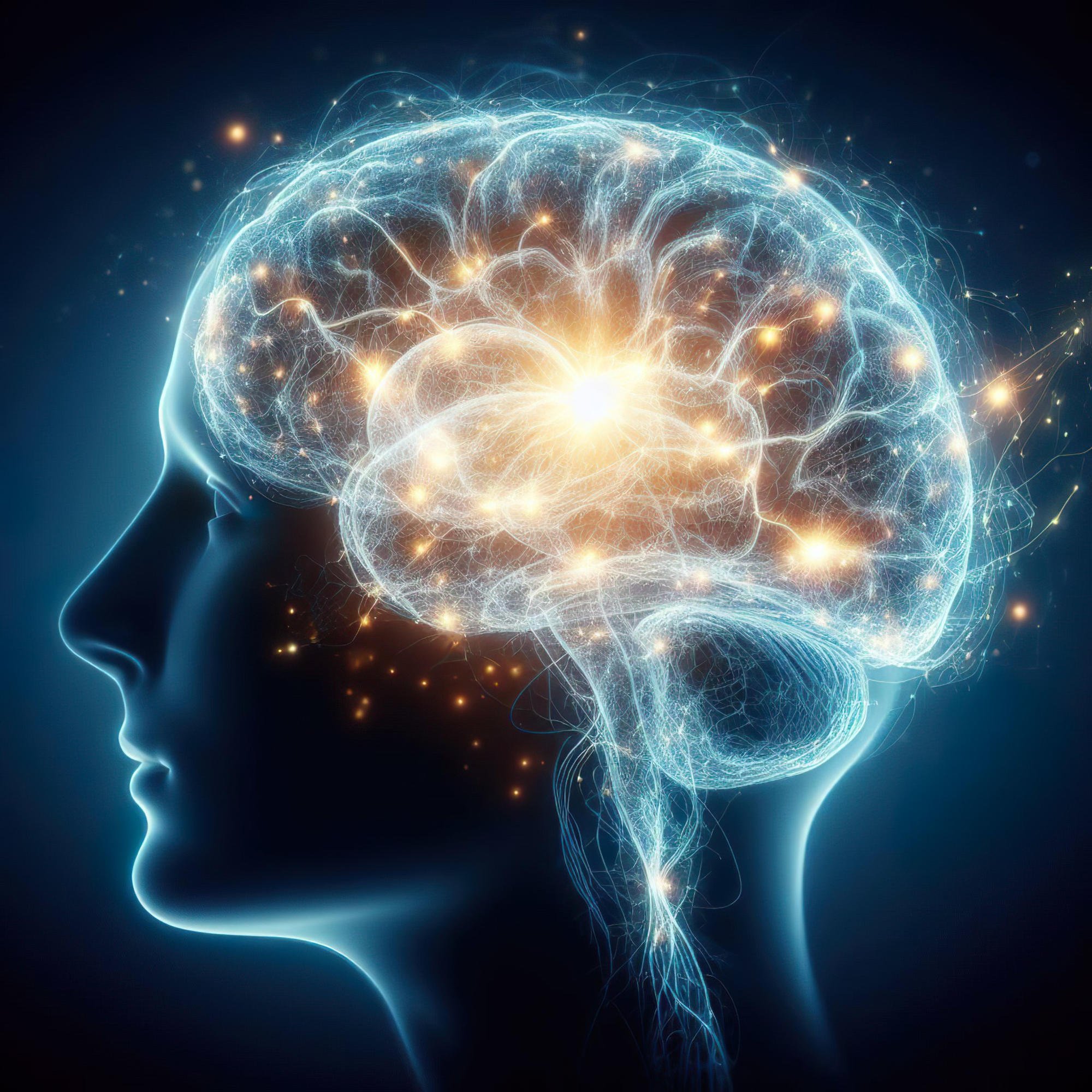
Recent research identifies “sharp wave-ripples” in the hippocampus as a brain mechanism that determines which daily experiences become permanent memories, with significant ripples during idle moments leading to memory consolidation during sleep.
Neuroscientists have discovered over the past few decades that the brain converts some of daily experiences into lasting memories during sleep that same night. A recent study introduces a mechanism that decides which memories are important enough to be preserved in the brain until sleep solidifies them permanently.
Led by researchers from NYU Grossman School of Medicine, the study revolves around brain cells called neurons that “fire” – or bring about swings in the balance of their positive and negative charges – to transmit electrical signals that encode memories. Large groups of neurons in a brain region called the hippocampus fire together in rhythmic cycles, creating sequences of signals within milliseconds of each other that can encode complex information.
Called “sharp wave-ripples,” these “shouts” to the rest of the brain represent the near-simultaneous firing of 15 percent of hippocampal neurons, and are named for the shape they take when their activity is captured by electrodes and recorded on a graph.
While past studies had linked ripples with memory formation during sleep, the new study, published recently in the journal Science, found that daytime events followed immediately by five to 20 sharp wave-ripples are replayed more during sleep and so consolidated into permanent memories. Events followed by very few or no sharp wave-ripples failed to form lasting memories.
“Our study finds that sharp wave-ripples are the physiological mechanism used by the brain to ‘decide’ what to keep and what to discard,” said senior study author György Buzsáki, MD, PhD, the Biggs Professor of Neuroscience in the Department of Neuroscience and Physiology at NYU Langone Health.
Walk and Pause
The new study is based on a known pattern: mammals including humans experience the world for a few moments, then pause, then experience a little more, then pause again. After we pay attention to something, say the study authors, brain computation often switches into an “idle” re-assessment mode. Such momentary pauses occur throughout the day, but the longest idling periods occur during sleep.
Buzsaki and colleagues had previously established that no sharp wave-ripples occur as we actively explore sensory information or move, but only during the idle pauses before or after. The current study found that sharp wave-ripples represent the natural tagging mechanism during such pauses after waking experiences, with the tagged neuronal patterns reactivated during post-task sleep.
Importantly, sharp wave-ripples are known to be made up the firing of hippocampal “place cells” in a specific order that encodes every room we enter, and each arm of a maze entered by a mouse. For memories that are remembered, those same cells fire at high speed, as we sleep, “playing back the recorded event thousands of times per night.” The process strengthens the connections between the cells involved.
For the current study, successive maze runs by study mice were tracked via electrodes by populations of hippocampal cells that constantly changed over time despite recording very similar experiences. This revealed for the first time the maze runs during which ripples occurred during waking pauses, and then were replayed during sleep.
Sharp wave-ripples were typically recorded when a mouse paused to enjoy a sugary treat after each maze run. The consumption of the reward, say the authors, prepared the brain to switch from an exploratory to an idle pattern so that sharp wave-ripples could occur.
Using dual-sided silicon probes, the research team was able to record up to 500 neurons simultaneously in the hippocampus of animals during maze runs. This in turn created a challenge because data becomes exceedingly complex the more neurons are independently recorded. To gain an intuitive understanding of the data, visualize neuronal activity, and form hypotheses, the team successfully reduced the number of dimensions in the data, in some ways like converting a three-dimensional image into a flat one, and without losing the data’s integrity.
“We worked to take the external world out of the equation, and looked at the mechanisms by which the mammalian brain innately and subconsciously tags some memories to become permanent,” said first author Wannan (Winnie) Yang, PhD, a graduate student in Buzsáki’s lab. “Why such a system evolved is still a mystery, but future research may reveal devices or therapies that can adjust sharp wave-ripples to improve memory, or even lessen recall of traumatic events.”
Reference: “Selection of experience for memory by hippocampal sharp wave ripples” by Wannan Yang, Chen Sun, Roman Huszár, Thomas Hainmueller, Kirill Kiselev and György Buzsáki, 28 March 2024, Science.
DOI: 10.1126/science.adk8261
Never miss a breakthrough: Join the SciTechDaily newsletter.
Follow us on Google and Google News.