

Bacteria flushed into sewers may offer clues to community health, with researchers finding links to chronic diseases and social conditions that could help reveal health disparities.
During the COVID-19 pandemic, wastewater became an unexpected tool for protecting public health. By examining sewage for traces of viruses, scientists could monitor infections across entire communities.
That success prompted researchers at The Ohio State University to consider a broader possibility: Could the same wastewater reveal something about chronic diseases, everyday health habits, and the conditions people live in?
“During the pandemic, the world learned how to use wastewater to track infectious disease. We asked, what else can it tell us?” said Emma Lancaster, lead author of a study published in the journal Environmental Research.
Lancaster began exploring that question while working with samples collected for COVID-19 surveillance. A former doctoral student in Ohio State’s College of Public Health, she now works as an environmental health consultant in Boston.
Sewage microbes linked to chronic illness
Her idea centered on the bacteria that normally live in the human gut. Some of these microbes end up in wastewater, where they can offer clues about the collective gut microbiome of a community. Because gut bacteria can vary alongside health and lifestyle, the researchers wanted to see whether differences in wastewater bacteria reflected broader public health patterns.

To investigate, the team analyzed 27 wastewater samples collected in 2022 from nine treatment plants serving eight Ohio cities. Together, these urban and rural communities were home to more than 1.3 million people. The researchers identified bacteria associated with the human gut and compared their findings with publicly available information on chronic diseases, health behaviors, demographics, and socioeconomic conditions.
Wastewater bacteria linked to chronic illness
The results showed distinct bacterial profiles across the cities. Several types of bacteria were associated with community rates of obesity, high blood pressure, asthma, and other chronic conditions. The researchers also found connections with smoking, depression, physical activity, and unemployment.
One bacterial group, called Desulfovibrio, stood out because its abundance was associated with eight different health measures, including obesity, high blood pressure, stroke, and other chronic diseases.
Rural communities generally had more of these bacteria, along with higher rates of several chronic health conditions. The findings suggested that wastewater might help researchers investigate health differences between communities, including disparities that are not fully explained by existing public health data.
“In many cases, poor health outcomes are worse in rural areas, and to see these distinct indicators of poorer gut microbiome health in these rural areas offers us clues to some of what is driving that,” Lancaster said.
Bacterial clues could inform public health
These associations do not establish that the bacteria caused the health problems. Rather, they provide potential indicators that researchers can investigate further. By identifying patterns across communities, wastewater monitoring could eventually help public officials recognize areas facing greater health challenges and make more informed decisions about where to direct resources.
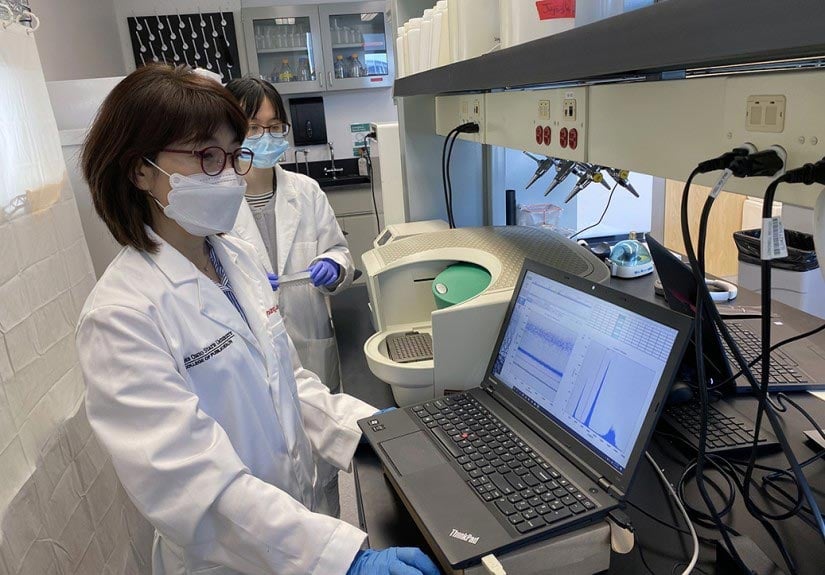
“Wastewater offers a unique way to understand the health of whole communities, not just the people who show up in clinics,” said Jiyoung Lee, professor and chair of environmental health sciences at Ohio State and the study’s senior author.
The approach builds on an established form of infectious disease surveillance, although using it to understand chronic health conditions remains an emerging possibility.
“It already helps us track viruses including those that cause COVID, flu and Mpox, and it has potential to support investigations of foodborne illness, such as the recent Cyclospora outbreak,” Lee said.
The researchers believe wastewater could eventually help communities evaluate public health initiatives, not simply identify where health problems are more common. One possibility involves monitoring changes in gut bacteria to investigate whether programs intended to improve nutrition are having the desired effects.
“Now, our findings suggest its value could extend beyond infectious agents — for example, tracking community gut microbiome changes could eventually help us assess whether nutrition programs are improving gut health.”
Reference: “Wastewater-based human gut microbiome surveillance links microbial signatures to population health in Ohio communities” by Emma Lancaster and Jiyoung Lee, 15 September 2026, Environmental Research.
DOI: 10.1016/j.envres.2026.125332
This work was partially funded by the Ohio Department of Health.
Never miss a breakthrough: Join the SciTechDaily newsletter.
Follow us on Google and Google News.