
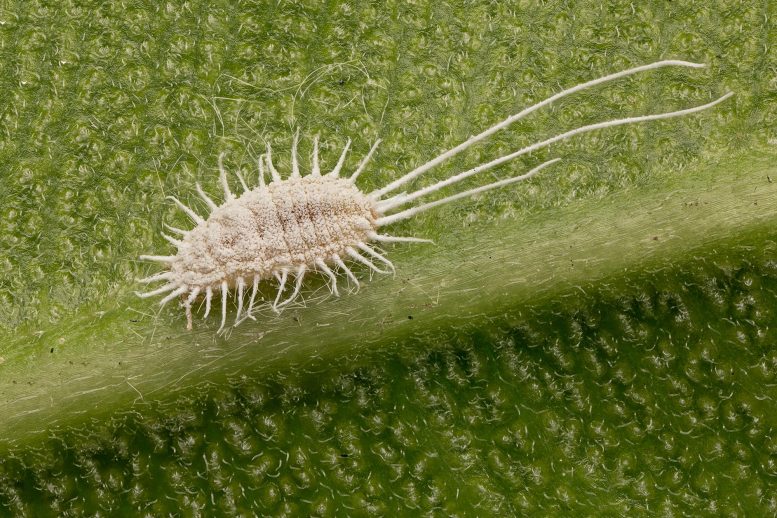
Arizona State University researcher explores pests, parasites, diseases on a global scale.
Countries looking to contain the spread of harmful species and diseases like COVID-19 should work together in multiple hotspots, according to a new model developed by an Arizona State University researcher.
Because it would be difficult to completely eliminate the novel coronavirus, mathematical modeling suggests countries should focus on keeping the rate of infection low by collaborating in multiple areas. In some circumstances, however, a clear division of labor may be called for.
The findings by Adam Lampert, an assistant professor with the School of Human Evolution and Social Change at ASU, will be published next week in the Proceedings of the National Academy of Sciences. The model is intended to guide policymakers responding to the outbreak of harmful species, including pests, parasites and even infectious diseases like COVID-19. It indicates that sometimes a “divide and conquer” approach is better, while in other situations it is more effective to work together in several locations.
A key question is whether to focus on eliminating the harmful species entirely or controlling its spread to prevent the next outbreak.
“If you want to eradicate the harmful species, or reduce its abundance rapidly, then you may want to split the duties of the agents,” Lampert said. “If you want to control it, and keep it at a low level for prolonged periods, then working together becomes important.”
Lampert identified three factors to determine if the species should be controlled or eradicated: the annual cost of maintaining the population, the natural growth rate of the harmful species, and its response to the treatment.
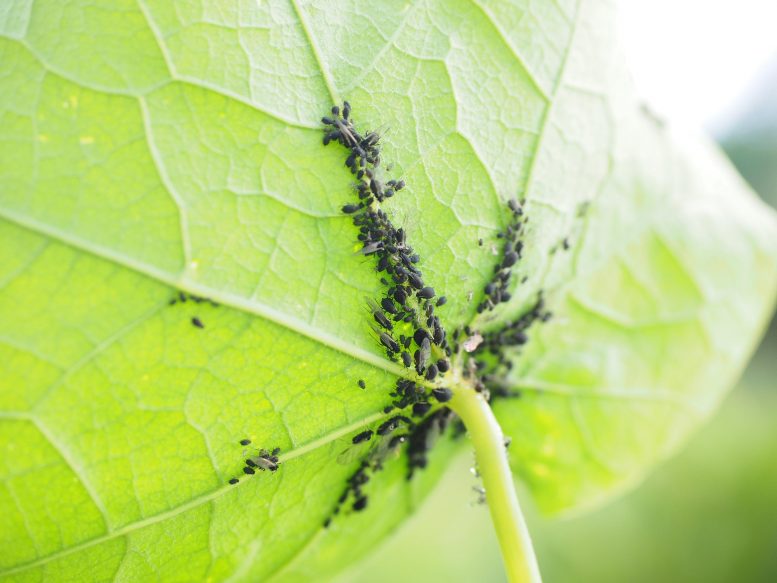
For example, when treating an invasive insect outbreak, managers spray pesticide over a large area as a general, blanket treatment method. A more targeted approach can be applied if the species can easily be seen. For example, complete eradication of a harmful plant species is plausible, because managers can physically remove each plant.
Given the ongoing spread of novel coronavirus, Lampert shared that we’re seeing a mix of blanketed and targeted control efforts.
“With diseases, you can put a lockdown on the entire country, or a region, and say ‘ok nobody goes out’, and this way you reduce the infection level over time,” he said. “Or you can do some more targeted actions by identifying the people who are sick — and keep them at home.”
Lampert’s research indicates that effective long-term control methods to reduce the spread of harmful species, including the novel coronavirus, require international cooperation. He says it is unlikely that we will be able to completely eradicate the virus, but controlling the spread is necessary for our social welfare and can be accomplished most effectively if countries work together.
Lampert is already working on additional research applying these findings to COVID-19, specifically. In the future, we can expect to see more intensive findings about the spread and control of harmful species, as the issue is not likely to disappear anytime soon.
“The impact of invasive species is a major problem in ecological systems,” Lampert said. “And it’s only becoming more and more prevalent because of globalization.”
Reference: “Multiple agents managing a harmful species population should either work together to control it or split their duties to eradicate it” by Adam Lampert, 24 April 2020, Proceedings of the National Academy of Sciences.
DOI: 10.1073/pnas.1917028117
Never miss a breakthrough: Join the SciTechDaily newsletter.
Follow us on Google and Google News.