
Close Menu
    Facebook X (Twitter) Instagram
    SciTechDaily
    • Biology
    • Chemistry
    • Earth
    • Health
    • Physics
    • Science
    • Space
    • Technology
    Facebook X (Twitter) Pinterest YouTube RSS
    SciTechDaily
    Home»Biology»“Zombie Leaves” – Scientists Discover That a Unique Species of Tree Fern Defies Death
    Biology

    “Zombie Leaves” – Scientists Discover That a Unique Species of Tree Fern Defies Death

    By University of Illinois at Urbana-ChampaignJanuary 31, 20241 Comment4 Mins Read
    Facebook Twitter Pinterest Telegram LinkedIn WhatsApp Email Reddit
    Share
    Facebook Twitter LinkedIn Pinterest Telegram Email Reddit
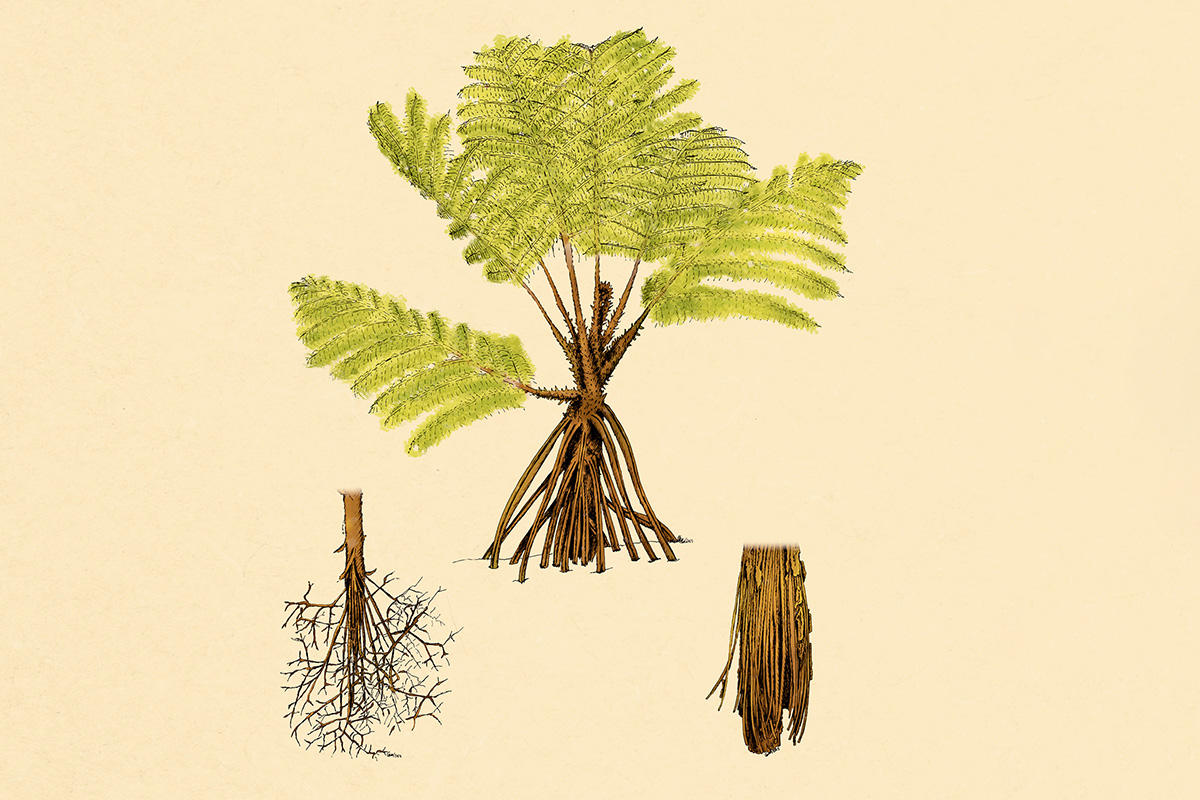
    Cyathea rojasiana
    Other plants, including some ferns, send out leaves or shoots that touch the ground and sprout roots to sustain a new plant. But the Panamanian tree fern, Cyathea rojasiana, reconfigures its “zombie leaves,” reversing the flow of water to draw nutrients back into the plant. Credit: Graphic by Camila Pizano, color by Michael Vincent

    Plant biologists have discovered that a unique species of tree fern, exclusive to Panama, has the ability to regenerate its deceased leaf fronds into root-like structures. This fern, known as Cyathea rojasiana, transforms these “zombie leaves” by altering their water flow direction, enabling them to absorb nutrients back into the main plant.

    This weird phenomenon occurs only after the leaves die and droop to the ground, said University of Illinois Urbana-Champaign plant biology professor James Dalling, who made the discovery with his team while studying a different plant in a Panamanian forest reserve. Dalling noticed that the fronds were strongly embedded in the soil and had sprouted a network of rootlets. Laboratory tests revealed that the zombie leaves were drawing nitrogen out of the soil.

    Even after they are converted into roots, the wilted fronds look like decayed plant matter, which is probably why generations of plant biologists failed to notice that they were performing a life-sustaining task, Dalling said.

    “This is a truly novel repurposing of tissue. And it’s distinct from what we know other ferns do,” he said.

    The Uniqueness of Cyathea rojasiana

    Other plants, including some ferns, send out leaves or shoots that touch the ground and sprout roots to sustain a new plant, he said. But reconfiguring dead tissue to feed the original plant has never been reported. The new findings are detailed in the journal Ecology.

    C. rojasiana belongs to an ancient lineage of tree ferns dating back to the Jurassic period, Dalling said. The zombie leaves are most likely an adaptation to the nutrient-poor volcanic soils.

    Geological and Environmental Context

    “Panama is a land bridge between North and South America that coalesced 7 million years ago out of an archipelago of islands, and those islands are the result of volcanic activity in the past,” he said. “In one site we discovered, a layer of volcanic ash several meters deep looks like sand that you would dig up on a sandy beach. The plants that grow there are distinct from those that we find elsewhere in that forest reserve.”
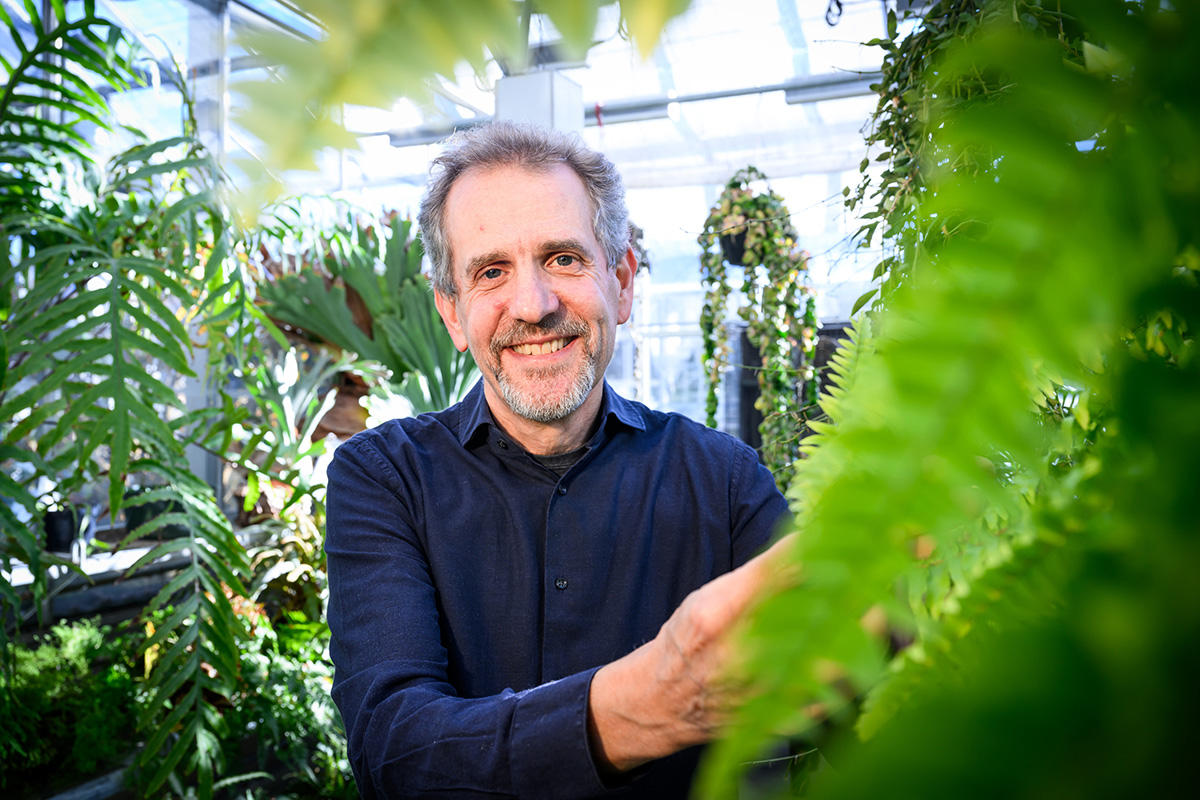
    James Dalling
    University of Illinois Urbana-Champaign plant biology professor James Dalling and his colleagues discovered that some tree ferns recycle their dead fronds into roots. The researchers call these repurposed fronds “zombie leaves.” Credit: Fred Zwicky

    The patchiness of the vegetation means soil nutrients also are unevenly distributed.

    “And so the tree ferns seem to be putting out tentacles to sample the surrounding soils,” Dalling said. “They’re able to sample a greater range of nutrient environments for the same amount of investment of rootlets than if they just sent out a single rooting structure all around the fern. I think it’s all about the economics of how they use resources in a patchy environment.”

    The tree ferns also grow very slowly.

    “They’re probably putting on one or two leaves a year, and so they’re adding on the order of a few centimeters of height a year,” Dalling said.

    This means each frond is a major investment of resources that the plant repurposes after the leaf dies. The slow growth also means that the tree fern is short enough that when its fronds die, they droop all the way to the ground. The trees reach a maximum height of about two meters, Dalling said.

    The finding is “another example of the extraordinary diversity of plant adaptations that exist in resource-poor environments,” he said.

    Reference: “Zombie leaves: Novel repurposing of senescent fronds in the tree fern Cyathea rojasiana in a tropical montane forest” by James W. Dalling, Evidelio Garcia, Carlos Espinosa, Camila Pizano, Astrid Ferrer and Jéssica Lira Viana, 18 January 2024, Ecology.
    DOI: 10.1002/ecy.4248

    Dalling also is a research associate at the Smithsonian Tropical Research Institute in Panama.

    Never miss a breakthrough: Join the SciTechDaily newsletter.
    Follow us on Google and Google News.

    Ecology Plants University of Illinois at Urbana-Champaign
    Share. Facebook Twitter Pinterest LinkedIn Email Reddit

    Related Articles

    Just One Degree Can Have a Big Impact on a Species

    Life Mystery Solved: What Determines the Lifespan of a Tree Leaf?

    Shaking Up Our Understanding: Ethereal Variant of Mysterious Plant Is Actually a New Species

    Yale Study Suggests That Evolution Can Be Predicted

    Genetic Variability Supports Plant Survival During Droughts

    Climate Change Affects Australian Shrub

    Insight on the Evolution of Cocaine Biosynthesis

    Leaf Vein Architecture Allows Predictions of Past Climate

    “Map of Life” to Illustrate All Living Things Geographically

    1 Comment

    1. Marthinus on January 31, 2024 7:28 am

      I unsubscribe with mediate effects

      Reply
    Leave A Reply Cancel Reply

    • Facebook
    • Twitter
    • Pinterest
    • YouTube

    Don't Miss a Discovery

    Subscribe for the Latest in Science & Tech!

    Trending News

    Scientists Uncover Promising New Strategy To Stop Parkinson’s in Its Tracks

    Experts Reveal the Surprising Cancer Link Behind a Common Vitamin

    This Strange “Golden Orb” Found 2 Miles Deep Stumped Scientists for Years

    Giant “Last Titan” Dinosaur Discovered in Thailand Was Bigger Than 9 Elephants

    This “Longevity Gene” May Protect the Brain From Aging and Dementia

    Common Cleaning Chemical Could Triple Your Risk of a Dangerous Liver Disease

    Scientists Discover Bizarre 100-Million-Year-Old Insect With Giant Claws

    Scientists Discover “Good” Gut Microbes That Could Protect Against Autism and ADHD

    Follow SciTechDaily
    • Facebook
    • Twitter
    • YouTube
    • Pinterest
    • Newsletter
    • RSS
    SciTech News
    • Biology News
    • Chemistry News
    • Earth News
    • Health News
    • Physics News
    • Science News
    • Space News
    • Technology News
    Recent Posts
    • Scientists Use Smartwatch Data To Track the Hidden Health Effects of Air Pollution
    • The Human Body Isn’t Perfect – It Was Improvised by Evolution
    • Scientists Rewire Donor Stem Cells To Outsmart Aggressive Blood Cancers
    • Scientists Discover Hidden Sleep Switch That Boosts Brainpower, Builds Muscle, and Burns Fat
    • Scientists Turn Wool Into Bone-Healing Material in Medical Breakthrough
    Copyright © 1998 - 2026 SciTechDaily. All Rights Reserved.
    • Science News
    • About
    • Contact
    • Editorial Board
    • Privacy Policy
    • Terms of Use

    Type above and press Enter to search. Press Esc to cancel.