
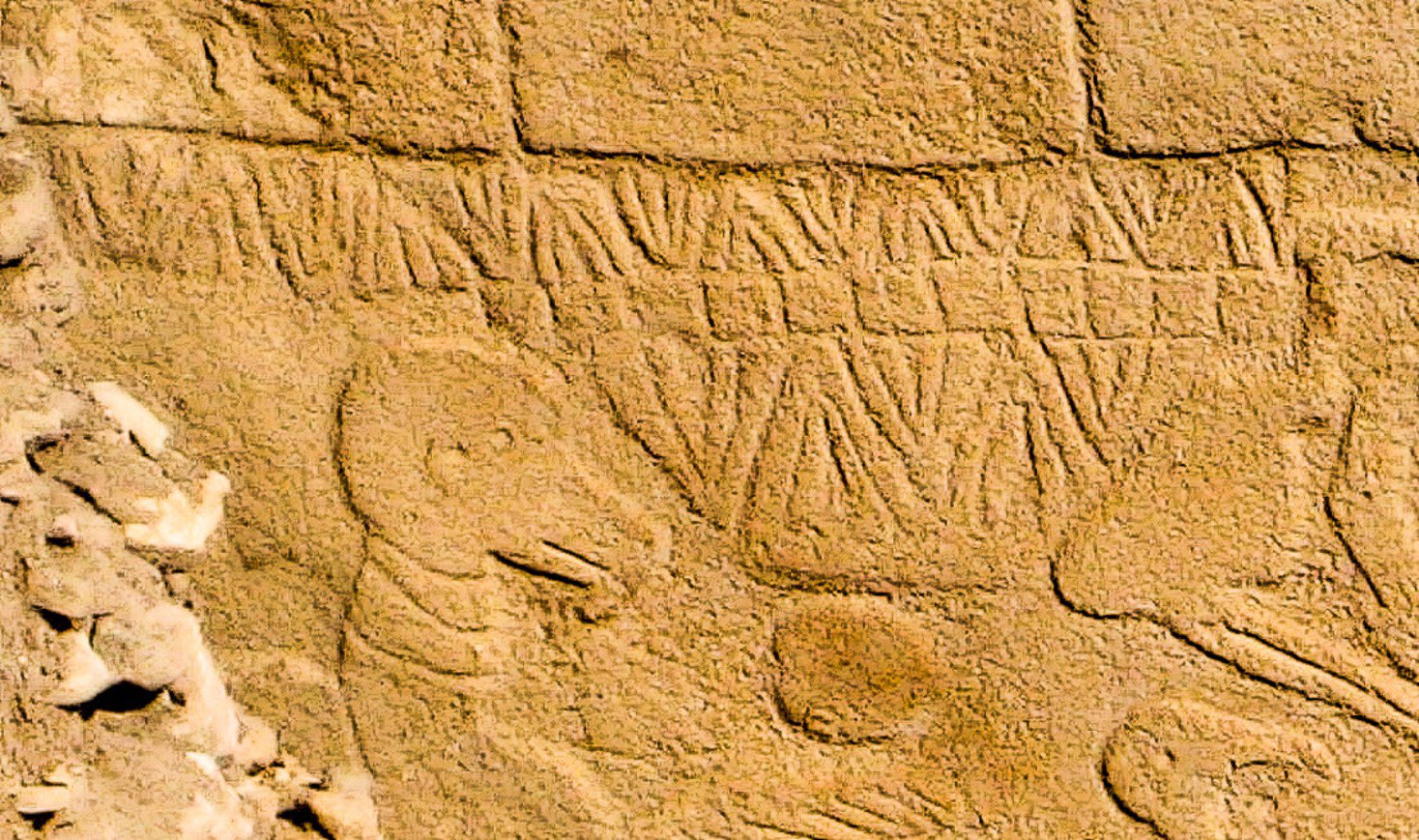
Research at Turkey’s 12,000-year-old Göbekli Tepe site indicates that carvings on ancient pillars likely represent the world’s oldest solar calendar, potentially created to commemorate a catastrophic comet strike that may have spurred the development of civilization.
Experts suggest that markings on a stone pillar at a 12,000-year-old archaeological site in Turkey likely represent the world’s oldest solar calendar, created to memorialize a devastating comet strike. These markings, found at Göbekli Tepe in southern Turkey—an ancient complex featuring temple-like enclosures adorned with intricate carvings—may document an astronomical event that sparked a significant shift in human civilization, researchers believe.
The research suggests ancient people were able to record their observations of the sun, moon, and constellations in the form of a solar calendar, created to keep track of time and mark the change of seasons. A fresh analysis of V-shaped symbols carved onto pillars at the site has found that each V could represent a single day. This interpretation allowed researchers to count a solar calendar of 365 days on one of the pillars, consisting of 12 lunar months plus 11 extra days.
Significance of Solar and Lunisolar Calendars
The summer solstice appears as a separate, special day, represented by a V worn around the neck of a bird-like beast thought to represent the summer solstice constellation at the time. Other statues nearby, possibly representing deities, have been found with similar V-markings at their necks.
Since both the moon’s and the sun’s cycles are depicted, the carvings could represent the world’s earliest so-called lunisolar calendar, based on the phases of the moon and the position of the sun – pre-dating other known calendars of this type by many millennia.
Ancient people may have created these carvings at Göbekli Tepe to record the date a swarm of comet fragments hit Earth nearly 13,000 years ago – or 10,850 BC – researchers say.
The comet strike is suggested to have ushered in a mini-ice age lasting over 1,200 years, wiping out many species of large animals. It could also have triggered changes in lifestyle and agriculture thought to be linked to the birth of civilization soon afterward in the fertile crescent of West Asia.
Depiction of Astronomical Phenomena
Another pillar at the site appears to picture the Taurid meteor stream – which is thought to be the source of the comet fragments – lasting 27 days and emanating from the directions of Aquarius and Pisces.
The find also appears to confirm that ancient people were able to record dates using precession – the wobble in Earth’s axis which affects the movement of constellations across the sky – at least 10,000 years before the phenomenon was documented by Hipparchus of Ancient Greece in 150 BC.
The carvings appear to have remained important to the people of Göbekli Tepe for millennia, suggesting the impact event may have triggered a new cult or religion that influenced the development of civilization.
The find also supports a theory that Earth faces increased comet strikes as its orbit crosses the path of circling comet fragments, which we normally experience as meteor streams.
Dr Martin Sweatman, of the University of Edinburgh’s School of Engineering, who led the research, said: “It appears the inhabitants of Göbekli Tepe were keen observers of the sky, which is to be expected given their world had been devastated by a comet strike. This event might have triggered civilization by initiating a new religion and by motivating developments in agriculture to cope with the cold climate. Possibly, their attempts to record what they saw are the first steps towards the development of writing millennia later.”
Reference: “Representations of calendars and time at Göbekli Tepe and Karahan Tepe support an astronomical interpretation of their symbolism” by Martin B. Sweatman, 24 July 2024, Time and Mind.
DOI: 10.1080/1751696X.2024.2373876
Never miss a breakthrough: Join the SciTechDaily newsletter.
Follow us on Google and Google News.
1 Comment
Call them birds maybe, but they look more like people with crocodile mouths, which is more likely when the existence of bits and pieces of human remains are taken into account and of an earlier attempt to destroy the evidence that this site had been used for the consumption of human flesh. When we take into consideration that there are other so-called anthropologists who essentially dance, whenever other similar sites are found that suggest slavery and humans as food. This site must have become something of a tourist trap for all those who came to investigate; were captured, forced to work to death and then eaten. We see the results even today in our politicians, etcetera, and the whole mythology that they don’t need the rest of humanity anymore so off into space from whence they came they will return. Obviously, that the comet fell upon a small community of cannibals was unfortunate, but a great blessing for the cannibals that lived nearby, and a human tragedy ever since.