
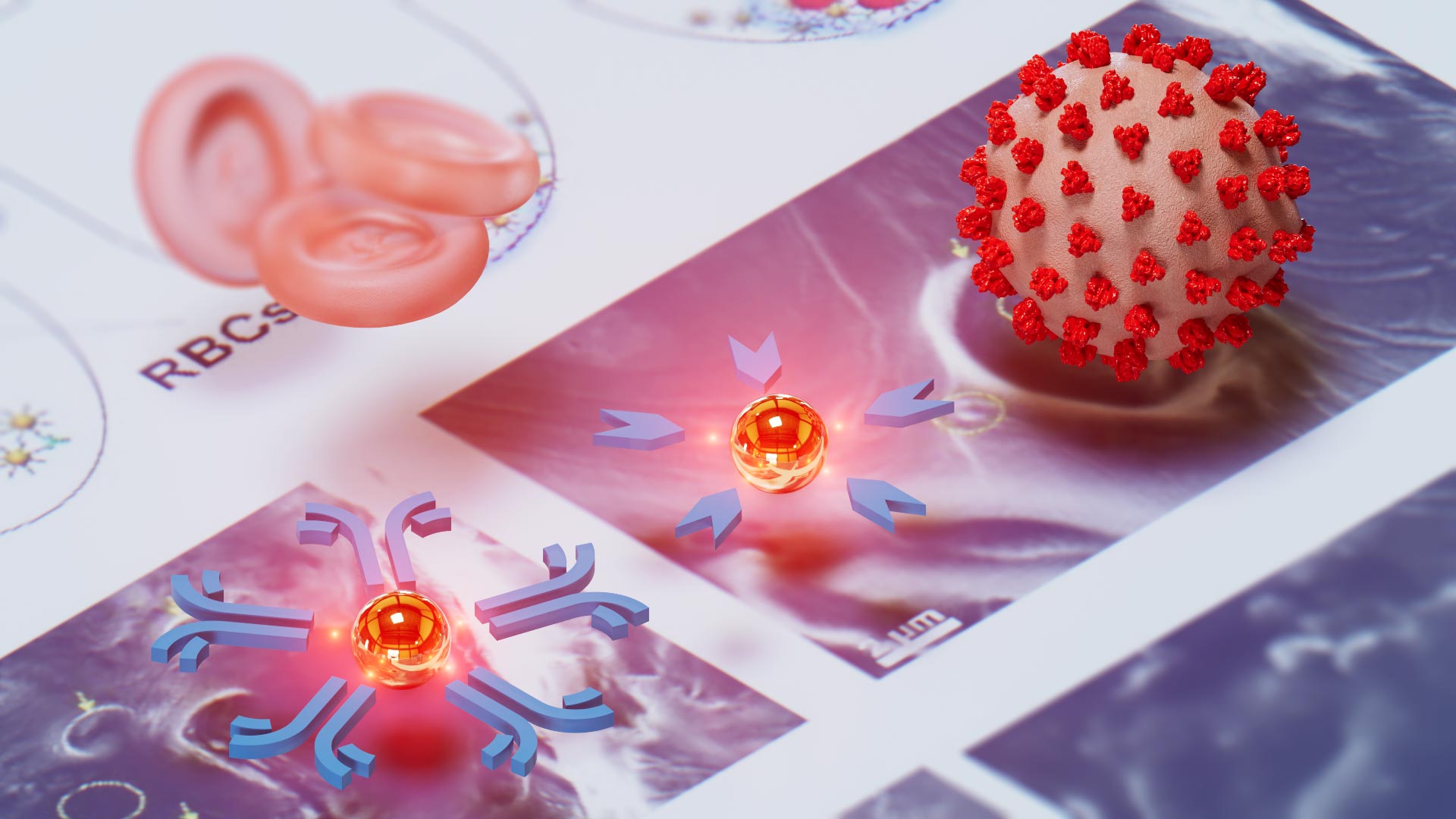
A new $2 gold nanoparticle test can detect deadly diseases in minutes, without a lab, offering life-saving speed and accuracy anywhere in the world.
Researchers at Arizona State University have created a groundbreaking diagnostic tool that could greatly improve the speed and accuracy of detecting illnesses such as COVID-19, Ebola, AIDS, and Lyme disease. The test requires only a single drop of blood, costs just a few dollars, and produces results in about 15 minutes.
In a recent study, the team demonstrated that the device can identify the virus responsible for COVID-19 with exceptional precision, reliably distinguishing it from other infections.
The portable diagnostic system, known as NasRED (Nanoparticle-Supported Rapid Electronic Detection), is designed for use in a wide range of settings—from small rural clinics to large city hospitals. It delivers lab-quality accuracy without the need for expensive instruments or advanced training, giving it the potential to become a major tool for public health.
“We have the speed and ease of use of a rapid antigen test with sensitivity that’s even better than lab-based tests,” says Chao Wang, lead author of the study. “This is very difficult to achieve.”
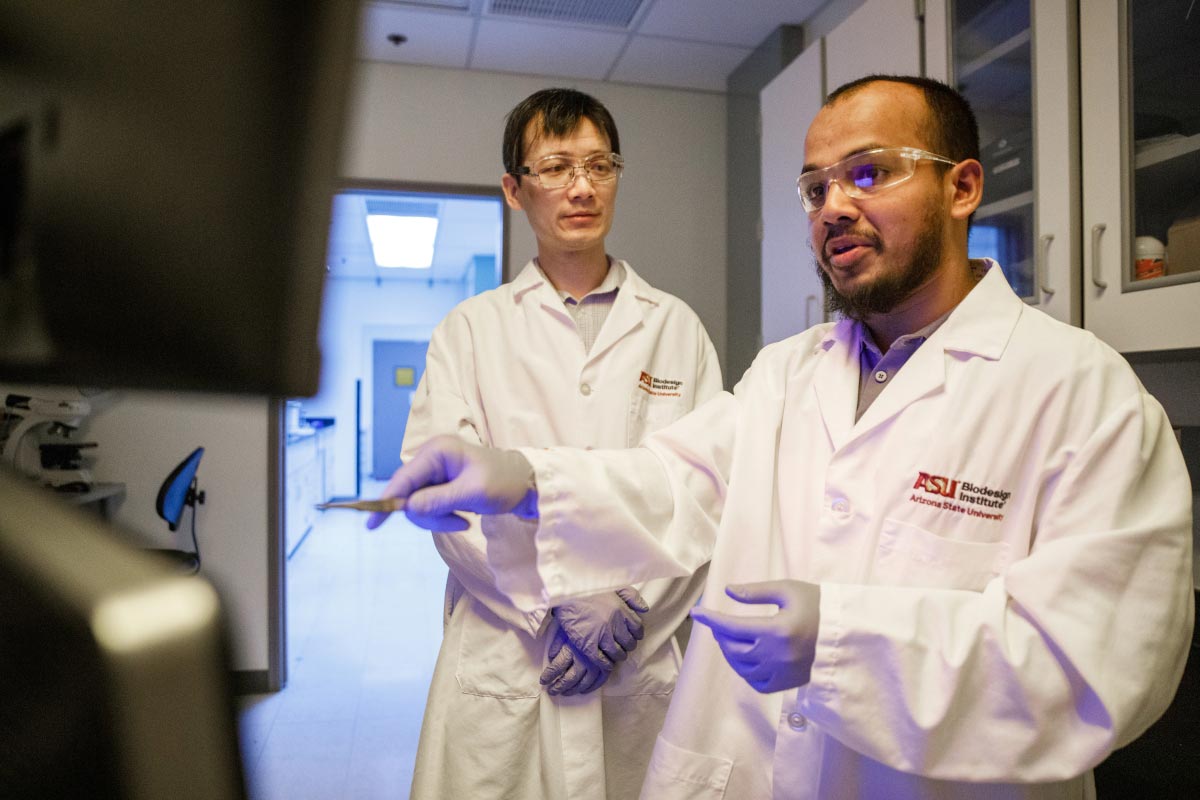
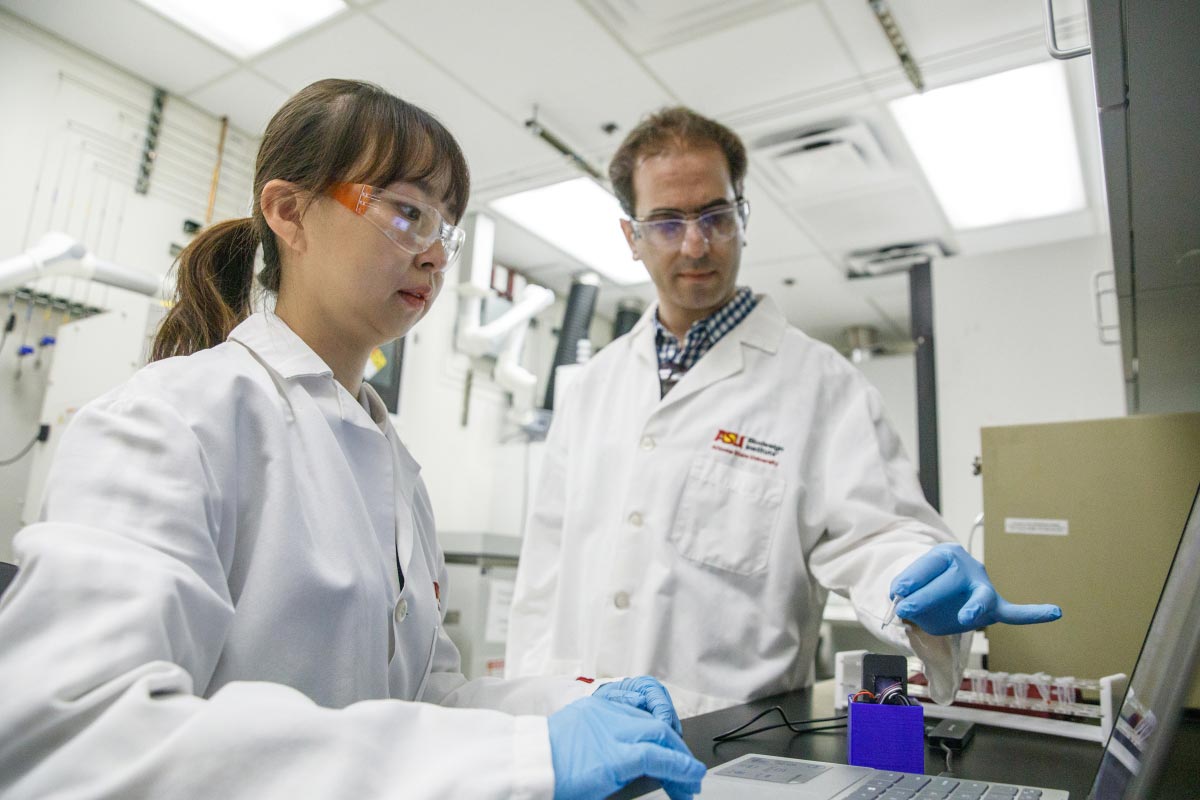
Wang, an associate professor in the Biodesign Center for Molecular Design and Biomimetics and ASU’s School of Electrical, Computer and Energy Engineering, worked alongside ASU colleagues Yeji Choi, Seyedsina Mirjalili, Ashif Ikbal, Sean McClure, Maziyar Kalateh Mohammadi, Scott Clemens, Jose Solano, John Heggland, Tingting Zhang, and Jiawei Zuo.
The research appears in the current issue of the journal ACS Nano.
A powerful new tool, using only a tiny sample of blood, can diagnose a range of diseases faster, cheaper, and more accurately than current methods. Credit: The Biodesign Institute at ASU
Halting the Spread of Infectious Diseases
Infectious diseases remain one of the most serious threats to human health, causing widespread suffering and heavy economic losses worldwide. Together, they account for more than 10 million deaths each year and are the leading cause of mortality in low-income nations.
In the United States alone, nearly 800,000 people die or are left permanently disabled each year due to diagnostic errors, according to research published in BMJ Quality & Safety. Many of these errors involve infections or vascular conditions that could have been treated successfully if identified in time.
In many low- and middle-income countries, reliable diagnostic testing is scarce or entirely unavailable. High costs for equipment, a lack of trained medical staff, and long delays in receiving results all contribute to missed or delayed diagnoses, often with fatal outcomes.
A rapid, low-cost, and portable diagnostic tool such as NasRED could give frontline health workers the ability to identify infections early, enabling swift intervention before outbreaks escalate beyond control.
“In many parts of the world, including the U.S., diseases are spreading, but people often don’t get tested — even for something like HIV. Ideally, you’d want to test them regularly, to catch infections early,” Wang says. “For example, people who use injection drugs are at higher risk for HIV or HCV, but they may be living in the streets and hard to reach. If we don’t test them consistently over time, we may miss the chance to intervene — until they develop serious complications like cancer or liver disease, when it’s much harder to treat.”
Gold Nanoparticles at the Core of Detection
At the heart of the new diagnostic system are gold nanoparticles, precisely engineered to identify extremely small quantities of proteins linked to disease. These nanoparticles are coated with carefully selected molecules tailored to detect particular illnesses.
Some nanoparticles are coated with antibodies—molecules that function like highly specific magnets. These antibodies bind to proteins released by viruses or bacteria during infection. Others are coated with antigens, which are fragments of proteins taken directly from viruses or bacteria. These antigens naturally attract antibodies produced by the body’s immune system in response to infection.
After coating, the nanoparticles are mixed with a tiny sample of bodily fluid, such as a drop of blood, saliva, or nasal fluid. When disease-related molecules are present, most nanoparticles clump together and sink to the bottom of the tube. In the absence of disease, they remain evenly suspended in the liquid.
The NasRED device then directs a beam of LED light through the fluid near the top of the tube. A custom-built electronic sensor measures how much light passes through. Greater light transmission indicates that the nanoparticles have settled to the bottom, leaving the upper portion clearer—signaling that the disease is present.
Sensitivity Beyond Current Standards
The device is so sensitive it can detect disease even when only a few hundred molecules are present in a tiny fluid sample — just a fraction of a single drop. This is a concentration nearly 100,000 times lower than what standard laboratory tests require.
Adding to its promise is NasRED’s portability and affordability. The current gold standards for testing, like PCR or ELISA, require expensive equipment and trained technicians. NasRED is compact and user-friendly. The researchers estimate each test costs $2, making it ideal for use in low-resource or remote locations.
NasRED has the potential to fill a critical diagnostic gap, especially for diseases that are difficult to detect early, such as hepatitis C, HIV or Lyme disease. It is also promising for emerging outbreaks with low prevalence but high risk. Such diseases often go undiagnosed because running a lab test for just one or two patients isn’t cost effective. NasRED bridges that gap by offering a highly sensitive test that works immediately and economically at the point of care.
While NasRED currently requires small, benchtop machines for spinning and mixing samples, the researchers are working to further miniaturize and automate the process. With continued development, the technology might one day become a convenient home test, similar to existing rapid COVID-19 tests. However, it would have vastly superior sensitivity and broader applications.
Outperforming Existing Diagnostic Methods by Leaps
NasRED dramatically surpasses existing diagnostic standards. The new study shows that NasRED is roughly 3,000 times more sensitive than ELISA, requires 16 times less sample volume, and delivers results approximately 30 times faster.
An earlier version of the technology detected Ebola in a tiny sample of blood. “For the new technology, we pushed the sensitivity down to the attomolar range,” Wang says. That’s like detecting a single drop of ink in 20 Olympic swimming pools.
The technology holds promise for detecting viral loads directly from bodily fluids without the complicated sample preparation used in PCR-based methods. In preliminary tests with actual coronavirus particles, NasRED achieved sensitivities comparable to Abbott ID NOW, a popular molecular test for many diseases such as COVID-19.

Modular Platform for Multiple Diseases and Conditions
“One of the strengths of our sensor is that it’s highly modular,” Wang says. “The nanoparticles are designed so that we can easily swap in different proteins, allowing the same platform to be adapted for many different diseases. We’ve already demonstrated this approach in our research on Shiga toxin-producing E. coli, as well as cancer biomarkers, Alzheimer’s-related proteins, Lyme disease and African swine fever.”
Wang recently received the Bay Area Lyme Foundation Emerging Leader Award and will make use of the high sensitivity and portability of this new technology to detect early Lyme infection.
As the technology evolves, its range of applications may extend beyond infectious diseases. Early detection of cancers, real-time monitoring of chronic illnesses and improved surveillance of public health threats are all within reach.
Reference: “Nanoparticle-Supported, Rapid, and Electronic Detection of SARS-CoV-2 Antibodies and Antigens at the Subfemtomolar Level” by Yeji Choi, Seyedsina Mirjalili, MD Ashif Ikbal, Sean McClure, Maziyar Kalateh Mohammadi, Scott Clemens, Jose Solano, John Heggland, Tingting Zhang, Jiawei Zuo and Chao Wang, 11 August 2025, ACS Nano.
DOI: 10.1021/acsnano.5c12083
Never miss a breakthrough: Join the SciTechDaily newsletter.
Follow us on Google and Google News.
2 Comments
This is amazing in so many ways. In a very personal way we use Metrix for Covid home testing because it is more sensitive in picking up Covid, than the rapid tests. Thus people who test with rapid tests could think that they don’t have Covid, but in fact do. When we test as a family of four that is $100. When my daughter wants friends to visit in our home, we have them test so again that could be over $100 or more. But, definitely worth it. But, this new test is even more sensitive and possibly less expensive that would be incredible. And more people would then trust home testing. Because even though the Metrix is great it isn’t perfect and people complain about it.
This sounds disturbingly like the Theranos/Elizabeth Holmes incident several years ago.