
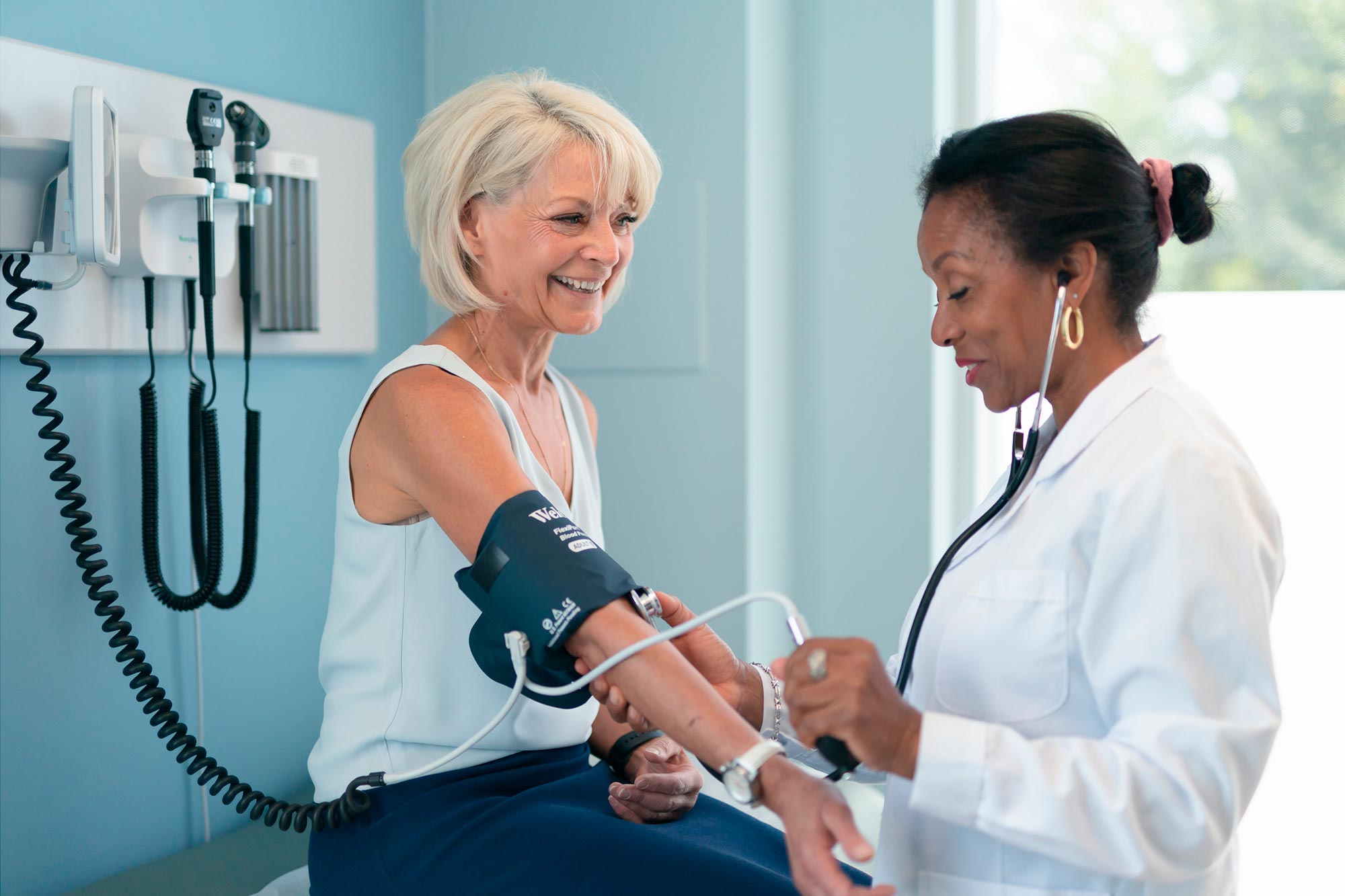
A study from UCL and the University of Sydney reveals that minor daily exercises, like stair climbing, may lower blood pressure. Replacing just five minutes of inactivity with movement showed potential for reducing hypertension-related risks, supporting manageable exercise as a significant health tool.
Incorporating small amounts of exercise into daily routines, such as climbing stairs or cycling to the store, may help reduce blood pressure. A new study by researchers from UCL and the University of Sydney suggests that just five extra minutes of daily activity could yield noticeable improvements.
Supported by the British Heart Foundation (BHF) and published today (November 6) in Circulation, the study analyzed health data from 14,761 participants who wore activity trackers to examine how daily movement affects blood pressure.
The researchers divided daily activities into six categories:[1]
- Sleep
- Sedentary behavior (such as sitting)
- Slow walking (cadence less than 100 steps per minute)
- Fast walking (cadence above 100 steps per minute)
- Standing
- More vigorous exercise (such as running, cycling, or stair climbing).
Replacing Inactivity With Exercise
Using this data, they estimated the impact of swapping one activity type for another. Results showed that replacing five minutes of less active behavior with exercise could reduce systolic blood pressure (SBP) by 0.68 mmHg and diastolic blood pressure (DBP) by 0.54 mmHg.
At a population level, a 2mmHg reduction in SBP and a 1mmHg reduction in DPB is equivalent to an approximately 10% reduction in cardiovascular disease risk.
The study estimated that these ‘clinically meaningful’ improvements could be achieved with as little as 20 additional minutes of exercise per day for SBP and 10 additional minutes of exercise per day for DBP.[3]
The Power of Everyday Activities
The findings emphasize that even everyday activities that raise heart rate, such as cycling, climbing stairs or short bursts of running, can have benefits for healthy blood pressure.
Dr. Jo Blodgett, first author of the study from UCL Surgery & Interventional Science and the Institute of Sport, Exercise & Health, said: “Our findings suggest that, for most people, exercise is key to reducing blood pressure, rather than less strenuous forms of movement such as walking.
“The good news is that whatever your physical ability, it doesn’t take long to have a positive effect on blood pressure. What’s unique about our exercise variable is that it includes all exercise-like activities, from climbing the stairs to a short cycling errand, many of which can be integrated into daily routines.
“For those who don’t do a lot of exercise, walking did still have some positive benefits for blood pressure. But if you want to change your blood pressure, putting more demand on the cardiovascular system through exercise will have the greatest effect.”
The researchers combined data from six studies in the ProPASS consortium, encompassing 14,761 people from five countries, to see how movement behaviour across the day is associated with blood pressure.
Daily Movement Breakdown
Each participant used a wearable accelerometer device on their thigh to measure their activity throughout the 24-hour day and had their blood pressure measured.
The average 24-hour day of the participants consisted of approximately seven hours of sleep, 10 hours of sedentary behavior such as sitting, three hours of standing, one hour of slow walking, one hour of fast walking, and just 16 minutes of exercise activities such as running and cycling.
Using this data, the team modeled what would happen if an individual substituted various amounts of one behavior for another each day, in order to estimate the effect on blood pressure of replacing one behavior with another for a certain amount of time.
Professor Emmanuel Stamatakis, joint senior author of the study from the Charles Perkins Centre and Faculty of Medicine and Health at the University of Sydney, said: “High blood pressure is one of the biggest health issues globally, but there may be relatively accessible ways to tackle the problem in addition to medication.
“The finding that doing as little as five extra minutes of exercise or vigorous incidental activities per day could be associated with measurably lower blood pressure readings emphasizes how powerful short bouts of higher intensity movement could be for blood pressure management.”
Hypertension: The ‘Silent Killer’
Hypertension, which describes consistently elevated blood pressure levels, affects 1.28 billion adults and is one of the biggest causes of premature death globally. It can lead to stroke, heart attack, heart failure, kidney damage, and many other health problems, and is often described as the ‘silent killer’ due to its lack of symptoms.
Professor Mark Hamer, joint senior author of the study from UCL Surgery & Interventional Science and the Institute of Sport, Exercise & Health, said: “Wearable activity-tracking devices such as smartwatches, which are not dissimilar to the accelerometers used in this study, are becoming an increasingly important tools for patients to track their physical activity habits and manage risk factors such as high blood pressure.”
“Our findings show how powerful research platforms like the ProPASS consortium are for identifying relatively subtle patterns of exercise, sleep, and sedentary behavior, that have quite significant clinical and public health importance.”
Notes
- Of the six behaviors observed, five were classified as less active behaviors than exercise: sleep, sedentary behavior, slow walking (cadence less than 100 steps per minute), fast walking (cadence above 100 steps per minute), and standing.
- High blood pressure (hypertension) is classified as readings above 140/90 mmHg. The first number, systolic blood pressure (SBP), measures the pressure against the artery walls when the heart beats. The second number, diastolic blood pressure (DBP), measures the pressure against the artery walls while the heart muscle rests between beats.
- An estimated 2mmHg improvement in SBP was observed if exercise-like activity replaced: ~20 minutes of fast walking, ~21 minutes of sedentary time, ~22 minutes of standing, ~26 minutes of slow walking or ~27 minutes of sleeping.
An estimated 1mmHg improvement in DBP was observed if exercise-like activity replaced ~10 minutes of fast walking, ~11 minutes of sedentary time, ~13 minutes of sleeping, ~14 minutes of slow walking or ~15 minutes standing.
Reference: “Device-Measured 24-Hour Movement Behaviors and Blood Pressure: A 6-Part Compositional Individual Participant Data Analysis in the ProPASS Consortium” by Joanna M. Blodgett, Matthew N. Ahmadi, Andrew J. Atkin, Richard M. Pulsford, Vegar Rangul, Sebastien Chastin, Hsiu-Wen Chan, Kristin Suorsa, Esmée A. Bakker, Nidhi Gupta, Pasan Hettiarachchi, Peter J. Johansson, Lauren B. Sherar, Borja del Pozo Cruz, Nicholas Koemel, Gita D. Mishra, Thijs M.H. Eijsvogels, Sari Stenholm, Alun D. Hughes, Armando Teixeira-Pinto, Ulf Ekelund, I-Min Lee, Andreas Holtermann, Annemarie Koster, Emmanuel Stamatakis and Mark Hamer, 6 November 2024, Circulation.
DOI: 10.1161/CIRCULATIONAHA.124.069820
Never miss a breakthrough: Join the SciTechDaily newsletter.
Follow us on Google and Google News.