
An ancient elephant bone hammer from southern England reveals that early humans used rare materials to precisely sharpen stone tools, highlighting unexpected technological sophistication 500,000 years ago.
Half a million years ago, early humans in what is now southern England were shaping rare elephant bone into specialized tools. A newly analyzed hammer made from elephant bone shows that these ancient toolmakers were capable of carefully refining stone implements with impressive precision.
Archaeologists from UCL and the Natural History Museum, London, examined the prehistoric hammer, which dates to about 500,000 years ago.
It is the oldest elephant bone tool ever identified in Europe. The findings, published in Science Advances, describe how the object was crafted and used by early Neanderthals or another human species known as Homo heidelbergensis. The handheld implement functioned as a soft hammer, helping to resharpen stone handaxes and other cutting tools that had become blunt through repeated use.
Lead author Simon Parfitt (UCL Institute of Archaeology and Scientific Associate at the Natural History Museum) said, “This remarkable discovery showcases the ingenuity and resourcefulness of our ancient ancestors. They possessed not only a deep knowledge of the local materials around them but also a sophisticated understanding of how to craft highly refined stone tools. Elephant bone would have been a rare but highly useful resource, and it’s likely this was a tool of considerable value.”
Triangular Elephant Bone Tool Identified Through Detailed Analysis
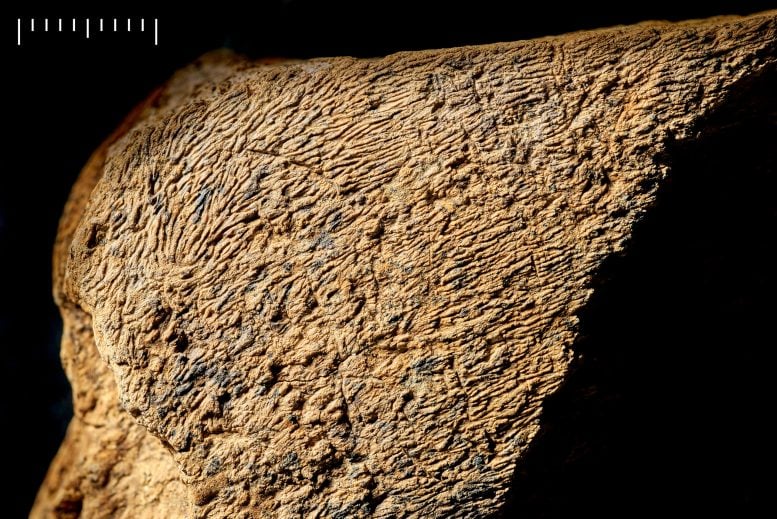
The fossilized object has a roughly triangular form and measures about 11 centimeters long, six centimeters wide, and around three centimeters thick. Surface markings show that it was deliberately shaped rather than broken by chance.
The piece consists largely of cortical bone, the dense outer layer of bone tissue. Its thickness and structure indicate that it came from an elephant or a mammoth, although the fragment is too incomplete to pinpoint the exact species or the specific bone in the skeleton.
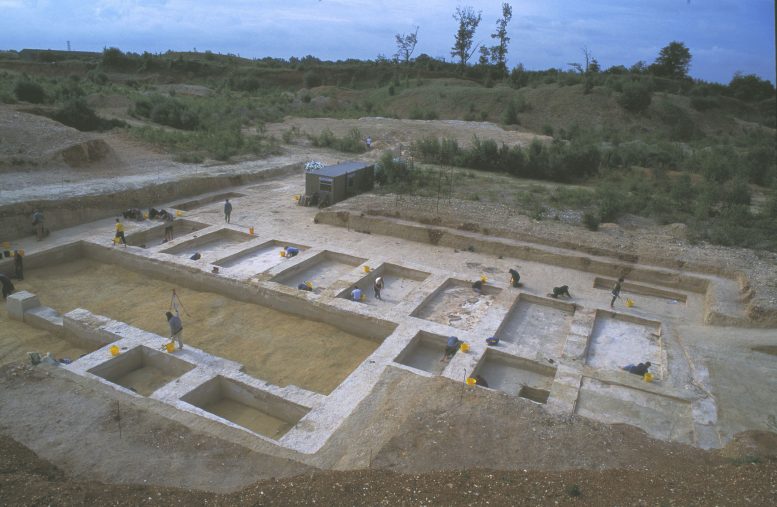
Although the bone fragment was first uncovered in the early 1990s, it was only recently recognized as a tool after researchers carried out a closer examination of material from the site.
3D Scanning Reveals Retoucher Hammer Use
To better understand how it had been used, the team employed 3D scanning and electron microscopy to inspect the surface in detail. They identified distinct notches and impact scars that point to its use as a hammer. Small pieces of flint were lodged within these marks, confirming that the bone had repeatedly struck stone during toolmaking.
Because bone is softer than stone, it can be useful for more controlled shaping. The researchers concluded that the elephant bone served as a retoucher, a tool used to strike the edges of dulled stone implements to remove small flakes and restore a sharp cutting edge through a technique known as “knapping”.
The dense outer layer of elephant bone would have made it tougher and more durable than many other animal bones, increasing its effectiveness as a hammer.
Cognitive Skills and Resourcefulness of Early Humans
Elephants and mammoths were not common in prehistoric southern England, which makes the choice of material especially significant. The find suggests that early humans in the region understood the value of this uncommon resource and deliberately kept and used it.
The presence of a retoucher also points to a comparatively advanced level of technological skill. By using such tools, these early populations could produce stone implements that were more refined and complex than those made by some other groups living at the same time.
Co-author Dr. Silvia Bello, Merit Researcher at the Natural History Museum, said, “Our ancient ancestors were sophisticated in their use of tools. Collecting and shaping an elephant bone fragment and then using it on multiple occasions to shape and sharpen stone tools shows an advanced level of complex thinking and abstract thought. They were resourceful gatherers of available materials, and savvy about how best to use them.”
Boxgrove Site and Broader Archaeological Context
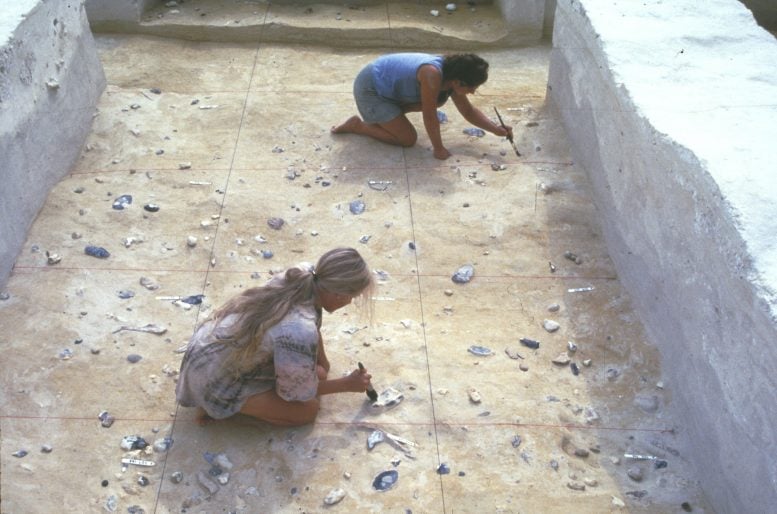
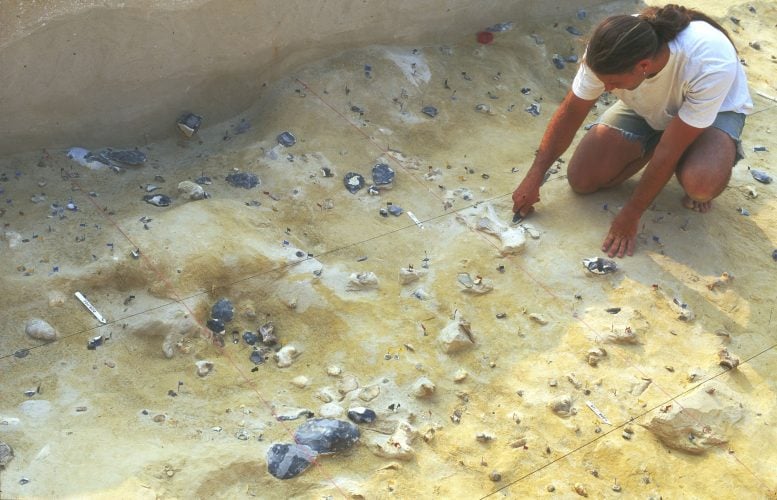
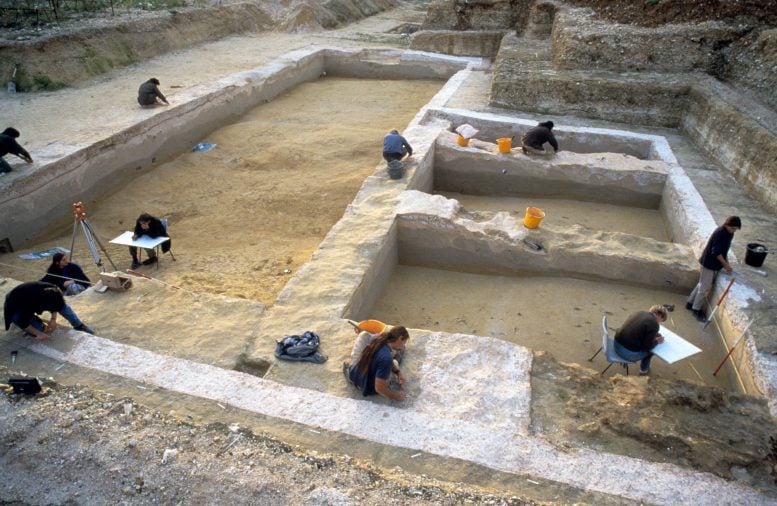
The hammer was discovered at Boxgrove, an archaeological site near Chichester in West Sussex, England. Excavations there have produced many flint, bone, and antler tools, but this is the first example made from elephant bone.
Researchers cannot yet determine whether the animal was hunted or whether its remains were scavenged. However, deformation visible on the tool suggests that the bone was shaped and used while it was still relatively fresh.
Elephant bone tools are known from Olduvai Gorge in Tanzania, where examples date back as far as 1.5 million years. In Europe, however, such finds are extremely rare before 43,000 years ago, when modern humans (Homo sapiens) expanded across the continent and left behind numerous ivory and elephant bone artifacts, artworks, and structures. No European elephant bone tools predate about 450,000 years ago, and most previously discovered examples come from regions farther south with warmer climates.
Reference: “The earliest elephant-bone tool from Europe: An unexpected raw material for precision knapping of Acheulean handaxes” by Simon A. Parfitt and Silvia M. Bello, 21 January 2026, Science Advances.
DOI: 10.1126/sciadv.ady1390
The research was supported by English Heritage, UCL, and the Calleva Foundation.
Never miss a breakthrough: Join the SciTechDaily newsletter.
Follow us on Google and Google News.