
Researchers have developed a cumulative adversity index that could be adapted to aid conservation efforts.
Experiencing adversity early in life can have lasting effects on a person’s health, even if their situation significantly improves later. To study how hardship impacts health and longevity, scientists use a cumulative adversity index (CAI), which quantifies factors such as poverty and stress. This tool has proven valuable in identifying actions that governments, healthcare providers, and families can take to enhance people’s well-being.
Wild animals may also experience adversity early in life, but the effect on their survival and longevity is unknown. While a similar tool could help scientists conserve animal populations by identifying the most influential stressors to mitigate, few populations have been studied over a long enough time to get the data needed to develop a CAI for that species.
UCLA’s Breakthrough Study on Marmots
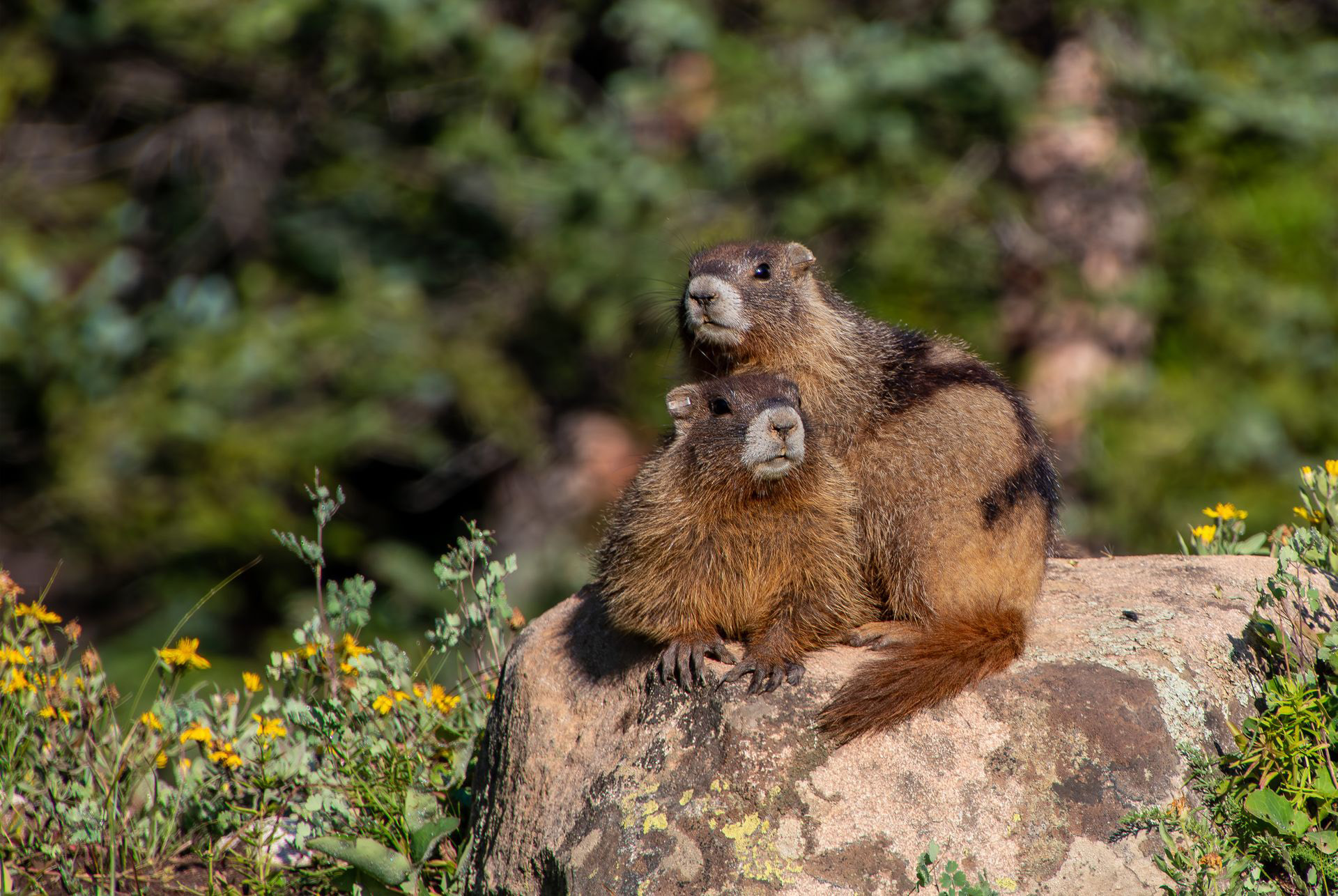
UCLA biologists are changing that by creating the first cumulative adversity index for yellow-bellied marmots, based on 62 years of continuous data collection at the Rocky Mountain Biological Laboratory in Colorado. This is the second-longest study of individually marked mammals in the world. The new study, published in Ecology Letters, offers detailed steps for scientists with large datasets for other species to create their own CAI.
The index they developed identified some predictable but also surprising stressors with significant effects on marmot survival and longevity. For example, it was no surprise a late start of the growing season reduced survival because marmots must gain weight during the summer for their 7- to 8-month hibernation. But the finding that summer drought had no effect was unexpected. Predation also played a smaller-than-anticipated role. Not surprisingly, a mother’s death played a large role — but it still did even if it occurred after the pup was weaned. That may be because pups live with their mother for a full year after weaning.
How the Cumulative Adversity Index Was Created
To create the index, doctoral student Xochitl Ortiz-Ross selected data for female marmots born after 2001 — when the researchers started quantifying physiological stress — that remained in one of the studied colonies until 2019, to guarantee an accurate record of their pedigree, age, and lifetime experiences. Males typically disperse while females remain in the area where they are born, so biologists can observe females during their lifespan.
This population of marmots spans a 984-foot (300-meter) elevation change that divides the population into up-valley and down-valley groups, with different environmental and demographic conditions. The scientists trap individuals in the population biweekly from spring through late summer, when the marmots are active, collecting behavioral, morphological, and physiological data.
Ortiz-Ross identified the following ecological, demographic, and maternal measures of adversity, all of which can affect if a pup survives its first year: late start of season; summer drought; predation pressure; large litters; male-biased litters; late weaning; poor maternal mass; high maternal stress; and maternal loss. She wanted to find out if these factors had any effect on the length of an individual’s lifespan after the first year.
Modeling Adversity and Survival
These variables were fed into computer models that quantified standard, mild, moderate, and acute adversity. All models yielded similar results. Moderate and acute cumulative adversity decreased the odds of pup survival by 30% and 40%, respectively. Pup survival odds were significantly higher up-valley for all models, while maternal loss decreased survival odds in all models and by up to 64% in the moderate adversity model. Poor maternal mass decreased chances of survival by 77% only in the moderate adversity model, while late weaning decreased odds by 33% only in the standardized and raw models. Surprisingly, drought increased the odds of survival across all but the acute adversity model, with the greatest effect observed in the moderate adversity model.
The average adult lifespan was 3.8 years, but acute CAIs tripled the risk of adverse effects on life expectancy.
“We found that a CAI effectively captures short-term survival risk in yellow-bellied marmots, and even in the long term, increased adversity early in life lowered the adult lifespan,” Ortiz-Ross said. “Positive effects didn’t cancel out earlier adverse ones, suggesting that adversity does accumulate in marmots and can’t be fully recovered by positive experiences.”
The results supported the hypothesis that a CAI can be a useful tool to evaluate the long-term survival impact of multiple early life stressors in yellow-bellied marmots.
“What we’re facing in terms of biodiversity management is death by a thousand cuts. We typically study one factor at a time: humans, predators, climate, and so forth,” said Daniel Blumstein, co-author and professor of ecology and evolutionary biology. “But these impacts occur together and have a cumulative effect. We need a way to figure out which of these stressors — or which combination — has the biggest cumulative effect, and our research shows the CAI can do that for marmots.”
For example, conservation plans targeting this marmot population might target the down-valley group which surprisingly, fared a little worse, and on reducing maternal mortality and improving the health of mothers. But they might not need to target reducing predation or countering the effects of summer drought; these did not turn out to be as important as expected.
Reference: “Cumulative adversity and survival in the wild” by Xochitl Ortiz-Ross and Daniel T. Blumstein, 14 August 2024, Ecology Letters.
DOI: 10.1111/ele.14485
Never miss a breakthrough: Join the SciTechDaily newsletter.
Follow us on Google and Google News.