

Birmingham researchers have developed a new method for producing hydrogen fuel that costs less than existing approaches.
Hydrogen has long been hailed as a key fuel for a low-carbon future, capable of powering everything from heavy industry to transportation without producing carbon emissions at the point of use. Yet there is a major contradiction at the heart of today’s hydrogen economy. Despite its clean reputation, around 95% of hydrogen is still produced using fossil fuels, often through energy-intensive processes that generate significant carbon dioxide emissions.
Now, researchers at the University of Birmingham have developed a new low-temperature method for producing hydrogen that could make the fuel cheaper, cleaner, and easier to generate close to where it is needed.
Their approach uses a perovskite catalyst to split water into hydrogen and oxygen at far lower temperatures than conventional thermochemical methods, potentially allowing industrial waste heat from sectors such as steel, cement, glass, and chemicals to power local hydrogen production.
Thermochemical water splitting has emerged as a promising alternative to conventional hydrogen production because it avoids direct reliance on fossil fuels. In these systems, catalysts repeatedly absorb and release oxygen while separating water into hydrogen and oxygen. However, existing catalysts typically require temperatures of 700 to 1000 °C for water splitting and as much as 1300 to 1500 °C for regeneration between cycles, limiting their practicality and efficiency.
A team led by Professor Yulong Ding from the University’s School of Chemical Engineering has shown that this temperature requirement can be reduced by 500 °C using a perovskite catalyst.
Their study, published in the International Journal of Hydrogen Energy, found that the catalyst can generate substantial hydrogen yields at temperatures of 150 to 500 °C and be regenerated at 700 to 1000 °C.
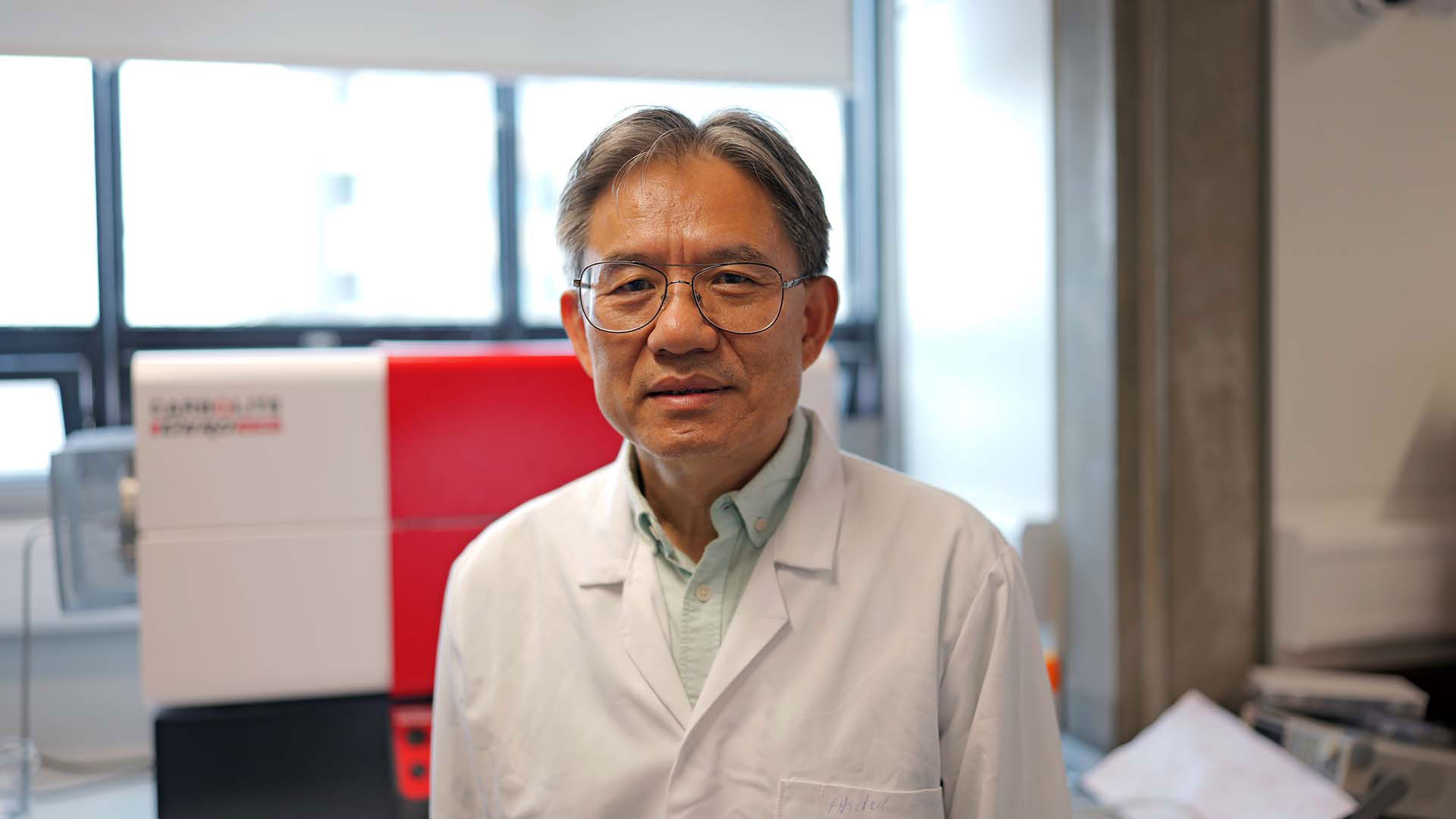
Professor Ding said: “The lower overall temperature of the process could enable hydrogen to be produced nearby renewable energy generation plants, and foundation industry sectors such as steel, cement, glass and chemicals have an abundance of waste heat, which could be harnessed as the heat input for low-temperature hydrogen production. If the hydrogen is used locally, this would overcome the obstacles presented by storage and transport, so enabling the uptake of hydrogen fuel without the need for costly infrastructure.”
An initial cost-competitiveness analysis suggests that water splitting with the perovskite catalyst could produce hydrogen more cheaply than either green hydrogen (produced from water by electrolysis) or blue hydrogen (produced from methane with carbon capture and storage). The cost advantage was strongest in places with low renewable energy prices, including Australia.
The research was carried out in collaboration with the University of Science and Technology Beijing (USTB) and is being commercialized in the UK and Europe by the University of Birmingham. University of Birmingham Enterprise has filed a patent application covering the use of BNCF catalysts for splitting water at low temperatures and is now seeking development partners to help advance the technology.
Why thermochemical splitting?
Hydrogen is the universe’s most abundant element, but on Earth, it is rarely found as pure hydrogen gas. Instead, it is usually locked inside other molecules, especially water and hydrocarbons such as natural gas, which contains mostly methane, as well as coal and oil. Producing hydrogen requires splitting those molecules into their separate components.
The dominant method today is steam reforming, which splits methane to make hydrogen. This process accounts for nearly half of the H2 produced worldwide, but it generates CO2 as a byproduct, weakening its value as a carbon-free energy source unless it is combined with carbon capture and storage. Electrolysis offers a greener way to produce H2, but it must compete with cheaper hydrogen from methane splitting and currently provides only about 4% of the H2 supply. Photonic methods use light to drive the conversion of water into hydrogen, but they are still at an early stage and face major challenges in efficiency, scalability and cost-effectiveness.
About the perovskite catalyst
Perovskites are lattice-like materials that can absorb oxygen molecules into their structure and split oxygen-containing molecules into their component parts.
Perovskites exist in many forms, but the researchers focused on materials made from barium, niobium, calcium, and iron (BNCF perovskites). These materials are readily available, do not require complex synthesis, and do not contain toxic ingredients.
Their work showed that BNCF perovskites can accept oxygen into their structures at much lower temperatures than previously thought. A perovskite called BNCF100 was identified as the best formulation. The study also confirmed that the catalyst can be regenerated at lower temperatures than current water-splitting catalysts and can keep producing hydrogen over 10 production cycles. X-ray diffraction showed little evidence of structural change in the catalyst during the process.
Professor Ding said: “Our research revealed a catalyst capable of produced substantial yields of hydrogen at relatively low temperatures, and a preliminary techno-economic study shows it is cost-effective compared to the established blue and green pathways for hydrogen production.”
Reference: “Remarkable thermochemical water-splitting on Ba2Ca0.66Nb1.34-xFexO6-δ perovskites at medium temperatures for hydrogen production” by Biduan Chen, Wenyi Huang, Wei Guo, Lige Tong, Yulong Ding and Li Wang, 30 April 2026, International Journal of Hydrogen Energy.
DOI: 10.1016/j.ijhydene.2025.152637
Funding: UK Engineering and Physical Sciences Research Council (under Grant EP/T022981/1), and the University of Science & Technology Beijing and China Scholarship Council (CSC)
Never miss a breakthrough: Join the SciTechDaily newsletter.
Follow us on Google and Google News.
4 Comments
Hydrogen is the fuel of the universe, and burning it makes water. What is wrong with that?
You don’t even need to burn it which is inefficient and difficult to control. Google Star Scientific and read about HERO. Amazing technology.
Widespread hydrogen is likely to cause large scale leaks into atmosphere and finally into the space. Will create a new problem ultimately.
Meow meow