
Two new tool compounds may help scientists study TAOK proteins linked to Alzheimer’s disease and other neurological disorders.
Alzheimer’s disease is the leading cause of dementia and affects more than seven million people in the United States. Some treatments can slow the disease, but most address symptoms rather than the root biology, and none can cure it.
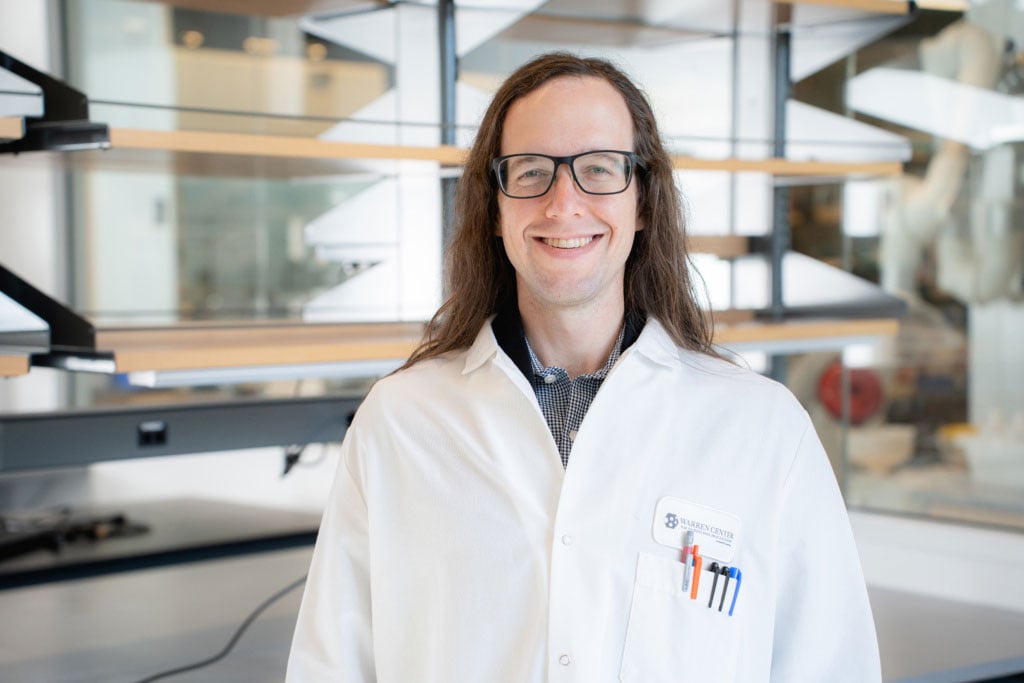
“Alzheimer’s is a condition that remains recalcitrant to the scientific community’s attempts at developing a cure or preventative treatment,” said Daniel Schultz, a former postdoctoral fellow in the Vanderbilt University Warren Center for Neuroscience Drug Discovery.
Biology remains a major barrier
A major reason treatments remain limited, not only for Alzheimer’s but also for many neurological diseases and neurodevelopmental disorders, is that scientists still do not fully understand the biology driving these conditions.
Researchers have identified genes and proteins that may be involved, but studying them can be extremely difficult when there is no reliable way to adjust how those proteins behave.
Tool compounds can help solve that problem. These compounds bind to specific proteins and either increase or reduce their activity. Although many are not suitable as drugs because they may affect other targets or cause toxicity, they are valuable research tools. By using them, scientists can explore what a protein does and whether it might be useful for future treatment development.
A new handle on TAOK-1
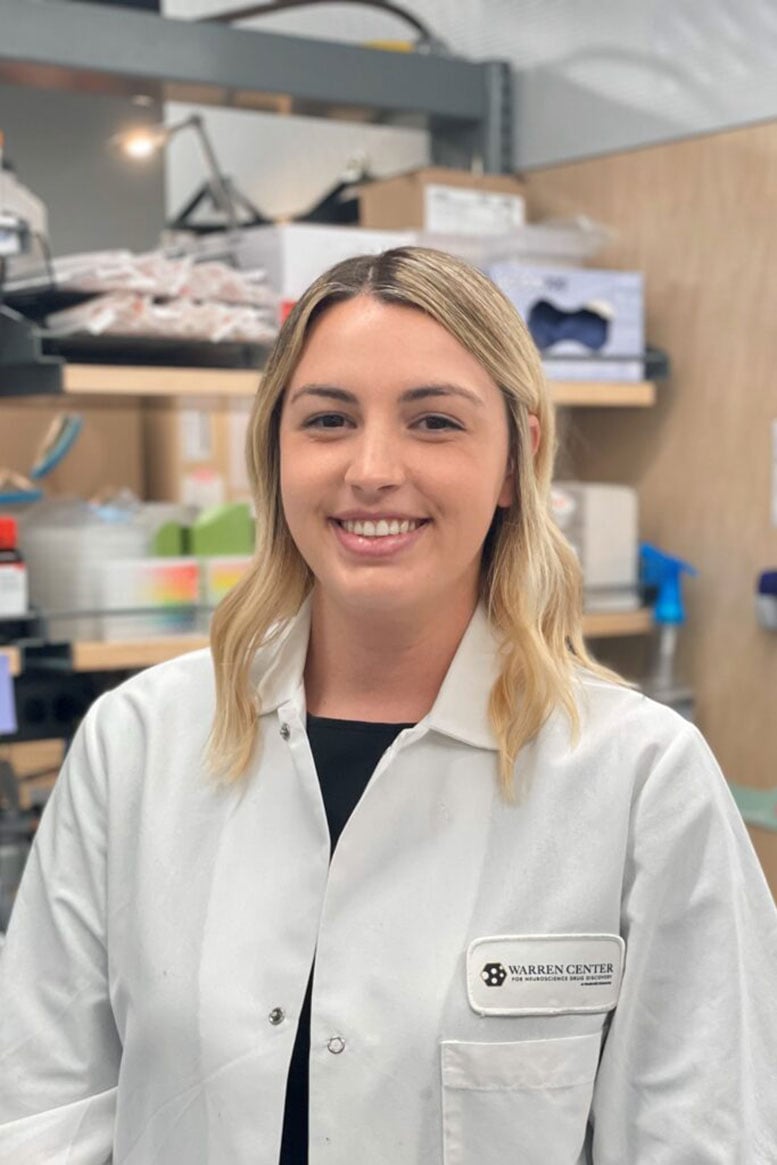
In a recent paper published in ACS Chemical Neuroscience, co-first authors Schultz and Lauren Parr, a Ph.D. student in the Department of Pharmacology, created a tool compound that selectively blocks TAOK-1. The protein has been connected to Alzheimer’s disease, but it has remained understudied in part because researchers lacked suitable tool compounds for investigating it.
Most of the work took place at the WCNDD and was led by WCNDD Executive Director Craig Lindsley. The WCNDD is a clinical-stage biotech startup within Vanderbilt, with a drug discovery pipeline that currently includes five compounds in phase I clinical trials. It is also a founding pillar of the new Vanderbilt Institute for Therapeutic Advances, a next-generation drug discovery institute also led by Lindsley.
For the study, Schultz, Parr, and the WCNDD research team made a large collection of related compounds, each with small chemical differences, and evaluated how they affected TAOK-1 as well as whether they had drug-like properties.
“This project showcased the strength of the WCNDD’s drug discovery infrastructure,” Schultz said. Their coordinated effort led to the first selective inhibitor of TAOK-1, a compound named VU6083859, which could provide an early foundation for future Alzheimer’s disease treatments.
An unexpected activator emerged
Another compound also drew the team’s attention: VU6080195. Rather than inhibiting TAOK proteins, the researchers found that it activates all three members of the TAOK family, an unexpected result.
“Our understanding of TAOK proteins largely centers around their inhibition, so we are excited at the prospect of studying the neurological effects of increasing their activity,” Schultz said. “As scientists, we can get lost in planning our projects to the last detail and expecting things to go a certain way, so it was quite fun to see this unexpected result.”

Schultz hopes the two newly developed tool compounds will encourage more research into the TAOK family, which has received little attention in in vivo models.
Better tools could guide treatments
The more scientists learn about the basic biology of disease, the stronger their chances become of developing effective treatments. With these two new tool compounds, neuroscientists now have better ways to study a protein family linked to Alzheimer’s and other neurological diseases, potentially helping set the stage for future therapies or even a cure.
Reference: “Discovery of VU6083859, a TAOK1 Selective Inhibitor, and VU6080195, a pan-TAOK Activator” by Daniel C. Schultz, Lauren C. Parr, Hunter Sweet, Sean Lamb, Julie L. Engers, Nathaniel C. Napier, Hallie G. McKinnie, David Whomble, Valerie Kramlinger, Olivier Boutaud and Craig W. Lindsley, 14 January 2026, ACS Chemical Neuroscience.
DOI: 10.1021/acschemneuro.5c00906
This research used funds from the William K. Warren Foundation and was supported by the Zenobia and Mark Godschalk Alzheimer’s Research Endowment, the Helen H. and Morris D. Hartman, MD 1910, Neurological Research Fund, the Warren Center for Neuroscience Drug Discovery, and the Vanderbilt Institute for Therapeutic Advances.
Never miss a breakthrough: Join the SciTechDaily newsletter.
Follow us on Google and Google News.