

Close Menu
    Facebook X (Twitter) Instagram
    SciTechDaily
    • Biology
    • Chemistry
    • Earth
    • Health
    • Physics
    • Science
    • Space
    • Technology
    Facebook X (Twitter) Pinterest YouTube RSS
    SciTechDaily
    Home»Science»Arsenic-Tolerant GFAJ-1 Bacterium Still Needs Phosphorous
    Science

    Arsenic-Tolerant GFAJ-1 Bacterium Still Needs Phosphorous

    By SciTechDailyJuly 11, 20121 Comment2 Mins Read
    Facebook Twitter Pinterest Telegram LinkedIn WhatsApp Email Reddit
    Share
    Facebook Twitter LinkedIn Pinterest Telegram Email Reddit
    GFAJ-1-arsenic-tolerant-bacterium-mono-lake
    GFAJ-1 arsenic-tolerant bacterium found in California’s Mono Lake.

    18 months after the controversy started, it’s become official that the arsenic-tolerant bacterium, GFAJ-1, found in California’s Mono Lake, cannot live without phosphorous. It was reported in 2010 by a group led by Felisa Wolfe-Simon, a microbiologist, now working at the Lawrence Berkeley National Laboratory, in the journal Science that the Halomonadaceae bacterium GFAJ-1 could include some atoms of arsenic instead of phosphorous in its crucial biochemicals.

    Rosie Redfield, a microbiologist at the University of British Columbia, in Vancouver, Canada, tested these claims and now has reported in the journal Science that although GFAJ-1 tolerates arsenic, it still depends on phosphorous, effectively refuting Wolfe-Simon’s claims.
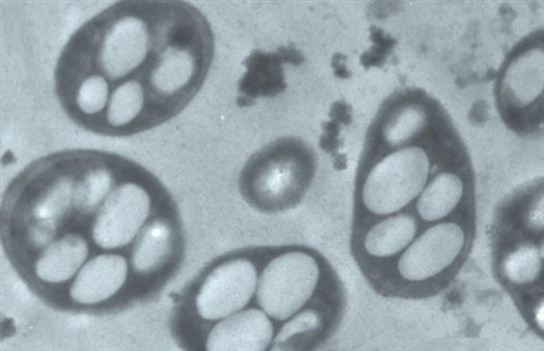
    GFAJ-1-arsenic-tolerant-bacterium-microscope

    GFAJ-1 was discovered thriving in the arsenic-rich sediment of Mono Lake, in California. While arsenic has some chemical similarities to phosphorous, it’s toxic to life. The suggestion that GFAJ-1 had phosphorous in its DNA triggered a plethora of questions and criticisms. Redfield was also unable to reproduce Wolfe-Simon’s results in the laboratory. A second paper by Julia Vorholt, a microbiologist at the Federal Institute of Technology in Zürich, Switzerland, was published in Science on July 8th.

    GFAJ-1’s DNA contained no detectable amounts of arsenic, as well as arsenic compounds. In the second paper, Vorholt reported that the bacterium cannot grow in a phosphorous-free environment. It can grow in low-phosphate conditions, and in the presence of arsenate. GFAJ-1 is arsenic-resistant, but still phosphorous-dependent.

    There are still open questions as to how these cells thrive in lethal concentrations of arsenic and where the arsenic goes.

    References:

    “Absence of Detectable Arsenate in DNA from Arsenate-Grown GFAJ-1 Cells” by Marshall Louis Reaves, Sunita Sinha, Joshua D. Rabinowitz, Leonid Kruglyak and Rosemary J. Redfield, 8 July 2012, Science.
    DOI: 10.1126/science.1219861

    “GFAJ-1 Is an Arsenate-Resistant, Phosphate-Dependent Organism” by Tobias J. Erb, Patrick Kiefer, Bodo Hattendorf, Detlef Günther and Julia A. Vorholt, 8 July 2012, Science.
    DOI: 10.1126/science.1218455

    Never miss a breakthrough: Join the SciTechDaily newsletter.
    Follow us on Google and Google News.

    Arsenic Bacterium DNA Microbiology Phosphorous
    Share. Facebook Twitter Pinterest LinkedIn Email Reddit

    Related Articles

    Ancient DNA Reveals Secrets of Bronze Age Cheese Making

    Ancient Fungi Discovered Deep in Ocean Floor Could Yield New Antibiotics

    Inherent Complexity of the Wheat Genome

    “Arsenic-Life” Bacterium Prefers Phosphate Over Arsenate

    New DNA Entity in Mammalian Cells

    Scientists Discover Dead Hydrothermal Vents Contain Life

    Relative Refutation of the Claim of Arsenic-Based Life

    DNA Motor Navigates Programmable Network of Tracks

    Genetically Modified Silk Worms Yield Super Strong Silk

    Leave A Reply Cancel Reply

    • Facebook
    • Twitter
    • Pinterest
    • YouTube

    Don't Miss a Discovery

    Subscribe for the Latest in Science & Tech!

    Trending News

    JWST Finds a “Star” 100 Billion Times Brighter Than Any Star Should Be

    Scientists Find a Hidden Biological Link Across Different Forms of Autism

    Astronomers Discover a Ghostly River of Stars That Could Reveal Dark Matter

    Why Is Colorectal Cancer Rising in People Under 50? New Clues Point to the Environment

    Quantum Fluctuations Break a Crystal’s Symmetry Rules

    Why Does an Irregular Heartbeat Strike 40 Years Early in Some People?

    Scientists Reveal How ADHD Could Fuel Creative Thinking

    Scientists Find Just 3 Minutes of Sprinting Can Transform Blood Chemistry

    Follow SciTechDaily
    • Facebook
    • Twitter
    • YouTube
    • Pinterest
    • Newsletter
    • RSS
    SciTech News
    • Biology News
    • Chemistry News
    • Earth News
    • Health News
    • Physics News
    • Science News
    • Space News
    • Technology News
    Recent Posts
    • Common Plant Chemical Linked to Widespread Organ Damage in Aquatic Animals
    • Scientists Discover a Hidden Baobab Species in Madagascar
    • Dogs and Humans May Share a Surprising Biological Secret to Longevity
    • A 150-Million-Year-Old Dinosaur Flight Mystery May Finally Have an Answer
    • Giant Crocodylians Ruled South America’s Ancient Food Chain
    Copyright © 1998 - 2026 SciTechDaily. All Rights Reserved.
    • Science News
    • About
    • Contact
    • Editorial Board
    • Privacy Policy
    • Terms of Use

    Type above and press Enter to search. Press Esc to cancel.