
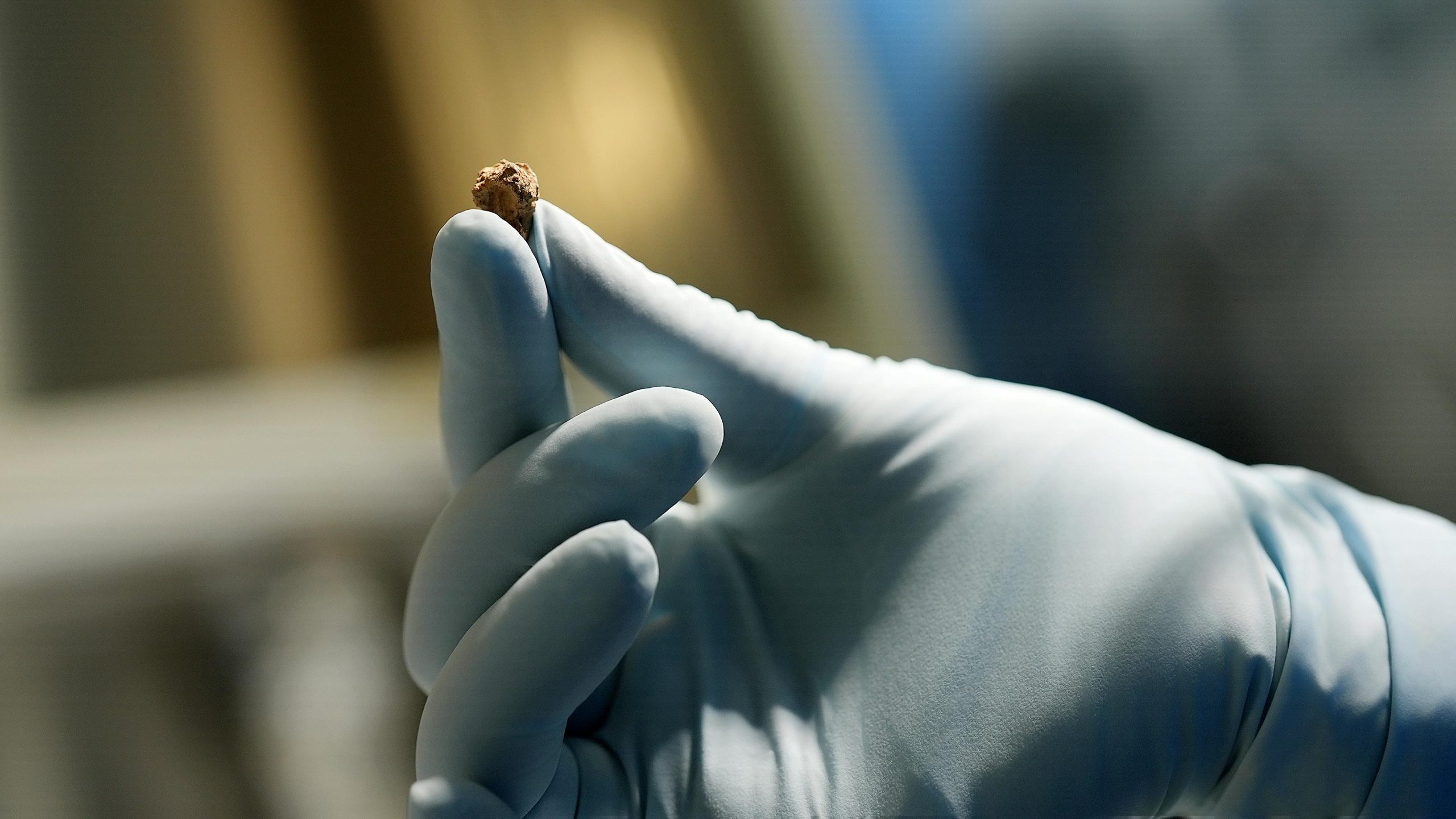
A groundbreaking study on ancient kefir cheese reveals the complex history and evolution of dairy fermentation in Eurasia, highlighting how Lactobacillus kefiranofaciens adapted through centuries of human interaction.
Food fermentation is the oldest production practice using microorganisms in human history. Milk fermentation, for example, can be traced back to 6000–4000 BC in India, and Mediterranean populations produced and consumed cheese as early as 7000 before present (BP).
Despite the long history of human consumption of fermented products, though, little has been known about the history of the use of fermentative microorganisms and the history of related cultural transmission. In particular, the evolutionary trajectories, especially functional adaptation, of these fermented microorganisms through long-term interactions with humans has been unclear.
Recently, a group of Chinese scientists has added to our knowledge of the dispersion of early dairy fermentation practices, however, by completing the world’s first metagenomic study of Bronze Age kefir cheese unearthed from Xiaohe cemetery—the most ancient dairy remains known to date. Molecular evidence obtained from ancient fermented dairy residues serves as a powerful tool for understanding past human-fermentative microbial interactions.

Breakthrough in Fermentation Research
In this study, the scientists extracted high-quality genomes of Lactobacillus kefiranofaciens (L. kefiranofaciens) from three ancient cheese samples unearthed in Xiaohe cemetery in Xinjiang, dating back to about 3,500 years ago. The group’s findings were published online in Cell on Sept. 25, in an article entitled “Bronze Age cheese reveals human-Lactobacillus interactions over evolutionary history.” It was featured as a Cell Highlighted Paper.
“We has been working on this project for over 11 years,” said FU Qiaomei, the last corresponding author and director of the Molecular Paleontology Laboratory at the Institute of Vertebrate Paleontology and Paleoanthropology (IVPP) of the Chinese Academy of Sciences. The key is she designed probes to enrich Lactobacillus DNA, which increases the target DNA from <1% to 64-80% and enables the reconstruction of the whole genome of Lactobacillus.
“This is an unprecedented study, allowing us to observe how a bacterium evolved over the past 3,000 years. Moreover, by examining dairy products, we’ve gained a clearer picture of ancient human life and their interactions with the world,” says FU. “This is just the beginning, and with this technology, we hope to explore other previously unknown artifacts.”

Ancient Dairy Techniques Unearthed
The cheese sample excavated from Xiaohe Cemetery in Xinjiang is the earliest cheese product ever found. It was previously identified through paleoproteomics as kefir cheese—a fermented milk product made using kefir grains, which contain fermentative microbes.
By reconstructing the fermentation microbial community, the study confirms that the cheese was made using lactic acid bacteria and yeasts. The researchers also discovered that the milk used to make the cheese came from a clade of goats widely distributed in Eurasia during the post-Neolithic period, distinct from contemporary domesticated goats from inland East Asia.
This finding suggests that ancient peoples from the Tarim Basim probably learned kefir production techniques from Eurasian steppe populations.
Genetic Insights From Ancient Fermentation
The spread of dairy fermentation technology largely accompanied human migration and interaction, a process that drove the evolution of lactic acid bacteria. However, this study also reveals a new route of spread of L. kefiranofaciens by analyzing the phylogenetic relationships of ancient L. kefiranofaciens in Xinjiang.
The researchers found that the L. kefiranofaciens used in fermentation comprised two clades. The first mainly consisted of strains from Europe (e.g., the area occupied by modern Germany) and coastal areas and islands in Asia (e.g., the areas occupied by modern Guangdong, Taiwan Island, Japan, and Singapore). This distribution conformed to the dispersal route from the Caucasus to Europe on the one hand and to the coastal areas of Asia and Southeast Asia, on the other hand. The other clade mainly consisted of strains distributed in inland East Asia (including Tibet).
The reconstructed ancient strains are located at the base of the clade, suggesting an additional route of diffusion of kefir production technology from Xinjiang to inland East Asia through techno-cultural exchange.
The divergence of the two clades of L. kefiranofaciens is likely the result of the spread of their common ancestor initially domesticated in different populations, representing the migration and interactions that occurred during the use and domestication of fermentative microorganisms by different ancient populations.
“It is exciting to see how much information can be retrieved from these cheeses,” said YANG Yimin, a professor at the University of Chinese Academy of Sciences. “Organic residues open a window into past human behaviors and culture that were lost in history and records.”
Insights Into Lactobacillus Evolution
This study also found that utilization and domestication by humans played an important role in the evolution of L. kefiranofaciens. Comparative analysis of the genomes of L. kefiranofaciens from the Bronze Age and modern times allows us to characterize the adaptive evolution of Lactobacillus kefiranofaciens over the past few thousands of years.
Extensive horizontal gene transfer is one of the main mechanisms of adaptive evolution in lactic acid bacteria. By comparing the functional profiles of ancient and modern L. kefiranofaciens, the study found three main trajectories of L. kefiranofaciens evolution: 1) adaptation to environmental stress, with the emergence of drug-resistance-related genes in modern strains; 2) enhancement of bacterial genome defense mechanisms, with modern L. kefiranofaciens showing gene clusters such as the R-M system and the associated toxin-antitoxin system, which can counteract the introduction of exogenous DNA and thus reduce related fitness costs; and 3) adaptations related to the human intestinal environment; for example, modern strains gained gene clusters that potentially interact with the host gut, likely due to their long-term interactions with humans.
This study also found that long-term human use and domestication of L. kefiranofaciens likely also influenced its evolution. Compared to Bronze Age L. kefiranofaciens, modern strains from Tibet show two horizontally transferred gene clusters associated with alleviation of the intestinal inflammatory response. This not only contributes to the survival of L. kefiranofaciens in the human gut but also promotes intestinal function.
Considering ancient populations could easily spread kefir production technology through kefir grains, the presence of these gene clusters is likely related to the preference among populations at the time for kefir grains carrying different clades of L.kefiranofaciens.
Fermentation’s Cultural Impact
“Human-microbial interaction is always fascinating,” said LIU Yichen, one of the first authors and an associate professor at the IVPP Molecular Paleontology Laboratory. “Fermentative microbes played such an important role in the daily life of these ancient humans, and they propagated these microbes for thousands of years without knowing the existence of them for most of the time.”
By using ancient DNA information about fermentative microorganisms closely related to past human activities and culture, this study offers a novel framework for using ancient DNA to examine the cultural interactions of past humans.
For more on this research, see World’s Oldest Cheese Unlocks Secrets of Ancient Kefir.
Reference: “Bronze Age cheese reveals human-Lactobacillus interactions over evolutionary history” by Yichen Liu, Bo Miao, Wenying Li, Xingjun Hu, Fan Bai, Yidilisi Abuduresule, Yalin Liu, Zequan Zheng, Wenjun Wang, Zehui Chen, Shilun Zhu, Xiaotian Feng, Peng Cao, Wanjing Ping, Ruowei Yang, Qingyan Dai, Feng Liu, Chan Tian, Yimin Yang and Qiaomei Fu, 25 September 2024, Cell.
DOI: 10.1016/j.cell.2024.08.008
The research was supported by the National Natural Science Foundation of China, the Chinese Academy of Sciences, the Peak Biomedical Fund, and the Fundamental Research Operating Expense Fund of the Central Universities.
Never miss a breakthrough: Join the SciTechDaily newsletter.
Follow us on Google and Google News.