
Close Menu
    Facebook X (Twitter) Instagram
    SciTechDaily
    • Biology
    • Chemistry
    • Earth
    • Health
    • Physics
    • Science
    • Space
    • Technology
    Facebook X (Twitter) Pinterest YouTube RSS
    SciTechDaily
    Home»Biology»“Arsenic-Life” Bacterium Prefers Phosphate Over Arsenate
    Biology

    “Arsenic-Life” Bacterium Prefers Phosphate Over Arsenate

    By SciTechDailyOctober 4, 2012No Comments2 Mins Read
    Facebook Twitter Pinterest Telegram LinkedIn WhatsApp Email Reddit
    Share
    Facebook Twitter LinkedIn Pinterest Telegram Email Reddit
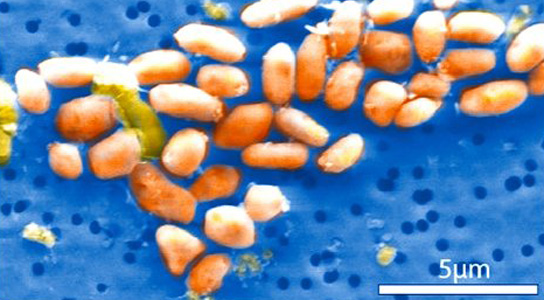
    gfaj-1
    GFAJ-1 bacterium

    Researchers that claimed that the GFAJ-1 bacterium had a preference for arsenic instead of phosphorous in its DNA have been somewhat refuted. A new study shows that the GFAJ-1 microbe actually goes to extreme lengths to grab any traces of phosphorous it can find.

    This clears up one of the lingering questions, from a controversial study published in the journal Science, that claimed that the GFAJ-1 microbe could thrive in the high-arsenic conditions of Mono Lake in California without metabolizing phosphorous, an element that’s essential to all forms of known life. The scientists published their findings in the journal Nature.

    mono-lake-california

    The scientists have discovered how the bacteria discriminate between nearly identical molecules of phosphate and arsenate. They looked at five types of phosphate-binding proteins, which help bind phosphate in a molecular pathway that brings it into cells, from four species of bacteria. Two of the species were sensitive to arsenate, while two others were resistant to it.

    The threshold for when “discrimination” broke down was when 50% of the proteins ended up bound to arsenate, indicating that the ability to discriminate had been overwhelmed. Even in solutions containing 500 times more arsenate than phosphate, all five proteins were still able to preferentially bind phosphate. One protein that was derived from GFAJ-1 could do so at arsenate excesses of up to 4,500-fold over phosphate.

    The detailed structure of Pseudomonas fluorescens, the phosphate binding protein, showed that the arsenate molecule, which is slightly larger than phosphate, distorts and weakens bonds around a hydrogen atom that forms a bridge to the protein.

    This doesn’t mean that the arsenate doesn’t get into the bacteria, it just shows that the bacterium has evolved to extract phosphate under almost any circumstances.

    Reference: “The molecular basis of phosphate discrimination in arsenate-rich environments” by Mikael Elias, Alon Wellner, Korina Goldin-Azulay, Eric Chabriere, Julia A. Vorholt, Tobias J. Erb and Dan S. Tawfik, 3 October 2012, Nature.
    DOI: 10.1038/nature11517

    Never miss a breakthrough: Join the SciTechDaily newsletter.
    Follow us on Google and Google News.

    Arsenic Bacterium Molecular Biology Phosphorous Protein
    Share. Facebook Twitter Pinterest LinkedIn Email Reddit

    Related Articles

    3D Analysis of SARS-CoV-2 Reveals Clues on Virus Tactics – How the Coronavirus Infects Human Cells and Replicates

    Yale Researchers Create a 21st Amino Acid

    New Analysis on Iceman Ötzi Opens Up New Research Possibilities for Mummies

    A Closer Look at the Antifreeze Protein That Allows Siberian Beetles to Survive

    Enzyme’s Essential Role in Long-Term Memory Refuted

    SSRL Validates Anti-Flu Protein Design

    New Design Makes Previously Inaccessible Proteins Vulnerable to Drugs

    Arsenic-Tolerant GFAJ-1 Bacterium Still Needs Phosphorous

    Sirtuin Protein SIRT6 Linked to Longevity in Mammals

    Leave A Reply Cancel Reply

    • Facebook
    • Twitter
    • Pinterest
    • YouTube

    Don't Miss a Discovery

    Subscribe for the Latest in Science & Tech!

    Trending News

    Scientists Uncover Potential Brain Risks of Popular Fish Oil Supplements

    Scientists Discover a Surprising Way To Make Bread Healthier and More Nutritious

    After 60 Years, Scientists Uncover Unexpected Brain Effects of Popular Diabetes Drug Metformin

    New Research Uncovers Hidden Side Effects of Popular Weight-Loss Drugs

    Scientists Rethink Extreme Warming After Surprising Ocean Discovery

    Landmark Study Links Never Marrying to Significantly Higher Cancer Risk

    Researchers Discover Unknown Beetle Species Just Steps From Their Lab

    Largest-Ever Study Finds Medicinal Cannabis Ineffective for Anxiety, Depression, PTSD

    Follow SciTechDaily
    • Facebook
    • Twitter
    • YouTube
    • Pinterest
    • Newsletter
    • RSS
    SciTech News
    • Biology News
    • Chemistry News
    • Earth News
    • Health News
    • Physics News
    • Science News
    • Space News
    • Technology News
    Recent Posts
    • Students Build Dark Matter Detector and Set New Experimental Limits
    • Scientists Discover Caffeine Can Repair Key Memory Circuits After Sleep Loss
    • Strange 65-Foot Dinosaur Discovered in Argentina
    • Researchers Uncover Source of Strange Deformation in Earth’s Largest Continental Rift
    • Scientists Solve Mystery of Where the Colorado River Vanished Millions of Years Ago
    Copyright © 1998 - 2026 SciTechDaily. All Rights Reserved.
    • Science News
    • About
    • Contact
    • Editorial Board
    • Privacy Policy
    • Terms of Use

    Type above and press Enter to search. Press Esc to cancel.