
Close Menu
    Facebook X (Twitter) Instagram
    SciTechDaily
    • Biology
    • Chemistry
    • Earth
    • Health
    • Physics
    • Science
    • Space
    • Technology
    Facebook X (Twitter) Pinterest YouTube RSS
    SciTechDaily
    Home»Science»Relative Refutation of the Claim of Arsenic-Based Life
    Science

    Relative Refutation of the Claim of Arsenic-Based Life

    By SciTechDailyJanuary 23, 20121 Comment2 Mins Read
    Facebook Twitter Pinterest Telegram LinkedIn WhatsApp Email Reddit
    Share
    Facebook Twitter LinkedIn Pinterest Telegram Email Reddit
    arsenic-based-life
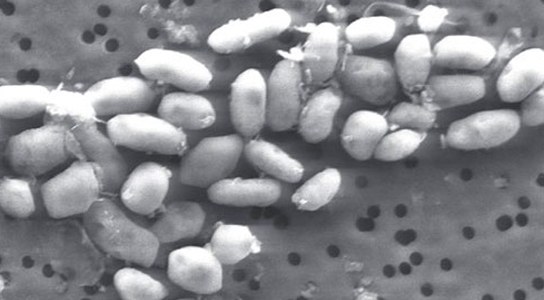
    The controversial 2010 study claiming arsenic-based life was subsequently refuted by a group of scientists.

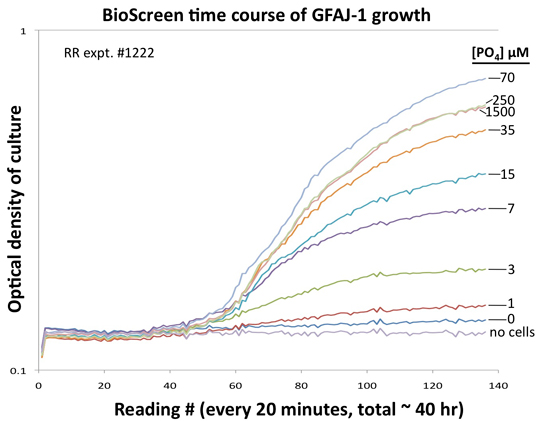
    A controversial study from 2010 was relatively refuted by a group of scientists, trying to duplicate the findings that were published in Science. Researchers have been unsuccessful to reproduce the results from the study authored by Wolfe-Simon et al.

    The team was led by microbiologist Rosie Redfield from the University of British Columbia in Vancouver and they’ve posted data on Redfield’s blog. Redfield says that she presents a clear refutation of some of the key findings from the original paper. The most striking claim was that arsenic had been incorporated into the backbone of the DNA, and there has been no arsenic in the DNA of our cells at all, she states.
    graph-gfaj-1-growth

    The authors aren’t retreating from their conclusions and are waiting to see if Redfield’s refutations will be published in a peer-reviewed journal. The bacterium in question, GFAJ-1, was found to use arsenic instead of phosphorous in molecules essential to life. This was a surprising finding, as phosphorous has been thought essential to life as we know it, while arsenic is considered toxic.

    Redfield isn’t the only one who has raised concerns about these findings. It’s unclear how much phosphorous was used to grow bacteria in the original paper, and at which concentrations they were able to find their results since apparently the Wolfe-Simon et al records aren’t detailed enough.

    Other researchers have said that Redfield and her colleagues have produced a reasonable refutation, but it will be difficult to definitely prove the complete absence of arsenic from GFAJ-1 DNA. It does not look encouraging for the arsenic-in-DNA hypothesis, states Ronald Oremland at the US Geographical Survey in Menlo Park, California.

    Redfield hopes to submit her findings to Science by the end of the month. Wolfe-Simon is still looking for arsenic in the bacterium. She states that with added effort from the scientific community, a lot more will be known by next year.

    Reference: “Arsenic-eating microbe may redefine chemistry of life” by Alla Katsnelson, 2 December 2010, Nature.
    DOI: 10.1038/news.2010.645

    Never miss a breakthrough: Join the SciTechDaily newsletter.
    Follow us on Google and Google News.

    Arsenic Bacteria Life Microbiology
    Share. Facebook Twitter Pinterest LinkedIn Email Reddit

    Related Articles

    Warning – Scientists Uncover Hidden Dangers of Feeding Dogs Raw Meat

    Awakening Ancient Dangers: Catastrophic Risks of “Time-Traveling” Pathogens From Melting Permafrost

    Bacteria Could Help Build Sustainable, Eco-Friendly Construction Materials

    Three Decade Wildlife Mystery Solved: International Investigation Discovers Bald Eagles’ Killer

    Shrinking (Ultra)Violet: Using Narrow Wavebands of UV Light to Kill Germs in Drinking Water

    Scientists Genetically Engineered Bacteria to Protect Bees From Colony Collapse

    Scientists Pinpoint Lowest Temperature Limit for Life on Earth

    Arsenic-Tolerant GFAJ-1 Bacterium Still Needs Phosphorous

    Scientists Discover Dead Hydrothermal Vents Contain Life

    Leave A Reply Cancel Reply

    • Facebook
    • Twitter
    • Pinterest
    • YouTube

    Don't Miss a Discovery

    Subscribe for the Latest in Science & Tech!

    Trending News

    AI Could Detect Early Signs of Alzheimer’s in Under a Minute – Far Before Traditional Tests

    What if Dark Matter Has Two Forms? Bold New Hypothesis Could Explain a Cosmic Mystery

    This Metal Melts in Your Hand – and Scientists Just Discovered Something Strange

    Beef vs. Chicken: Surprising Results From New Prediabetes Study

    Alzheimer’s Breakthrough: Scientists Discover Key Protein May Prevent Toxic Protein Clumps in the Brain

    Quantum Reality Gets Stranger: Physicists Put a Lump of Metal in Two Places at Once

    Scientists May Have Found the Key to Jupiter and Saturn’s Moon Mystery

    Scientists Uncover Brain Changes That Link Pain to Depression

    Follow SciTechDaily
    • Facebook
    • Twitter
    • YouTube
    • Pinterest
    • Newsletter
    • RSS
    SciTech News
    • Biology News
    • Chemistry News
    • Earth News
    • Health News
    • Physics News
    • Science News
    • Space News
    • Technology News
    Recent Posts
    • What if Your Memories Never Happened? Physicists Take a New Look at the Boltzmann Brain Paradox
    • Students Found an Ancient Star That Shouldn’t Be in the Milky Way
    • Astronomers Solve 50-Year Mystery and Reveal Hidden Culprit Behind Strange X-Ray Emissions
    • One of the Universe’s Largest Stars May Be Getting Ready To Explode
    • Scientists Discover Enzyme That Could Supercharge Ozempic-Like Weight Loss Drugs
    Copyright © 1998 - 2026 SciTechDaily. All Rights Reserved.
    • Science News
    • About
    • Contact
    • Editorial Board
    • Privacy Policy
    • Terms of Use

    Type above and press Enter to search. Press Esc to cancel.