
Close Menu
    Facebook X (Twitter) Instagram
    SciTechDaily
    • Biology
    • Chemistry
    • Earth
    • Health
    • Physics
    • Science
    • Space
    • Technology
    Facebook X (Twitter) Pinterest YouTube RSS
    SciTechDaily
    Home»Technology»Solar Cell Testing Sped Up Dramatically With New 3D-Printed System
    Technology

    Solar Cell Testing Sped Up Dramatically With New 3D-Printed System

    By ARC Centre of Excellence in Exciton ScienceMay 20, 20202 Comments3 Mins Read
    Facebook Twitter Pinterest Telegram LinkedIn WhatsApp Email Reddit
    Share
    Facebook Twitter LinkedIn Pinterest Telegram Email Reddit
    16-Channel Parallel Characterization System
    (Click image for full view.) A detail from the new 16-channel parallel characterization system. Credit: Adam Surmiak, Xiongfeng Lin

    Australian scientists flag dramatic improvement to next-gen perovskite R&D.

    Tests on new designs for next-generation solar cells can now be done in hours instead of days thanks to a new system built by scientists at Australia’s Monash University, incorporating 3D-printed key components.

    The machine can analyze 16 sample perovskite-based solar cells simultaneously, in parallel, dramatically speeding up the process.
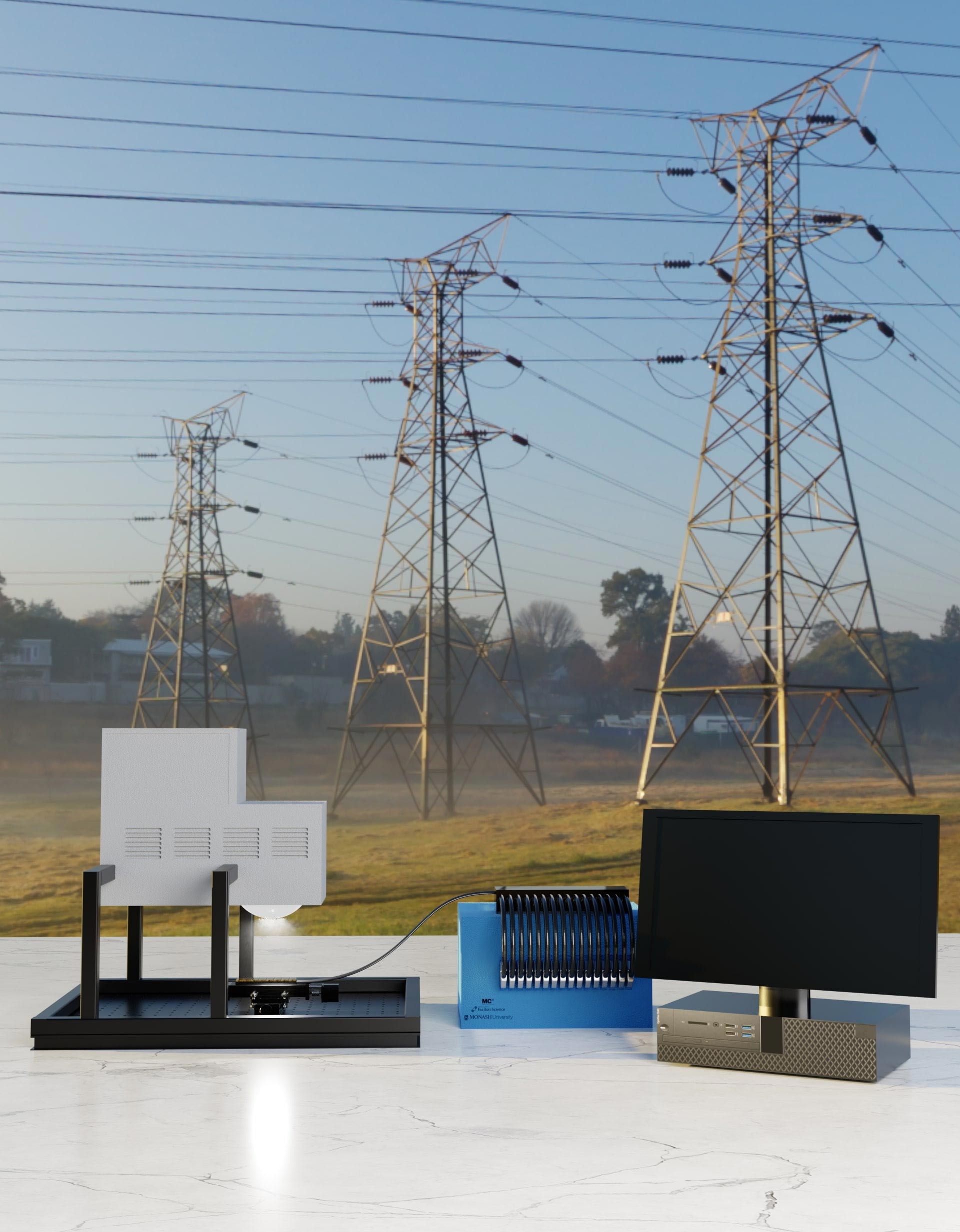
    New 16 Channel Parallel Characterization System
    The new 16-channel parallel characterization system dramatically seeds up testing for new perovskite solar cell designs. Credit: Adam Surmiak, Xiongfeng Lin

    The invention means that the performance and commercial potential of new compounds can be very rapidly evaluated, significantly speeding up the development process.

    “Third-generation perovskite cells have boosted performance to above 25%, which is almost identical to the efficiency level for conventional silicon-based ones,” said project leader Mr. Adam Surmiak from the ARC Centre of Excellence in Exciton Science.

    “But those results are from laboratory tests on millimeter-sized samples in indoor conditions – and therefore don’t take into account a whole range of real-world factors such as environmental conditions, the use to which the cells are put, the manufacturing process, and possible deterioration over time.

    “To make proper decisions, we need to know how each different cell design will function at large scales in the real world – and to do that we need a proper data library so we can pick the best candidates to take to that next stage. This new system lets us build that very rapidly and speed up transition from laboratory to fabrication.”

    Getting the recipe right for perovskite solar cells is regarded as critically important to the transition away from fossil fuels and towards renewable energy generation. They cost about 10 times less than silicon cells and are much cheaper to manufacture.

    Rooftop solar panels made from perovskite will pay for themselves within months instead of years, which is the case with present models.
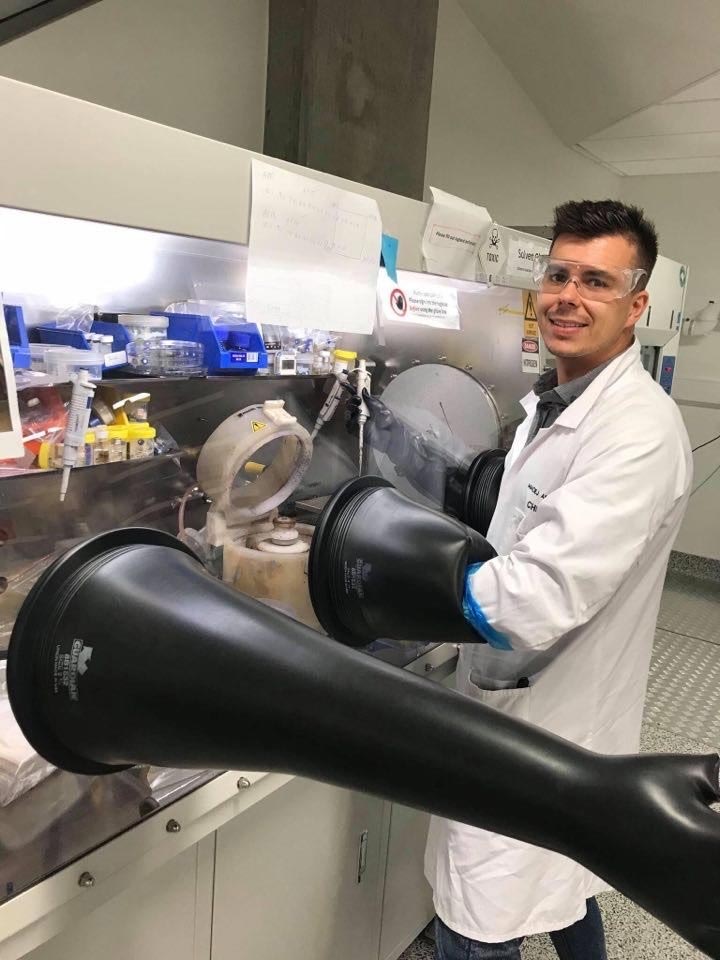
    Adam Surmiak
    Adam Surmiak at work in the laboratory. Credit: Exciton Science

    To achieve the high level of precision needed to build the system, Ph.D. candidate Surmiak and his colleagues turned to Monash University’s Instrumentation Facility and the Melbourne Centre for Nanofabrication, part of the Australian National Fabrication Facility – highly specialized machining and equipment facilities. There, the researchers’ designs were produced using ultra-detailed milling and a 16-micrometer precision 3D printer.

    Alongside the development and set-up of this new testing facility, Mr. Surmiak was also able to significantly speed up the actual solar cell fabrication process.

    The head of the Monash University lab in which Surmiak works, Professor Udo Bach, a Chief Investigator with Exciton Science, described the invention as world-leading.

    “Experimental high-throughput concepts will become increasingly important for the discovery of the next generation of energy materials, fueling the transition to a carbon-neutral energy economy,” he said.

    “Our new set-up has the capacity to test thousands of solar cells in one single day, putting us ahead of practically all other R&D labs worldwide.”

    The research is published in the journal Solar RRL.

    Reference: “High‐Throughput Characterization of Perovskite Solar Cells for Rapid Combinatorial Screening” by Maciej Adam Surmiak, Tian Zhang, Jianfeng Lu, Kevin James Rietwyk, Sonia Ruiz Raga, David Patrick McMeekin and Udo Bach, 22 April 2020, Solar RRL.
    DOI: 10.1002/solr.202000097

    Mr. Surmiak and Professor Bach worked with Dr. Tian Zhang, Dr. Jianfeng Lu, Dr. Kevin Rietwyk, Dr. Sonia Ruiz Raga, and Dr. David McMeekin, all from Exciton Science.

    Never miss a breakthrough: Join the SciTechDaily newsletter.
    Follow us on Google and Google News.

    3D Printing Monash University Perovskite Solar Cell Solar Cells
    Share. Facebook Twitter Pinterest LinkedIn Email Reddit

    Related Articles

    Breakthrough Self-Assembly Innovation Enables Cheaper Solar Energy Production

    Capturing Extra Energy From the Sun: Harnessing Hot Carriers for High Efficiency Solar Cells

    Chalcogenide Perovskite Energy Transport Mechanism Mapped for Solar Energy Use

    Important Breakthrough in Perovskite Solar Cells

    New Dual-Layer Solar Cell Sets Record for Efficiently Generating Power

    Hybrid Perovskites Improve Solar Cell Efficiency

    Guanidinium Helps Stabilizes Perovskite Solar Cells

    DMSO Treatment Could Transform Solar Cells, Boosts Efficiency

    Nanoscientists Improve the Stability of Perovskite Solar Cells

    2 Comments

    1. Claudette on May 20, 2020 4:49 pm

      Please UNSUBSCRIBE ME ..

      Reply
    2. Claudette on May 20, 2020 4:50 pm

      UNSUBSCRIBE ME PLEASE

      Reply
    Leave A Reply Cancel Reply

    • Facebook
    • Twitter
    • Pinterest
    • YouTube

    Don't Miss a Discovery

    Subscribe for the Latest in Science & Tech!

    Trending News

    Tea or Coffee? Your Daily Choice Could Affect Osteoporosis Risk

    Vitamin C May Fight Cancer in a Surprising Way

    Hidden Earthquake Threat: Oregon’s Fault May Be Closer to the Surface Than Scientists Thought

    Scientists Discover Hidden Sleep Switch That Boosts Brainpower, Builds Muscle, and Burns Fat

    Ancient Mega-Floods Once Ripped Across Mars and Left This Giant Scar

    Scientists Discover Cheap, Natural Remedy for High Blood Pressure

    Earth’s Upper Atmosphere Is Cooling Fast and Scientists Finally Know Why

    32,000 Olympic Pools of Magma Nearly Erupted Beneath Atlantic Island

    Follow SciTechDaily
    • Facebook
    • Twitter
    • YouTube
    • Pinterest
    • Newsletter
    • RSS
    SciTech News
    • Biology News
    • Chemistry News
    • Earth News
    • Health News
    • Physics News
    • Science News
    • Space News
    • Technology News
    Recent Posts
    • Ancient Roman Gold Mines Discovered in Spain’s Pyrenees
    • Ancient DNA Reveals How Farming Spread and Nearly Broke a Civilization
    • 146,000-Year-Old Discovery Rewrites the Story of Human Creativity
    • The Type of Alcohol You Drink Could Affect How Long You Live
    • 19-Year Study Reveals the Surprising Truth About Sitting and Dementia
    Copyright © 1998 - 2026 SciTechDaily. All Rights Reserved.
    • Science News
    • About
    • Contact
    • Editorial Board
    • Privacy Policy
    • Terms of Use

    Type above and press Enter to search. Press Esc to cancel.