
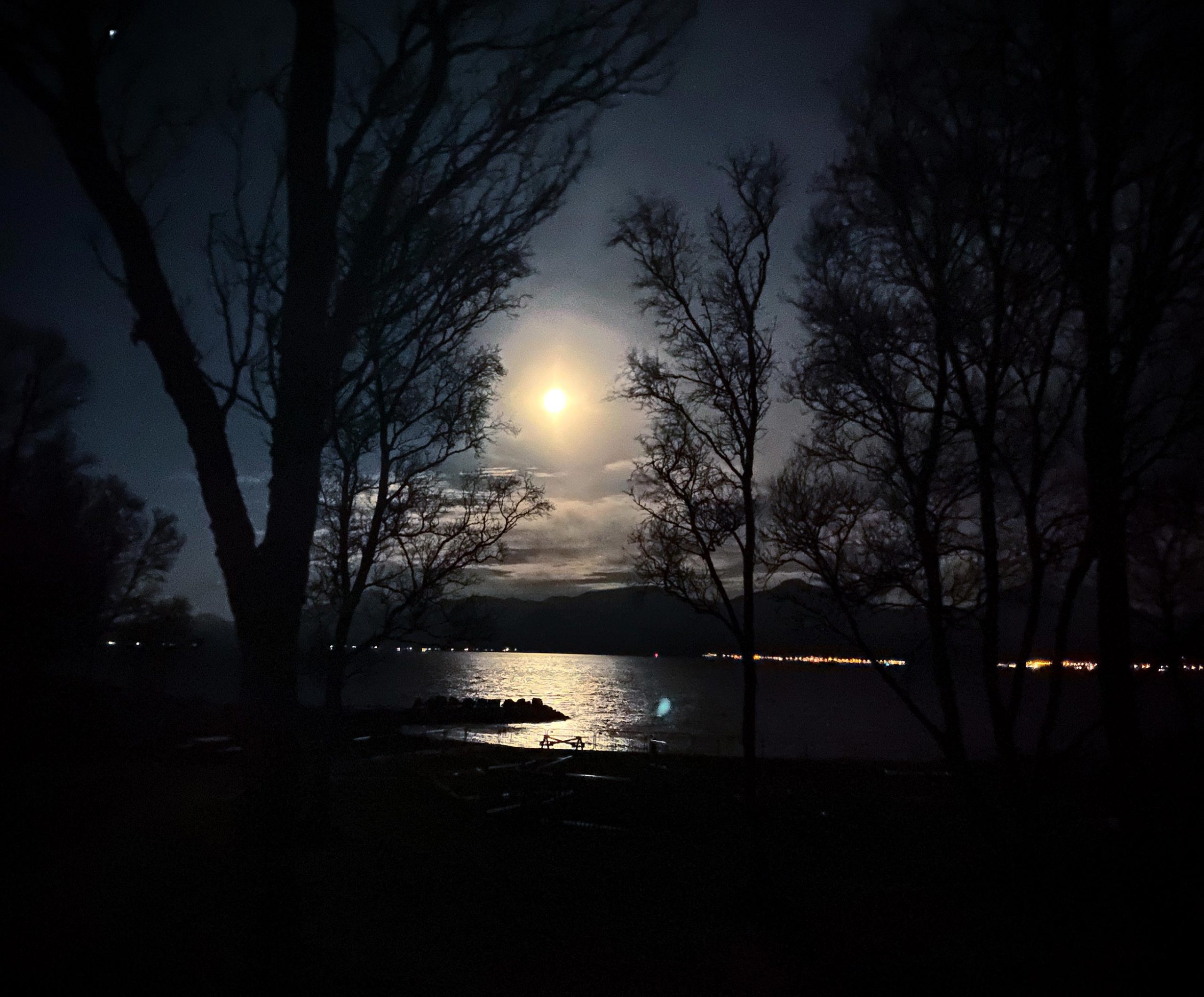
High tides may even counter the potential threat of submarine methane release from the warming Arctic.
It may not be very well known, but the Arctic Ocean leaks enormous amounts of the potent greenhouse gas methane. These leaks have been ongoing for thousands of years but could be intensified by a future warmer ocean. The potential for this gas to escape the ocean, and contribute to the greenhouse gas budget in the atmosphere, is an important mystery that scientists are trying to solve.
The total amount of methane in the atmosphere has increased immensely over the past decades, and while some of the increase can be ascribed to human activity, other sources are not very well constrained.
A recent paper in Nature Communications even implies that the moon has a role to play.
Small Pressure Changes Affect Methane Release
The moon controls one of the most formidable forces in nature – the tides that shape our coastlines. Tides, in turn, significantly affect the intensity of methane emissions from the Arctic Ocean seafloor.
“We noticed that gas accumulations, which are in the sediments within a meter from the seafloor, are vulnerable to even slight pressure changes in the water column. Low tide means less of such hydrostatic pressure and higher intensity of methane release. High tide equals high pressure and lower intensity of the release” says co-author of the paper Andreia Plaza Faverola.
“It is the first time that this observation has been made in the Arctic Ocean. It means that slight pressure changes can release significant amounts of methane. This is a game-changer and the highest impact of the study.” Says another co-author, Jochen Knies.
New Methods Reveal Unknown Release Sites
Plaza Faverola points out that the observations were made by placing a tool called a piezometer in the sediments and leaving it there for four days.
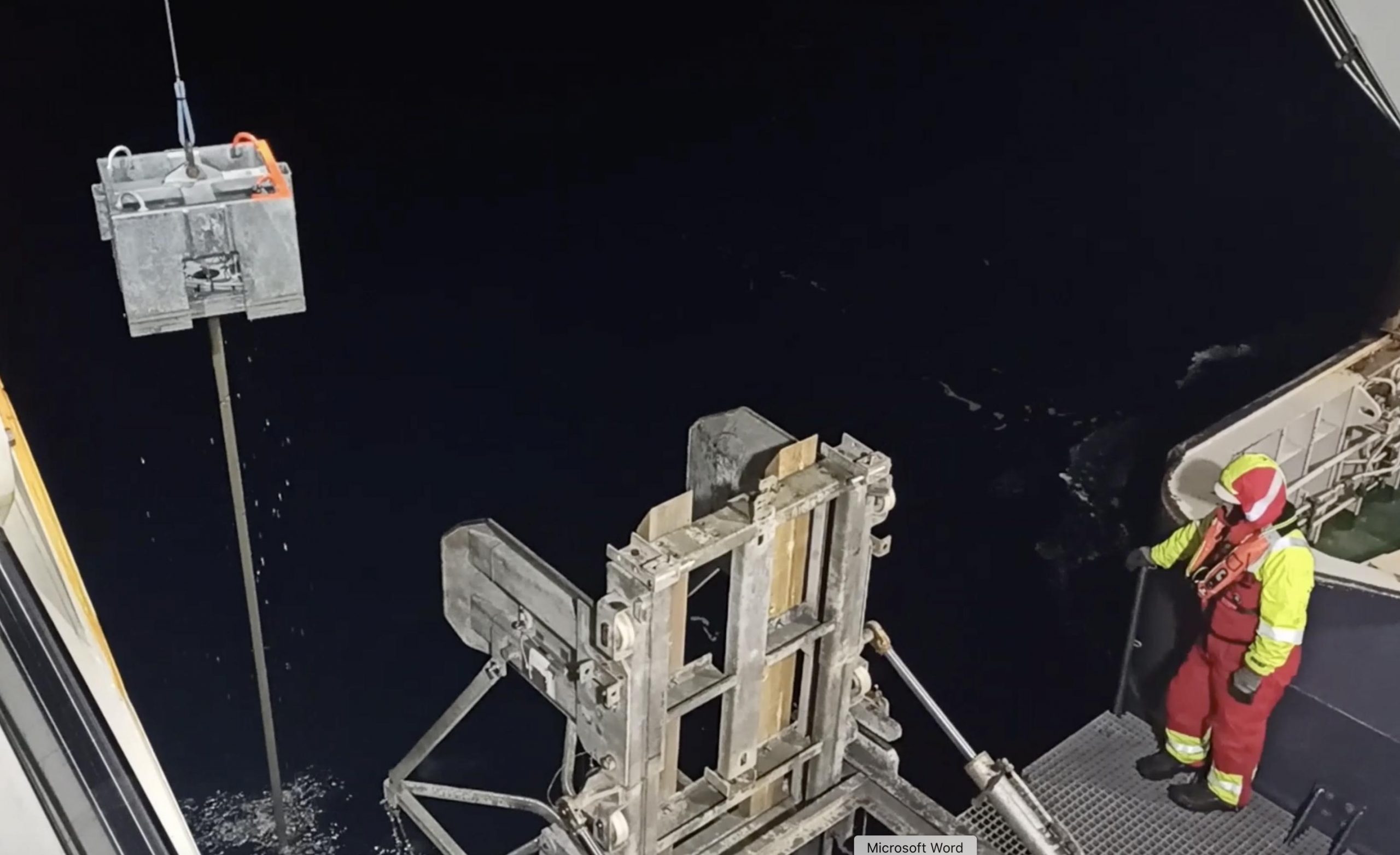
It measured the pressure and temperature of the water inside the pores of the sediment. Hourly changes in the measured pressure and temperature revealed the presence of gas close to the seafloor that ascends and descends as the tides change. The measurements were made in an area of the Arctic Ocean where no methane release has previously been observed but where massive gas hydrate concentrations have been sampled.
“This tells us that gas release from the seafloor is more widespread than we can see using traditional sonar surveys. We saw no bubbles or columns of gas in the water. Gas burps that have a periodicity of several hours won’t be identified unless there is a permanent monitoring tool in place, such as the piezometer.” Says Plaza Faverola

These observations imply that the quantification of present-day gas emissions in the Arctic may be underestimated. High tides, however, seem to influence gas emissions by reducing their height and volume.
“What we found was unexpected and the implications are big. This is a deep-water site. Small changes in pressure can increase the gas emissions but the methane will still stay in the ocean due to the water depth. But what happens in shallower sites? This approach needs to be done in shallow Arctic waters as well, over a longer period. In shallow water, the possibility that methane will reach the atmosphere is greater.” Says Knies.
May Counteract the Temperature Effects
High sea level seems thus to influence gas emissions by potentially reducing their height and volume. The question remains whether sea-level rise due to global warming might partially counterbalance the effect of temperature on submarine methane emissions.
“Earth systems are interconnected in ways that we are still deciphering, and our study reveals one of such interconnections in the Arctic: The moon causes tidal forces, the tides generate pressure changes, and bottom currents that in turn shape the seafloor and impact submarine methane emissions. Fascinating!” says Andreia Plaza Faverola.
Reference: “Impact of tides and sea-level on deep-sea Arctic methane emissions” by Nabil Sultan, Andreia Plaza-Faverola, Sunil Vadakkepuliyambatta, Stefan Buenz and Jochen Knies, 9 October 2020, Nature Communications.
DOI: 10.1038/s41467-020-18899-3
The paper is the result of a collaboration between CAGE and Ifremer under the project SEAMSTRESS – Tectonic Stress Effects on Arctic Methane Seepage
Never miss a breakthrough: Join the SciTechDaily newsletter.
Follow us on Google and Google News.