
Close Menu
    Facebook X (Twitter) Instagram
    SciTechDaily
    • Biology
    • Chemistry
    • Earth
    • Health
    • Physics
    • Science
    • Space
    • Technology
    Facebook X (Twitter) Pinterest YouTube RSS
    SciTechDaily
    Home»Technology»Ultralow-Temperature Supercapacitors Using Porous Carbon Aerogel – Could Power Mars & Polar Missions
    Technology

    Ultralow-Temperature Supercapacitors Using Porous Carbon Aerogel – Could Power Mars & Polar Missions

    By American Chemical SocietyMarch 10, 2021No Comments2 Mins Read
    Facebook Twitter Pinterest Telegram LinkedIn WhatsApp Email Reddit
    Share
    Facebook Twitter LinkedIn Pinterest Telegram Email Reddit
    Porous Carbon Aerogel Supercapacitor
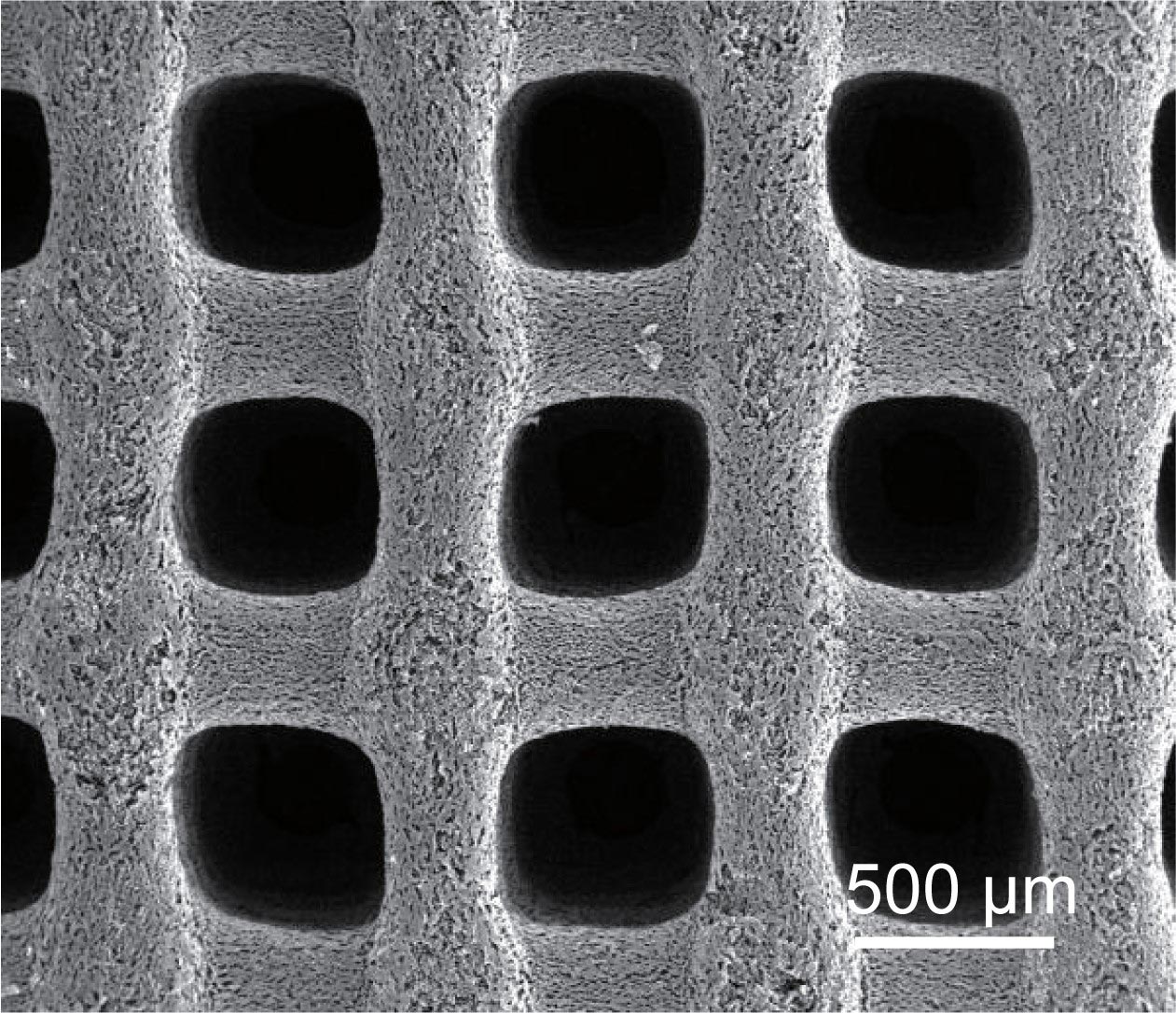
    A porous carbon aerogel improves the low-temperature performance of supercapacitors, which could help supply energy for space missions and polar activities. Credit: Adapted from Nano Letters 2021, DOI: 10.1021/acs.nanolett.0c04780

    3D-printed carbon aerogels enable power storage at -94°F, aiding space exploration without heaters.

    NASA’s Perseverance Rover recently made a successful landing on Mars, embarking on a two-year mission to seek signs of ancient life and collect samples. Because Mars is extremely cold — nighttime temperatures can drop below -112 F  (-80 C) — heaters are required to keep the rover’s battery system from freezing. Now, researchers reporting in ACS’ Nano Letters have 3D printed porous carbon aerogels for electrodes in ultralow-temperature supercapacitors, reducing heating needs for future space and polar missions.

    Jennifer Lu, Yat Li, and colleagues wanted to develop an energy storage system that could operate at very low temperatures without heating units, which add weight and energy requirements to instruments and machinery, such as the Mars rovers. So the researchers 3D printed a porous carbon aerogel using cellulose nanocrystal-based ink, and then freeze-dried it and further treated the surface. The resulting material had multiple levels of pores, from the 500-μm pores in the lattice-like structure, to nanometer-sized pores within the bars of the lattice.

    This multiscale porous network preserved adequate ion diffusion and charge transfer through an electrode at -94 F (-70 C), achieving higher energy storage capacitance than previously reported low-temperature supercapacitors. The team will collaborate with NASA scientists to further characterize the device’s low-temperature performance.

    Reference: “Printing Porous Carbon Aerogels for Low Temperature Supercapacitors” by Bin Yao, Huarong Peng, Haozhe Zhang, Junzhe Kang, Cheng Zhu, Gerardo Delgado, Dana Byrne, Soren Faulkner, Megan Freyman, Xihong Lu, Marcus A. Worsley, Jennifer Q. Lu and Yat Li, 10 March 2021, Nano Letters.
    DOI: 10.1021/acs.nanolett.0c04780

    The authors acknowledge funding from the Merced Nanomaterials Center for Energy and Sensing, NASA, the University of California, Santa Cruz, and the U.S. Department of Energy.

    Never miss a breakthrough: Join the SciTechDaily newsletter.
    Follow us on Google and Google News.

    American Chemical Society Energy Nanotechnology Supercapacitors
    Share. Facebook Twitter Pinterest LinkedIn Email Reddit

    Related Articles

    Overcoming Long-Held Limitations: Korean Scientists Unveil Next-Generation Energy Storage Technology

    MXene Nanomaterial Offers Flexible and Stretchable High-Capacity Energy Storage

    Backpack Makes Loads Feel Lighter and Powers Electronics by Harvesting Energy From Walking

    Anode-Free Zinc Battery Could Someday Provide Large Scale Storage of Renewable Energy

    Swarms of Microrobots Quickly Clean Up Radioactive Waste [Video]

    Scientists Develop a New Nanobiocomposite Material

    A Cost-Effective Fabrication Method for Micro-Scale Graphene-Based Supercapacitors

    Nanosheet-Flower Structure Boosts Energy Storage

    Researchers Study the Use of Photosystem-I as Photovoltaic Panels

    Leave A Reply Cancel Reply

    • Facebook
    • Twitter
    • Pinterest
    • YouTube

    Don't Miss a Discovery

    Subscribe for the Latest in Science & Tech!

    Trending News

    Scientists May Have Discovered How To Heal Damaged Kidneys

    Interstellar Visitor 3I/ATLAS Is Bursting With an Unexpected Chemical

    Scientists Just Found All 5 Genetic “Letters” of DNA and RNA on an Asteroid

    The 4,000-Year-Old City That Defied History’s Rules on Wealth and Power

    The World’s Biggest Population Fear Has Flipped – and It Could Change Everything

    This “Fake” Pill Improved Memory and Physical Performance in Just 3 Weeks

    Scientists Say Frequent Ejaculation May Improve Sperm Quality and Fertility

    Scientists Have Found “The Heaven Sword” After Years of Looking

    Follow SciTechDaily
    • Facebook
    • Twitter
    • YouTube
    • Pinterest
    • Newsletter
    • RSS
    SciTech News
    • Biology News
    • Chemistry News
    • Earth News
    • Health News
    • Physics News
    • Science News
    • Space News
    • Technology News
    Recent Posts
    • Watch What Happened When a Lost Elephant Calf Returned to Her Family
    • 17,000 Brain Scans Reveal Surprising Ethnic Differences in Alzheimer’s Biology
    • New Autism Treatment Strategy Restores Key Brain Receptor Function
    • Younger Generations Are Aging Faster – and It May Be Fueling a Surge in Cancer
    • Scientists Turn Ordinary Sunlight Into UV Light in Major Energy Breakthrough
    Copyright © 1998 - 2026 SciTechDaily. All Rights Reserved.
    • Science News
    • About
    • Contact
    • Editorial Board
    • Privacy Policy
    • Terms of Use

    Type above and press Enter to search. Press Esc to cancel.