
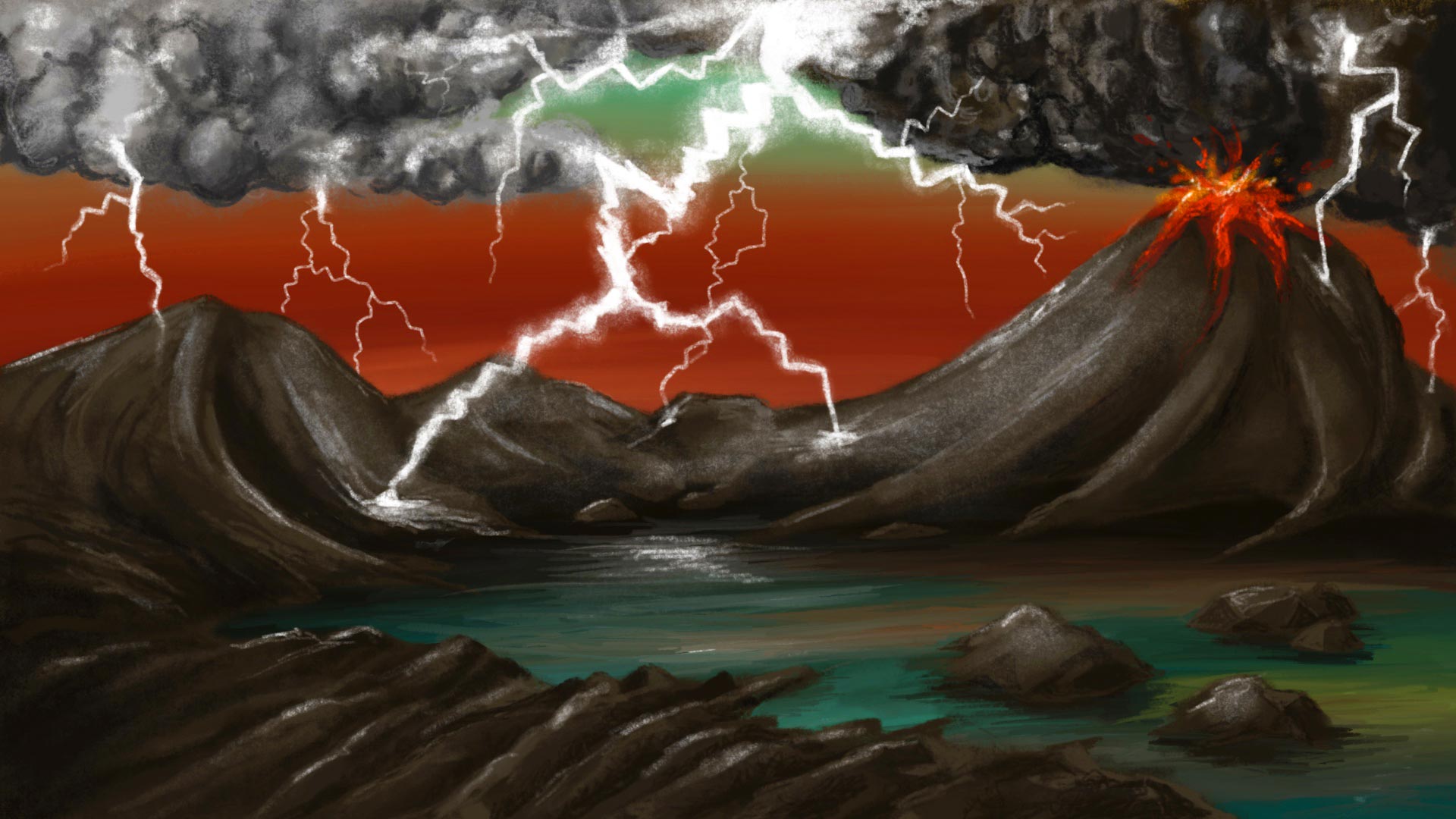
Lightning may have sparked life by delivering key phosphorus, much like meteorites.
Lightning strikes were just as important as meteorites in creating the perfect conditions for life to emerge on Earth, geologists say.
Minerals delivered to Earth in meteorites more than 4 billion years ago have long been advocated as key ingredients for the development of life on our planet.
Scientists believed minimal amounts of these minerals were also brought to early Earth through billions of lightning strikes.
But now researchers from the University of Leeds have established that lightning strikes were just as significant as meteorites in performing this essential function and allowing life to manifest.
They say this shows that life could develop on Earth-like planets through the same mechanism at any time if atmospheric conditions are right. The research was led by Benjamin Hess during his undergraduate studies at the University of Leeds in the School of Earth and Environment.
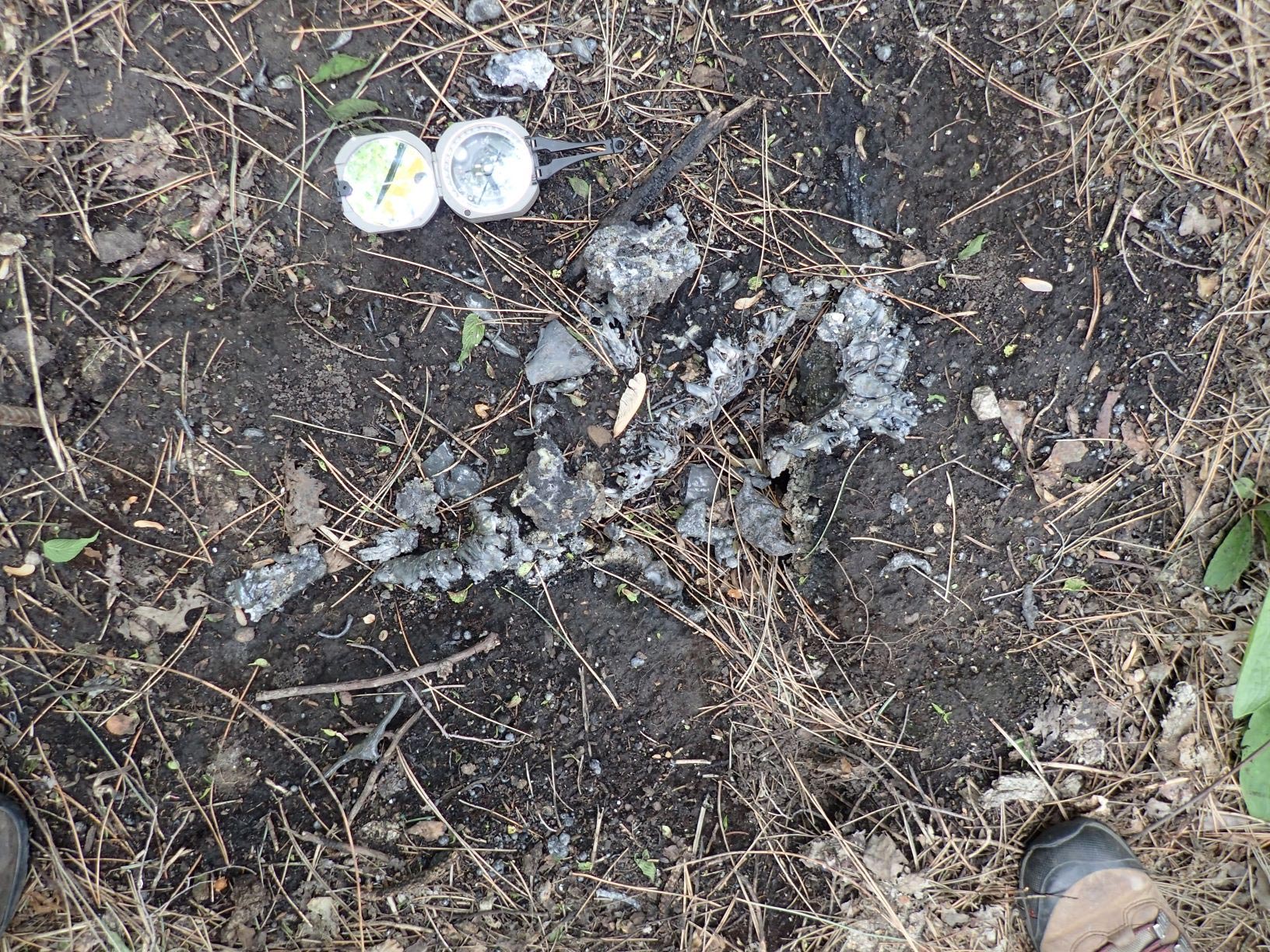
Mr. Hess and his mentors were studying an exceptionally large and pristine sample of fulgurite, a rock created when lightning strikes the ground. The sample was formed when lightning struck a property in Glen Ellyn, Illinois, USA, in 2016, and donated to the geology department at Wheaton College nearby.
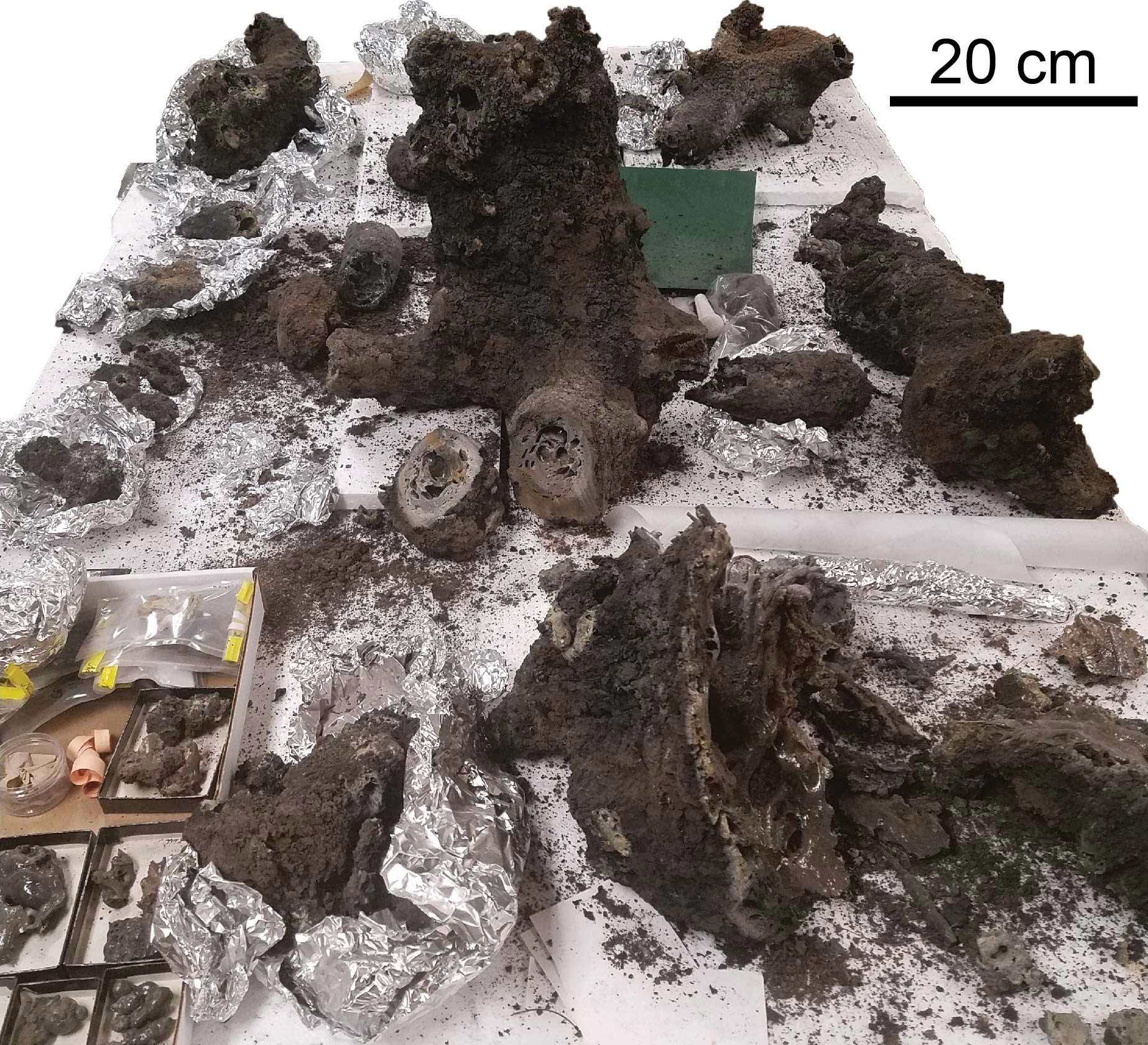
The Leeds researchers were initially interested in how fulgurite is formed but were fascinated to discover in the Glen Ellyn sample a large amount of a highly unusual phosphorous mineral called schreibersite.
Phosphorus and the Spark of Life
Phosphorus is essential to life and plays a key role in all life processes from movement to growth and reproduction. The phosphorous present on early Earth’s surface was contained in minerals that cannot dissolve in water, but schreibersite can.
Mr. Hess, now a PhD student at Yale University, Connecticut, USA, said: “Many have suggested that life on Earth originated in shallow surface waters, following Darwin’s famous ‘warm little pond’ concept.
“Most models for how life may have formed on Earth’s surface invoke meteorites which carry small amounts of schreibersite. Our work finds a relatively large amount of schreibersite in the studied fulgurite.
“Lightning strikes Earth frequently, implying that the phosphorus needed for the origin of life on Earth’s surface does not rely solely on meteorite hits.
“Perhaps more importantly, this also means that the formation of life on other Earth-like planets remains possible long after meteorite impacts have become rare.”
A More Constant Catalyst
The team estimates that phosphorus minerals made by lightning strikes surpassed those from meteorites when the Earth was around 3.5 billion years old, which is about the age of the earliest known micro-fossils, making lightning strikes significant in the emergence of life on the planet.
Furthermore, lightning strikes are far less destructive than meteor hits, meaning they were much less likely to interfere with the delicate evolutionary pathways in which life could develop.
The research, titled Lightning strikes as a major facilitator of prebiotic phosphorus reduction on early Earth, was published on March 16, 2021, in Nature Communications.
The School of Earth and Environment funded the project under a scheme that enables undergraduate led research using high-end analytical facilities.
Dr. Jason Harvey, Associate Professor of Geochemistry in Leeds’ School of Earth and Environment, and Sandra Piazolo, Professor of Structural Geology and Tectonics in the School of Earth and Environment, mentored Mr. Hess in the research project.
Expanding Possibilities for Life in the Universe
Dr. Harvey said: “The early bombardment is a once-in-a-solar-system event. As planets reach their mass, the delivery of more phosphorus from meteors becomes negligible.
“Lightning, on the other hand, is not such a one-off event. If atmospheric conditions are favorable for the generation of lightning, elements essential to the formation of life can be delivered to the surface of a planet.
“This could mean that life could emerge on Earth-like planets at any point in time.”
Professor Piazolo said: “Our exciting research opens the door to several future avenues of investigation, including search for and in-depth analysis of fresh fulgurite in Early Earth-like environment; in-depth analysis of the effect of flash heating on other minerals to recognize such features in the rock record, and further analysis of this exceptionally well-preserved fulgurite to identify the range of physical and chemical processes within.
“All these studies will help up to increase our understanding of the importance of fulgurite in changing the chemical environment of Earth through time.”
Read Lightning Strikes – Perhaps 1,000,000,000,000,000,000 of Them – May Have Sparked Life on Earth for more on this research.
Reference: “Lightning strikes as a major facilitator of prebiotic phosphorus reduction on early Earth” by Benjamin L. Hess, Sandra Piazolo and Jason Harvey, 16 March 2021, Nature Communications.|
DOI: 10.1038/s41467-021-21849-2
Never miss a breakthrough: Join the SciTechDaily newsletter.
Follow us on Google and Google News.
4 Comments
The complexity of even the most simplest of life forms is beyond imagination. But amazingly, it is not beyond the imagination of those in the article above to think that lightning could be the catalyst for life. If the above theory is correct, then we should have seen chemists creating a flurry of life in the laboratories around the world. They certainly have the “sparks” to get things started, don’t they? I think the creation of life is much more complicated than some dare let on. Now bring God into the picture, and then you have the mystery solved.
Superstition.
Which solves nothing, as magical ‘gods’ are human inventions these ideas have nothing to say on nature. Synthetic cells have been lab made for years now, the first was JCVI-syn1 in 2010. But in nature evolutionary processes happens over geological time, so it takes millions of years.
I quote again the phylogenetic tree of evolution from non-life geology over half alive ancestors to modern independent cellular populations: https://www.nature.com/articles/nmicrobiol2016116 .
Also, the early appearance and ease of diversity with which life evolves should clue anyone in that it is an easy process. You don’t even need to see the tree of life for that.
The first life was very simple, nothing complex like we see today after 4 billion years.
That would only work for the minority biochemical “fres water pond” hypothesis.
“The Earth of 3.2 billion years ago was a “water world” of submerged continents, geologists say, after analyzing oxygen isotope data from ancient ocean crust now exposed on land in Australia. The finding could have major implications for the origin of life on Earth.
“An early Earth without emergent continents may have resembled a ‘water world,’ providing an important environmental constraint on the origin and evolution of life on Earth as well as its possible existence elsewhere,” geoscientists Benjamin Johnson and Boswell Wing write in a paper published in the journal Nature Geoscience.”
[ https://www.nsf.gov/discoveries/disc_summ.jsp?cntn_id=300172&org=NSF&from=news ]
But phylogenetic trees support the geology and biology majority hypothesis of ocean hydrothermal vent evolution [“The physiology and habitat of the last universal common ancestor”, Weiis et al., Nature Microbiology].
Presumably there was a huge phosphate release on the ocean floor on the early Earth.
“Thus, the fate of carbon in the early Earth was to be oxidized to carbonate or carbon dioxide within the first 100 Myr [42]. The upshot was that volcanoes dispensed great volumes of CO2 to the early atmosphere as Darwin [47], Haeckel [48], Mereschkowsky [49] and Leduc [50] had surmised. Indeed, a pressure of 10 bar or more was likely at least at times when carbonated ocean floor was reheated in mantle downdraughts and the gas returned to the atmosphere [42,43]. Hydrogen too was essentially oxidized at these high temperatures to water vapour, and it too was exhaled to produce the all-enveloping universal carbonic ocean perhaps 8 km or so deep [51,52]. Other oxidized volatiles were pyrophosphate, nitric oxide and sulfur dioxide [53–56].”
[“The inevitable journey to being”, Michael J. Russell, Wolfgang Nitschke and Elbert Branscomb]