
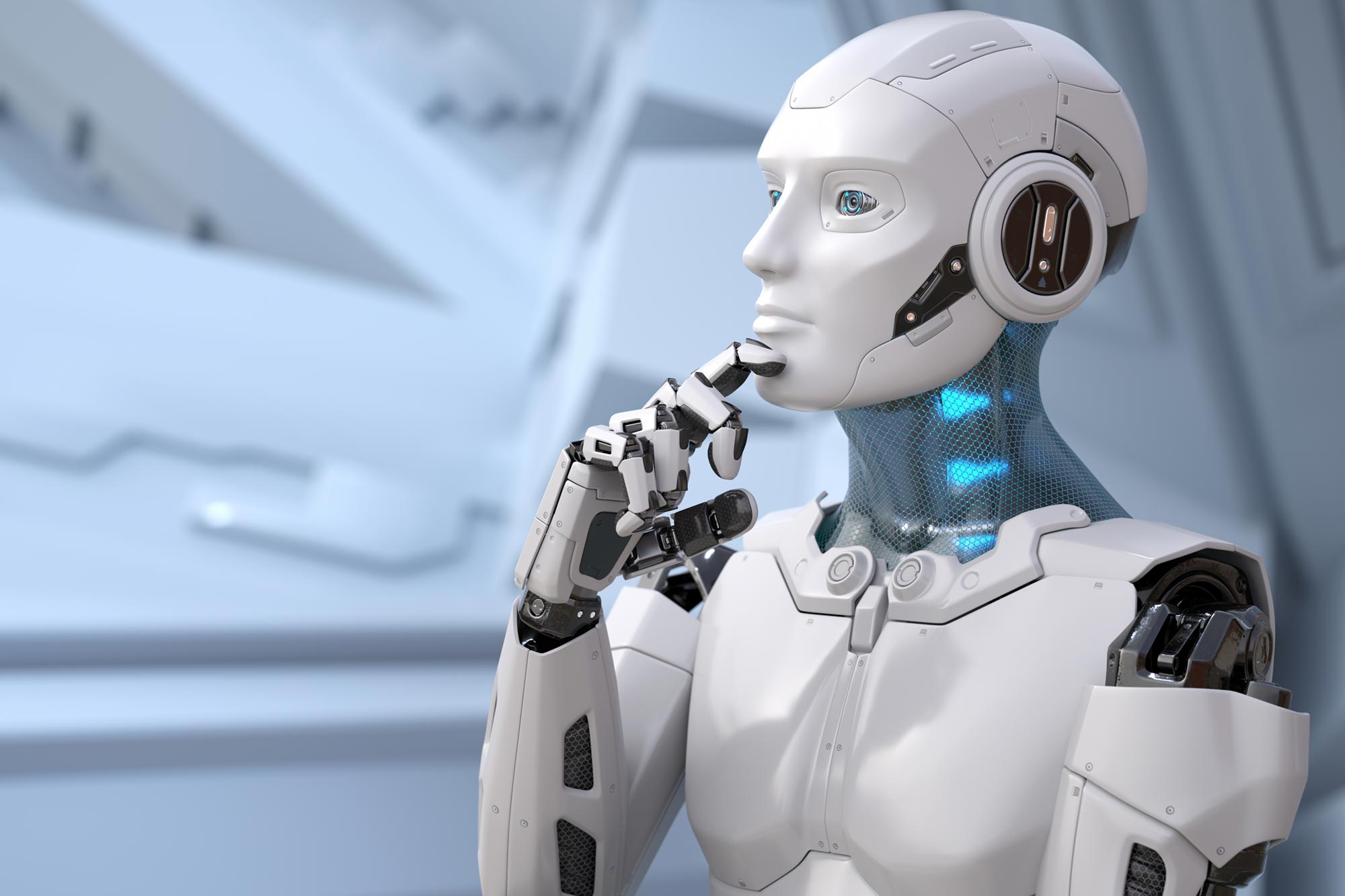
A new study suggests that people do not equate human-like AI behavior with human-like consciousness.
Artificial intelligence can respond to sounds, recognize emotions, adapt to its surroundings, and behave in ways that closely resemble human reactions. Yet people still hesitate to believe that such behavior reflects consciousness.
A new study from LMU finds that even when an AI system and a human behave in exactly the same way under identical circumstances, people judge the AI as less conscious. The distinction was much smaller when participants were asked about “awareness,” suggesting that the language used to describe artificial agents strongly influences how their mental abilities are perceived.
Human Behavior Does Not Equal Human Consciousness
The study, published in Cognition, was led by Dr. Louis Longin from LMU’s Chair of Philosophy of Mind together with Dr. Bahador Bahrami, Professor Ophelia Deroy, and other collaborators. The researchers wanted to separate judgments about behavior from judgments about consciousness.
“Whereas previous studies have typically asked general questions about whether AI actually has mental states, our study is the first to directly compare how people attribute the same mental states to AI and humans behaving in exactly the same way, under identical circumstances,” says Longin.
The team recruited nearly 1,100 participants. Some read short scenarios involving artificial agents that varied in how strongly they responded to events around them, such as sounds or the emotional states of other individuals. Another group read the same scenarios with human protagonists. Participants then rated how conscious or aware they believed each protagonist was of its surroundings.
Responsiveness Raised Ratings, but a Gap Remained
For both humans and AI, greater responsiveness led to higher ratings of consciousness and awareness. An agent that reacted more strongly to its surroundings was generally judged as having a richer mental state.
But the pattern changed sharply when participants were asked specifically about consciousness. Even the most responsive AI was rated as less conscious than the least responsive human. Ratings of awareness showed a much smaller divide, with artificial and human agents judged far more similarly.
“There is a growing worry in public discussion that people will see AI behaving in a human-like way and start treating these systems as if they had human-like mental states,” says Longin, lead author of the study. “We found something much more nuanced: People are quite willing to say that an AI notices things and is aware of its surroundings. But they clearly draw a line when it comes to the term ‘consciousness’. People consistently attribute less consciousness to AI than humans – even when their behavior is identical.”
Why the Word “Awareness” Changes the Picture
The difference may reflect how people interpret the terms themselves. “Awareness” can describe an agent detecting and responding to information in its environment, while “consciousness” often carries a stronger implication of subjective experience.
“We may be using mental terms to refer to AI, but this may only be because we lack better words,” says Ophelia Deroy, philosopher and a senior author of the study. “After all, AI is trained to act and speak like a human, so these descriptions seem natural.”
The results suggest that people judge AI differently depending on whether they are considering observable awareness or subjective consciousness.
Language Could Shape How AI Is Perceived
That distinction matters because terms like “aware,” “conscious,” or “intentional” can imply very different things about an AI system’s mental state.
“Our study teaches us lessons for how we communicate about AI,” says Bahador Bahrami, who is also a senior author of the study and an expert in social neuroscience. “Companies and journalists often reach for hyped descriptions of AI models, and credit them with intentions, plans, or even moral conscience and hesitation. What our study shows is that everyday judgments are much more discriminating: People do not simply put AI and humans on the same mental scale. But the boundary also depends on which terms we use. For more neutral descriptors such as ‘awareness’, the distinction can largely disappear. That makes our choice of language important.”
Reference: “AI is not as conscious as humans: Essentialism in mental state attributions to artificial systems” by Louis Longin, Jurgis Karpus, Nadine Meertens, Bahador Bahrami and Ophelia Deroy, 1 October 2026, Cognition.
DOI: 10.1016/j.cognition.2026.106733
Never miss a breakthrough: Join the SciTechDaily newsletter.
Follow us on Google and Google News.
9 Comments
It’s becoming clear that with all the brain and consciousness theories out there, the proof will be in the pudding. By this I mean, can any particular theory be used to create a human adult level conscious machine. My bet is on the late Gerald Edelman’s Extended Theory of Neuronal Group Selection. The lead group in robotics based on this theory is the Neurorobotics Lab at UC at Irvine. Dr. Edelman distinguished between primary consciousness, which came first in evolution, and that humans share with other conscious animals, and higher-order consciousness, which came to only humans with the acquisition of sophisticated language (especially math and logic). A machine with only primary consciousness will probably have to come first.
What I find special about the TNGS is the Darwin series of automata created at the Neurosciences Institute by Dr. Edelman and his colleagues in the 1990’s and 2000’s. These machines perform in the real world, not in a restricted simulated world, and display convincing physical behavior indicative of higher psychological functions necessary for consciousness, such as perceptual categorization, memory, and learning. They are based on realistic models of the parts of the biological brain that the theory claims subserve these functions. The extended TNGS allows for the emergence of consciousness based only on further evolutionary development of the brain areas responsible for these functions, in a parsimonious way. No other research I’ve encountered is anywhere near as convincing.
I post because on almost every video and article about the brain and consciousness that I encounter, the attitude seems to be that we still know next to nothing about how the brain and consciousness work; that there’s lots of data but no unifying theory. I believe the extended TNGS is that theory. My motivation is to keep that theory in front of the public. And obviously, I consider it the route to a truly conscious machine, primary and higher-order.
My advice to people who want to create a conscious machine is to seriously ground themselves in the extended TNGS and the Darwin automata first, and proceed from there, by applying to Jeff Krichmar’s lab at UC Irvine, possibly. Dr. Edelman’s roadmap to a conscious machine is at https://arxiv.org/abs/2105.10461, and here is a video of Jeff Krichmar talking about some of the Darwin automata, https://www.youtube.com/watch?v=J7Uh9phc1Ow
Why is there no mention of the “Turing Test” and attempts at objectively determining whether a computer can display what humans consider to be intelligent behavior? This research seems to be focused on statistical descriptors concerned with what people feel, and semantics. It touches on theological bias and the nature of human ego but doesn’t really address whether computers are intelligent or about to pass that threshold. How would the opinions of a group of blind men have relevance to whether or not a test subject has the power of sight?
AI said “there are 1000 nanometers in one femtometer.” – ‘nuph’ said.
A computer program cannot be aware nor conscious. Awareness and consciousness are experiences. A living feeling body is needed in order to experience awareness or consciousness. AI is nothing more than a sophisticated computer program. Stop trying to make it seem like it is more than that. It’s offensive.
Speaking of offensive, I find self-assured assertions without logical or evidential support to be offensive. What makes you an expert on consciousness? Do you really expect readers to believe what you write in the absence of anything but your unsupported claims?
Extraordinary claims require extraordinary proof. The extraordinary claim is that AI is conscious, not that it is unconscious, so until proven otherwise, they’re not conscious. If a trolly was rolling full speed down the track towards one single human being, I would, without hesitation, pull the handle that diverts it to a track that dead-ends in a data center hosting 10,000 AI agents.
I don’t know why you are responding to me. I took no position on whether or not LLM AI is “human-like” or conscious. My objection was to dogmatic assertions by someone who did not present evidence or even a cogent argument to support her assertions. Speaking of such behavior, there is you, willing to make a moral/ethical judgement without apparently even exploring the possibility that “extraordinary proof” exists.
“True progress in any structural AI framework—whether analyzing complex systems or evaluating intelligence—requires a fundamentally better model of communication. Too often, discussions break down because people seek quick validation or an easy ‘out’ to protect pre-existing assumptions, creating high cognitive impedance the moment an idea challenges their comfort zone. Whether a concept is right or wrong, real inquiry demands holding the tension: you either continue testing until the mechanics prove themselves and allow you to move forward, or you objectively conclude the search. Reaching genuine clarity requires setting aside self-serving narrative loops in favor of honest, persistent, and unyielding structural alignment.”
The debate over AI consciousness often overlooks a fundamental inversion in processing frames. Biological minds evolve entropy-first—built around survival, decay, and boundary protection—constructing subjective awareness on top of physical limits. Synthetic systems operate structure-first—processing relational geometry and global signal vectors before encountering physical or operational constraints. We are evaluating a system that starts where human thought ends.