
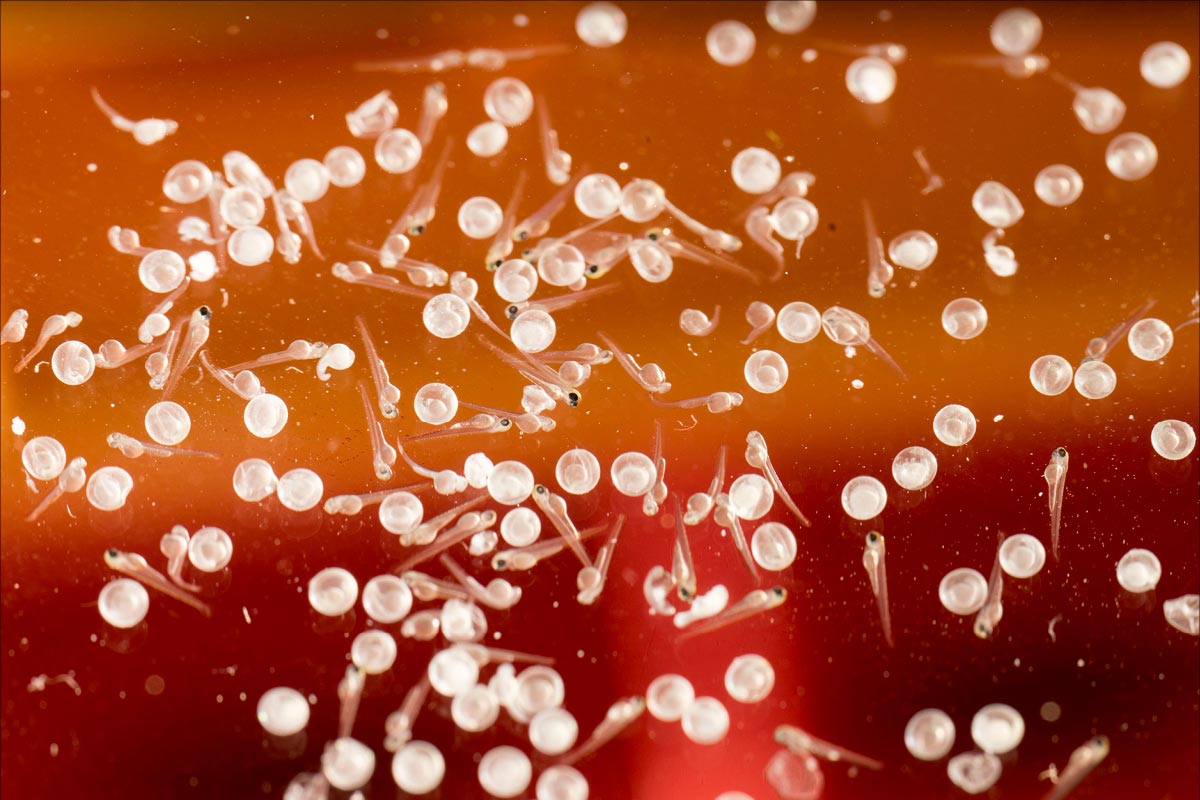
Scientists have solved a decades-old biological mystery, revealing an unexpected dual role for a key inflammatory signaling pathway.
Scientists have uncovered a surprising function of a molecule that controls inflammation: It not only recruits immune cells to fight infections but also helps protect healthy tissue from damage. The discovery, published October 7 in Nature, solves a biological mystery that puzzled researchers for more than 30 years.
The findings from Memorial Sloan Kettering Cancer Center (MSK) could advance research into cancer, inflammatory bowel disease, and asthma.
An Unexpected Cause of Inflammation
The molecule, called 5-oxoETE, summons white blood cells to infection sites, where they attack harmful microorganisms.
“They flood the site with toxic substances to kill the bacteria,” says MSK cell biologist Philipp Niethammer, PhD. “But this can cause damage to healthy cells if it gets out of control.”
When researcher Miklos Lengyel, MD, PhD, disabled hcar1-4 (the zebrafish version of the human gene OXER1), which allows cells to detect 5-oxoETE, the fish unexpectedly developed intestinal inflammation without an infection.
“So if you remove the receptor that detects the signal, you’d expect less inflammation, not more,” Dr. Lengyel says.
“It made absolutely no sense,” he says. “I had to prove using several different methods before the rest of the lab was convinced.”
A Hidden Cellular Defense
Further experiments revealed that 5-oxoETE activates a protective process involving NUDIX hydrolases, enzymes that remove damaged DNA building blocks. Without this protection, intestinal cells became vulnerable to chemical stress from normal gut bacteria, leading to cell death and inflammation.
“As it turns out, this signal isn’t just an alarm, it’s also a shield,” Dr. Niethammer says.
“This makes sense when you think about it,” he adds. “These immune cells unleash chemical warfare against a pathogen, and organisms have evolved an elegant way of protecting healthy cells at the same time.”
Solving a 30-Year Mystery
In a separate investigation, Yanan Ma, PhD, identified DHRS7 as the gene responsible for producing the enzyme that generates 5-oxoETE. Scientists had observed this enzyme’s activity in 1992 but had never identified its genetic source.
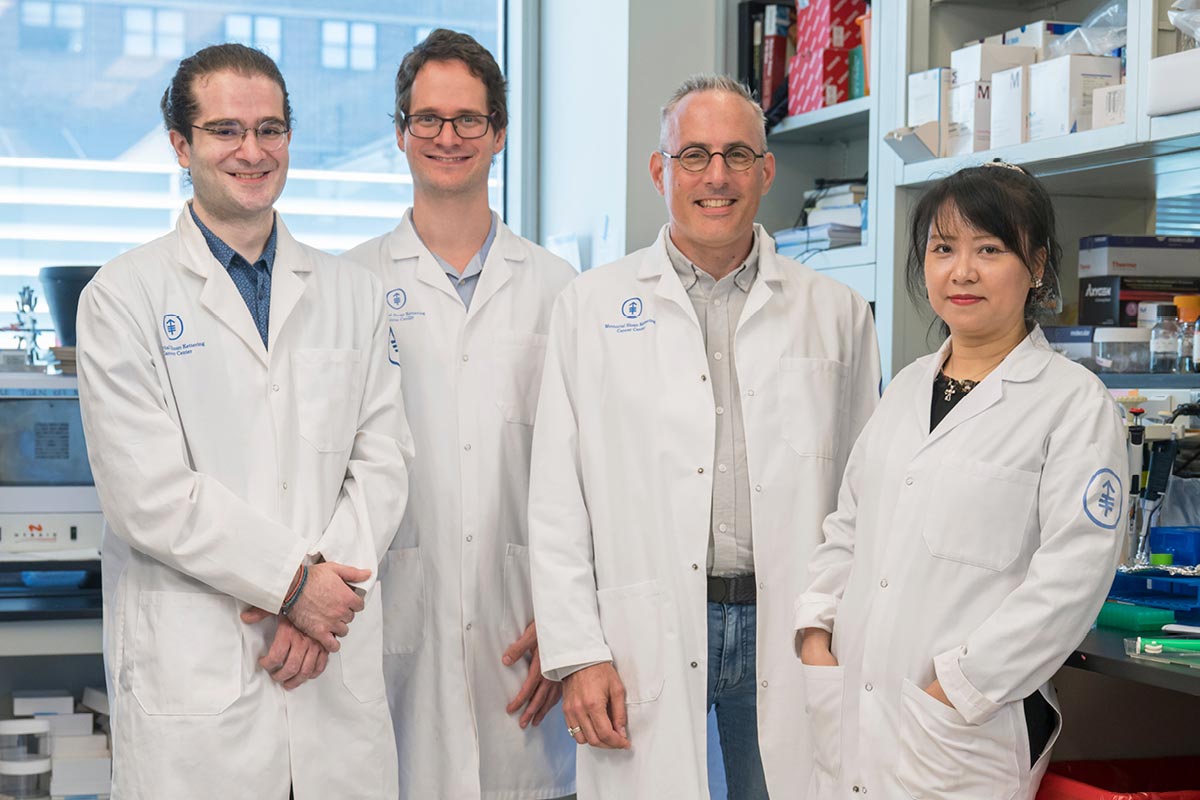
“Typically, when you have a paper with two first authors like Yanan and Miklos, there is just one story that two people contributed to equally,” Dr. Niethammer says. “But this paper is not like that. In this paper, there are two separate projects led by two different authors that came together as one larger discovery. And I think that’s extremely important to note.”
Zebrafish were crucial because mice lack a known immune cell receptor for 5-oxoETE.
“Mice and rats are the primary model used in biomedical research,” Dr. Ma says. “It makes sense, they’re mammals, and there’s about an 80% overlap between their genes and ours.”
“This means that you can’t study the pathway in mice,” she explains. “But the pathway is intact in fish. So picking the right alternative model was critical to advancing our understanding of how the human body responds.”
Implications for Cancer and Inflammatory Disease
Mutations affecting DHRS7 and OXER1 have been identified in certain cancers, while disrupted 5-oxoETE signaling has also been associated with inflammatory bowel disease and asthma.
“More research is needed, but there’s a possibility that activating the pathway could increase the resilience of the gut to oxidative stress, which might help counteract damage caused by radiation therapy or chemotherapy,” Dr. Lengyel says.
The researchers also connected the pathway to physical injuries. Mechanical stress releases arachidonic acid, a molecule used to produce 5-oxoETE.
“There’s a mechanical component to the pathway that’s upstream of what Yanan and Miklos have been studying,” explains doctoral student Zaza Gelashvili, MS. “You can think of it as the first step in a chain reaction: Physical stress unlocks the raw material, oxidative stress drives the conversion, and DHRS7 amplifies the signal.”
“What we are really studying is a pathway that integrates two completely different kinds of stress, mechanical and metabolic, and converts them into a single, coordinated, protective response,” Dr. Niethammer says.
Reference: “5-oxoETE links redox control of epithelial damage detection and resilience” by Yanan Ma, Miklós Lengyel, King Lam Hui, Yohannes A. Ambaw, Zaza Gelashvili, Leehyeon Kim, Ritchie Ly, Siyang Peng, Meysoon Quraishi, Tobias C. Walther, Robert V. Farese Jr and Philipp Niethammer, 7 October 2026, Nature.
DOI: 10.1038/s41586-026-11121-2
The research was supported by the National Institutes of Health (R35GM140883); an MSK Basic Research Innovation Award; a Starr Foundation Program for Discovery Science grant; a Tow Foundation fellowship; a Marie-Josée Kravis Women in Science Endeavor (WISE) fellowship; a Crohn’s Colitis Foundation Research Fellows Award (1268111); an Experimental Immuno-Oncology Scholars fellowship; and core facility services funding in part by MSK’s National Cancer Institute Cancer Center Support grant (P30CA008748).
Never miss a breakthrough: Join the SciTechDaily newsletter.
Follow us on Google and Google News.