
Close Menu
    Facebook X (Twitter) Instagram
    SciTechDaily
    • Biology
    • Chemistry
    • Earth
    • Health
    • Physics
    • Science
    • Space
    • Technology
    Facebook X (Twitter) Pinterest YouTube RSS
    SciTechDaily
    Home»Space»Don’t Miss: Saturn, Halley’s Comet Meteors and the Seven Sisters Light Up October
    Space

    Don’t Miss: Saturn, Halley’s Comet Meteors and the Seven Sisters Light Up October

    By NASA's Jet Propulsion LaboratoryOctober 6, 2026No Comments4 Mins Read
    Facebook Twitter Pinterest Telegram LinkedIn WhatsApp Email Reddit
    Share
    Facebook Twitter LinkedIn Pinterest Telegram Email Reddit
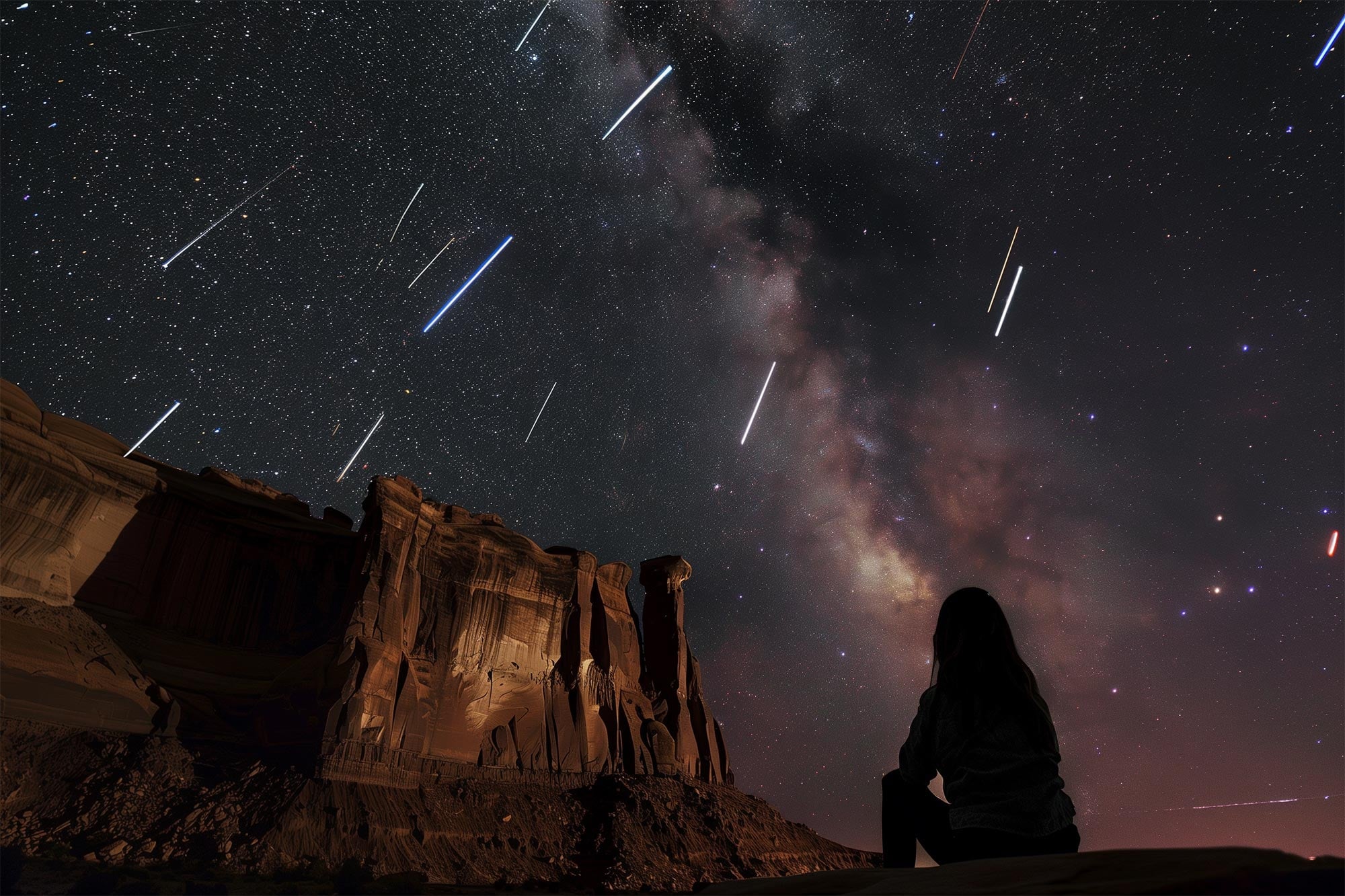
    Meteor Shower Art Concept Illustration
    October brings a packed lineup for skywatchers, including Saturn at opposition, the Orionid meteor shower, and a close Moon-Pleiades encounter. Credit: SciTechDaily.com

    October brings several notable skywatching events, including Saturn at opposition, the Orionid meteor shower, and a close pairing of the Moon with the Pleiades, also known as the Seven Sisters.

    Skywatching Highlights

    • October 4: Saturn reaches opposition, making the ringed planet visible for much of the night
    • October 6: A thin crescent Moon appears close to bright Jupiter before sunrise
    • October 21–22: The Orionid meteor shower peaks; moonlight may interfere, so look before dawn after moonset
    • October 27–28: The Moon passes near the Pleiades star cluster, also known as the Seven Sisters

    Saturn will be one of October’s main attractions, while meteors from Halley’s Comet streak across the sky later in the month. The Moon will also make a close pass by the Seven Sisters. That’s What’s Up for October.

    Saturn Reaches Opposition

    On October 4th, Saturn reaches opposition, creating one of the best viewing opportunities of the year for the ringed planet.

    Opposition occurs when Earth moves between the Sun and Saturn. From our perspective, Saturn then appears on the opposite side of the sky from the Sun. As a result, the planet rises around sunset and remains visible for much of the night.
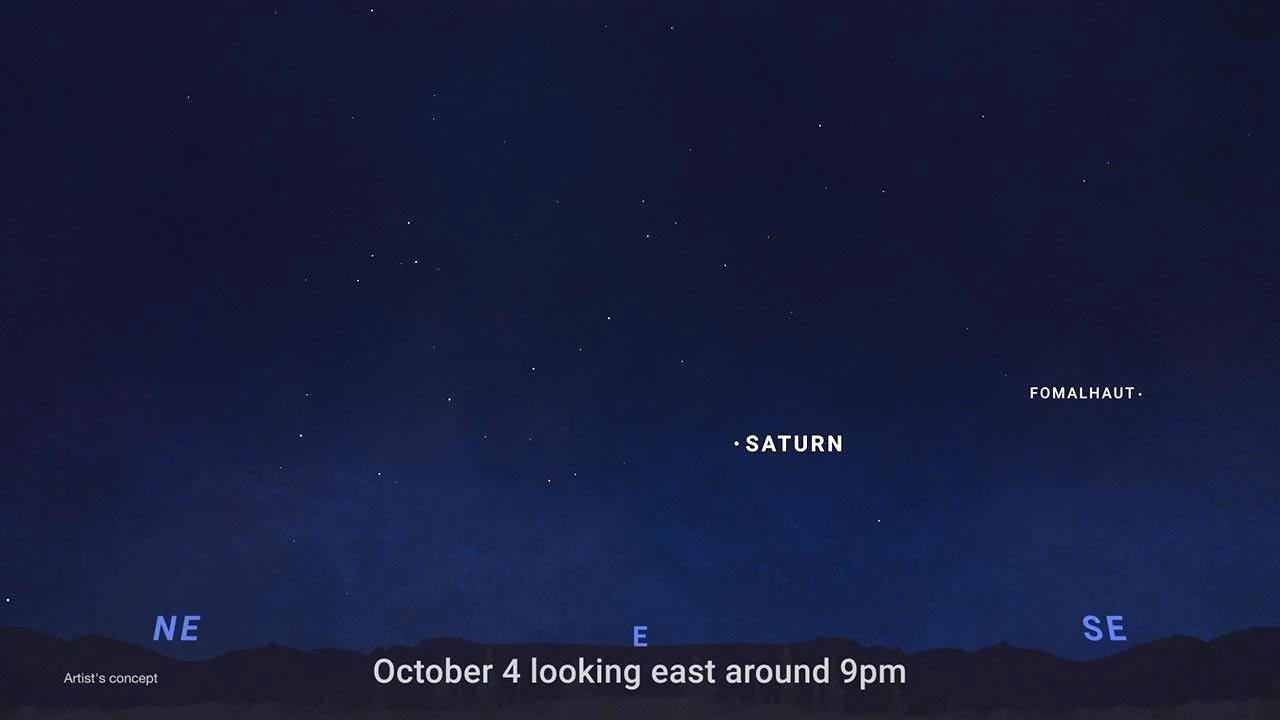
    Sky Chart October 4, 2026
    A sky chart showing Saturn above the eastern horizon on October 4, 2026, around 9 p.m. Credit: NASA/JPL-Caltech

    Saturn is also drawing scientific attention for activity in its atmosphere. Astronomers have known for years about the giant hexagon-shaped jet stream around the planet’s north pole, which stretches nearly 20,000 miles across.

    Just last month, however, NASA’s Hubble Space Telescope detected a ten-sided atmospheric wave surrounding Saturn’s south pole. The feature in the southern hemisphere appears to be growing stronger, giving researchers an unusual chance to observe a massive atmospheric pattern as it develops.
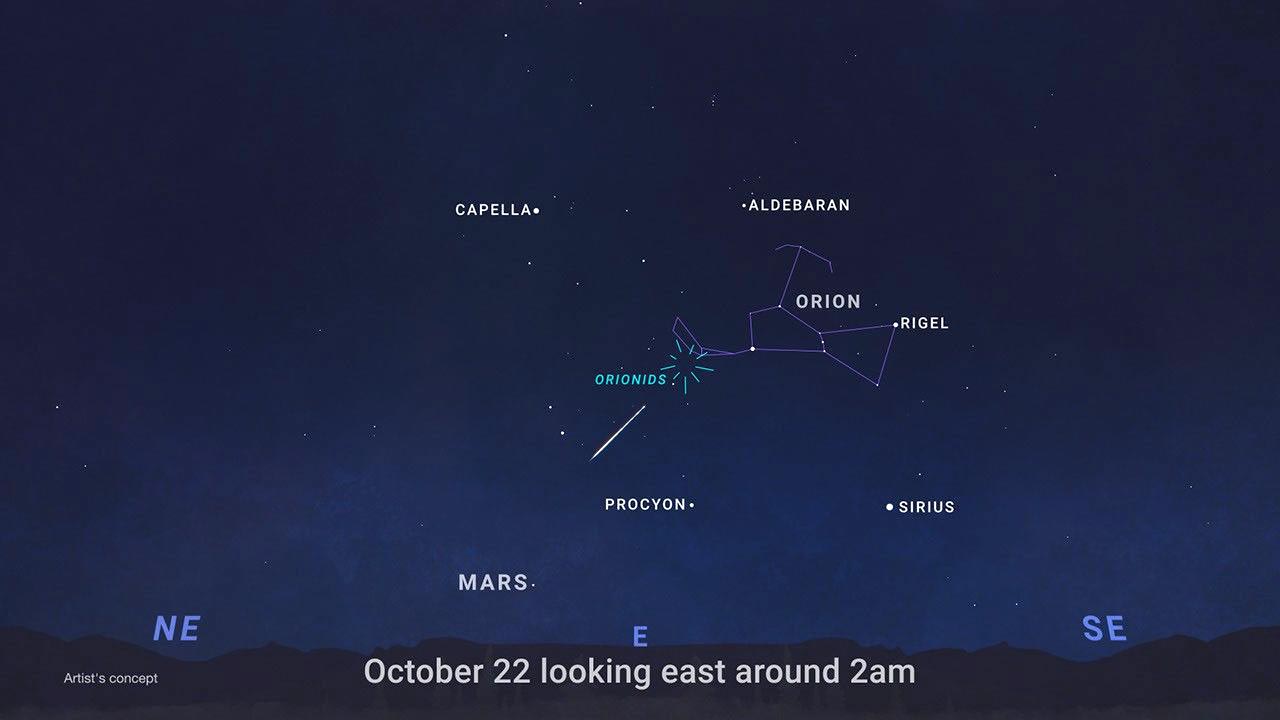
    Sky Chart October 22, 2026
    A sky chart illustrating where to view the Orionid meteor shower. Credit: NASA/JPL-Caltech

    Orionid Meteor Shower Peaks

    The Orionid meteor shower reaches its peak from the night of October 21st into the morning of October 22nd.

    The Orionids come from small pieces of debris shed by Halley’s Comet. Although the meteors appear to originate near the constellation Orion, they can flash across any part of the night sky.
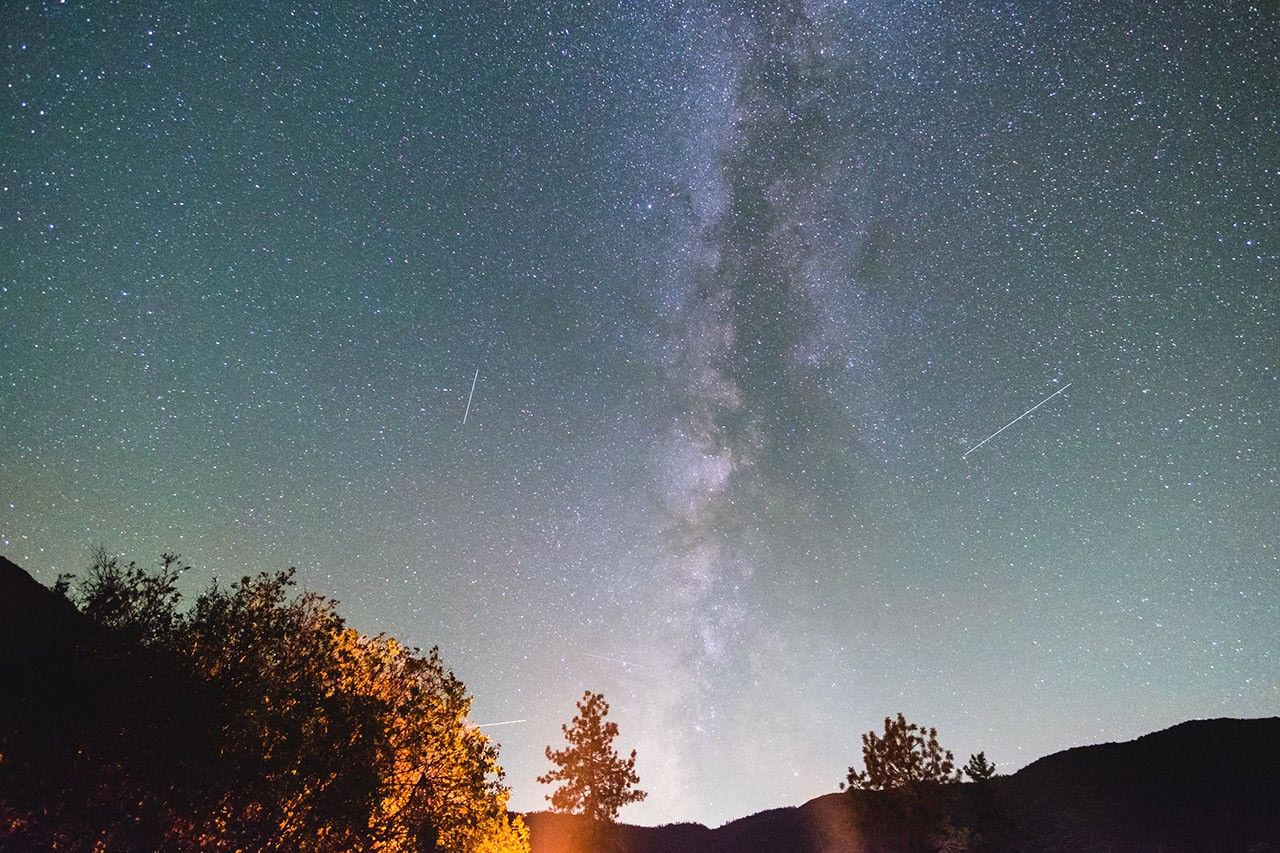
    2017 Orionid Meteor Shower
    Meteors streak across the sky during the 2017 Orionid meteor shower, with the Milky Way visible overhead. Credit: Ben Goldstein via Flickr_CC BY-NC-SA

    Viewing conditions will not be perfect this year because a bright waxing gibbous Moon will make some of the dimmer meteors harder to see. The best opportunity may come during the final few hours before sunrise, after the Moon has set.

    For the best view, head somewhere dark, allow your eyes time to adjust, and scan as much of the sky as possible.
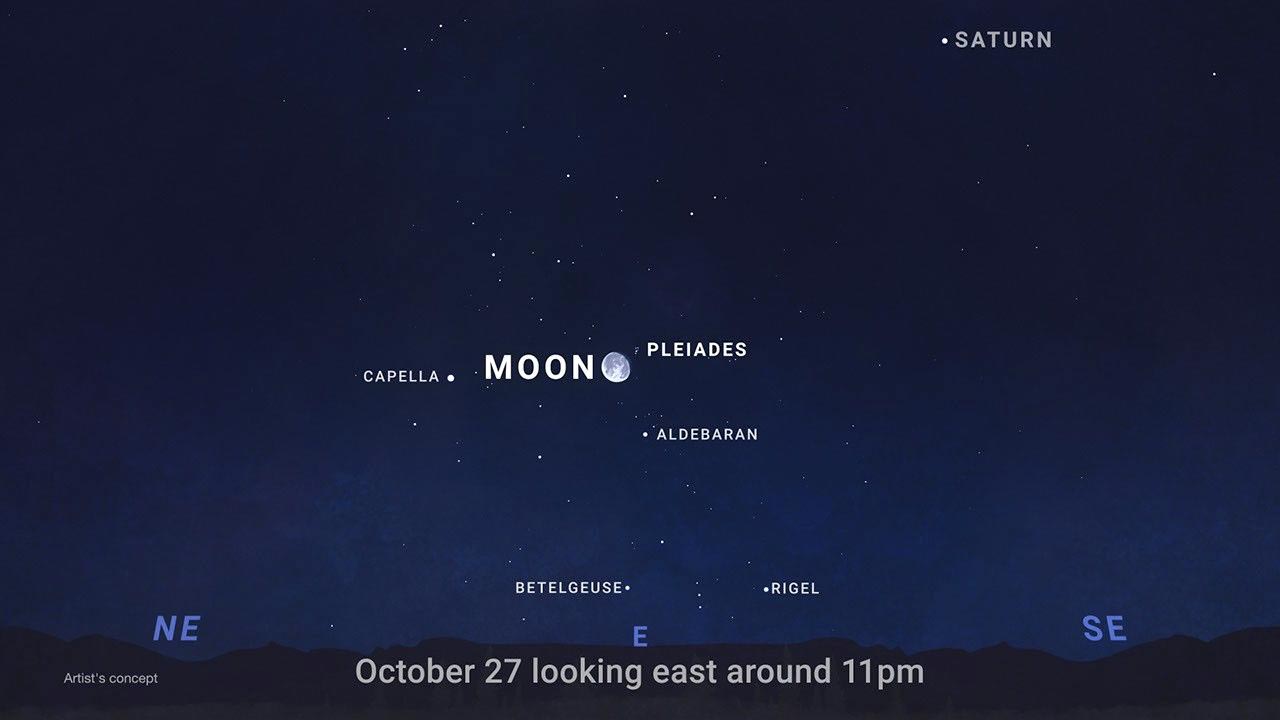
    Sky Chart October 27, 2026
    A sky chart showing the Moon next to the Pleiades on October 27, 2026, looking east at around 11 p.m. Credit: NASA/JPL-Caltech

    The Moon Meets the Seven Sisters

    On the night of October 27th into the 28th, the Moon will pass close to the Pleiades, one of the most recognizable star clusters in the night sky.

    The Pleiades are also known as the Seven Sisters. The cluster has inspired stories in many ancient cultures, in part because it can be seen from nearly every region of the world.

    To find the pairing, look toward the east during the evening as the Moon and the Pleiades rise higher in the sky. To the naked eye, the Pleiades look like a faint, slightly fuzzy cluster of 6 to 7 stars.

    The cluster is easy to see without optical equipment, but binoculars or a telescope can reveal far more detail and make the view even more striking.

    Here are the phases of the Moon for October.
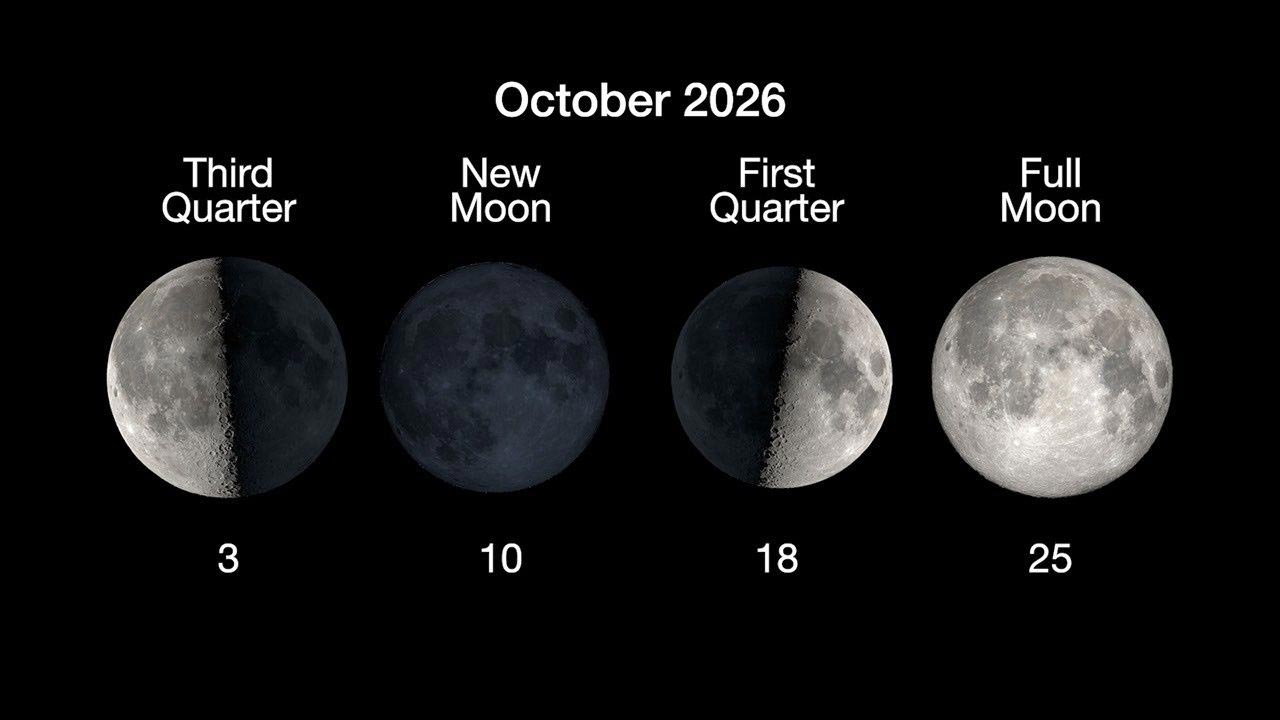
    Moon Phases October 2026
    A chart showing the phases of Earth’s Moon in October 2026. Credit: NASA/JPL-Caltech

    Never miss a breakthrough: Join the SciTechDaily newsletter.
    Follow us on Google and Google News.

    Astronomy JPL NASA
    Share. Facebook Twitter Pinterest LinkedIn Email Reddit

    Related Articles

    NASA’s Roman Telescope Unlocks New Chapter in the Search for Alien Worlds

    Don’t Miss November’s Celestial Spectacles: Rare Occultations, Planetary Alignments, and Hidden Stars Await

    NASA’s SPHEREx: Exploring the Universe in 102 Infrared Colors

    Cosmic Horror Unveiled: NASA Reveals “Blood-Soaked Eyes” Staring From Deep Space [Video]

    Euclid’s Extraordinary 208-Gigapixel View: Uncovering the Universe’s Hidden Forces

    NASA Finds Signs of an Io-Like Volcanic Exomoon Just 635 Light-Years Away

    Skywatching Magic: October’s Spectacular Comet Lights Up the Night Sky

    Don’t Miss September’s Stunning Supermoon Eclipse

    Don’t Miss: Meteor Shower Peak, Star Forge, Mars and Jupiter Converge

    Leave A Reply Cancel Reply

    • Facebook
    • Twitter
    • Pinterest
    • YouTube

    Don't Miss a Discovery

    Subscribe for the Latest in Science & Tech!

    Trending News

    This Honeybee Silk Film Could Transform How Chronic Wounds Are Treated

    Homo erectus Was Outnumbered 10 to One by Another Human Relative

    The Strongest Dementia Risk Signal May Be Hiding in Your Muscles

    Just 7 Days of Strength Training Triggered Fat-Burning Changes in Mice

    Spinosaurus May Have Spent Most of Its Life Underwater, New Study Finds

    Einstein Probe Discovers a Secret Phase of Neutron Star Collisions

    Scientists Watch New Particles “Pop Into Existence” on a Quantum Computer

    The More Ultra-Processed Food People Ate, the Higher Their Risk of Disease and Death

    Follow SciTechDaily
    • Facebook
    • Twitter
    • YouTube
    • Pinterest
    • Newsletter
    • RSS
    SciTech News
    • Biology News
    • Chemistry News
    • Earth News
    • Health News
    • Physics News
    • Science News
    • Space News
    • Technology News
    Recent Posts
    • Don’t Miss: Saturn, Halley’s Comet Meteors and the Seven Sisters Light Up October
    • New Antibody Treatment Silences Nerve Pain for Days Without Blocking Normal Pain
    • Scientists Discover 5 Hidden Forms of a Liver Disease Affecting 30% of Adults
    • Could Vitamin C Help Stop Leukemia Before It Starts?
    • Two Laser Pulses Unlock Electron States Physicists Had Never Reached Before
    Copyright © 1998 - 2026 SciTechDaily. All Rights Reserved.
    • Science News
    • About
    • Contact
    • Editorial Board
    • Privacy Policy
    • Terms of Use

    Type above and press Enter to search. Press Esc to cancel.