
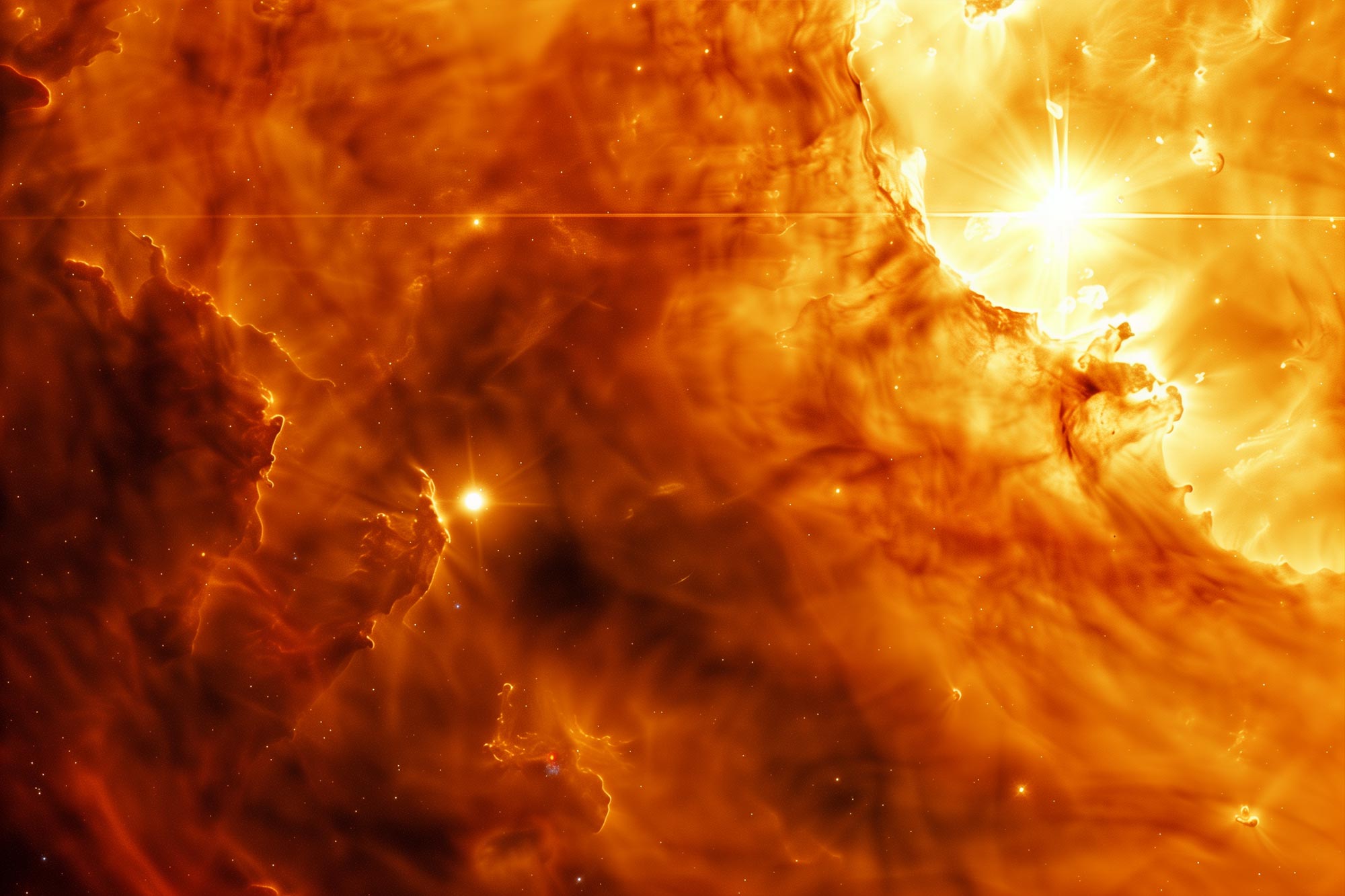
Astronomers identified icy compounds made of complex organic molecules like alcohol and likely acetic acid, using Webb’s MIRI instrument, which was managed through launch by JPL.
What do margaritas, vinegar, and ant stings have in common? They contain chemical ingredients that NASA’s James Webb Space Telescope has identified surrounding two young protostars known as IRAS 2A and IRAS 23385. Although planets are not yet forming around those stars, these and other molecules detected there by Webb represent key ingredients for making potentially habitable worlds.
An international team of astronomers used Webb’s MIRI (Mid-Infrared Instrument) to identify a variety of icy compounds made up of complex organic molecules like ethanol (alcohol) and likely acetic acid (an ingredient in vinegar). This work builds on previous Webb detections of diverse ices in a cold, dark molecular cloud.
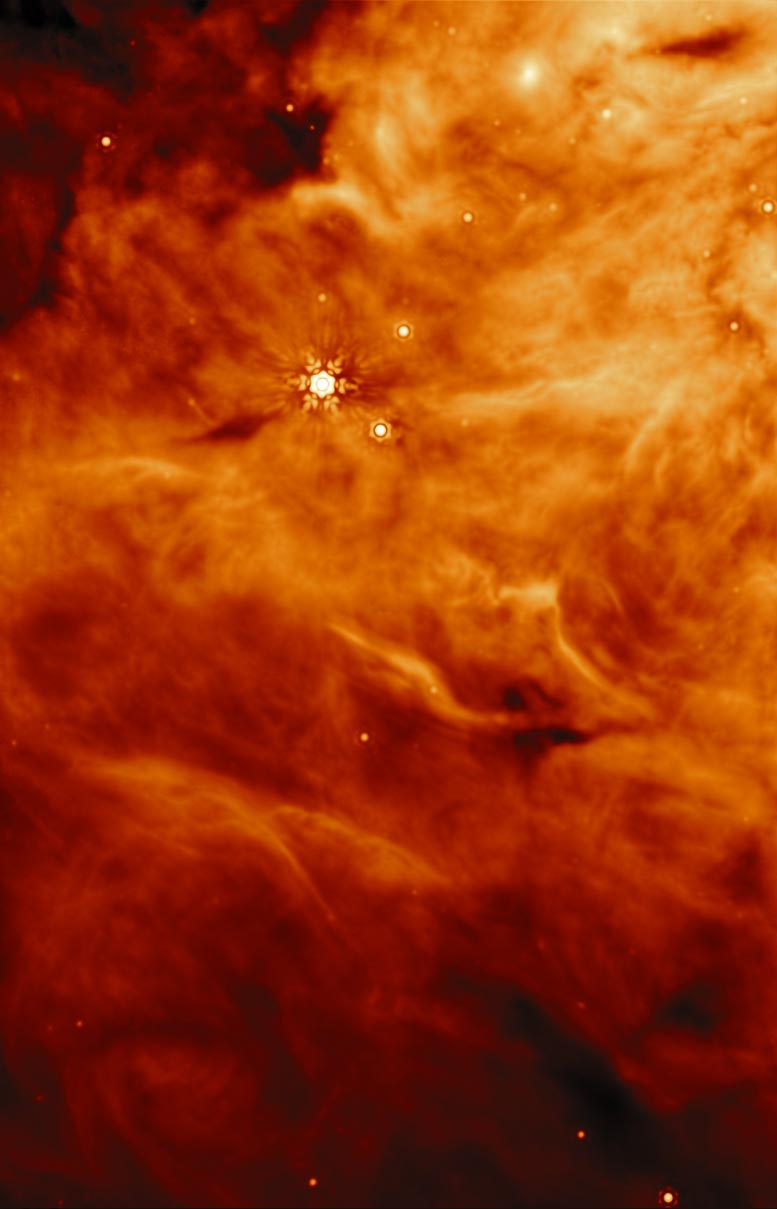
IRAS 2A and IRAS23385 (not visible in this image) were targets for a recent research effort by an international team of astronomers that used Webb to discover that the key ingredients for making potentially habitable worlds are present in early-stage protostars, where planets have not yet formed.
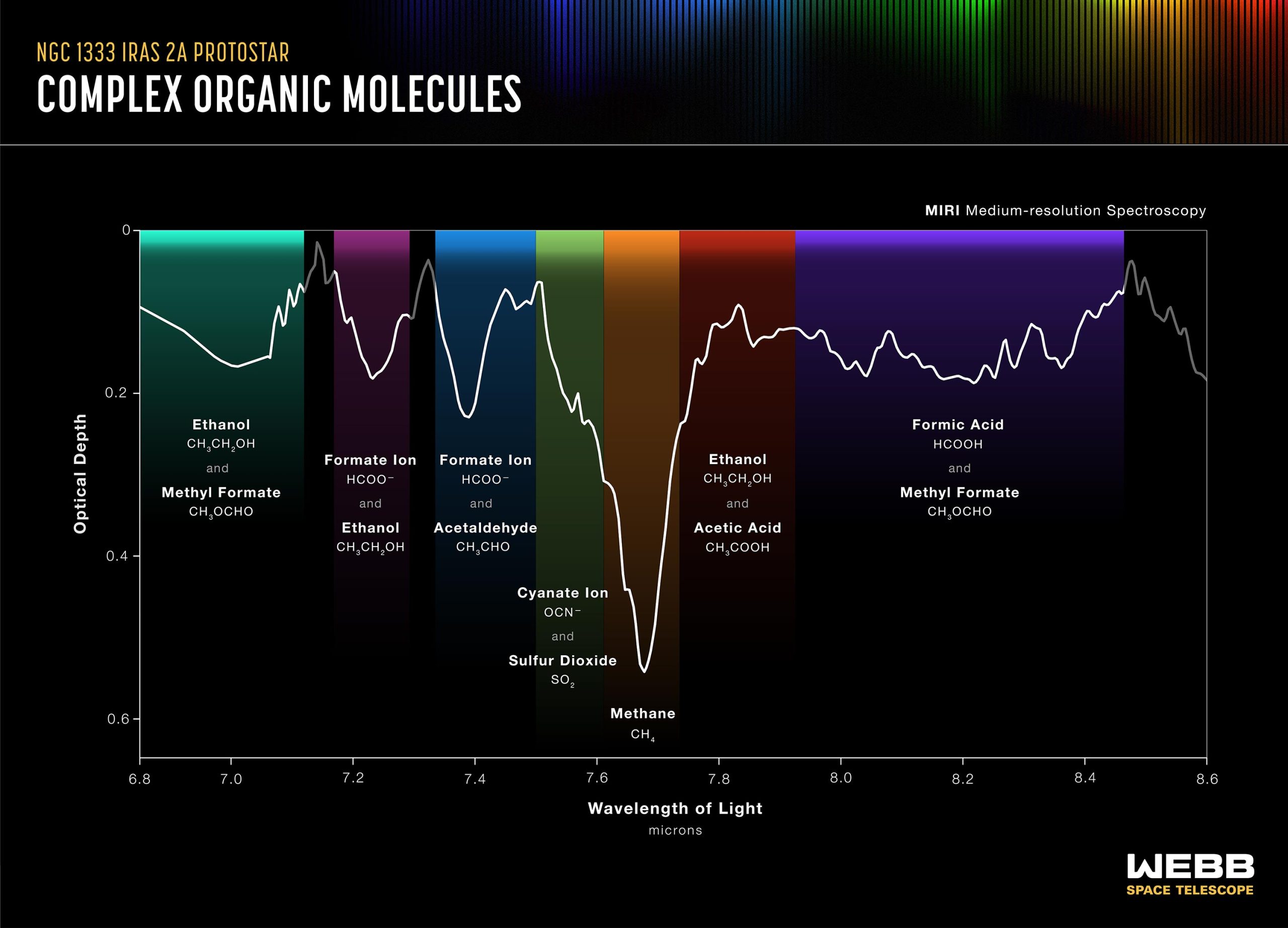
With MIRI’s unprecedented spectral resolution and sensitivity, the JOYS+ (James Webb Observations of Young ProtoStars) program individually identified organic molecules that have been confirmed to be present in interstellar ices. This includes the robust detection of acetaldehyde, ethanol, methyl formate, and likely acetic acid, in the solid phase.
Credit: ESA/Webb, NASA, CSA, W. Rocha et al. (Leiden University)
What is the origin of complex organic molecules (COMs)?
As several COMs, including those detected in the solid phase in this research, were previously detected in the warm gas phase, it is now believed that they originate from the sublimation of ices. Sublimation is to change directly from a solid to a gas without becoming a liquid. Therefore, detecting COMs in ices makes astronomers hopeful about improved understanding of the origins of other, even larger molecules in space.
Scientists are also keen to explore to what extent these COMs are transported to planets at much later stages of protostellar evolution. COMs in cold ices are thought to be easier to transport from molecular clouds to planet-forming disks than warm, gaseous molecules. These icy COMs can therefore be incorporated into comets and asteroids, which in turn may collide with forming planets, delivering the ingredients for life to possibly flourish.
The science team also detected simpler molecules, including formic acid (which causes the burning sensation of an ant sting), methane, formaldehyde, and sulfur dioxide. Research suggests that sulfur-containing compounds like sulfur dioxide played an important role in driving metabolic reactions on the primitive Earth.
Similar to the early stages of our own solar system?
Of particular interest is that one of the sources investigated, IRAS 2A, is characterized as a low-mass protostar. IRAS 2A may therefore be similar to the early stages of our own solar system. As such, the chemicals identified around this protostar were likely present in the first stages of development of our solar system and later delivered to the primitive Earth.
“All of these molecules can become part of comets and asteroids and eventually new planetary systems when the icy material is transported inward to the planet-forming disk as the protostellar system evolves,” said Ewine van Dishoeck of Leiden University, one of the coordinators of the science program. “We look forward to following this astrochemical trail step-by-step with more Webb data in the coming years.”
These observations were made for the JOYS+ (James Webb Observations of Young ProtoStars) program. The team dedicated these results to team member Harold Linnartz, who unexpectedly passed away in December 2023, shortly after the acceptance of this paper.
This research was published on March 13 in the journal Astronomy & Astrophysics.
Reference: “JWST Observations of Young protoStars (JOYS+): Detecting icy complex organic molecules and ions – I. CH4, SO2, HCOO−, OCN−, H2CO, HCOOH, CH3CH2OH, CH3CHO, CH3OCHO, and CH3COOH” by W. R. M. Rocha, E. F. van Dishoeck, M. E. Ressler, M. L. van Gelder, K. Slavicinska, N. G. C. Brunken, H. Linnartz, T. P. Ray, H. Beuther, A. Caratti o Garatti, V. Geers, P. J. Kavanagh, P. D. Klaassen, K. Justtanont, Y. Chen, L. Francis, C. Gieser, G. Perotti, Ł. Tychoniec, M. Barsony, L. Majumdar, V. J. M. le Gouellec, L. E. U. Chu, B. W. P. Lew, Th. Henning and G. Wright, 13 March 2024, Astronomy & Astrophysics.
DOI: 10.1051/0004-6361/202348427
The James Webb Space Telescope is the world’s premier space science observatory. Webb is solving mysteries in our solar system, looking beyond to distant worlds around other stars, and probing the mysterious structures and origins of our universe and our place in it. Webb is an international program led by NASA with its partners, ESA (European Space Agency) and the Canadian Space Agency.
MIRI was developed through a 50-50 partnership between NASA and ESA. NASA’s Jet Propulsion Laboratory led the U.S. efforts for MIRI, and a multinational consortium of European astronomical institutes contributes for ESA. George Rieke with the University of Arizona is the MIRI science team lead. Gillian Wright is the MIRI European principal investigator.
The MIRI cryocooler development was led and managed by JPL, in collaboration with Northrop Grumman in Redondo Beach, California, and NASA’s Goddard Space Flight Center in Greenbelt, Maryland.
Never miss a breakthrough: Join the SciTechDaily newsletter.
Follow us on Google and Google News.
1 Comment
Alcohol and vinegar in outer space? Who knew!