
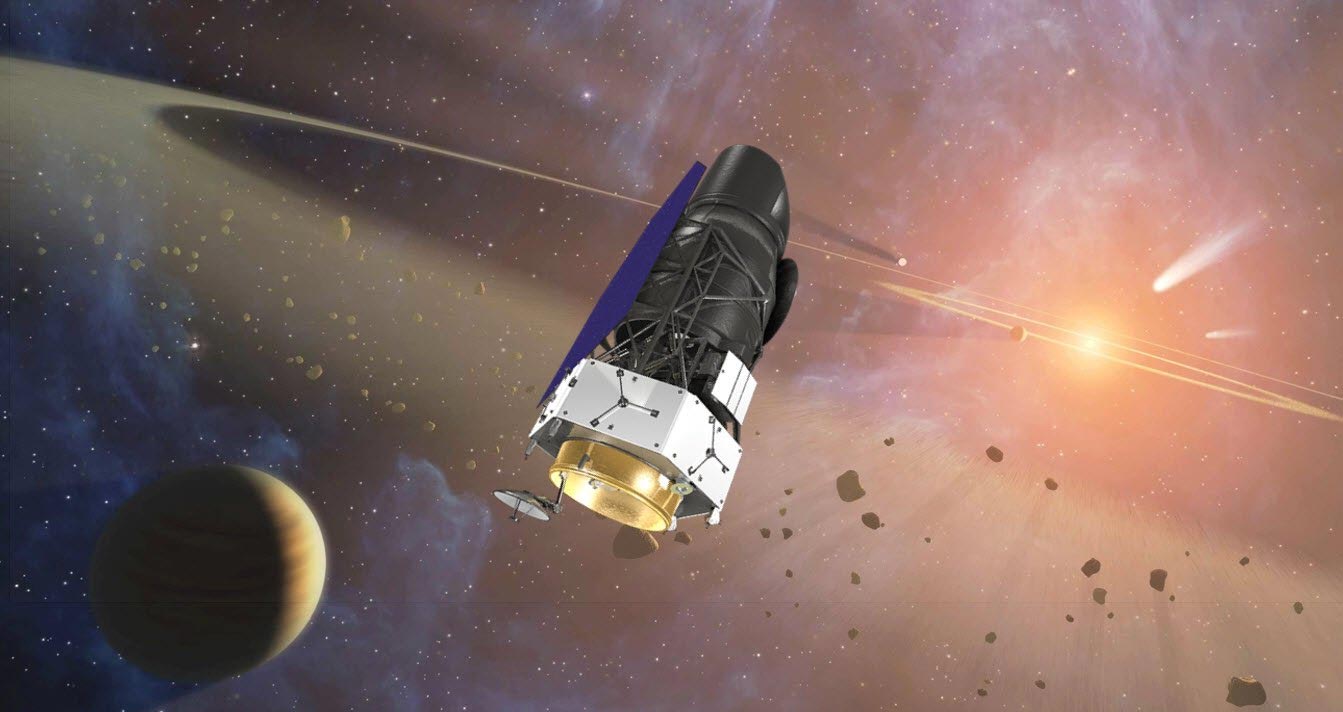
NASA’s Roman Space Telescope’s Coronagraph Instrument, designed to observe distant exoplanets by blocking stellar light, has passed essential tests, marking a significant advancement in space observation technology and the search for extraterrestrial life.
A cutting-edge tool to view planets outside our solar system has passed two key tests ahead of its launch as part of the agency’s Roman Space Telescope by 2027.
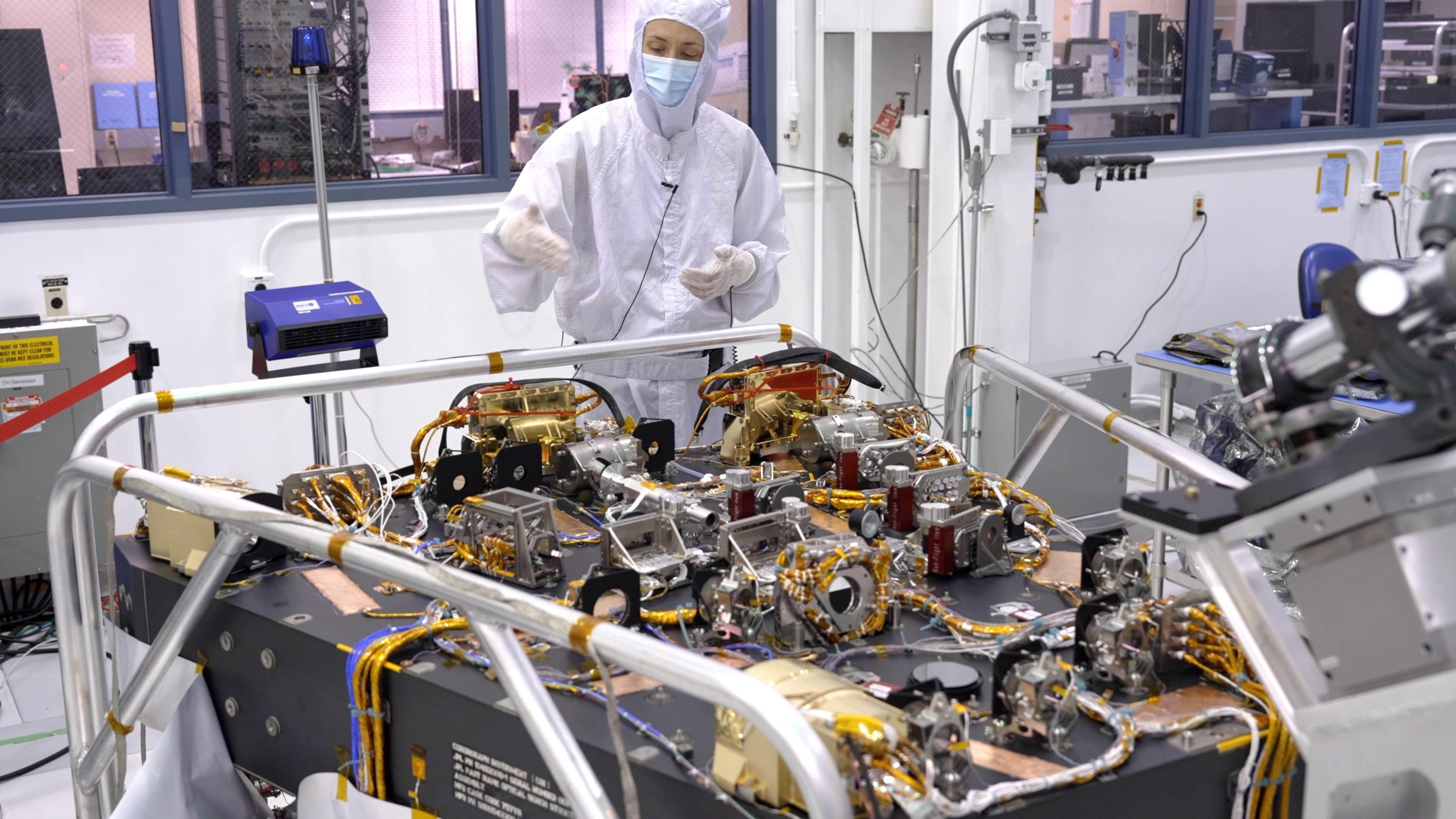
The Coronagraph Instrument on NASA’s Nancy Grace Roman Space Telescope will demonstrate new technologies that could vastly increase the number of planets outside our solar system (exoplanets) that scientists can directly observe. Designed and built at the agency’s Jet Propulsion Laboratory in Southern California, it recently passed a series of critical tests ahead of launch. That includes tests to ensure the instrument’s electrical components don’t interfere with those on the rest of the observatory and vice versa.
Key Tests and Coronagraph Technology
“This is such an important and nerve-wracking stage of building a spacecraft instrument, testing whether or not everything works as intended,” said Feng Zhao, deputy project manager for the Roman Coronagraph at JPL. “But we have an amazing team who built this thing, and it passed the electrical components tests with flying colors.”
A coronagraph blocks light from a bright cosmic object, like a star, so that scientists can observe a nearby object that would otherwise be hidden by the glare. (Think of a car’s sun visor.) The light reflected or emitted by a planet carries information about the chemicals in the planet’s atmosphere and other potential signs of habitability, so coronagraphs will likely be a critical tool in the search for life beyond our solar system.
Advancements in Exoplanet Observation
But if scientists were trying to obtain images of an Earth-like planet in another solar system (same size, same distance from a star similar to our Sun), they wouldn’t be able to see the planet in the star’s glare, even with the best coronagraphs and most powerful telescopes operating today.
The Roman Coronagraph aims to change that paradigm. The innovations that have gone into the instrument should make it possible to see planets similar to Jupiter in size and distance from their star. The Coronagraph team expects these advances will help enable the leap to viewing more Earth-like planets with future observatories.
As a technology demonstration, the Roman Coronagraph’s primary goal is to test technologies that have not been flown in space before. Specifically, it will test sophisticated light-blocking capabilities that are at least 10 times better than what’s currently available. Scientists expect to push its performance even further to observe challenging targets that could yield novel scientific discoveries.
Overcoming Challenges in Space Observation
Even with the Coronagraph blocking a star’s light, a planet will still be exceptionally faint, and it might take a full month of observations to get a good picture of the distant world. To make these observations, the instrument’s camera detects individual photons, or single particles of light, making it far more sensitive than previous coronagraphs.
That’s one reason the recent tests were crucial: The electrical currents that send power to the spacecraft’s components can produce faint electrical signals, mimicking light in the Coronagraph’s sensitive cameras – an effect known as electromagnetic interference. Meanwhile, signals from the Coronagraph could similarly disrupt Roman’s other instruments.
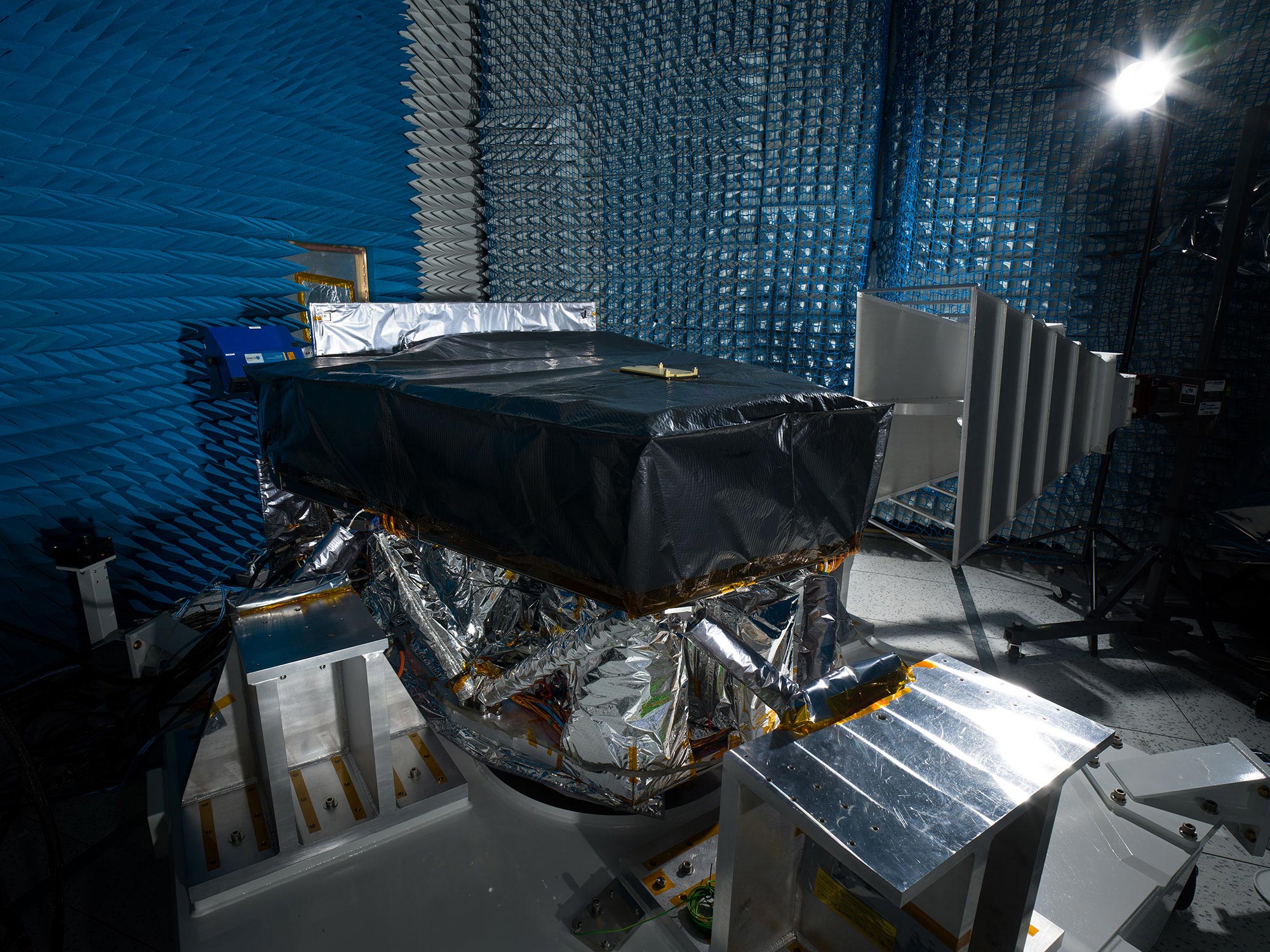
The mission needs to ensure neither will happen when the telescope is operating in an isolated, electromagnetically quiet environment 1 million miles (about 1.5 million kilometers) from Earth. So a team of engineers put the fully assembled instrument in a special isolated, electromagnetically quiet chamber at JPL and turned it on to full power.
They measured the instrument’s electromagnetic output to make sure it fell below the level required to operate aboard Roman. The team used injection clamps, transformers, and antennas to produce electrical disturbances and radio waves similar to what the rest of the telescope will generate. Then they measured the instrument’s performance, looking for excessive noise in the camera images and other unwanted responses from the optical mechanisms.
“The electric fields we generate with the antennas are about the same strength as what’s generated by a computer screen,” said Clement Gaidon, the Roman Coronagraph electrical systems engineer at JPL. “That’s a pretty benign level, all things considered, but we have very sensitive hardware onboard. Overall, the instrument did a fantastic job navigating across the electromagnetic waves. And props to the team for wrapping this test campaign in record time!”
The Broad Mission of the Roman Space Telescope
The lessons learned from the Coronagraph technology demonstration will be separate from the Roman Space Telescope’s primary mission, which includes multiple science objectives. The mission’s principal tool, the Wide Field Instrument, is designed to generate some of the largest images of the universe ever taken from space. These images will enable Roman to conduct groundbreaking surveys of cosmic objects such as stars, planets, and galaxies, and study the large-scale distribution of matter in the universe.
For example, by taking repeated images of the center of the Milky Way – like a multiyear time-lapse movie – the Wide Field Instrument will discover tens of thousands of new exoplanets. (This planet survey will be separate from the observations made by the Coronagraph).
Roman will also make 3D maps of the cosmos to explore how galaxies have formed and why the universe’s expansion is speeding up, measuring the effects of what astronomers call “dark matter” and “dark energy.” With these wide-ranging capabilities, Roman will help answer questions about big and small features of our universe.
More About the Mission
The Nancy Grace Roman Space Telescope is managed at NASA’s Goddard Space Flight Center in Greenbelt, Maryland, with participation by JPL and Caltech/IPAC in Southern California, the Space Telescope Science Institute in Baltimore, and a science team comprising scientists from various research institutions. The primary industrial partners are Ball Aerospace & Technologies Corp. in Boulder, Colorado; L3Harris Technologies in Melbourne, Florida; and Teledyne Scientific & Imaging in Thousand Oaks, California.
The Roman Coronagraph Instrument was designed and is being built at JPL, which manages the instrument for NASA. Contributions were made by ESA (the European Space Agency), JAXA (the Japanese Aerospace Exploration Agency), the French space agency CNES (Centre National d’Études Spatiales), and the Max Planck Institute for Astronomy in Germany. Caltech, in Pasadena, California, manages JPL for NASA. The Roman Science Support Center at Caltech/IPAC partners with JPL on data management for the Coronagraph and generating the instrument’s commands.
Never miss a breakthrough: Join the SciTechDaily newsletter.
Follow us on Google and Google News.