
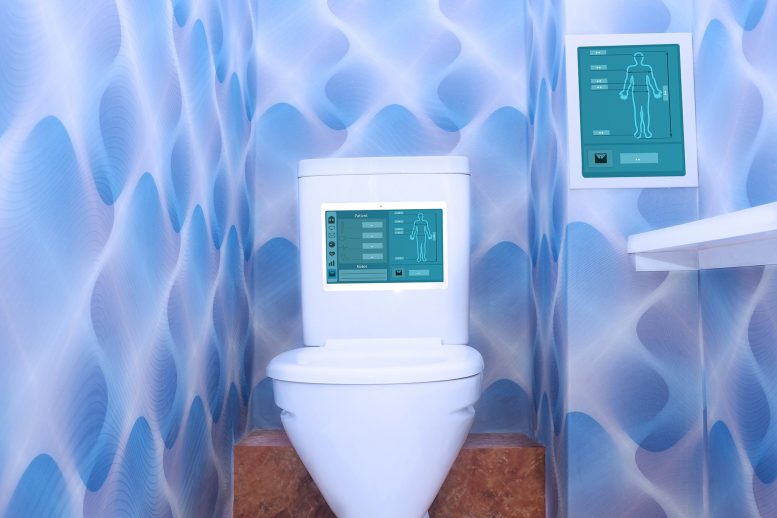
Artificial intelligence tool can be used for long-term tracking and management of chronic gastrointestinal ailments.
An artificial intelligence tool under development at Duke University can be added to the standard toilet to help analyze patients’ stool and give gastroenterologists the information they need to provide appropriate treatment, according to research that was selected for presentation at Digestive Disease Week® (DDW) 2021. The new technology could assist in managing chronic gastrointestinal issues such as inflammatory bowel disease (IBD) and irritable bowel syndrome (IBS).
“Typically, gastroenterologists have to rely on patient self-reported information about their stool to help determine the cause of their gastrointestinal health issues, which can be very unreliable,” said Deborah Fisher, MD, one of the lead authors on the study and associate professor of medicine at Duke University Durham, North Carolina. “Patients often can’t remember what their stool looks like or how often they have a bowel movement, which is part of the standard monitoring process. The Smart Toilet technology will allow us to gather the long-term information needed to make a more accurate and timely diagnosis of chronic gastrointestinal problems.”
The technology can be retrofitted within the pipes of an existing toilet. Once a person has a bowel movement and flushes, the toilet will take an image of the stool within the pipes. The data collected over time will provide a gastroenterologists a better understanding of a patient’s stool form (i.e., loose, normal, or constipated) and the presence of blood, allowing them to diagnose the patient and provide the right treatment for their condition.
To develop the artificial intelligence image analysis tool for the Smart Toilet, researchers analyzed 3,328 unique stool images found online or provided by research participants. All images were reviewed and annotated by gastroenterologists according to the Bristol Stool Scale, a common clinical tool for classifying stool. Using a computationally efficient approach to convolutional neural networks, which is a type of deep learning algorithm that can analyze images, researchers found that the algorithm accurately classified the stool form 85.1 percent of the time; gross blood detection had an accuracy of 76.3 percent.
“We are optimistic about patient willingness to use this technology because it’s something that can be installed in their toilet’s pipes and doesn’t require the patient to do anything other than flush,” said Sonia Grego, PhD, a lead researcher on the study and founding director of the Duke Smart Toilet Lab. “An IBD flare-up could be diagnosed using the Smart Toilet and the patient’s response to treatment could be monitored with the technology. This could be especially useful for patients who live in long-term care facilities who may not be able to report their conditions and could help improve initial diagnosis of acute conditions.”
The prototype has promising feasibility, but it is not yet available to the public. Researchers are developing additional features of the technology to include stool specimen sampling for biochemical marker analysis that will provide highly specific disease data to meet patients’ and gastroenterologists’ needs.
DDW Presentation Details
Dr. Fisher will present data from the study, “Automated stool image analysis by artificial intelligence in a smart toilet,” abstract Sa652, on Saturday, May 22, at 12:15 p.m. EDT.
Never miss a breakthrough: Join the SciTechDaily newsletter.
Follow us on Google and Google News.
1 Comment
… one can use nano material or even ultra sound and infrared light to ease the maintenance…