
Close Menu
    Facebook X (Twitter) Instagram
    SciTechDaily
    • Biology
    • Chemistry
    • Earth
    • Health
    • Physics
    • Science
    • Space
    • Technology
    Facebook X (Twitter) Pinterest YouTube RSS
    SciTechDaily
    Home»Biology»A Mother’s Age and Diet Influences Offspring Health – Shown in Research on Tropical Flies
    Biology

    A Mother’s Age and Diet Influences Offspring Health – Shown in Research on Tropical Flies

    By University of BristolJuly 20, 2021No Comments2 Mins Read
    Facebook Twitter Pinterest Telegram LinkedIn WhatsApp Email Reddit
    Share
    Facebook Twitter LinkedIn Pinterest Telegram Email Reddit
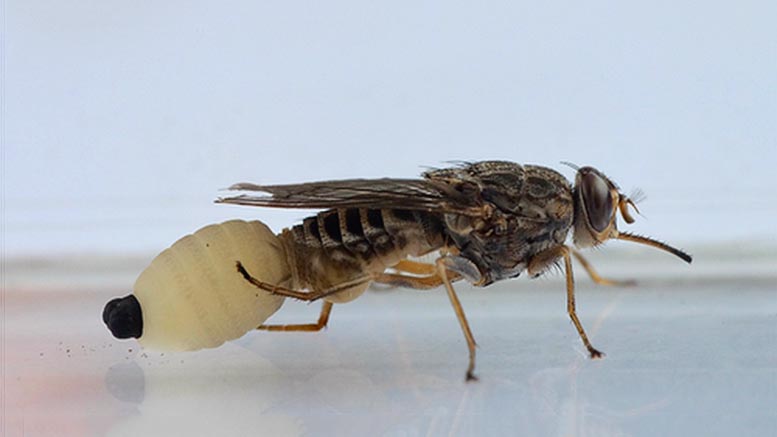
    Tsetse Fly Giving Birth
    Tsetse fly giving birth. Credit: Daniel Hargrove

    Aging and Nutrition Impact Tsetse Fly Offspring

    The female tsetse fly, which gives birth to adult-sized live young, produce weaker offspring as they get older, and when they feed on poor quality blood.

    The study, carried out by researchers at the Universities of Bristol, Oxford, and the Liverpool School of Tropical Medicine, was designed to measure how tsetse offspring health is influenced by their mothers’ age, and how factors such as the mother’s nutrition and mating experience might come into play.

    In many animals, females show signs of reproductive aging — where offspring health declines with maternal age — but there is huge variation within species in how rapidly this aging occurs.

    Reproductive Aging Unaffected by Mating or Diet Quality

    Scientists found that female tsetse that experience nutritional stress have lower fertility and produce smaller offspring that are less likely to survive starvation. However, the rate at which the female fly ages is not affected by the quality of her diet or how long she waited to mate. Thus, neither nutrition during pregnancy nor mating costs drive variation in reproductive aging in this species.

    Dr. Sinead English of Bristol’s School of Biological Sciences and senior author of the paper said: “Tsetse are remarkable flies. Mothers can produce offspring the same size as they are. But, like many other animals (including humans), this huge reproductive investment comes at a cost: as females get older or when they have low quality food, they produce weaker offspring which do not survive as long. We still do not know, however, why some females age more rapidly than others.”

    Now researchers will look at new ways to test evolutionary predictions about aging, using a new model system and innovative method of tracking reproduction of individual flies.

    Dr. English added: “We are also interested in understanding these patterns in tsetse as they spread deadly parasites, called trypanosomes, to humans and animals. By understanding how offspring survival depends on maternal nutritional stress and age, we can design better population dynamic and disease transmission models.

    Reference: “Effects of maternal age and stress on offspring quality in a viviparous fly” by Jennifer S. Lord, Robert Leyland, Lee R. Haines, Antoine M. G. Barreaux, Michael B. Bonsall, Stephen J. Torr and Sinead English, 15 July 2021, Ecology Letters.
    DOI: 10.1111/ele.13839

    Never miss a breakthrough: Join the SciTechDaily newsletter.
    Follow us on Google and Google News.

    Developmental Biology Ecology Evolution University of Bristol
    Share. Facebook Twitter Pinterest LinkedIn Email Reddit

    Related Articles

    New Discovery Challenges Previously Held Beliefs About the Origin of Branching in Plants

    New Study Links Expanding Human Population to Threats of Animal Extinction

    Study Suggests Europeans Are Closely Related

    Study Reveals Environmental Change Can Trigger Rapid Evolution

    Insects Help Scientists Understand the Predictability of Evolution

    Rediscovery Sheds New Light on the Behavior of the Proboscis Anole

    Evolution Shapes Ecology of Dammed Connecticut Lakes

    Marine Worm Thrives on Steady Diet of Deadly Poisons

    Researchers Recreate the Song of 165 Million Year Old Katydid

    Leave A Reply Cancel Reply

    • Facebook
    • Twitter
    • Pinterest
    • YouTube

    Don't Miss a Discovery

    Subscribe for the Latest in Science & Tech!

    Trending News

    Scientists Recreate a Nuclear Fireball and Uncover Fallout’s Hidden Chemistry

    These Tiny Gut Particles Could Be Accelerating Aging Throughout the Body

    Doctors Changed One Thing and Weight Gain Stopped

    Magnetic Fields May Solve a Longstanding Binary Star Mystery

    The Probiotic Breakthrough for Natural Anxiety Relief and Better Mental Health

    Animal vs. Plant Protein: Scientists Found a Surprising Nutritional Difference

    According to Scientists, This Simple Dietary Change Is Linked to Lower Depression Scores

    Researchers Discover a Hidden Vitamin D Problem That Persists Year-Round

    Follow SciTechDaily
    • Facebook
    • Twitter
    • YouTube
    • Pinterest
    • Newsletter
    • RSS
    SciTech News
    • Biology News
    • Chemistry News
    • Earth News
    • Health News
    • Physics News
    • Science News
    • Space News
    • Technology News
    Recent Posts
    • Astronomers Find Strongest Evidence Yet for Magnetic Fields on Alien Worlds
    • Astronomers Unveil Record-Breaking Haul of 161 New Black Hole Collisions
    • Ancient Meteorite Reveals a Forgotten Planet That Existed 4.5 Billion Years Ago
    • Mini Brain Organoids Expose Hidden Biological Differences in Alzheimer’s Disease
    • Scientists Recommend Doing This To Reduce Anxiety During Pregnancy
    Copyright © 1998 - 2026 SciTechDaily. All Rights Reserved.
    • Science News
    • About
    • Contact
    • Editorial Board
    • Privacy Policy
    • Terms of Use

    Type above and press Enter to search. Press Esc to cancel.