
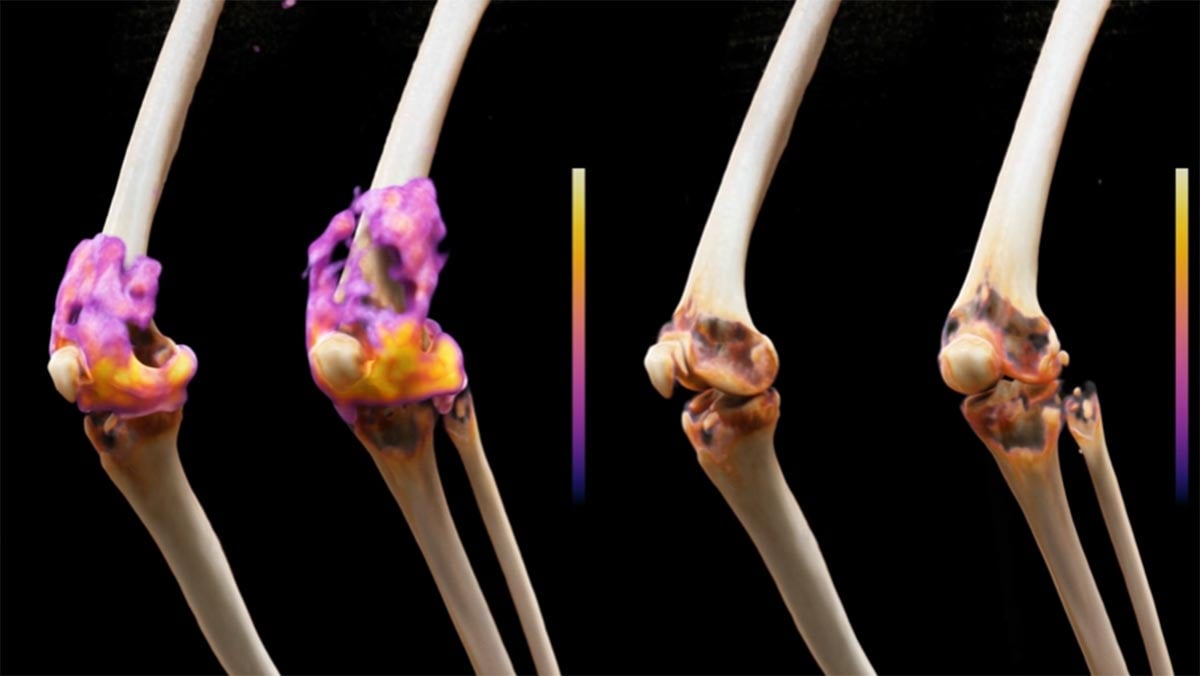
After years of failed treatments, a single infusion of genetically reprogrammed immune cells sent severe rheumatoid arthritis into lasting, medication-free remission in several patients.
Rheumatoid arthritis begins when the immune system turns against the tissue lining the joints. The resulting inflammation causes pain, stiffness, and swelling and can gradually erode cartilage and bone. Available medications often control the disease, but they generally do so by continuously suppressing parts of the immune response rather than correcting the underlying malfunction.
Patients may need anti-inflammatory or immunosuppressing drugs for life, leaving them vulnerable to infections and other side effects.
For those with treatment-refractory rheumatoid arthritis, the disease remains active even after repeated attempts with advanced targeted or biologic therapies.
“One reason could be disease-driving B cells, memory cells of the adaptive immune system that may survive in the lymph nodes, bone marrow, or joint tissue after an infection, where they produce harmful antibodies directed against the body’s own tissues and repeatedly reignite the inflammation,” explains Prof. David Simon, who designed the trial for this patient group with Prof. Gerhard Krönke at Charité’s Department of Rheumatology and Clinical Immunology.
Erasing Rheumatoid Arthritis Immune Memory
Instead of merely quieting inflammation, researchers at Charité are testing whether CAR T-cell therapy can remove the B cells that help the disease return. The treatment uses a patient’s own T cells, which are genetically reprogrammed in a laboratory to recognize a selected molecular target.
CAR T cells were developed to fight certain blood cancers. In that setting, the engineered cells search for malignant cells and destroy them. The same basic technology can be redirected against autoimmune disease by targeting immune cells that mistakenly attack healthy tissue.
The target in this trial was CD19, a molecule found on the surface of many B cells. “The identifying marker on many B cells, both abnormal B cells in cancers of the blood or lymphatic system and disease-driving B cells in rheumatoid arthritis, is the surface molecule CD19. You could think of it as a kind of “name tag,” explains David Simon. “To enable CAR T cells to detect and eliminate the disease-causing cells, we equip patients’ own immune cells with a receptor that acts like a search sensor for CD19.”

How CD19 CAR T-Cell Therapy Works
Doctors begin by collecting T cells from the patient’s blood. Scientists then equip them with a chimeric antigen receptor, or CAR, designed to bind to CD19. This modification turns the T cells into living treatments capable of finding and attacking CD19-positive B cells throughout the body.
Before receiving the cells through a single infusion, patients undergo a brief course of chemotherapy. This temporarily lowers the number of certain immune cells, creating space for the engineered T cells to multiply and remain active.
The treatment temporarily removes nearly all B cells carrying CD19, not only those circulating in the blood. The CAR T cells may also reach disease-driving cells hidden in the bone marrow, lymph nodes, and joint tissue, where they can survive beyond the reach of conventional treatment and restart inflammation.
Healthy B cells are removed as well, but the population can later recover from precursor cells. Researchers hoped this rebuilding process would produce a new B-cell system without the harmful immune memory responsible for rheumatoid arthritis.
Six Patients With Few Options Left
The initial stage of the COMPARE trial included six adults with particularly severe rheumatoid arthritis. The three women and three men were between ages 31 and 69 and had tried as many as eight targeted or biologic therapies over the previous ten years without adequate relief.
This was the world’s first clinical trial designed to evaluate the safety and effectiveness of CD19 CAR T-cell therapy specifically in rheumatoid arthritis. The central questions were whether the engineered cells could reach harmful B cells inside affected tissues, whether eliminating those cells would reduce disease activity, and whether the risks would be acceptable.
Every participant experienced a marked decline in disease activity. “Disease activity decreased markedly in all six patients. During follow-up of up to one year, three patients were in sustained remission without any medication for rheumatoid arthritis,” reports Gerhard Krönke, who leads the joint Clinical Rheumatology research group at Charité and the German Rheumatology Research Center (DRFZ), a Leibniz Institute. “This is particularly remarkable given that none of the established treatments had previously been able to relieve their symptoms adequately.”
Signs of a Deeper Immune Reset
The results suggested that the therapy did more than temporarily suppress swollen joints. The engineered cells entered deeper immune reservoirs and eliminated B cells in the bone marrow, lymph nodes, and joint tissue. Over twelve months of follow-up, levels of the autoantibodies characteristic of rheumatoid arthritis also fell sharply.
The type of B cells that returned offered another important clue. “When the B-cell system later recovered, predominantly naïve B cells that had not yet been shaped by the disease returned. In contrast, the B cells directed against the body’s own tissues that had been present before treatment were no longer detectable in almost all patients, an indication that the treatment may indeed be able to reset the pathological immune memory,” David Simon adds.
Naïve B cells have not yet encountered the signals that shape them into antibody-producing memory cells. Their predominance after treatment supports the idea that the immune system was rebuilding from an earlier and potentially less harmful state.
Protective antibodies produced after previous vaccinations, including those against chickenpox and tetanus, remained detectable. This suggests that some protection may persist even after profound B-cell depletion, although the longer-term effects on immunity remain unknown.
Remission Did Not Occur in Everyone
For several patients, one CAR T-cell infusion led to remission without continued rheumatoid arthritis medication. If that effect can be confirmed, the therapy could represent a fundamental shift for carefully selected patients, replacing indefinite immune suppression with a treatment intended to remove a source of the disease.
The responses, however, were not uniform. Some participants did not achieve complete remission, and one patient’s arthritis returned after an initial medication-free period. The study was also far too small to establish how often the therapy works, how long its benefits last, or which patients are most likely to respond.
CAR T-cell therapy is also substantially more complex than taking a conventional rheumatoid arthritis drug. It requires collecting and genetically modifying a patient’s cells, administering preparatory chemotherapy, and closely monitoring the patient after infusion. Those demands make safety especially important when applying a cancer treatment strategy to a chronic autoimmune disease.
Encouraging Safety Findings So Far
The most consistent side effect was cytokine release syndrome, an inflammatory reaction that can occur when CAR T cells rapidly activate the immune system. “After the participants received the CD19 CAR T cells, we observed only a temporary, mild-to-moderate cytokine release syndrome (CRS) in all participants, which was readily manageable. There were no severe neurological complications or other serious adverse events, and infections were rare,” explains Dr. Marie Luise Hütter-Krönke, Medical Director of the Hematology Early Clinical Trial Unit at Charité’s Department of Hematology, Oncology, and Cancer Immunology.
Although those early safety findings are reassuring, six patients and one year of observation cannot reveal uncommon complications or delayed effects. CAR T-cell therapy for autoimmune diseases, therefore, remains experimental, and longer follow-up will be essential.
The trial’s second phase will enroll ten additional patients and compare CAR T-cell therapy with an approved rheumatoid arthritis medication that also targets B cells. This comparison should help researchers determine whether the engineered cells produce deeper or more durable disease control and whether they truly reset immune memory rather than temporarily reducing inflammation.
If larger trials confirm the early results, CD19 CAR T-cell therapy could eventually offer an alternative for people with severe rheumatoid arthritis who have exhausted existing options.
Reference: “CD19 CAR T cell therapy for treatment-refractory seropositive rheumatoid arthritis: a phase 1 trial” by Fredrik N. Albach, Marie C. Rehm, Marie Luise Hütter-Krönke, Thanh Hang Le, Julia M. Giezen, Murat Torgutalp, Arne Sattler, Ioanna Minopoulou, Robert Biesen, Edgar Wiebe, Vincent Casteleyn, Thorben Witte, Christian Furth, Jan Zernicke, Melanie Nuesch Germano, Johan Verhagen, Artur Wilhelm, Maria Dzamukova, Klaus Engel, Simon Schallenberg, Aimo Kannt, Nicole Ziegler, Michaela Fehringer, Udo Schneider, Nadine Unterwalder, Mark Beling, Alexander Pfeil, Elpida Phithak, Martin Krusche, Olaf Penack, Tobias Alexander, Werner Stenzel, Manfred Wuhrer, Kamran Movassaghi, Thomas Dörner, Eicke Latz, Thomas Vogl, Antonia Busse, Georg Schett, Hans Ulrich Scherer, Rene E. M. Toes, Arnd Kleyer, Ulrich Keller, Lars Bullinger, David Simon and Gerhard Krönke, 27 August 2026, Nature Medicine.
DOI: 10.1038/s41591-026-04603-3
The main contributors to the first of two phases of the COMPARE study included researchers from Charité’s Department of Rheumatology and Clinical Immunology and the Department of Hematology, Oncology, and Cancer Immunology at Campus Benjamin Franklin, as well as researchers from the Cluster of Excellence ImmunoPreCept; the German Rheumatology Research Center (DRFZ), a Leibniz Institute; and the Fraunhofer Institute for Translational Medicine and Pharmacology ITMP. The study, which was initiated and designed at Charité, also received support from Kyverna Therapeutics.
Never miss a breakthrough: Join the SciTechDaily newsletter.
Follow us on Google and Google News.
3 Comments
I have rheumatoid arthritis and I believe that I am suffering from autoimmune disease, and need some care
Allogene Therapeutics is also exploring this approach but from the allogeneic donoe derived cells and without chemo.
*donor