

Gut microbes in early life play a key role in shaping insulin production and diabetes risk, with Candida dubliniensis showing strong protective effects in mice.
New research in mice reveals that the gut microbiome plays a crucial role in the development of insulin-producing cells during early life, with lasting impacts on metabolism and diabetes risk.
The study suggests that introducing certain gut microbes could potentially reduce the risk of type 1 diabetes, or even help restore metabolic function later in life by promoting the growth and repair of pancreatic tissue.
The findings were published in the journal Science.
The critical window
Researchers found that mice exposed to broad-spectrum antibiotics shortly after birth experienced long-term metabolic problems. When given antibiotics during a critical 10-day window in early life, the mice developed fewer beta cells—the insulin-producing cells in the pancreas that regulate blood sugar. As adults, these mice had higher blood sugar levels and produced less insulin.
“This, to me, was shocking and a bit scary,” says June Round, PhD, professor of pathology at University of Utah Health and one of the senior authors on the study. “It showed how important the microbiota is during this very short early period of development.”
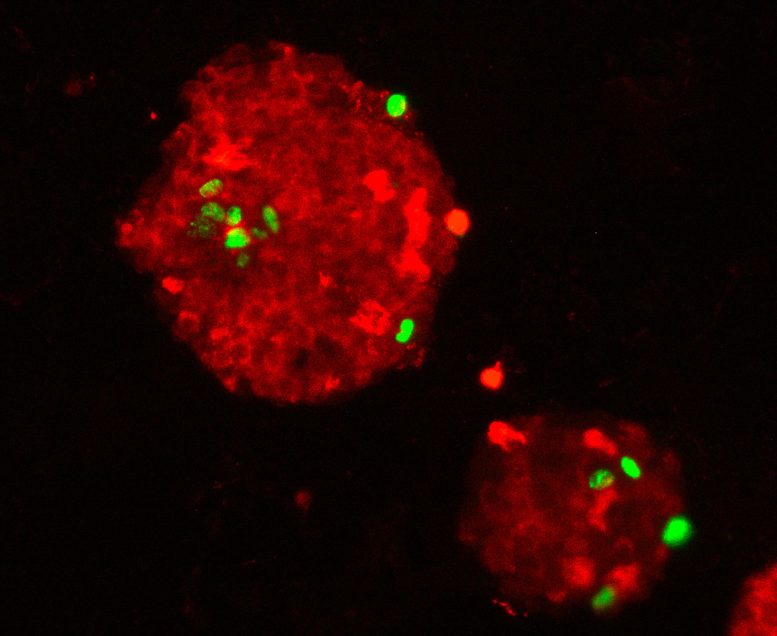
By testing a variety of antibiotics that affect different types of microbes, the researchers pinpointed several specific microbes that increased the amount of insulin-producing tissue and the level of insulin in the blood. Intriguingly, one of these metabolism-boosting microbes is a largely unstudied fungus called Candida dubliniensis, which isn’t found in healthy human adults but may be more common in infants.
Crucially, C. dubliniensis exposure in early life also dramatically reduced the risk of type 1 diabetes for at-risk male mice. When male mice that were genetically predisposed to develop type 1 diabetes were colonized by a metabolically “neutral” microbe in infancy, they developed the disease 90% of the time. Their compatriots that were colonized with the fungus developed diabetes less than 15% of the time.
Exposure to C. dubliniensis could even help a damaged pancreas recover, the researchers found. When researchers introduced the fungus to adult mice whose insulin-producing cells had been killed off, the insulin-producing cells regenerated, and metabolic function improved. The researchers emphasize that this is highly unusual: this kind of cell normally doesn’t grow during adulthood.

“One possibility in the far future is that maybe signals like these could be harnessed not only as a preventative but also as a therapeutic to help later in life,” says Jennifer Hill, PhD, first author on the study, who led the research as a postdoctoral scientist in the Round Lab at the U. Hill is now an assistant professor in molecular, cellular, and developmental biology at the University of Colorado Boulder.
If the benefits seen in mice hold true in humans, microbe-derived molecules might eventually help restore pancreatic function in people with diabetes. But Hill cautions that treatments that help beta cells regenerate in mice historically have not led to improvements for human health.
An immune system boost
The C. dubliniensis fungus appears to support insulin-producing cells via its effects on the immune system. Previous research had shown that immune cells in the pancreas can promote the development of their insulin-producing neighbors. The researchers found that mice without a microbiome have fewer immune cells in the pancreas and worse metabolic function in adulthood.
When such mice get a booster of C. dubliniensis in early life, both their pancreatic immune cells and their metabolic function are back to normal. And C. dubliniensis can only promote the growth of insulin-producing cells in mice that have macrophages, showing that the fungus promotes metabolic health by affecting the immune system.
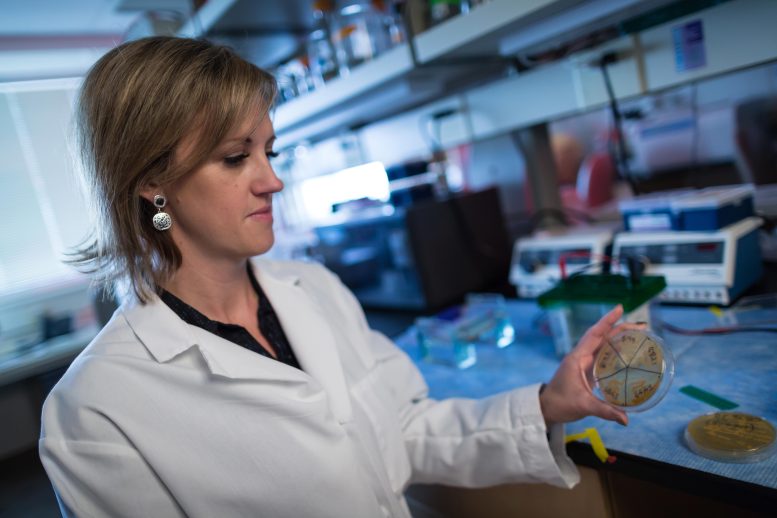
The researchers emphasize that there are probably other microbes that confer similar benefits as C. dubliniensis. Their new findings could provide a foot in the door for understanding how similar health cues from other microbes might function. “We don’t know a lot about how the microbiome is impacting early-life health,” Hill says. “But we’re finding that these early-life signals do impact early development, and then, on top of that, have long-term consequences for metabolic health.”
Round adds that understanding how the microbiome impacts metabolism could potentially lead to microbe-based treatments to prevent type 1 diabetes. “What I hope will eventually happen is that we’re going to identify these important microbes,” she says, “and we’ll be able to give them to infants so that we can perhaps prevent this disease from happening altogether.”
Reference: “Neonatal fungi promote lifelong metabolic health through macrophage-dependent β cell development” by Jennifer Hampton Hill, Rickesha Bell, Logan Barrios, Halli Baird, Kyla Ost, Morgan Greenewood, Josh K. Monts, Erin Tracy, Casey H. Meili, Tyson R. Chiaro, Allison M. Weis, Karen Guillemin, Anna E. Beaudin, L. Charles Murtaugh, W. Zac Stephens and June L. Round, 7 March 2025, Science.
DOI: 10.1126/science.adn0953
Research was funded by the National Institutes of Health (award numbers S10OD026959, 1K99DK133625-01A1, R01DK124336, R01DK124317 and R01AT011423), the UU Developmental Biology Training Grant (2T32 HD007491-21), the JDRF Postdoctoral Fellowship (3-PDF-2019-747-A-N), and by the Helmsley Foundation, Burroughs Wellcome Fund, and the Keck Foundation. This content is solely the responsibility of the authors and does not necessarily represent the official views of the National Institutes of Health or of the JDRF.
Never miss a breakthrough: Join the SciTechDaily newsletter.
Follow us on Google and Google News.