

A clinical trial has found that a widely used and affordable type 2 diabetes medication can lower insulin requirements in people with type 1 diabetes, potentially improving how the condition is managed.
For many years, doctors have prescribed metformin, a long-established and widely used medication for type 2 diabetes, to people with type 1 diabetes in an effort to treat insulin resistance. This practice has largely been supported by clinical experience rather than strong trial evidence.
Now, a randomized clinical trial led by the Garvan Institute of Medical Research has shown that metformin does not directly reverse insulin resistance in people with type 1 diabetes. Instead, it lowers the total amount of insulin required to keep blood glucose levels within the recommended range.
The findings, published in Nature Communications, challenge long-held assumptions about how metformin works in type 1 diabetes. The results may help physicians refine treatment strategies and reduce the daily demands placed on people who rely solely on insulin therapy.
Can we overcome insulin resistance in type 1 diabetes?
Type 1 diabetes is an autoimmune disease that affects more than 130,000 Australians. In this condition, the immune system mistakenly destroys the insulin-producing cells in the pancreas. Without natural insulin production, individuals must inject insulin for life to control their blood sugar. Managing glucose levels with insulin is complex and constant.
Estimates suggest that people with type 1 diabetes make approximately 180 additional health-related decisions each day connected to monitoring and adjusting their treatment.
Over time, some individuals with type 1 diabetes develop insulin resistance. In this state, the body’s cells become less responsive to insulin, meaning higher doses are needed to achieve the same blood sugar control. This can complicate treatment and increase health risks.
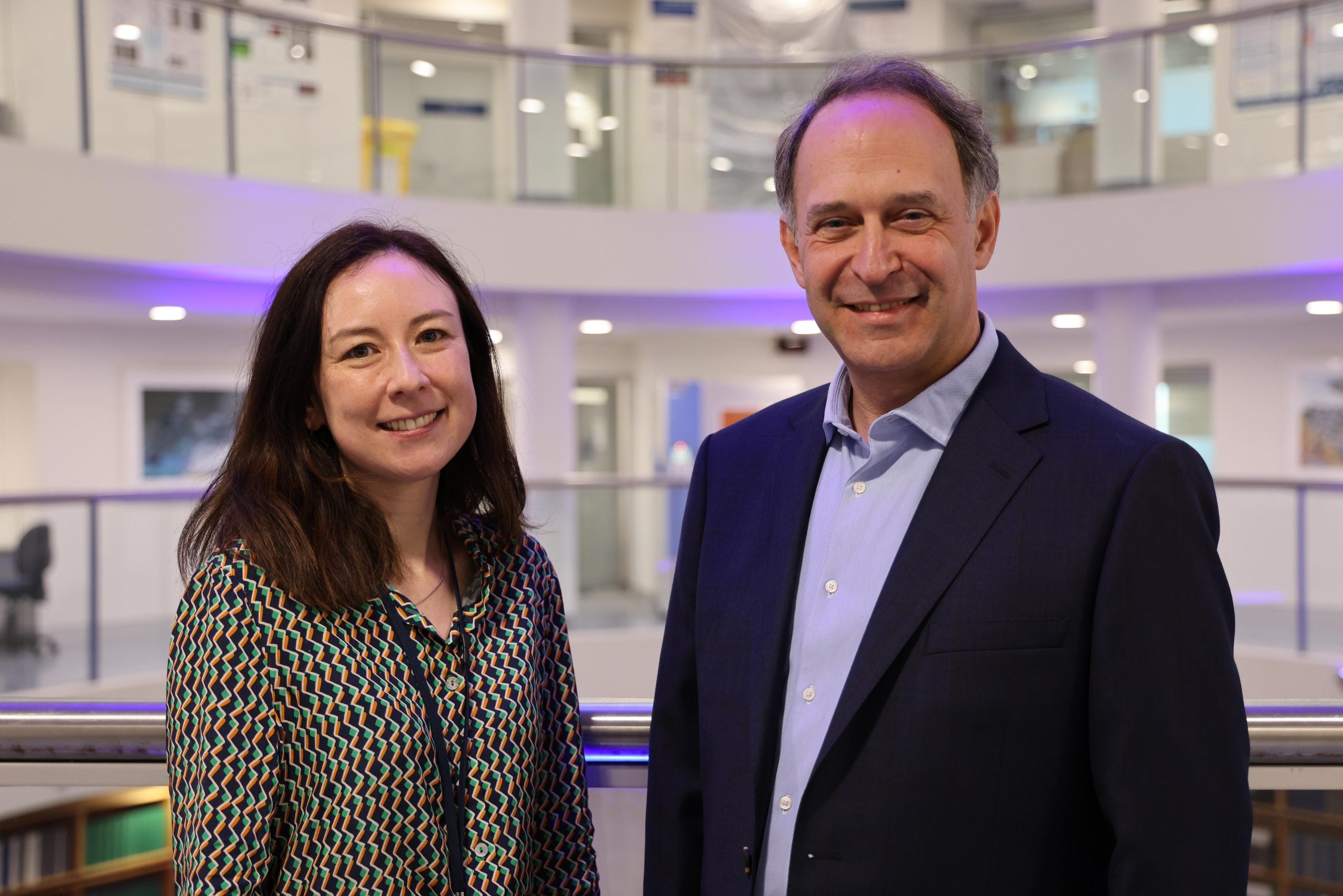
“Insulin resistance is a growing problem in type 1 diabetes. Not only does it make regulating blood sugar levels difficult, but it is an underappreciated risk factor for heart disease, which is one of the biggest causes of health complications and deaths in those with type 1 diabetes,” says Dr. Jennifer Snaith, endocrinologist and co-lead of the study.
To investigate whether metformin could address this issue, Dr. Snaith and Professor Jerry Greenfield led the first randomized controlled trial in adults with type 1 diabetes to test the drug’s effects on insulin resistance. Metformin is an inexpensive oral medication commonly used in type 2 diabetes to improve the body’s response to insulin. Despite its frequent off-label use in type 1 diabetes, including by an estimated 13,000 Australians, its exact mechanism in this group has remained unclear. The study, titled Insulin Resistance in Type 1 Diabetes Managed with Metformin (INTIMET), was designed to provide definitive answers.
“We randomized 40 adults with long-term type 1 diabetes to take either metformin or a placebo for six months. We examined whether their insulin resistance changed over that time through a sophisticated and comprehensive research technique, called a clamp study, that allowed us to map insulin resistance in different parts of the body,” explains Professor Greenfield.
A surprise finding challenges the assumption of metformin’s action
Unexpectedly, the team found that the use of metformin did not lead to improvements in insulin resistance or changes to blood sugar levels. This suggests that, unlike for type 2 diabetes, metformin does not work to counter insulin resistance in type 1 diabetes. However, metformin did decrease the amount of insulin people needed to keep their blood sugars stable.
Credit: Garvan Institute of Medical Research
“Although we didn’t find changes to insulin resistance from the use of metformin, we did show that people taking it used around 12% less insulin than those on placebo. This is an important result. Insulin is a relatively old treatment which, while lifesaving, comes with significant mental and physical burden. This means that lowering the amount of insulin used is a priority for many people living with type 1 diabetes. We have shown that a very cheap, accessible medication may serve this purpose, and this is very exciting,” Dr Snaith says.
A role for gut microbes?
The team is now investigating how metformin may work to lower the amount of insulin needed by those with type 1 diabetes.
Professor Greenfield explains: “Metformin has been available in various forms for around 100 years, but it’s mechanism of action remains unknown. We would have expected that the observed reductions in insulin dose induced by metformin in our study would be due to the body becoming more sensitive to insulin, that is, becoming less insulin resistant. But we have shown that is not the case. Our priority is now working out how metformin is achieving this effect.”
“There is increasing evidence suggesting that metformin may act on the gut. This is why we are now investigating how metformin changes gut flora, also known as the microbiome, in people with type 1 diabetes. This has not been studied before in type 1 diabetes. We’re hoping this will provide clues on metformin’s mechanism of action, so that it can be more widely used in the management of type 1 diabetes,” adds Dr Snaith.
Reference: “Effect of metformin on insulin resistance in adults with type 1 diabetes: a 26-week randomized double-blind clinical trial” by Jennifer R. Snaith, Nick Olsen, Jennifer Evans, Greg M. Kowalski, Clinton R. Bruce, Dorit Samocha-Bonet, Samuel N. Breit, Deborah J. Holmes-Walker and Jerry R. Greenfield, 24 November 2025, Nature Communications.
DOI: 10.1038/s41467-025-65951-1
This research is supported by the Diabetes Australia Research Program, St Vincent’s Clinic Research Foundation, UNSW Cardiac Vascular and Metabolic Medicine Theme, National Health and Medical Research Council, Melissa and Jonathon Green, and Dr Leslie and Mrs Ginny Green.
Never miss a breakthrough: Join the SciTechDaily newsletter.
Follow us on Google and Google News.
25 Comments
I’m in the US and started using Metformin to help reduce inflammation in my body. Not only did those markers come way down, my a1c went from averaging 6.2-6.5 down to 5.7 – 5.9. I have been a Type 1 diabetic since 1980.
My endocrinologist was so encouraged by my results, she’s prescribed it to almost all the T1d’s under her care. I’m lucky in that my body doesn’t react too much to the drug. I know some people have a rough time tolerating it.
I don’t have diabetes, but my doctor prescribed me metformin do I need to be taking this medication
Over 20 years i have been taking Metformin and at all times it’s the same. Never lower my blood sugar.
Should I stop taking?
Six months to a year later
Hey guys soo this cuases cancer of your eyes, leaky bum, erections that last longer than 12 hours, farts the smell like 3 week old raw sewage, lack of appetite, hearing loss, gums to bleed, teeth to loosen or fall out, amd many other major and minor side effects.. our bad.
In my situation, my liver is constantly dumping sugar into my blood stream 24×7. Metformin suppresses this, and therefore I require one insulin injection per day, and eat a carb reduced diet. I’ve been doing this for over 10 years, my BGL time in range is consistently 98% over 90 days.
I also have type 2 diabetes, look at other meds you take, some will cause diabetes like atorvastatin
Leave it pharmaceuticals that pay for this kind of a conclusion and pay for the research to keep people on their drugs even if they don’t really work, they just mask the symptoms and make them billions. We are so beyond believing anything from the “medical” community. They don’t work to cure diseases, they strive to keep us sick to keep the money coming in.
Metformin nearly killed me!
I took myself off it as my GP said it was a bad idea. I proved to him that my very low hypos stopped. Dizzy spells stopped and lack of being able to eat for 3 months turning around. He and my endocrinologist decided to take me off Metformin and Jardiance. I will never use Metformin again regardless what I am told. I have Diabetes Type 2.
I have my daughter diagnosed recently
Her body still products insulin, i want to look otherwise to improve her life as her body is so tiny a d she is very sensitive especially at night,her sugar always high 3out of 7 days and needs correction dose.
Main thing is we did her auto immune anti body test. And she got tested negative for it. Still what is causing this, is it truely her liver? I like to get better than juat auto immune response because of that test.
One more thing her age she is 12 and right at age when girls starts puberty which she has not started yet… he on her way to.
This makes me ask lot of questions.
Hello,
Does your daughter have any other symptoms of anything? Does she see a endocrinologist?
I’m curious because my daughter is dealing with some health problems and we can’t seem to find any answers for it.
Amy
Hello,
Does your daughter have any other symptoms of anything? Does she see a endocrinologist?
I’m curious because my daughter is dealing with some health problems and we can’t seem to find any answers for it.
Hello Amy how are you doing? Could you tell me more about the daughter who has been on the metformin and insulin since a child and how did you get her to non existent and by the way, awesome news and glad to hear it especially with the creative Commons license and everything that pointed to North Carolina and wherever they did make some mistakes they need to correct. Looking forward to seeing the world in a different direction and I have been more than expected., oops
I was 29 so you are right, it’s not true.
The way I figured out it is my liver dumping sugar into my bloodstream, is for an entire day, I consumed no carbs from food and drinks, and I checked my blood sugar every hour, and wrote down the results. During that day my blood sugar was constantly in the safe high range or a little too high.
I then repeated the same test 4 days later, same thing happened. Did my research and discovered there’s a medical condition where the liver constantly over produces sugar. Spoke to my endocrinologist and started on Metformin.
Did the same experiment for a day with Metformin, and sugar levels were in the normal range or going low.
Metformin also has longevity properties.
https://www.google.com/url?q=https://pmc.ncbi.nlm.nih.gov/articles/PMC6779524/&sa=U&sqi=2&ved=2ahUKEwiBlur-1oCTAxUVGTQIHfUYKfEQFnoECCQQAQ&usg=AOvVaw2Ei-tSRWOoBNMO0Kx0OtEN
When do you take your Metformin?
500mg with breakfast and 500mg with dinner, every day
Metformin makes your body eject glucose out of your system. I was put on it, and it nearly killed me off, as the doctors did not listen to me. My body has always been very sensitive to any medication, but I had to stop it otherwise I would not be here now. These doctors do not know much about how the body works.
Diabetes – Liver ?
Diabetes – Pancreas.
This article is flawed and contradictory. The research sounds to be the same.
There is No evidence for Type 1 diabetes being an autoimmune disease.
The adverse effects of treatments used for Type 1 diabetes are the likely true causes of heart lung vascular gastric kidney liver and other morbidities and or mortalities.
Why test adults when it is young people who are affected by Type 1 diabetes. ??
More drugs to lessen the use of drugs leading to more risks, more complications, more detriment But of course of a different kind!
This is not an appealing and healthy and beneficial breakthrough.
This is repurposing a drug.
This is marketing.
This is likely harmful.
Hopefully children and parents will not rush into the ideology of popping a pill or more to save the need from one less daily injection.
As far as research stands – it is questionable
You’re wrong that adults can’t develop type 1 diabetes. My boyfriend was diagnosed at age 38. When your pancreas fails at that age it’s because of an autoimmune disease.
Type I diabetes is caused by a badly damaged pancreas (damaged by one’s own immune system). It is not caused by insulin resistance. This article seems badly confused on this point.
Care when ready this journalists article, The study clearly says there is no evidence of benefit. ‘These results do not support prescribing metformin to reduce hepatic insulin resistance in adults with type 1 diabetes’ so it is odd that the article suggests something different to the study.
Young children have not developed insulin resistance. This occurs later in life for those with Type-1 diabetes. This research shows that metformin can reduce the dosage amount needed to maintain a healthy blood sugar level in those with Type-1 diabetes..
I developed Type-2 diabetes in my 50’s. This was caused mainly by a poor diet and not exercising . I take one injection of insulin at night with metformin. I have successfully reduced my A1-C from 10+ to 6.0.
As long as I take metformin after eating, I have not experienced any major issues with the drug. Occasionally I’ll have a soft stool. I’m willing to live with that because I’m able to maintain a good blood sugar level.
I also believe that type 2 diabetes can be reversed through diet and exercise. For me, now that I’m in my ’60s, diet and exercise are less attractive to be unfortunately. Metformin helps me eat less and feel full longer.
It is possible with collective efforts to reverse or eradicate diabetes in the. If we will live in a greedy-free world.
what about how metformin has been directly linked with pancreatic cancer you know the organ that is directly related with insulin production and moderation in the body.. look at the system class action lawsuits find because of these numbers.. typical cancer treatments do not work w pancreatic cancer it’s a death sentence so publishing the benefits without giving the ugly full story is criminal.