
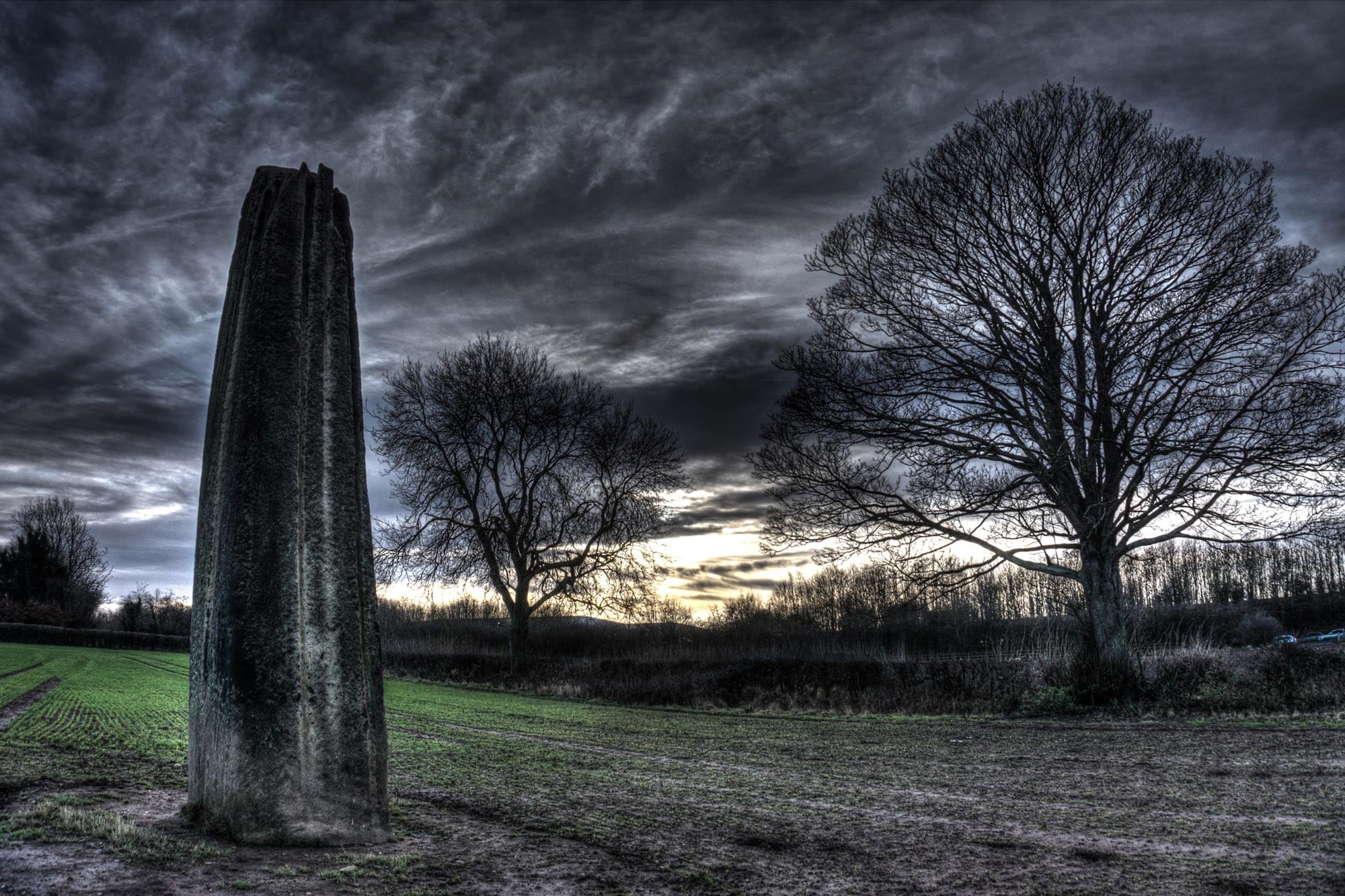
Prehistoric builders in Britain went to extraordinary lengths to create one of the country’s most striking ancient monuments. New research shows they intentionally transported enormous stones weighing more than 25 tonnes for at least 18 kilometers (11 miles) before raising them as the famous Devil’s Arrows, Britain’s tallest surviving prehistoric stone row.
A study led by Curtin University in collaboration with the University of York, UK, has identified the geological origin of the stones for the first time. The analysis points to Brimham Rocks, a dramatic and rugged landscape in North Yorkshire.
A 4,000-Year-Old Monumental Mystery
The Devil’s Arrows stand near Boroughbridge in northern England. Reaching heights of up to seven meters (23 feet), the towering stones form an unusual alignment in a lowland landscape.
Although their impressive size has made them a prominent feature for thousands of years, researchers had not been able to determine exactly where the stones came from. They are thought to have been transported and erected during the Late Neolithic or Early Bronze Age, possibly around 2000 BC.
Lead author Dr. Anthony Clarke, from the Timescales of Mineral Systems Group within Curtin’s School of Earth and Planetary Sciences, said the discovery challenges established ideas about the decisions prehistoric communities made when constructing monumental sites.
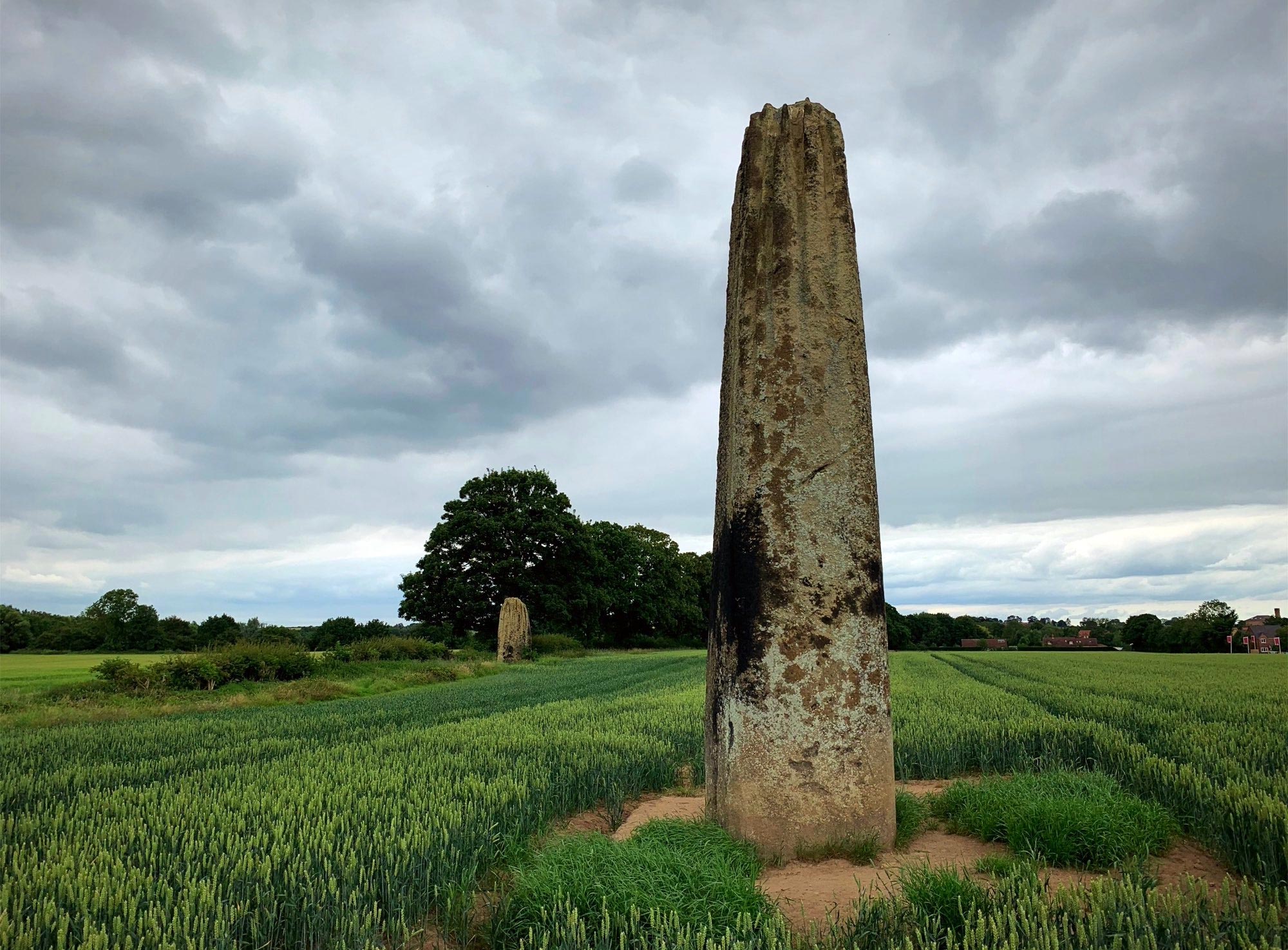
“Our research shows these stones weren’t simply taken from the nearest available source – they were deliberately chosen from a challenging landscape 18 kilometers away,” Dr. Clarke said.
“Plumpton Rocks, which is closer to the Devil’s Arrows, had previously been identified as the probable source of the stones. Our findings instead point to Brimham Rocks, showing that prehistoric builders transported these enormous stones significantly further than thought.
“Each stone weighs more than 25 tonnes, so moving them would have required incredible planning, coordination and engineering skill.
“This tells us prehistoric people placed real importance on the landscape itself. It wasn’t just about convenience – the location the stones came from likely held meaning for them.”
Why Carry 25 Tonne Stones So Far?
The newly identified source is important because suitable stone was available closer to the monument. Instead of taking material from the nearest location, prehistoric builders appear to have deliberately selected stones from a more distant and difficult landscape.
That decision suggests the origin of the stones may have mattered for reasons beyond practicality. Brimham Rocks itself may have carried cultural, symbolic, or spiritual significance for the communities involved.
Co-author Dr. Jim Leary from the University of York said the results change the picture of prehistoric monument building.
“These results show that ancient communities were making deliberate and meaningful choices about where their stones came from,” Dr. Leary said.
“It highlights the importance of landscape and shared belief systems, as well as the remarkable effort involved in transporting and raising stones of this size.”
Mineral Fingerprints Reveal the Stones’ Origin
To investigate where the Devil’s Arrows came from without damaging them, the researchers used a new low-impact sampling technique. Adhesive tape allowed the team to collect extremely small mineral grains from the stones.
Researchers then examined the age “fingerprints” preserved in those grains. Those signatures provided a geological match with Brimham Rocks, revealing the most likely source of the monument’s enormous stones.
The evidence also allowed researchers to rule out natural transportation by processes such as glacial movement. Instead, the findings indicate that people intentionally moved the stones across the landscape.
That would have required prehistoric communities to transport blocks weighing more than 25 tonnes over a distance of at least 18 kilometers before positioning and raising them at the monument site.
Searching for More Clues
Dr. Clarke said the researchers now hope to use the same noninvasive approach to investigate other standing stones whose origins remain uncertain. The team also plans targeted excavations at the Devil’s Arrows and at the newly identified source area.
“These next steps could help us better understand when the stones were moved and how these extraordinary monuments were constructed,” Dr. Clarke said.
Justin Scully, National Trust General Manager for Fountains Abbey & Studley Royal and Brimham Rocks, said the findings establish a direct connection between Brimham Rocks and the Devil’s Arrows, linking two notable Yorkshire landscapes through an ancient human story.
“We’re incredibly grateful to the researchers for helping us uncover this new chapter in the stones’ story and deepen our understanding of the people who shaped this landscape thousands of years ago,” Mr. Scully said.
“The Devil’s Arrows are deeply cherished by local communities, and we’re delighted that this discovery adds a new chapter to their story.”
Reference: “Deliberate prehistoric sourcing of the Devil’s Arrows, Britain’s tallest stone row” by Anthony Clarke, Jim Leary and Chris Kirkland, 9 September 2026, Proceedings of the Royal Society A Mathematical Physical and Engineering Sciences.
DOI: 10.1098/rspa.2026.0504
Never miss a breakthrough: Join the SciTechDaily newsletter.
Follow us on Google and Google News.
1 Comment
If the Vatican makes it’s own AI, they can teach it the old names and in two generations, maybe people will think they really old arrow heads shot from below. Or hollow earthers will see evidence of giants living below.
Since people believe anything they are told