
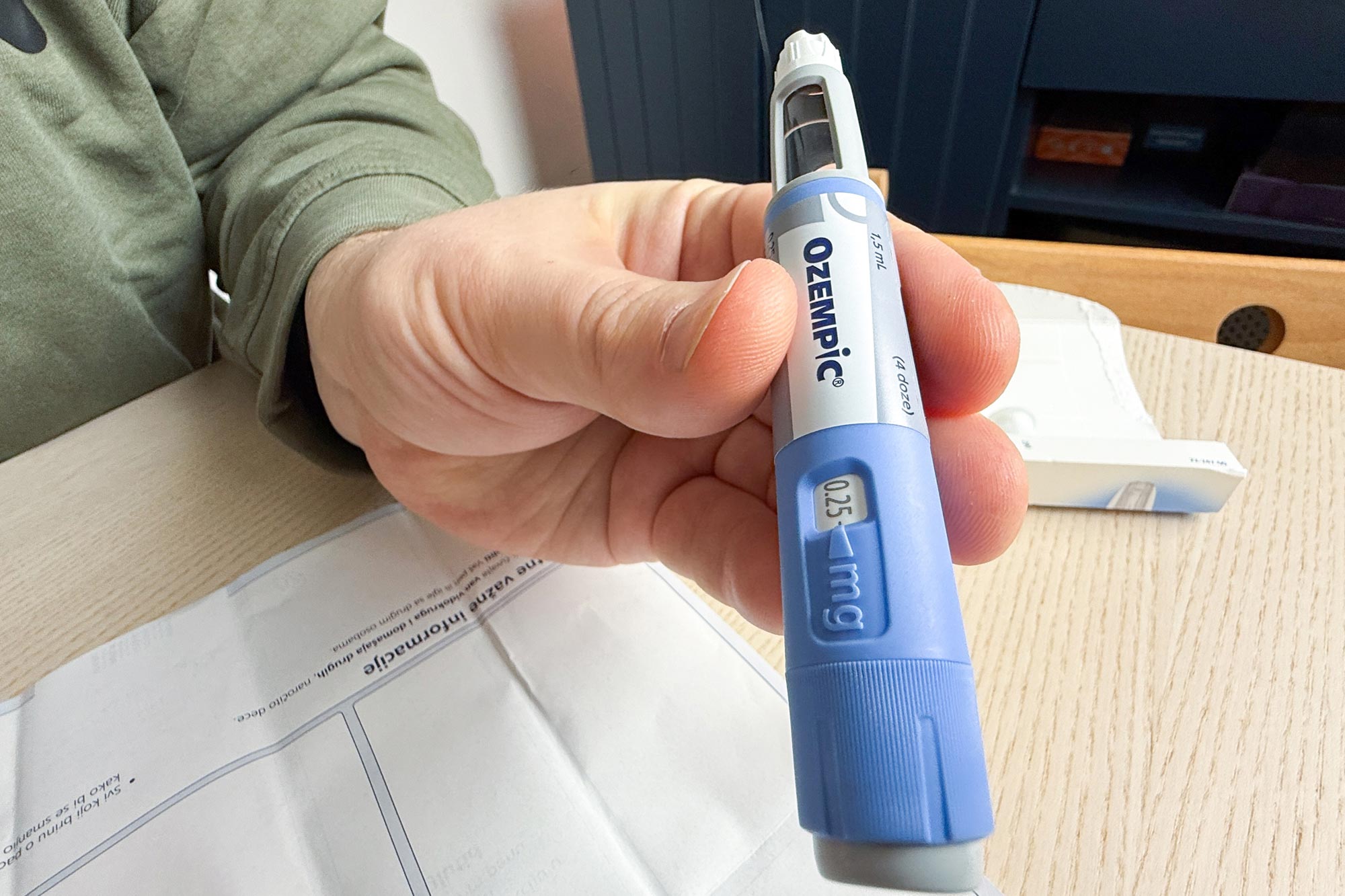
Most weight lost with GLP-1 obesity drugs came from fat, while relative muscle mass was largely preserved.
GLP-1 obesity drugs can lead to substantial weight loss, but an important question is what the body is actually losing. New research presented at the European Congress on Obesity (ECO2026) suggests that 80-85% of weight lost during treatment comes from fat, while relative skeletal muscle mass is largely preserved.
The findings involve GLP-1–based treatments such as semaglutide and liraglutide, as well as the GIP/GLP-1 dual agonist tirzepatide. Although these drugs are already known to promote weight loss and improve clinical outcomes, their effects on fat and muscle have been less clear.
To investigate, researchers in Vienna used bioelectrical impedance analysis (BIA), a fast, noninvasive method that estimates body fat, skeletal muscle, and water by measuring how a low-level electrical current moves through the body.
The study tracked fat and muscle separately
Because body weight alone cannot show whether someone is losing fat or muscle, the researchers examined both components during GLP-1RA or GIP/GLP-1RA treatment in adults with obesity. They used bioelectrical impedance analysis (BIA) to track skeletal muscle mass and fat mass and to examine how fat loss related to muscle preservation over time.
The retrospective cohort included 486 adults with obesity (18% male, 82% female; mean BMI 37.68 kg/m²; mean age 49.9 years) who received GLP-1 receptor agonists or GIP/GLP-1 receptor agonists at a specialized private obesity outpatient clinic in Vienna between 2022 and 2025. Treatment consisted of liraglutide (8%), semaglutide (82%), or tirzepatide (8%), and all participants were given physical exercise recommendations based on current guidelines. Their fat and muscle mass were estimated using BIA.
The researchers compared changes in absolute and relative skeletal muscle mass and fat mass from baseline across treatment periods of <6 months, 6–24 months, and >24 months. When more than one measurement was available within a predefined time window, they selected one measurement per person based on the longest interval from baseline. Computer modeling accounting for repeated measurements was adjusted for fat mass, time since treatment began, age, sex, and baseline BMI.
Most lost weight came from fat
After an average of about 14 months of treatment, patients had lost 9.9% of their body weight on average. Fat mass fell by 9.0 kg (around 18%), compared with a decrease of only 1.2 kg (around 5%) in skeletal muscle mass. More than 70% of patients preserved or increased their relative skeletal muscle mass. After changes in fat mass were taken into account, statistical modeling indicated that muscle mass remained stable over time, pointing toward favorable changes in body composition rather than clinically relevant muscle wasting.
Adjusted linear mixed effects models also found that time since treatment began was not independently associated with skeletal muscle mass after accounting for fat mass and other variables. Absolute skeletal muscle mass was strongly associated with fat mass, suggesting that the changes reflected proportional shifts in body composition rather than disproportionate muscle loss.
The authors say: “In this real-world cohort, GLP-1RA or GIP/GLP-1 RA therapy was associated with substantial fat mass reduction while largely preserving skeletal muscle mass in relative terms. Our analyses indicate that skeletal muscle mass remains stable over time when accounting for changes in fat mass, supporting the concept that GLP-1RA-induced weight loss reflects favorable body composition changes rather than clinically relevant muscle wasting.”
Long-term effects remain uncertain
The researchers caution that the study was retrospective and based on real-world clinical data, which brings several limitations.
These include missing data, the absence of a placebo group, and a study population that was predominantly female. The results apply to this particular treatment group and follow-up period, and larger prospective trials will be needed to determine the long-term effects.
Meeting: European Congress on Obesity 2026 (ECO2026)
Never miss a breakthrough: Join the SciTechDaily newsletter.
Follow us on Google and Google News.
2 Comments
Interesting study, however, while it appears that the study considered pre and post treatment, they still call it retrospective. And would have been nice if there was any conflict of interest.
I had horrific side effects for the Wegovy pill. Brain fog, massive fatigue, then came the rash…. My tongue swelled and I had a giant hive on me left cheek. I had a histamine storm. I did also lost muscle tone and I had hair loss.
I was eating well and tried to exercise in waves of nausea. It was not a good thing at all.