

In August 2026, a series of powerful winter storms transformed parts of northern Chile’s Atacama Desert, covering the famously dry landscape in an unusual layer of snow.
Snow is not unheard of in the Atacama. Significant falls occurred in 2025 and, before that, in 2011. But one of the August 2026 storms stood out because of its remarkable reach. Snow spread westward from the Andes across the desert and came close to the Pacific coast.
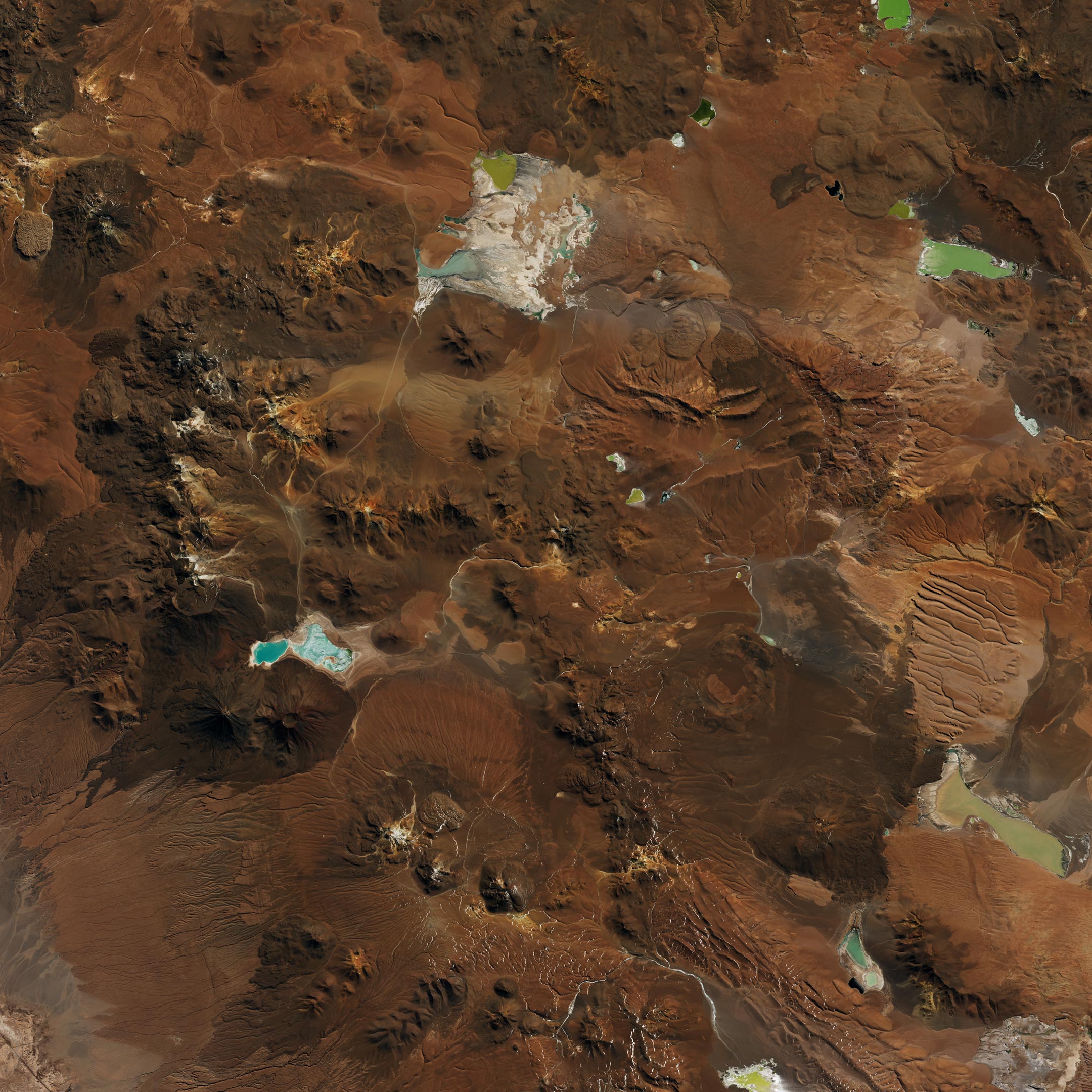
NASA Satellites Capture a Snow-Covered Desert
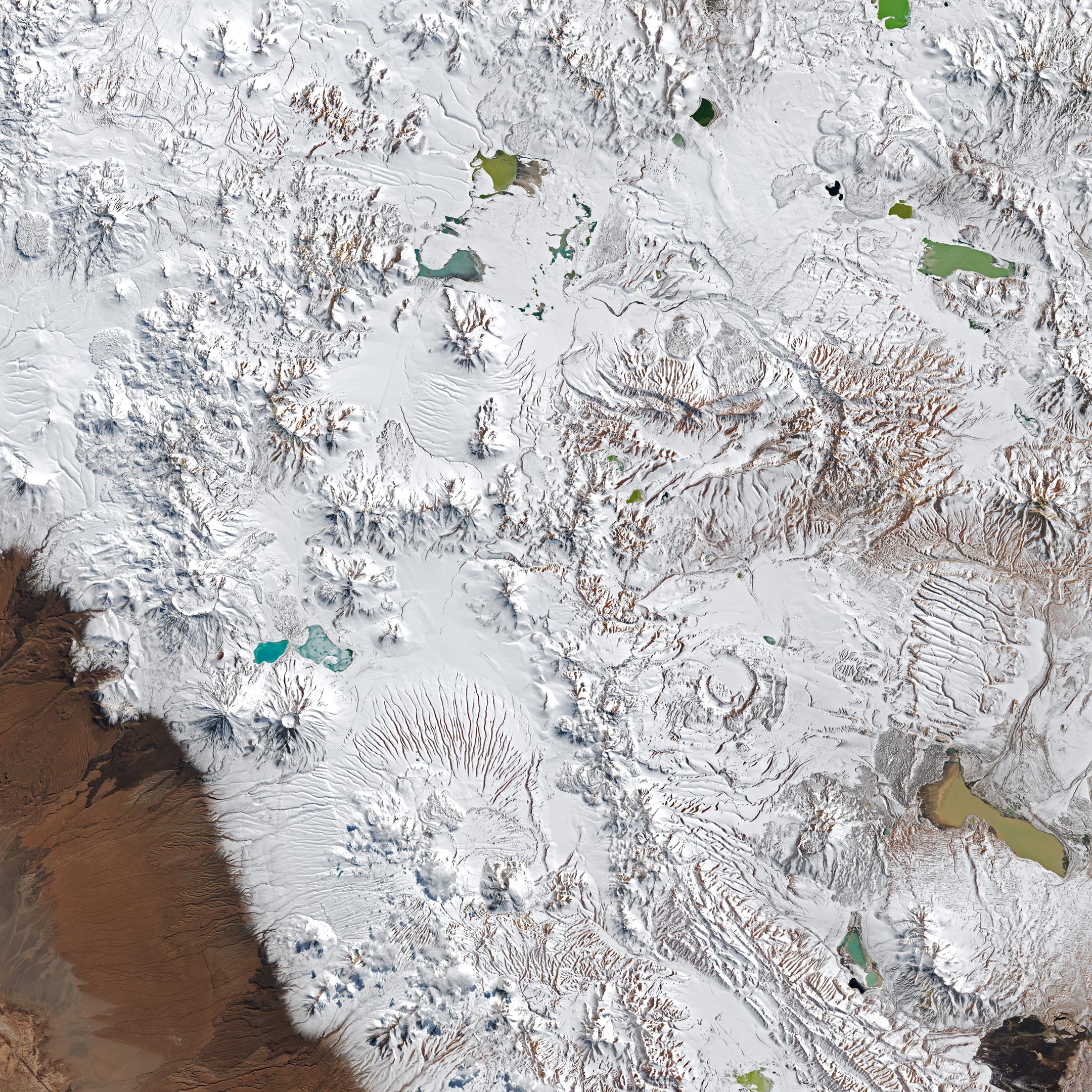
The OLI (Operational Land Imager) aboard the NASA USGS Landsat 8 and Landsat 9 satellites captured images of the region on August 6 (above) and August 14 (below), before and after a stretch of severe winter weather.
The images provide a detailed look at the Chajnantor plateau within the Altiplano-Puna volcanic complex. The high plateau is home to the Atacama Large Millimeter/submillimeter Array (ALMA), one of the most powerful radio telescopes on Earth.
When heavy snow and strong winds arrived, ALMA temporarily suspended operations. Its antennas were placed in a protective survival mode designed to help the observatory withstand severe conditions.
Snow Spreads Toward the Pacific
The weather became even more extraordinary later in the month.
A second storm covered a much larger area with fresh snow. An image taken on August 19 by MODIS (Moderate Resolution Imaging Spectroradiometer) aboard NASA’s Terra satellite shows the extent of the snowfall.
Snow stretched west from the Andes, crossed the hyper-arid heart of the Atacama, and reached areas close to the Pacific coast south of the Chilean port city of Antofagasta. Several other major astronomical observatories are located in this coastal region, and some also suspended operations during the storm.

An Unusual Atmospheric Setup
Winter precipitation in northern Chile is often associated with cutoff lows, low-pressure systems that become separated from the main jet stream and can occasionally drift into the region.
A cutoff low was responsible for the significant snowfall seen in 2025, according to René Garreaud, an atmospheric scientist at the University of Chile.
The late August 2026 storm also developed from a cutoff low, but its origins were especially unusual. The system broke away from an exceptionally large trough, an elongated region of relatively low atmospheric pressure. That trough extended across a huge portion of the Southern Hemisphere, reaching from the southern tip of South America into the subtropics.
Combined with plentiful moisture near the coast, the atmospheric disturbance produced precipitation across an unusually broad area. Rain and snow extended offshore, along the coastline, through the heart of the Atacama, and over the Andes.
The resulting precipitation reached levels “rarely seen in the otherwise extremely arid region,” Garreaud said.
Nearly a Year’s Rain Many Times Over
Not all of the precipitation arrived as snow.
In Taltal, a coastal city in northern Chile, nearly 40 millimeters (1.6 inches) of rain fell over just three days. According to Garreaud, that amount was roughly 10 times the city’s average annual rainfall.
“We see these kinds of events only a few times, if any, per decade.”
For a landscape defined by extreme dryness, such a sudden influx of water can quickly become dangerous.
The heavy precipitation triggered destructive mudflows and flash flooding across parts of northern Chile. The National Disaster Prevention and Response Service (SENAPRED) reported that thousands of people were affected and hundreds of homes suffered major damage.
El Niño Sets the Stage
The storms arrived during an unusually wet winter in north central Chile, with a strengthening El Niño providing the broader climate backdrop, Garreaud noted.
August was not the first month to bring damaging weather. A major storm in July also caused significant impacts across Chile’s Norte Chico region.
El Niño can alter the large-scale atmospheric patterns that normally help keep northern Chile exceptionally dry. During El Niño, the subtropical Pacific high, which usually suppresses storms and rainfall in the region, tends to weaken. At the same time, a blocking high often develops over the South Pacific near the southern tip of South America.
Together, those changes can shift the Southern Hemisphere storm track closer to the equator, making it easier for powerful weather systems to reach normally arid parts of Chile.
In August 2026, that unusual setup helped bring widespread snow, intense rain, flooding, and mudflows to a region better known as one of the driest places on Earth.
NASA Earth Observatory images by Lauren Dauphin, using Landsat data from the U.S. Geological Survey and MODIS data from NASA EOSDIS LANCE and GIBS/Worldview.
Never miss a breakthrough: Join the SciTechDaily newsletter.
Follow us on Google and Google News.
2 Comments
Who knows what kinds of plants, that have been dormant for decades, will sprout now that there is water available. It might be a great time to discover never before observed plant life and perhaps associated animal life as well.
That is definitely something to think about. I could be an exciting time of discovery for the area in regards to the plant life that is there.