
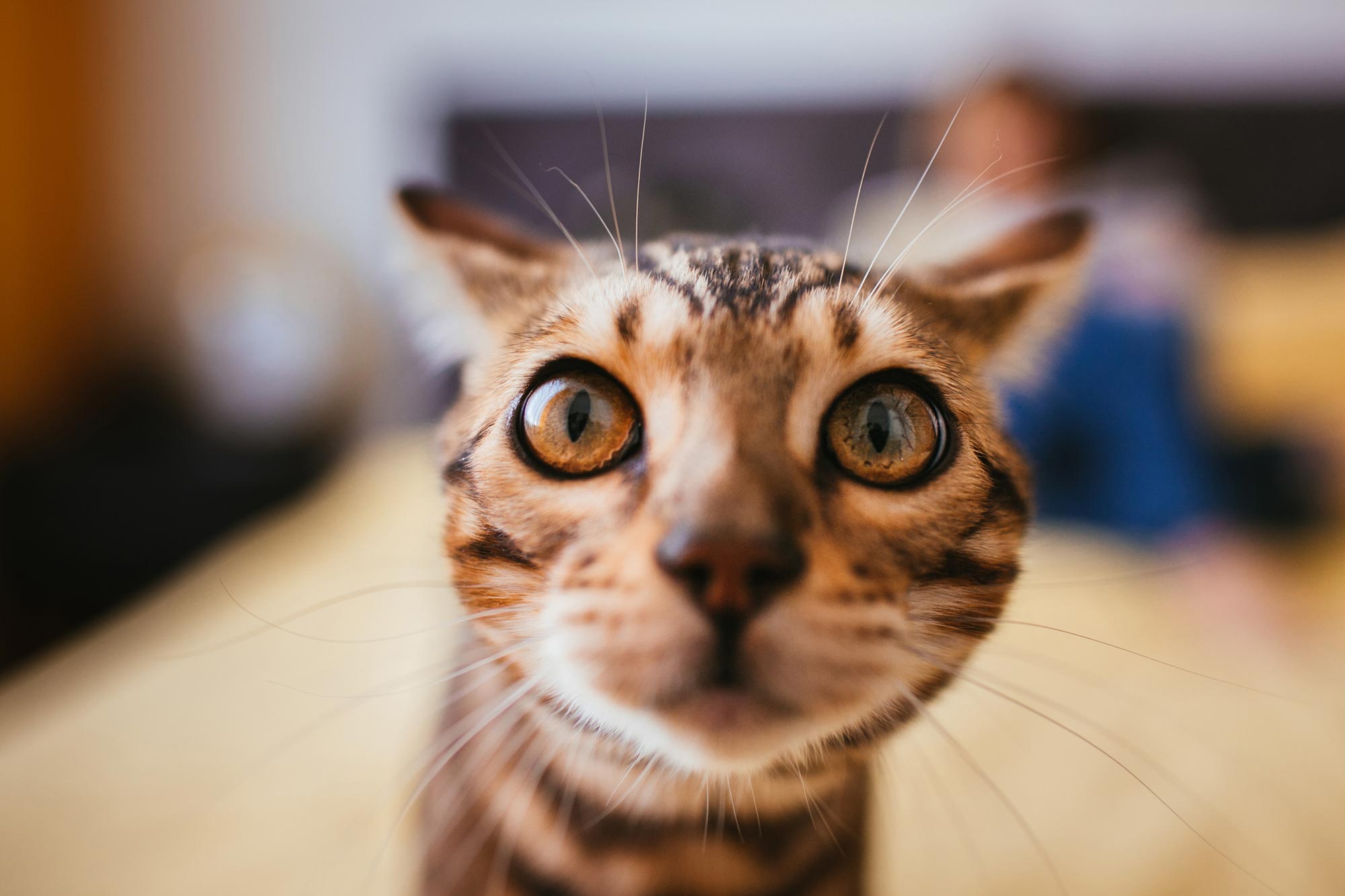
Lipid droplets in the kidneys may help cats maintain a consistent chemical “scent identity.”
Scent marks can linger long after an animal has moved on, allowing urine and other chemical signals to carry information across both distance and time. Yet the molecules responsible for odor do not remain unchanged. They evaporate, break down, and shift after being released. How, then, can a scent mark continue to convey reliable information about who left it?
A team from Japan, Germany, and Spain, led by Iwate University, has identified a possible answer in domestic cats. Through behavioral testing and chemical analysis, the researchers found 13 branched-chain fatty acids (BFAs) whose combinations and relative amounts varied from cat to cat but stayed comparatively consistent within each individual.
Cats were also able to distinguish donor-specific BFA mixtures when the researchers controlled other lipid components in urine. The results suggest that BFAs may provide durable information about individual identity, functioning as a chemical “calling card” in cat urine. The study was published in Current Biology.
Cats recognize individual urine scents
The first step was to establish whether cats could actually tell urine samples from different individuals apart. When researchers repeatedly presented the same urine, the cats spent progressively less time sniffing it. When urine from a different cat was introduced, their interest increased again. Cats also continued to show reduced responses to urine they had encountered before even after intervals lasting months, pointing to long-term memory for urine odors.
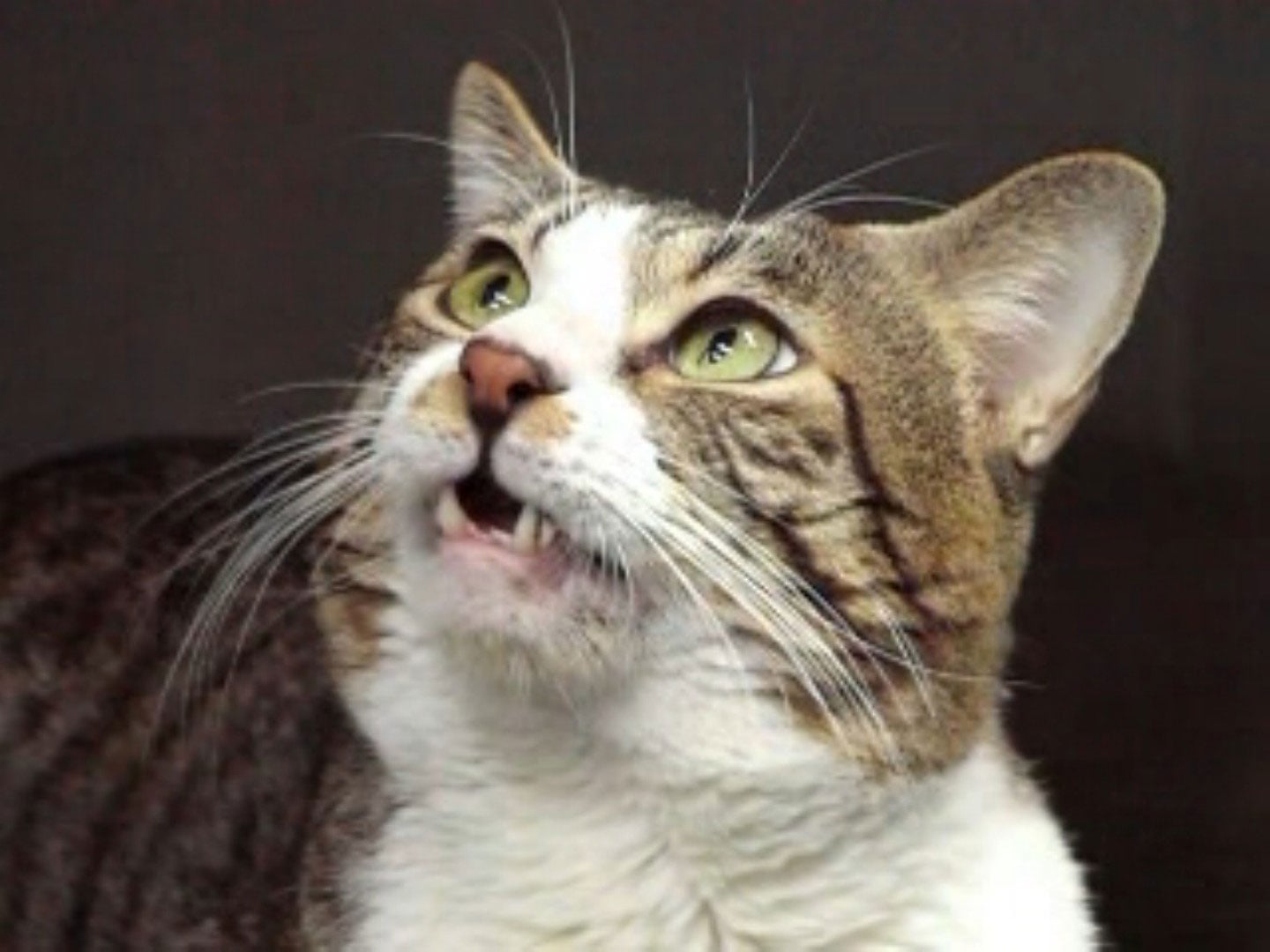
The researchers next examined the flehmen response, the familiar open-mouthed expression cats sometimes make when investigating scents. Cats performed flehmen more often when exposed to unfamiliar urine than to their own. The response declined as the same sample was presented repeatedly, then rose again when urine from another cat appeared. “After confirming that cats can distinguish individual urine odors, we used the flehmen response as a clue to identify urinary molecules that may contribute to individual scent recognition,” said Professor Masao Miyazaki of Iwate University, who led the research project.
Following those behavioral clues led the researchers to a lipid portion of urine containing unusual BFAs. They identified 13 of these compounds and found, after reviewing the scientific literature, no earlier reports of the same molecules in mammalian excretions or secretions.
Each cat carried a distinctive BFA profile based on the combination and relative abundance of the compounds. Those profiles differed substantially between cats but remained comparatively stable for the same individual across samples collected on different dates. Related cats generally had more similar profiles, though family members still retained individual differences.
The BFAs also persisted longer than many other odor molecules in urine. Whereas highly volatile compounds can change quickly after urine is deposited, these semi-volatile molecules evaporate more slowly. When urine-soaked samples were stored at 25°C, the individual-specific BFA patterns remained comparatively stable for at least 24 hours.
The researchers then tested whether cats could perceive the chemical differences themselves. After controlling the other lipid components of urine, they changed only the donor-derived fraction containing BFAs. Cats that had already become accustomed to the original sample began sniffing more when that fraction changed, showing that they could distinguish individual-specific BFA compositions.
Kidney lipid droplets may stabilize identity
The investigation also led to an unexpected organ: the kidney. BFAs appeared in kidney tissue but were absent from the other tissues examined, and lipids containing BFAs were found among neutral lipids stored inside droplets in the renal cortex.
Cats have been known to possess abundant kidney lipid droplets for more than a century, but their biological purpose has remained uncertain. The new findings suggest that these droplets could serve as a reservoir for BFA-containing lipids. Such storage might reduce short-term changes caused by diet or physiological condition, helping keep each cat’s urinary chemical profile relatively consistent.
“Lipid droplets in the cat kidney have been known for more than a century, but why cats have so many of them has remained a mystery,” Miyazaki said. “Our findings suggest that one of their functions may be to support a stable chemical signature in urine. How BFAs stored in renal lipids are ultimately released into urine is an important question for future research.”
Similar chemistry appears across felids
The researchers extended their analysis beyond domestic cats to other members of the cat family. They detected BFA-related compounds in urine and lipid droplets in the kidneys of several felids, including lions, tigers, leopards, jaguars, lynxes, and the Iriomote cat.
The BFA profiles differed between species, as did the abundance and distribution of lipid droplets in the kidneys. Differences also appeared between the Iriomote cat and the Tsushima leopard cat, two geographically isolated forms of leopard cat found in Japan. Together, these results suggest that BFA-related chemistry and kidney physiology may occur broadly across Felidae while having changed during felid evolution. Whether wild cats actually use BFAs to recognize individuals has not yet been determined.
More broadly, the findings address a long-standing problem in chemical communication: how can scent marks continue carrying reliable information about identity when their odor changes after being deposited?
Mice are known to maintain individual information in urine partly through major urinary proteins, but researchers have not established an equivalent protein-based mechanism across many other mammals. Cats may rely on a different system, using combinations of semi-volatile lipid-derived molecules whose stability could be supported by storage in the kidney.
The work remains basic research and does not immediately produce a new technology or commercial application, but several future directions emerge. A better understanding of BFAs could eventually inform methods for managing cat urine odor.
Investigating normal lipid storage in feline kidneys could also help researchers explore why lipid accumulation is harmless in some settings but associated with disease in others. And if repeated urine samples can reliably identify individual animals from their BFA profiles, scent marks collected in the environment might one day offer a non-invasive way to monitor rare wild felids and aid conservation.
Reference: “Signatures of branched-chain fatty acids derived from a kidney reservoir confer stable chemical individuality on domestic cats” by Shota Ichizawa, Jana Caspers, Reiko Uenoyama, Yuria Ito, Tamako Miyazaki, Mizuki Morisasa, Naoko Goto-Inoue, Yusuke Suzuki, Nozomi Nakanishi, Yasuyuki Endo, Masako Izawa, Tetsuro Yamashita, Beatriz Ortiz-Guisado, Elisa María Espinosa-López, Guadalupe Gómez-Baena, Stefan Schulz and Masao Miyazaki, 19 August 2026, Current Biology.
DOI: 10.1016/j.cub.2026.07.045
Never miss a breakthrough: Join the SciTechDaily newsletter.
Follow us on Google and Google News.