
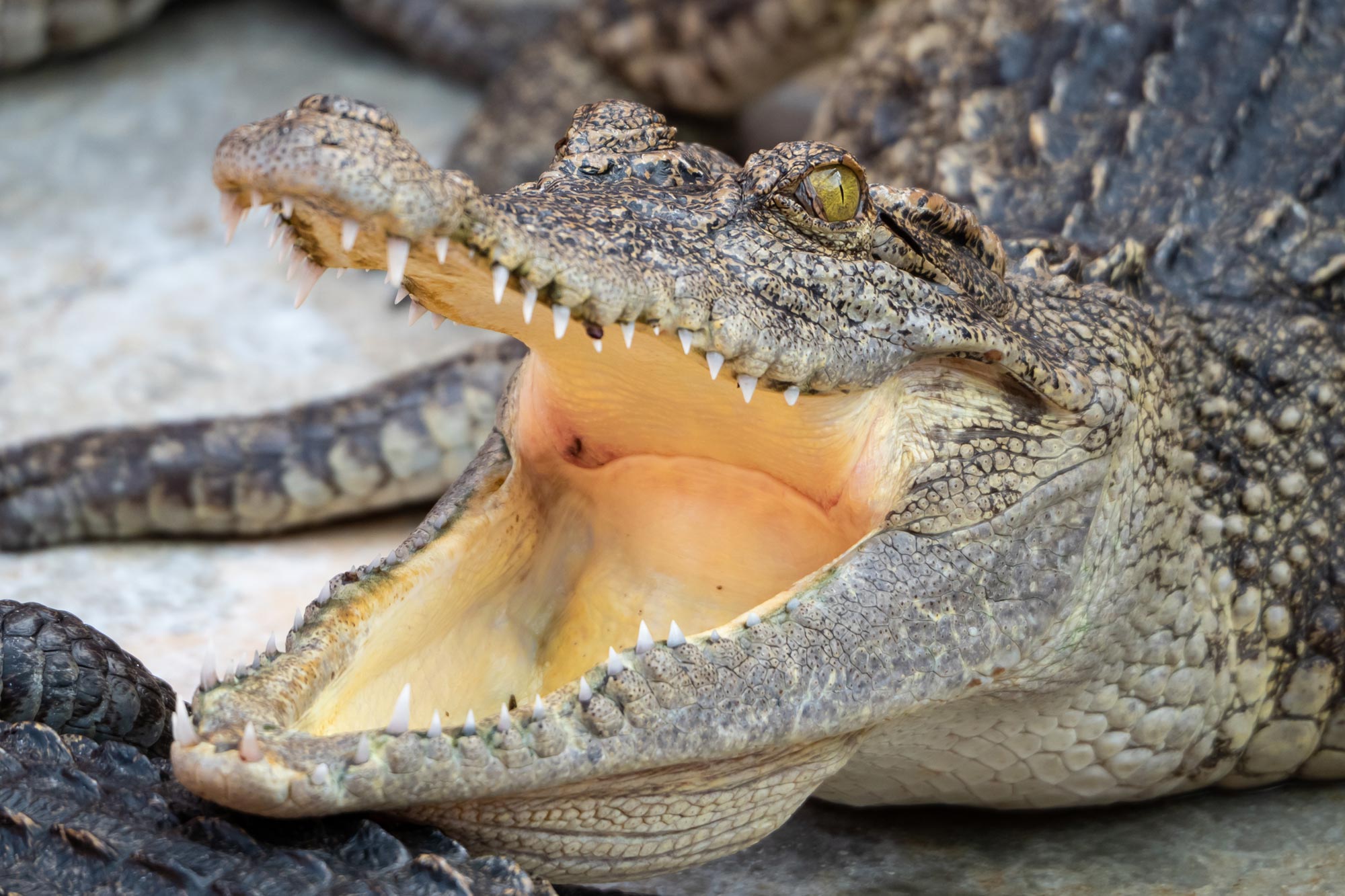
Captive-reared crocodiles adapted well after release, but a translocated wild crocodile showed strong homing instincts, offering new insights for conservation planning.
A new study suggests that saltwater crocodiles born or raised in captivity may successfully adapt to life in the wild without returning to the facilities where they were bred. Researchers say the findings could help improve crocodile conservation and reintroduction programs.
The ability to find a way back home is common throughout the animal kingdom and often plays a major role in survival and reproduction. Many animals return daily to nests or burrows after searching for food, while others travel vast distances over months to reach familiar territory.
“Crocodilians, the largest predators in most tropical and subtropical freshwater and brackish environments, are a unique case when it comes to homing behavior,” said behavioral ecologist and adjunct associate professor Ru Somaweera from Murdoch University.
“Crocodiles are remarkably good at finding their way home, often returning to their original capture sites and limiting the success of relocation programs. What we still don’t fully understand, though, is how this behavior plays out in individuals that have been bred or kept in captivity for long periods before being released back into the wild.”
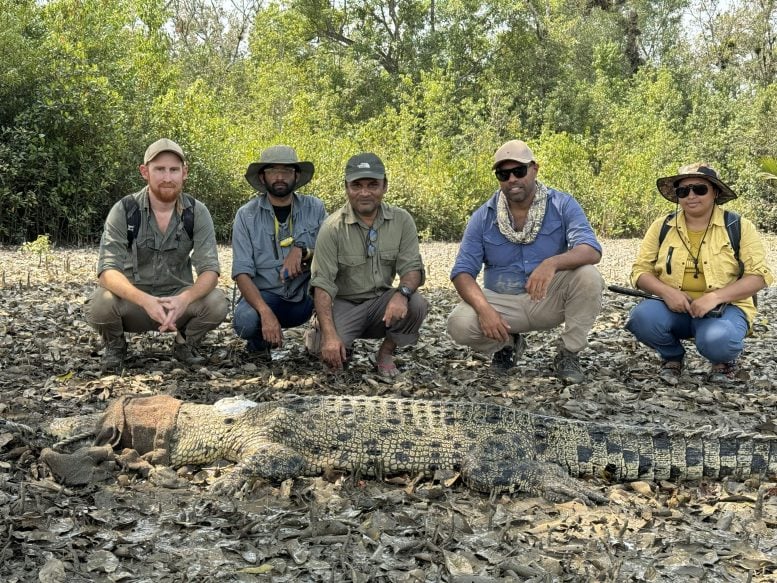
Saltwater Crocodiles in Bangladesh’s Sundarbans
The study took place in the Sundarbans mangrove forest in Bangladesh, one of the country’s last remaining habitats for saltwater crocodiles. Heavy commercial hunting for crocodile skins up to the 1970s devastated the population. Although Bangladesh introduced legal protections in 1973, there has been no clear population recovery.
Most of the country’s remaining saltwater crocodiles now live in the Sundarbans. The latest survey estimated only 140 mature individuals remain.
“If crocodiles who are bred and raised in captivity subsequently return to their enclosures or breeding facilities after being released, attempts to reintroduce them into the wild as part of conservation efforts will ultimately fail,” Associate Professor Somaweera said.
“The traditional approach has been to use hatchlings in reintroduction programs, but their survival rates are extremely low, and they take a long time to reach reproductive maturity. Understanding whether larger, captive-bred crocodiles can be used instead represents an important knowledge gap.”
Satellite Tracking Reveals Surprising Adaptability
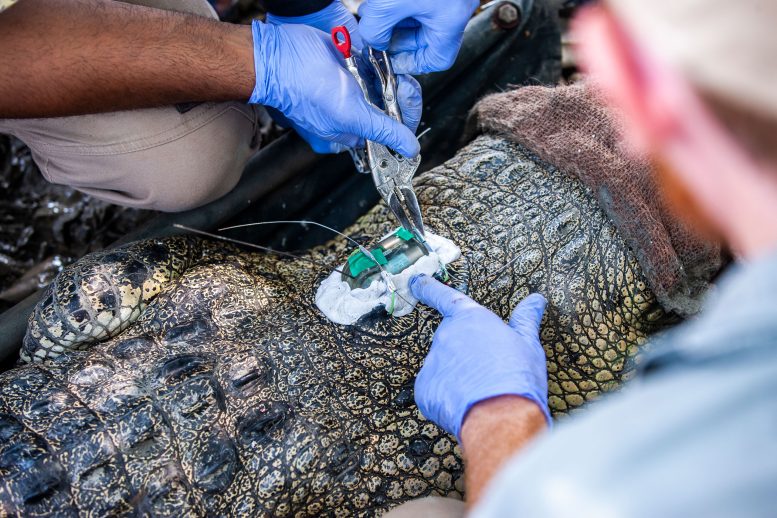
Researchers fitted five adult saltwater crocodiles with satellite tracking devices. The group included three captive-reared females that had lived in captivity for 8 to 22 years, one wild crocodile captured and released locally, and another wild crocodile that was translocated far from where it was originally caught. The animals were monitored for several months after release.
According to Associate Professor Somaweera, the most encouraging result was that none of the captive-reared crocodiles attempted to return to the breeding facility.
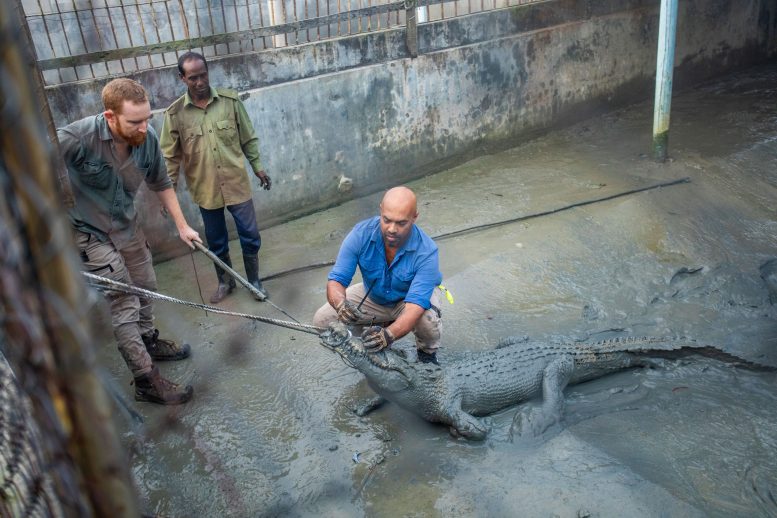
“Instead, they settled into small, well-defined areas and moved in much the same way as the local wild crocodile we tracked, which tells us they are possibly able to adapt to their new environment seamlessly,” he said. “Unfortunately, the results weren’t as good for the wild crocodile Jongra, who was translocated about 132 km from his home before being released.
“Although Jongra didn’t make it back to his original capture site during the during of the study, his movements were very clearly going in that direction. He traveled far more each day than any other crocodile we tracked, covered an exceptionally large area, and even recorded single‑day movements of more than 30 kilometers: all typical signs of homing behavior.”
Conservation Benefits of Releasing Captive-Reared Crocodiles
Associate Professor Somaweera said the results may help guide future conservation efforts.
“These findings suggest that releasing subadult and adult captive-reared crocodiles can be a viable strategy to strengthen wild populations,” he said.
“For translocated crocodiles, it’s important there is careful release planning to manage their tendencies to return home.”
Reference: “What is home? Post-release movements of captive-reared and translocated mature saltwater crocodiles in Bangladesh” by Ruchira Somaweera, A. B. M. Sarowar Alam, Kazi Zenifar Azmiri, Sakib Ahmed, Tania Zakir, Yaqub Ali, Tarique Hassan, Dorothea Theunissen, Stefan Alfred Groenewold, Md. Mofizur Rahaman Chowdury, Md. Shohel Rana, Paul Beri and Vinay Udyawer, 23 March 2026, Wildlife Research.
DOI:10.1071/WR25141
The study was funded by the Deutsche Gesellschaft für Internationale Zusammenarbeit and led by IUCN Bangladesh and the Bangladesh Forest Department.
Never miss a breakthrough: Join the SciTechDaily newsletter.
Follow us on Google and Google News.
1 Comment
I wish the article had explained how crocodiles are able to know what direction to go in to find “home”. What is the physiological mechanism that allows them to do this? I guess I will have to google it…