
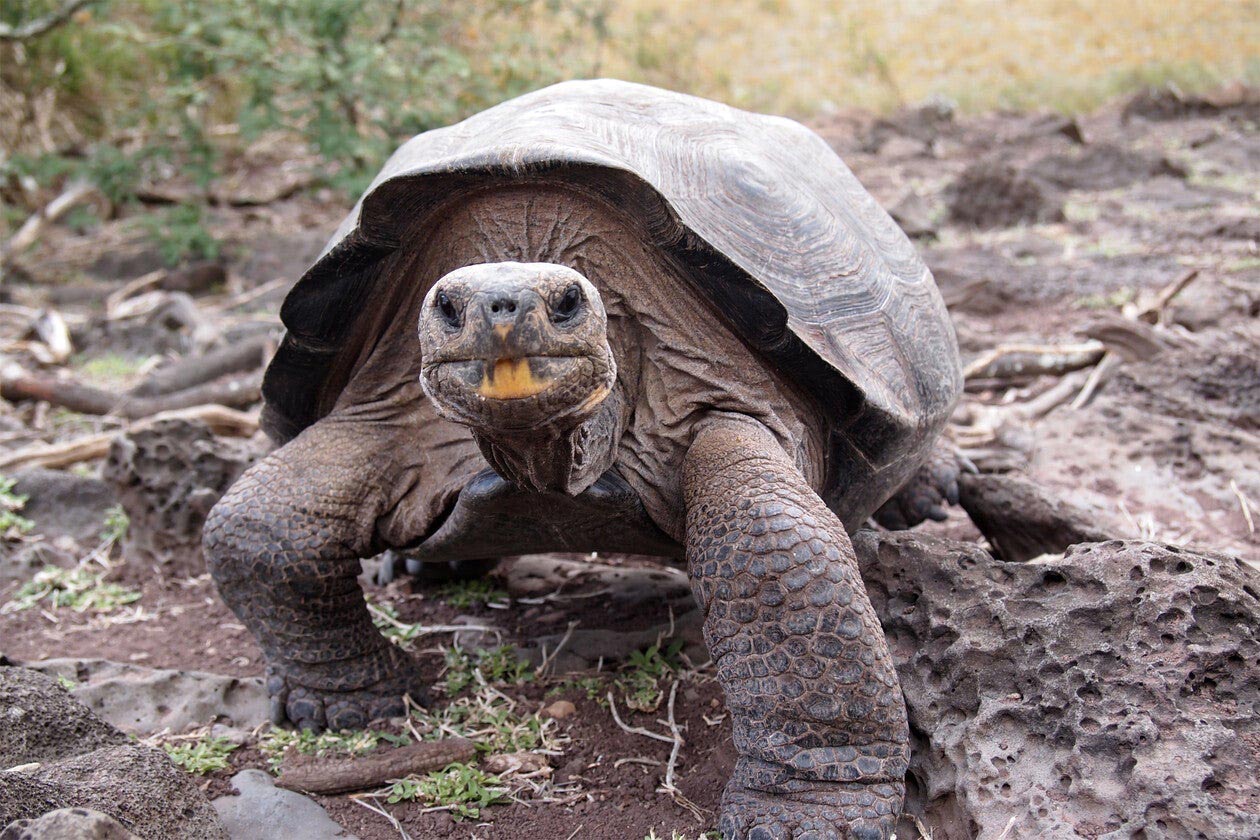
Using a new computational toolkit, Yale researchers recovered evolutionary clues from highly degraded DNA and identified two extinct lineages of giant tortoises.
Some Galapagos giant tortoise specimens preserved in museums contained so little usable DNA that less than 1% of their genomes could be read. Yet Yale researchers were still able to recover enough genetic information to identify two extinct island lineages, revealing evolutionary history from samples that conventional methods might otherwise discard.
The team did this by combining several genome analysis tools designed to work with severely degraded genetic material. The findings could also aid efforts to expand giant tortoise populations across the Galapagos archipelago, where traces of extinct lineages may survive in living hybrids.
Results of the study are published in the journal Proceedings of the Royal Society B.
Damaged DNA can still reveal ancestry
Ancient DNA creates a persistent challenge for researchers studying extinct species. As genetic material deteriorates over time, complete genomes break into scattered fragments, leaving major gaps that make it difficult to determine how individuals and populations were related.
The Yale-led team developed a computational approach that could draw evolutionary information from these incomplete genomes without requiring a more intact DNA sample.
“The challenge of this study was to reconstruct the genetic relationships of extinct Galapagos giant tortoises, knowing that the DNA we were able to obtain from museum specimens was going to be highly degraded and fragmented and have a high proportion of contamination,” said study lead author Alexander Ochoa, former associate research scientist in Yale’s Department of Ecology and Evolutionary Biology who is beginning a new position as an assistant professor at the State University of New York at Old Westbury this fall.
Ochoa conducted the work as part of the laboratory of Adalgisa Caccone, a senior research scientist and lecturer in Yale’s Department of Ecology and Evolutionary Biology, a member of Yale’s Faculty of Arts and Sciences, and co-author of the study. The lab’s ongoing research focuses on understanding the genetic diversity of Galapagos giant tortoises.
Fragments reveal two extinct lineages
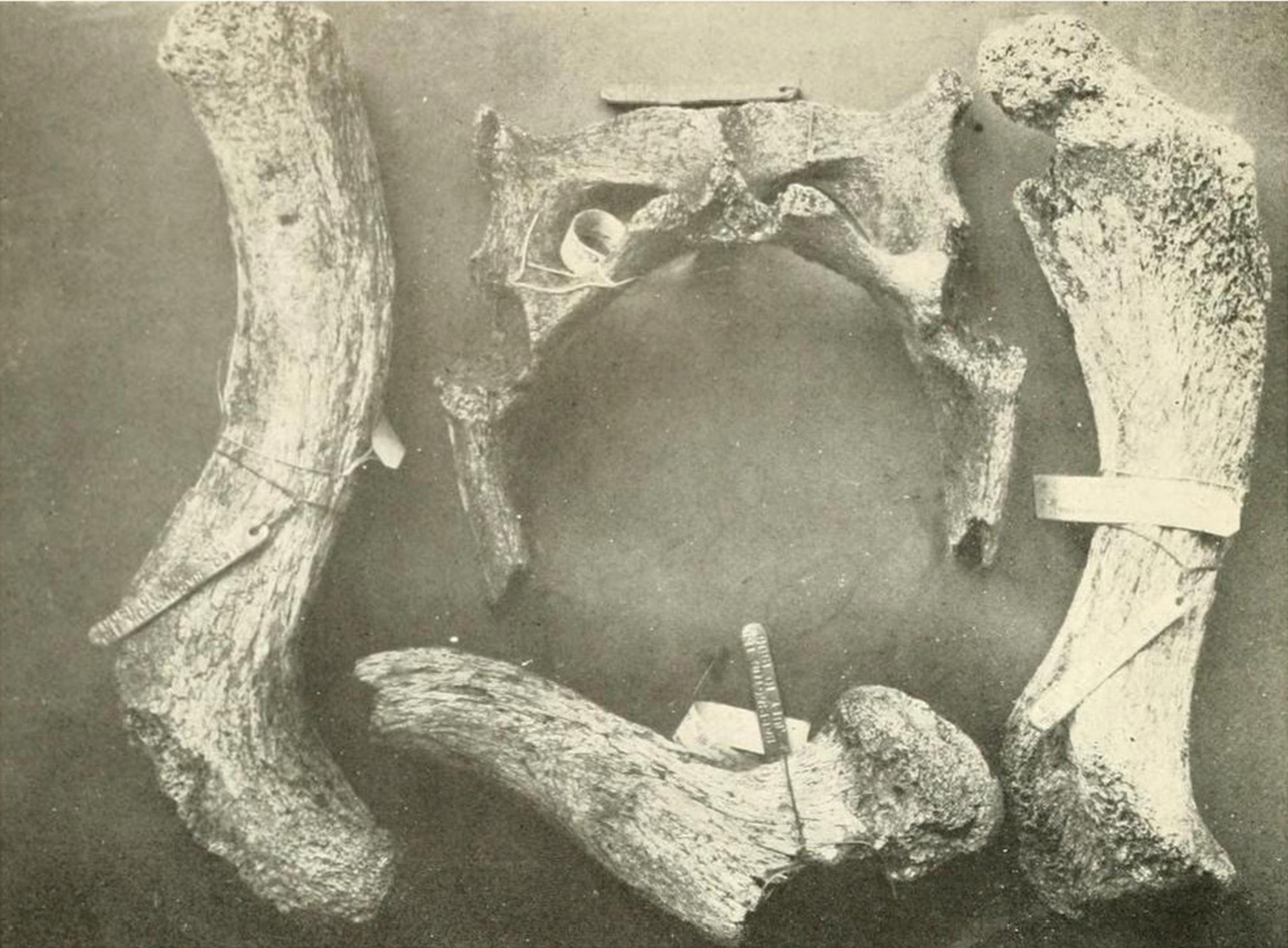
The researchers extracted DNA from dried bones in historical museum collections, including five specimens representing two extinct tortoise lineages. They combined the surviving genetic fragments and placed the information onto a reference phylogenetic tree, which maps evolutionary relationships.
The reference tree was constructed using high-quality genomes from living tortoises and other historical specimens. It provided a framework for determining where the severely degraded samples belonged within the tortoises’ evolutionary history.
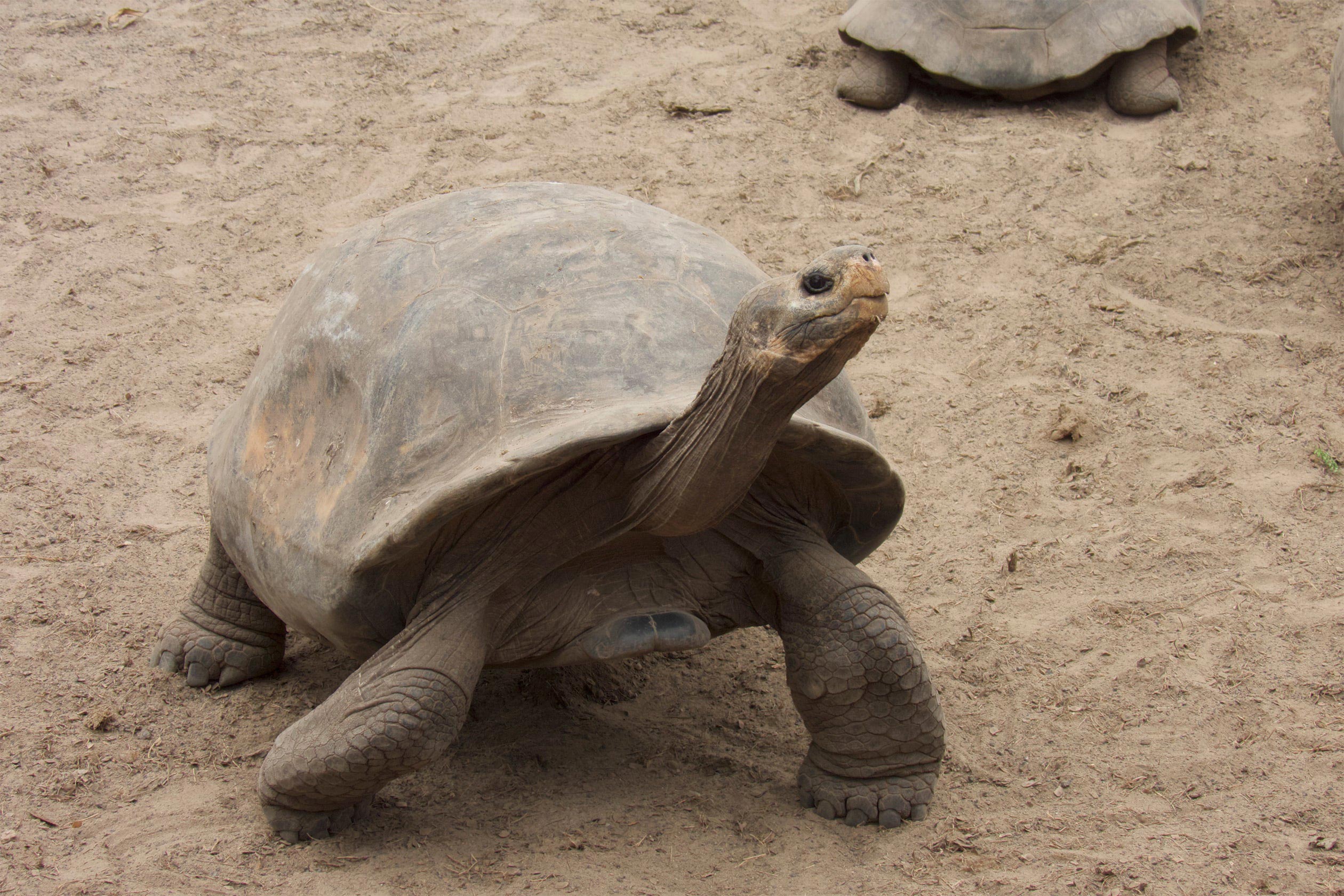
In some of the degraded tortoise specimens studied, less than 1% of the genome could be read. Conventional genomic analyses often discard samples with such extensive missing data because the gaps can distort estimates of evolutionary relationships. By combining several computational tools, however, the researchers successfully identified specimens belonging to the extinct San Cristóbal and Santa Fe island lineages.
Extinct genomes may persist in hybrids
“These are two distinct lineages,” Ochoa said, adding that connecting these extinct populations with tortoises alive today could have implications for conservation efforts throughout the Galapagos archipelago.
Sailors historically transported Galapagos tortoises between islands as cargo and used them as a source of food, Ochoa said. Some displaced tortoises survived and bred with animals from other islands. Because of these human-driven movements, genetic material from extinct lineages may still be “living” in extant, hybrid tortoises.
“In this regard, captive breeding programs that mate these hybrids may be able to recover the genomes of the extinct lineages in future generations,” Ochoa said. “The tools developed in our study are not only useful for the discovery of extinct lineages but could also be applied to broader wildlife conservation efforts.”
Reference: “Integration of ultra-low coverage whole-genome sequences for reconstructing the evolutionary history of Galapagos giant tortoises” by Alexander Ochoa, Stephen J. Gaughran, Rachel Gray, Nicole A. Fusco, Johanna N. J. Weston, Cyler Conrad, Nikos Poulakakis, Joshua M. Miller, Adalgisa Caccone and Evelyn L. Jensen, 1 July 2026, Proceedings of the Royal Society B: Biological Sciences.
DOI: 10.1098/rspb.2026.0103
This work was funded by the Galapagos Conservancy (GR117985), the Turtle Taxonomy Fund (TTF-0020), the Natural Environment Research Council (Discipline Hopping Fund), Re:wild (5248-0000), and through institutional support from the Yale Center for Biospheric Studies and Newcastle University School of Natural and Environmental Sciences.
Never miss a breakthrough: Join the SciTechDaily newsletter.
Follow us on Google and Google News.