
Widely used osteoporosis drugs were associated with a lower risk of Alzheimer’s disease and related dementias in a study of more than 120,000 older adults.
A medication already prescribed to protect aging bones may have an unexpected second benefit. In a large study of older adults with osteoporosis or fragility fractures, people who took nitrogen-containing bisphosphonates, or NBPs, a common class of osteoporosis drugs, had a lower risk of developing Alzheimer’s disease and related dementias.
Researchers at the University of Hong Kong analyzed electronic medical records from more than 120,000 people age 60 and older. NBP users had a 16% lower risk of developing Alzheimer’s disease and related dementias than untreated patients and a 24% lower risk than people who received other osteoporosis medications.
The association was particularly strong among women and people with hip fractures. Based on the researchers’ estimates, treating 48 patients with NBPs for five years could potentially prevent one case of dementia.
Bone and brain risks overlap
NBPs such as alendronate and zoledronate are well-established treatments for osteoporosis. They help strengthen bones and reduce fractures, making them common medications among older adults with weakened bones.
Researchers are now interested in whether those same drugs could potentially serve another purpose.
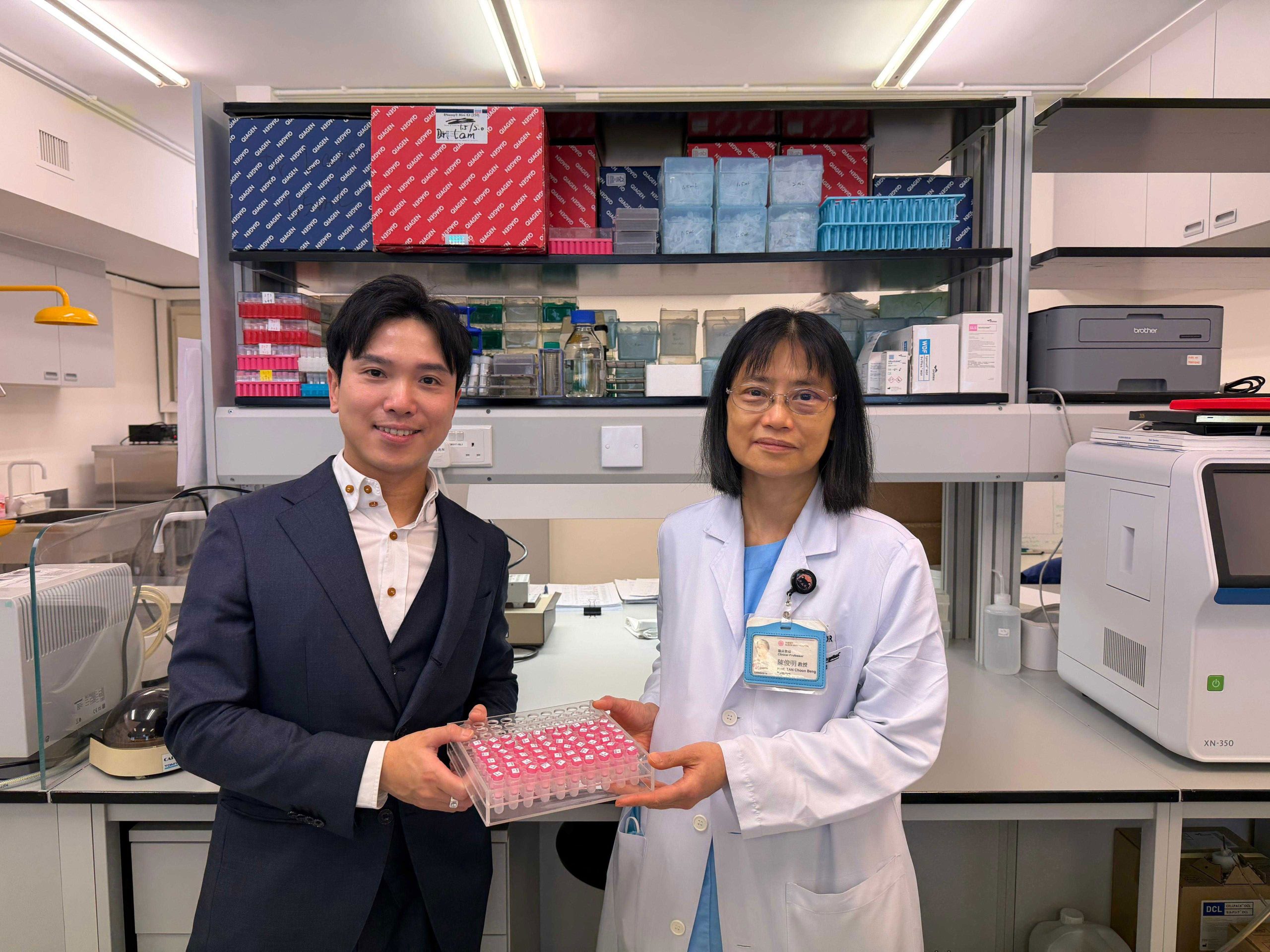
Osteoporosis and dementia frequently affect the same older populations, and the two conditions share several risk factors, including advanced age, female sex, and reduced physical activity. Previous research from the same team also found that osteoporosis and fractures are independent risk factors for dementia, while people with dementia have a greater risk of falls and fractures.
There are biological reasons to investigate the connection as well. Emerging research suggests that some of the biological pathways affected by NBPs may also play a role in the development of Alzheimer’s disease and related dementias.
Medical records reveal a lower dementia risk
To examine whether that possibility showed up in real-world patients, the HKUMed researchers used Hong Kong’s citywide electronic medical records. They studied people with osteoporosis or fragility fractures between 2005 and 2020 and compared dementia risk among patients taking NBPs, those receiving other osteoporosis medications, and those who were untreated.
Professor Cheung Ching-lung, associate professor in the Department of Pharmacology and Pharmacy at HKUMed, remarked, “Our study provides evidence that NBPs may offer dual benefits in strengthening bones and reducing fracture risk, as well as potentially preventing ADRD. Their potential neuroprotective role provides an empirical basis and supports future research on the actual effectiveness of this medication in preventing or delaying cognitive decline associated with ADRD.”
Existing drugs could offer another path
The possibility of finding another use for an existing medication comes as dementia places a growing burden on aging populations worldwide. More than 55 million people are currently living with dementia, and that number is projected to reach 139 million by 2050. The World Health Organization has identified dementia as a critical health priority.
New disease-modifying treatments that can slow the progression of Alzheimer’s disease have begun to emerge, but concerns remain about their cost, effectiveness, and how broadly they can be used. That has increased interest in preventive strategies that could be more affordable and accessible, including the possibility of repurposing medications that are already widely prescribed.
“These findings are significant as they demonstrate a potential approach for reducing dementia risk in a vulnerable population using safe and widely available NBPs. In our rapidly aging society, these findings suggest that while waiting for the novel therapies, existing medications can also provide additional protection for high-risk populations,” said Professor Cheung.
Reference: “Bisphosphonates and the risk of dementia in patients with osteoporosis or fragility fracture: A population-based study in Hong Kong” by Chor-Wing Sing, Koon-Ho Chan, Patrick K. C. Chiu, Wallis C. Y. Lau, Xiaowen Zhang, Kathryn C. B. Tan and Ching-Lung Cheung, 21 July 2025, Alzheimer’s & Dementia.
DOI: 10.1002/alz.70503
This study was supported by the Health and Medical Research Fund, Health Bureau, Hong Kong SAR Government (Grant number: 18192451).
Never miss a breakthrough: Join the SciTechDaily newsletter.
Follow us on Google and Google News.
1 Comment
Repurposing some osteoporosis drugs to treat dementia might be helpful in many cases but, with my family histories of very, very mild sub-acute non-IgE-mediated food allergies (that mainstream medicine still fails to recognize and research as true allergies) aggravated (or not) with officially (e.g., FDA in the US) approved food poisoning (e.g., soy, TBHQ and added MSG, minimally) and dementia, I believe that to make it possible for people to learn of their personal food allergies and to eliminate officially approved food poisoning would be the real solutions. Dementia and osteoporosis, minimally, share a common diet related cause; long-term chronic low-grade inflammation. It stimulates the release of xanthine oxidase which degrades into uric acid and free radicals, stimulating the body to reallocate calcium from the bones, nerves and/or teeth to try to maintain the blood at an optimal pH, about 7.4 (slightly alkaline), while some MSG likely crosses the blood-brain barrier to damage neurons resulting in mental disorders. First, of course, mainstream medicine needs to recognize that it is more a part of the problem than of the solution.