

A hidden hormone disorder may be driving millions of cases of high blood pressure, and a wearable device is revealing what standard tests miss
Researchers have used a wearable device to uncover previously hidden hormone patterns in primary aldosteronism, a potentially curable disorder that may affect as many as one in five people with high blood pressure. The condition develops when the adrenal glands produce too much aldosterone, disrupting the body’s regulation of salt, water, and blood pressure.
People with the condition face elevated risks of heart disease, stroke, diabetes, and other serious health problems. Yet diagnosis is frequently delayed because aldosterone naturally fluctuates, meaning a blood sample taken at a single moment may provide an incomplete or even misleading picture.
In a study published in Science Translational Medicine, researchers found that patients experienced brief surges of hormone production during both waking hours and sleep. The nighttime activity is particularly easy to miss because routine blood tests are rarely conducted while patients are asleep.
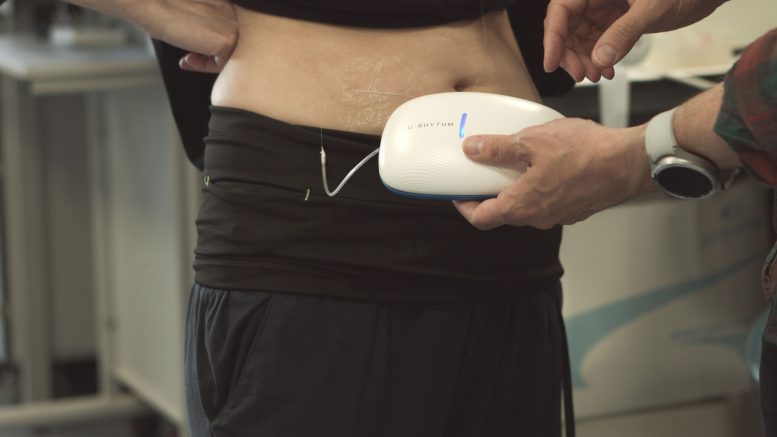
A Wearable Captures Hidden Hormone Activity
Scientists from the University of Bristol and the University of Manchester in the UK, the University of Bergen in Norway, and partner institutions in Stockholm and Athens used a portable device to monitor patients in their own homes. This allowed hormone rhythms to be recorded during ordinary activities rather than under the artificial conditions of a hospital or research facility.
The proof-of-concept investigation included 60 patients from Bristol, Bergen, Stockholm, and Athens. Hormone levels were measured every 20 minutes across a continuous 24-hour period, including while participants slept.
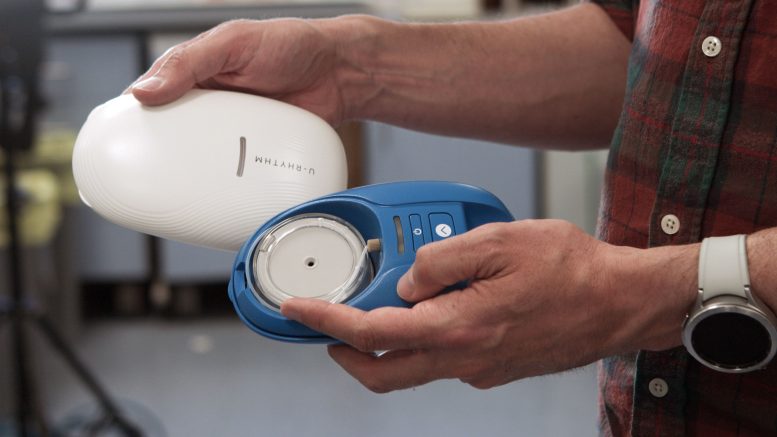
The lightweight monitor, about the size of a mobile phone, attached at the waist and measured hormones from the skin. Called U-RHYTHM, the University of Bristol technology was adopted and further developed by the spinout company Dynamic Therapeutics in 2023.
Study co-lead author Dr. Thomas Upton, Clinical Research Fellow in Automated Sampling, Clinical Fellow at the University of Bristol, and Senior Clinical Fellow at Bristol Hospitals NHS Foundation Trust, said, “Primary aldosteronism is an important cause of high blood pressure and the most common cause of secondary hypertension we see in our blood pressure clinic. It could be affecting millions of people in the UK. However, due to the way hormones change during the day and the current complexity of the diagnostic process, diagnosis is often delayed or never made at all.
“In our study, patients were monitored at home during normal activity, and this allowed us to see how hormones changed over time in realistic settings. This approach could potentially revolutionize how we diagnose hypertension and ultimately reduce cardiovascular disease, particularly heart disease and strokes, that could have been prevented.”
Why One Blood Test Can Miss the Disorder
Computational analysis allowed the team to reconstruct the daily behavior of aldosterone and two closely related hormones, 18-hydroxycortisol and 18-oxocortisol. Rather than staying continuously elevated, aldosterone repeatedly climbed and fell.
At certain points, levels dropped below the minimum thresholds used to diagnose primary aldosteronism. This happened even in some patients with severe disease, showing how a sample collected at the wrong time could incorrectly appear reassuring.
The disorder did not erase the normal day and night hormone rhythm. Instead, it produced repeated surges within that rhythm, including a previously hidden pattern of nighttime secretion.
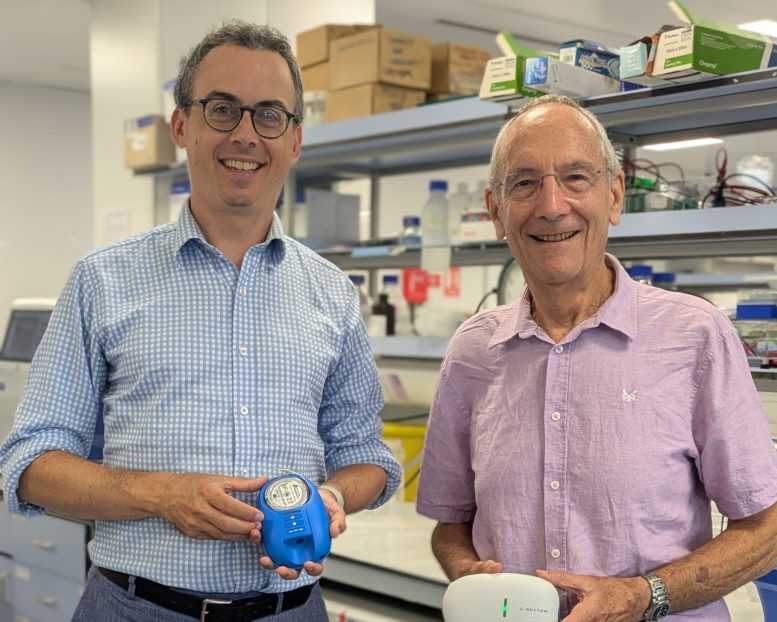
Study senior author Dr. Eder Zavala, UKRI Future Leader Fellow at the University of Manchester, said, “By continuously monitoring hormones over 24 hours, we were able to reveal a previously hidden pattern of nocturnal hormone bursts. This gives us a much clearer understanding of the disease and could ultimately help doctors detect it earlier and treat patients more effectively.
“A more detailed mathematical and computational analysis of daily hormonal profiles could eventually also help uncover earlier and more subtle forms of the disease, opening new opportunities to improve outcomes for patients living with high blood pressure.”
Nighttime Bursts Point to the Adrenal Gland
The abnormal spikes were especially pronounced in patients whose condition originated in one adrenal gland rather than both. That pattern could be clinically valuable because disease confined to a single gland may sometimes be treated surgically.
After the affected gland was removed, the unusual hormone bursts disappeared. The result provided additional evidence that the rhythmic surges were directly connected to primary aldosteronism rather than being incidental fluctuations.
By revealing when abnormal secretion occurs, continuous monitoring may eventually help doctors distinguish subtle disease from normal hormonal variation. It could also provide a more informative view of a patient’s condition than a single measurement taken during a clinic visit.
Rethinking How High Blood Pressure Is Tested
Study co-author Prof. Stafford Lightman, professor of medicine at the University of Bristol and inventor of U-RHYTHM, added, “The findings suggest that clinicians may need to rethink how they look for the disorder, which the Endocrine Society clinical practice guidelines now recommend should be considered for all people with hypertension, also known as high blood pressure.
“Future diagnoses could move away from single-time-point blood tests and towards tracking the body’s hormone rhythms over time, particularly the overnight patterns that appear to hold crucial clues to disease. Further research is needed to define the best clinical pathways, using dynamic hormone measurement, to ensure early diagnosis of this common and potentially curable cause of high blood pressure.”
The study was designed to demonstrate that the monitoring approach could work, not to establish a new diagnostic standard. Larger investigations will be needed to determine how continuous hormone profiles should be interpreted and how the technology could fit into routine care.
Reference: “Tissue corticosteroid rhythms are dysregulated predominantly during sleep in primary aldosteronism” by Marianne A. Grytaas, Thomas Upton, Isabella Marinelli, Paal Methlie, Marianne Øksnes, Dimitra A. Vassiliadi, Sophie Bensing, Georgina Russell, Kristian Løvås, Dimitris Margaritopoulos, Ileana R. Botusan, Katerina Simunkova, Maria Balomenaki, Katarina Berinder, Belinda Lombard, Thea Sjøgren, Ida Løvik, Bergithe E. Oftedal, Anette Heie, Grethe Å. Ueland, Olle Kämpe, Stylianos Tsagarakis, Stafford L. Lightman, Eder Zavala and Eystein S. Husebye, 26 August 2026, Science Translational Medicine.
DOI: 10.1126/scitranslmed.aeb7517
Never miss a breakthrough: Join the SciTechDaily newsletter.
Follow us on Google and Google News.