
Close Menu
    Facebook X (Twitter) Instagram
    SciTechDaily
    • Biology
    • Chemistry
    • Earth
    • Health
    • Physics
    • Science
    • Space
    • Technology
    Facebook X (Twitter) Pinterest YouTube RSS
    SciTechDaily
    Home»Biology»Innovative Experiment Reveals the Complex Dynamics of Stem Cell Tethers and Slings
    Biology

    Innovative Experiment Reveals the Complex Dynamics of Stem Cell Tethers and Slings

    By King Abdullah University of Science & Technology (KAUST)October 8, 2021No Comments4 Mins Read
    Facebook Twitter Pinterest Telegram LinkedIn WhatsApp Email Reddit
    Share
    Facebook Twitter LinkedIn Pinterest Telegram Email Reddit
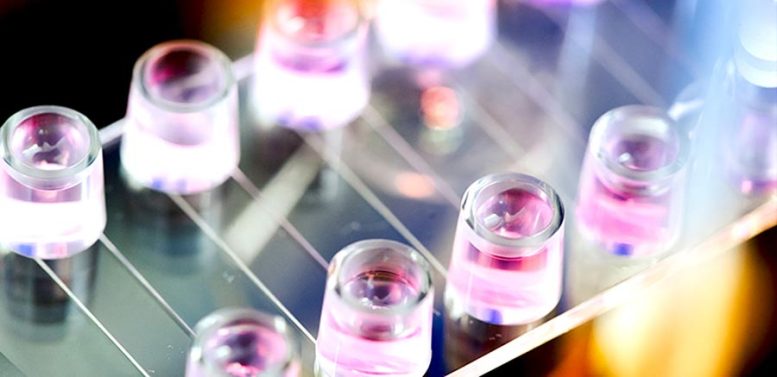
    Complex Dynamics of Stem Cell Tethers and Slings
    Research conducted at KAUST aims to improve how stem cells move in the body so that they can reach where they are needed following transplantation. Credit: © 2021 KAUST; Anastasia Serin

    Molecules move within elongated protrusions to help stabilize migrating cells inside the bloodstream.

    An innovative experiment design shows, in real time and at the scale of a single molecule, how stem cells slow their rolling inside the circulatory system by growing long tethers that attach to the inner surfaces of blood vessels. The strategy could help researchers to improve stem cell transplantations and to find new treatments for metastasizing cancers.

    Many cells in the human body travel through blood vessels from one organ to another to carry out specific functions. For example, immune cells migrate to inflamed tissue, and cancer cells spread to new organs. Stem cells also travel to new locations to develop into different tissues. “This stem cell ‘homing,’ where cells migrate to their new place of residence, is also essential for successful bone marrow transplantation for treating various diseases,” explains Satoshi Habuchi, who led the study.

    Homing is a multistep process in which cells slowly roll over the inner lining of blood vessels, then adhere to the lining once they reach the site they are destined for, and finally transmigrate across the vessel wall into the tissue.

    Scientists already knew that homing cells produce tethers containing ligands that can sense and bind to adhesion molecules on the blood vessel lining. Until now, however, scientists had not been able to directly visualize this rolling to understand exactly what happens at the molecular level.

    Stem Cell Homing
    Stem cell “homing” is a process whereby stem cells migrate through the circulatory system to arrive at the place where they are required in the human body. Credit: © 2021 KAUST; Anastasia Serin

    Satoshi, Merzaban, and their teams were able to mimic cell rolling by using a microfluidic system. “The tethering and rolling step of homing had previously been described as a simple binding between selectins on the endothelium and their ligands on stem cells,” says Ph.D. student Bader Al Alwan. “Our findings demonstrated that the initial step of homing is far more dynamic and complicated.”
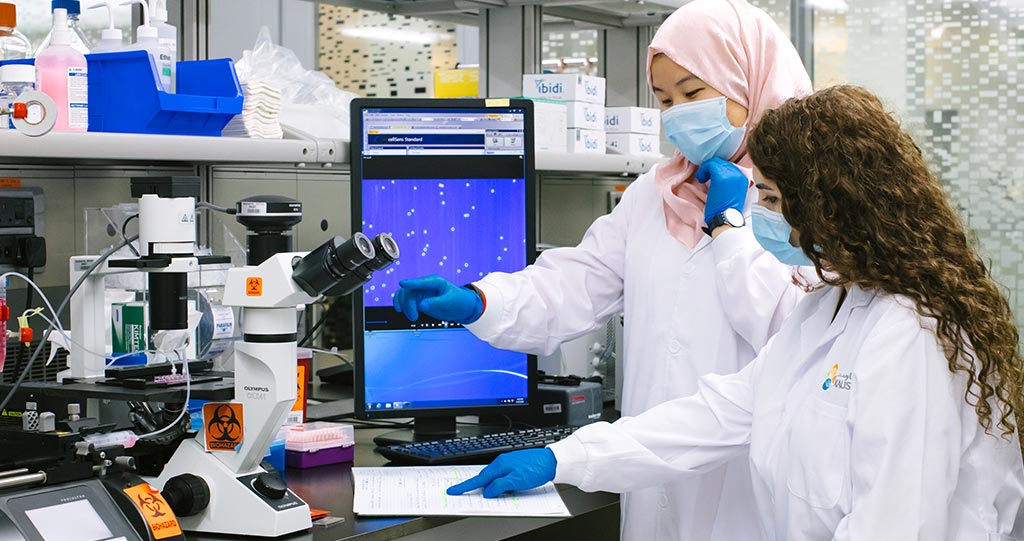
    Cancer Cells Migrate Around Human Body
    Part of the team’s research is focused on understanding why cancer cancer cells outperform normal cells in their ability to migrate around the human body. Credit: © 2021 KAUST; Anastasia Serin

    The team found that individual microvilli on the surface of the homing cells elongate to form individual tethers. Ligands in the microvilli rapidly extend throughout the tethers so they can “sniff out” selectin in the blood-vessel lining. Once located, the ligands bind to the selectins, attaching the tether to the vessel lining. This helps the cell resist the full strength of the blood flow. As the blood flow exerts pressure on the top of the cell, it rolls forward, stretching the tether until it reaches a critical point when it breaks and flips forward to come in front of the cell. Now called a sling, it is used to slow down the cell so that it can look for the molecules that signal where its new home is.

    “When we started, we did not expect that cell morphology played such a critical role in stabilizing cell rolling,” says Al Alwan. “We were also surprised by the extent to which the morphology changes, with some tethers merging into multiple ones and others stretching to more than ten times the length of the cell.”
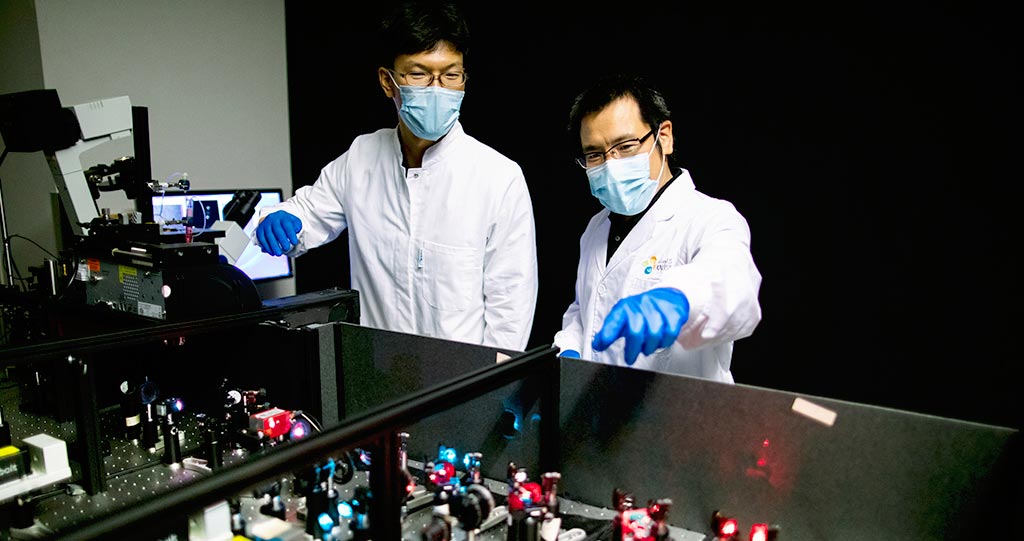
    Why Cancer Cells Outperform Normal Cells
    The team, led by Satoshi (right), want to create a more precise map of the proteins that are present at each step of the homing and migration process. Credit: © 2021 KAUST; Anastasia Serin

    “Our research is focused on understanding how various cells move in the body using adhesion systems. For example, one goal is to improve stem cell movement in the body so they can get where they are needed following transplantation or in other disease settings. We are also focused on understanding how and why cancer cells outperform normal cells in their ability to migrate so that we can develop methods to inhibit their metastasis. Using the sophisticated assays developed by Satoshi and his team, we also want to create a more precise map of the proteins that are present at each step of the homing and migration process to identify when and where they are important during migration,” says bioscientist Jasmeen Merzaban, the co-principal investigator of the study.

    Reference: “Single-molecule imaging and microfluidic platform reveal molecular mechanisms of leukemic cell rolling” by Bader Al Alwan, Karmen AbuZineh, Shuho Nozue, Aigerim Rakhmatulina, Mansour Aldehaiman, Asma S. Al-Amoodi, Maged F. Serag, Fajr A. Aleisa, Jasmeen S. Merzaban and Satoshi Habuchi, 14 July 2021, Communications Biology.
    DOI: 10.1038/s42003-021-02398-2

    Never miss a breakthrough: Join the SciTechDaily newsletter.
    Follow us on Google and Google News.

    Cell Biology KAUST Stem Cells
    Share. Facebook Twitter Pinterest LinkedIn Email Reddit

    Related Articles

    Maternally Inherited Diseases: New Technology Uncovers Hidden Mitochondrial DNA Mutations

    Scientists Convert Human Skin Cells Into Embryonic Stem Cells

    Researchers Generate Immune Responses From Stem Cell Grown Thymus Tissue

    Antibody Transforms Bone Marrow Stem Cells Directly Into Brain Cells

    New Technique Converts Skin Cells Into Functional Brain Cells

    UCSF Researchers Discover a New Type of Pluripotent Cell in Breast Tissue

    Steps That Enable Human Stem Cells to Develop Into Egg Cells

    Overcoming Barriers to Stem Cell-Based Regenerative Medicine

    Ajuba Regulates Stem Cell Activity in the Heart

    Leave A Reply Cancel Reply

    • Facebook
    • Twitter
    • Pinterest
    • YouTube

    Don't Miss a Discovery

    Subscribe for the Latest in Science & Tech!

    Trending News

    First-of-Its-Kind Discovery: Homer’s Iliad Found Embedded in a 1,600-Year-Old Egyptian Mummy

    Beyond Inflammation: Scientists Uncover New Cause of Persistent Rheumatoid Arthritis

    A Simple Molecule Could Unlock Safer, Easier Weight Loss

    Scientists Just Built a Quantum Battery That Charges Almost Instantly

    Researchers Unveil Groundbreaking Sustainable Solution to Vitamin B12 Deficiency

    Millions of People Have Osteopenia Without Realizing It – Here’s What You Need To Know

    Researchers Discover Boosting a Single Protein Helps the Brain Fight Alzheimer’s

    World-First Study Reveals Human Hearts Can Regenerate After a Heart Attack

    Follow SciTechDaily
    • Facebook
    • Twitter
    • YouTube
    • Pinterest
    • Newsletter
    • RSS
    SciTech News
    • Biology News
    • Chemistry News
    • Earth News
    • Health News
    • Physics News
    • Science News
    • Space News
    • Technology News
    Recent Posts
    • Your Favorite Fishing Spot Is Turning Brown – and the Fish Are Changing
    • 380-Million-Year-Old Fish Fossil Reveals Secrets of Life’s First Steps Onto Land
    • Mezcal “Worm” in a Bottle Mystery: DNA Testing Reveals a Surprise
    • Scientists Turn Red Lettuce Green, Unlocking Hidden Nutrients
    • Researchers Discover Natural Compound That Disarms Deadly Superbug
    Copyright © 1998 - 2026 SciTechDaily. All Rights Reserved.
    • Science News
    • About
    • Contact
    • Editorial Board
    • Privacy Policy
    • Terms of Use

    Type above and press Enter to search. Press Esc to cancel.